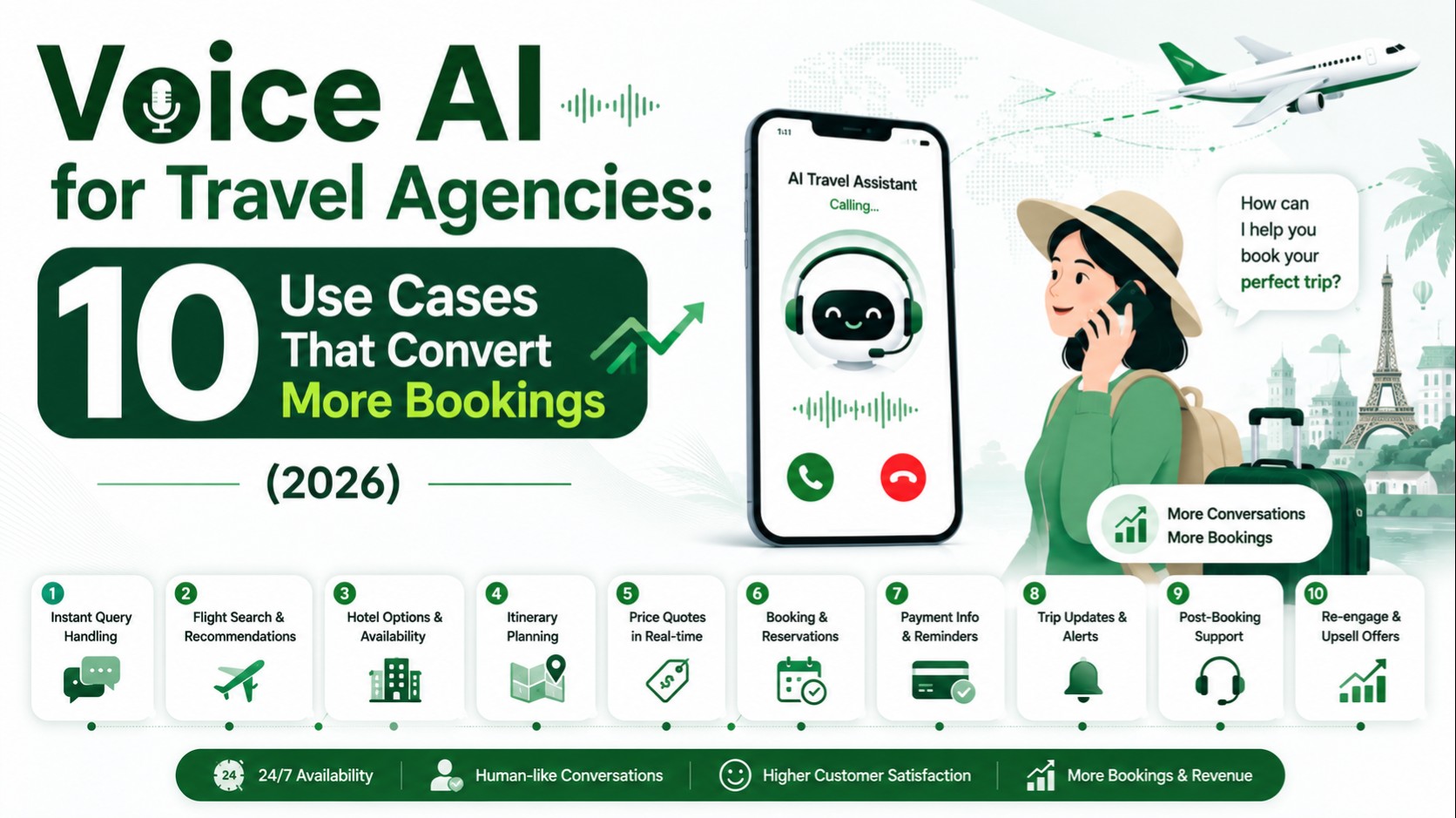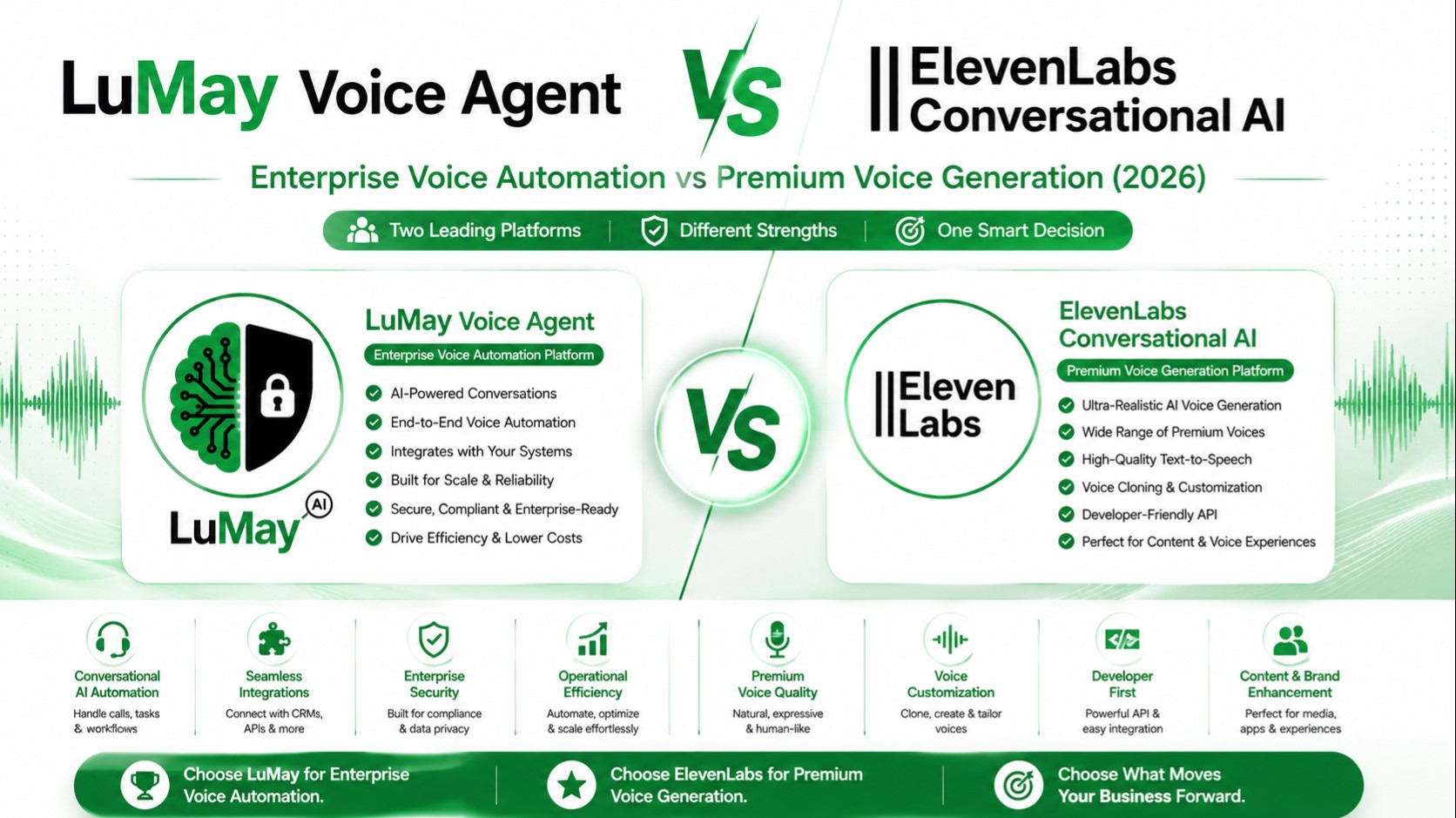



Missed calls mean missed revenue. In 2026, relying solely on human staff or outdated IVR systems to manage your front desk is a competitive disadvantage. AI receptionist software has evolved from basic routing tools into sophisticated, conversational engines capable of resolving complex customer inquiries, booking appointments, and qualifying leads—all with zero wait times.
Whether you run a growing dental clinic or manage an enterprise contact center, an AI phone receptionist ensures your business is always on.
In this comprehensive guide, we unpack how an AI business receptionist works, break down the costs, compare the technology to traditional alternatives, and show you exactly how to implement a solution like the LuMay Platform to drive measurable ROI.
What Is AI Receptionist Software?
AI receptionist software is an intelligent voice automation system designed to handle inbound and outbound phone calls using advanced natural language processing (NLP) and large language models (LLMs). Unlike legacy phone trees, an AI virtual receptionist converses naturally with callers, understanding context, sentiment, and intent.
These systems serve as the digital front desk for a business, answering questions, scheduling meetings, routing calls, and syncing data seamlessly with CRMs.
Key Takeaway: An AI receptionist doesn't just "answer the phone." It acts as a tier-one support agent, sales development rep, and scheduling coordinator wrapped into one.
How AI Receptionist Software Works
An AI call receptionist operates through a sophisticated pipeline of instantaneous voice processing. When a customer dials your number, the audio is captured via SIP or WebRTC. The system converts speech to text, analyzes the intent using models like GPT-5 or Claude, generates an intelligent response, and synthesizes that text back into a human-sounding voice. This entire loop happens in under 500 milliseconds.
AI Receptionist Architecture Explained
The backbone of a virtual receptionist AI relies on decoupling complex microservices. To understand Voice Agent Latency, you must look at the architecture:
Telephony Layer: (e.g., Twilio) Handles the physical call routing.
ASR (Automatic Speech Recognition): (e.g., Deepgram) Converts audio to text.
NLU/LLM (Natural Language Understanding): (e.g., OpenAI, Anthropic) Determines the best response.
TTS (Text-to-Speech): (e.g., ElevenLabs, Cartesia) Converts the text response back to lifelike audio.
AI Receptionist Workflow Step by Step
Call Initiation: Customer calls your business number.
Greeting & Intent Capture: The AI answers immediately with a custom greeting and asks how it can help.
Processing: The system transcribes the caller's request.
Action Execution: The AI checks an integrated calendar, queries a knowledge base, or qualifies a lead.
Resolution: The AI books the appointment, answers the question, or triggers a live agent handoff.
Post-Call Automation: The system logs the call in your CRM and sends a follow-up SMS.
AI Receptionist vs Human Receptionist
Table 1: AI vs Human Receptionist Comparison
Feature | AI Receptionist Software | Human Receptionist |
Availability | 24/7/365, zero breaks | 9 AM – 5 PM, requires breaks/time off |
Call Capacity | Unlimited concurrent calls | One call at a time |
Response Time | Instantaneous | Prone to hold times |
Cost | Fixed SaaS fee or usage-based | Salary, benefits, training overhead |
Empathy/Nuance | High, but simulated | Genuine human connection |
Data Entry | 100% automated & error-free | Prone to manual data entry errors |
AI Receptionist vs Traditional Answering Services
Table 2: AI Receptionist vs Call Center Answering Service
Metric | AI Answering Service | Traditional Call Center |
Pricing Model | Per-minute or flat SaaS subscription | High per-minute fees + base retainers |
Script Adherence | 100% compliant | Variable based on agent training |
Integration | Deep, real-time CRM syncing | Often manual batch reporting |
Wait Times | Zero | 1-5 minutes during peak hours |
AI Receptionist vs IVR Systems
Table 3: AI Front Desk Software vs Legacy IVR
Capability | Conversational AI Receptionist | Traditional IVR ("Press 1 for...") |
Navigation | Open-ended voice requests | Rigid, frustrating menus |
Context Memory | Remembers previous statements | Amnesic, forces repeating info |
Resolution Rate | High (handles complex queries) | Low (usually just routes the call) |
Customer Satisfaction | Excellent | Poor (high abandonment rates) |
AI Receptionist vs AI Chatbots
Table 4: Voice AI vs Text Chatbots
Element | AI Voice Receptionist | Website AI Chatbot |
Medium | Phone calls (Inbound/Outbound) | Website/App text widget |
Accessibility | Ideal for driving, hands-free | Requires active screen attention |
Urgency | High-urgency resolutions | Medium-urgency queries |
Tech Complexity | High (requires ultra-low latency) | Low (latency is more forgiving) |
Key Features of Modern AI Receptionist Software
When comparing the Best AI Voice Agent Platforms, certain features are non-negotiable for enterprise deployment.
Feature Matrix (Table 5)
Core Feature | Description | Business Value |
Conversational Flow | Free-flowing, interruptible dialogue | Reduces caller frustration |
Multi-Language | Speaks 30+ languages fluently | Expands serviceable market |
Dynamic Workflows | Changes conversation paths based on CRM data | Personalizes caller experience |
Custom Voices | Voice cloning and brand-aligned tones | Maintains brand consistency |
24/7 AI Call Answering
The primary function of an AI receptionist system is to ensure no call goes to voicemail. Whether a customer calls at 2 PM on a Tuesday or 3 AM on a Sunday, the Inbound Voice Agent handles the inquiry professionally.
Human-Like Voice Conversations
Gone are the days of robotic text-to-speech. Modern platforms utilize neural voices from providers like ElevenLabs and Cartesia. The AI uses natural pauses, "umms," and inflection to simulate a genuine human interaction, making callers feel comfortable.
AI Appointment Scheduling
AI receptionists don't just take messages; they take action. By connecting to your scheduling tools, the AI can cross-reference availability, propose times, and secure bookings.
AI Lead Qualification
For sales teams, an AI receptionist acts as a frontline SDR. It asks qualifying questions (budget, timeline, authority) and scores the lead. If the lead is hot, it can trigger a live transfer to an account executive.
Intelligent Call Routing
Not every call can be handled by AI. Intelligent routing determines the caller's intent and transfers them to the appropriate human department seamlessly, complete with a warm handover that includes the call context.
Live Agent Handoff
When an AI receptionist encounters a complex emotional issue or a highly specific technical question, it executes a live agent handoff. The human agent receives an instant transcription of the conversation so far, preventing the customer from having to repeat themselves.
CRM Integration
An AI business receptionist is only as smart as the data it accesses. Integrations allow the AI to recognize callers by their phone numbers, reference past purchases, and update records automatically.
Table 6: Top CRM Integrations
CRM Platform | AI Receptionist Integration Capability |
Salesforce | Real-time object updating, lead routing, SOQL querying |
HubSpot | Contact timeline updates, deal stage progression |
Zoho CRM | Instant lead creation, call logging, task assignments |
Pipedrive | Activity scheduling, pipeline movement based on call intent |
Google Calendar Integration
Syncing with Google Workspace allows the AI to manage multiple staff calendars, handling time-zone conversions and sending Google Meet links directly to the caller via SMS.
Microsoft Outlook Integration
Table 7: Calendar Integrations
Calendar Tool | Sync Frequency | Conflict Resolution |
Google Calendar | Real-time | Auto-suggests next open slot |
Microsoft Outlook | Real-time | Respects "Out of Office" auto-replies |
Call Recording
For compliance and QA, every call is recorded and stored securely, allowing managers to review interactions and refine the AI's prompts.
Conversation Intelligence
Using NLP, the software analyzes call recordings to extract sentiment, identify trending competitor mentions, and score the interaction quality.
SMS and Email Follow-Ups
An Outbound Voice Agent or inbound receptionist can trigger automated post-call actions. If a caller asks for a pricing sheet, the AI instantly texts or emails the PDF before the call even ends.
AI Receptionist Analytics Dashboard
Managers need visibility. Dashboards display metrics like average handle time, resolution rates, missed calls prevented, and total pipeline generated.
AI Receptionist Pricing Explained
Understanding Voice Agent Pricing requires looking past the monthly sticker price.
Table 8: Pricing Comparison Models
Pricing Model | Best For | Pros | Cons |
SaaS Flat Rate | Predictable budgets | Easy to forecast | May overpay if call volume drops |
Per-Minute Usage | Seasonal businesses | Pay only for what you use | Costs can spike during busy periods |
Per-Seat/Agent | Teams with distinct roles | Dedicated phone numbers | Can get expensive at scale |
Monthly Subscription vs Usage-Based Pricing
Most platforms offer a hybrid approach: a base platform fee ($99–$499/month) plus a per-minute usage fee. To explore LuMay's transparent structure, read our LuMay Voice Agent Pricing Guide.
Per-Minute Voice AI Costs
Currently, raw telephony and AI processing cost vendors around $0.05 to $0.15 per minute. SaaS platforms package this between $0.10 and $0.35 per minute to account for markup, support, and infrastructure.
Hidden Costs to Consider
Pro Insight: Always ask vendors if premium text-to-speech models incur an extra per-minute surcharge.
ROI of AI Receptionist Software
Replacing an answering service or augmenting a front desk yields immediate returns.
Table 9: ROI Examples by Business Type
Metric | Dental Clinic | SaaS Company | HVAC Services |
Missed Call Reduction | 98% | 100% | 95% |
New Revenue Captured | $8,500/mo (new patients) | $15,000/mo (qualified leads) | $12,000/mo (emergency jobs) |
Cost Savings | $2,000/mo (answering service) | $4,500/mo (SDR labor) | $1,800/mo (dispatch labor) |
Payback Period | < 1 Month | < 1 Month | < 1 Month |
AI Receptionist for Small Businesses
SMBs use AI to punch above their weight. It gives a single-founder operation the polished, professional appearance of a Fortune 500 company.
AI Receptionist for Healthcare
Patient privacy and empathy are paramount. AI systems handle appointment rescheduling, basic triage, and FAQ answering, freeing up nurses for patient care.
AI Receptionist for Dental Clinics
A missed call from a patient with a toothache goes straight to a competitor. AI ensures emergency appointments are booked instantly, syncing with software like Dentrix or Eaglesoft.
AI Receptionist for Law Firms
Legal intake requires precise questioning. AI receptionists can capture case details, check for conflicts of interest, and route high-value injury claims directly to an attorney's cell phone.
AI Receptionist for Real Estate
Agents are always on the road. The AI handles property inquiries, schedules showings, and qualifies buyers based on budget and pre-approval status.
AI Receptionist for Insurance
During open enrollment, call volume spikes. AI agents process basic policy questions, handle claims intake, and verify member IDs without long hold times.
AI Receptionist for Restaurants
"Are you open?" "Do you take reservations?" AI deflects these repetitive questions and integrates with platforms like OpenTable to secure bookings while staff focus on the floor.
AI Receptionist for Hotels
Guests calling for late checkout, room service, or amenities can be serviced entirely by an AI receptionist integrated with the property management system.
AI Receptionist for HVAC
Emergency heating and cooling issues happen at 2 AM. The AI qualifies the urgency, quotes dispatch fees, and schedules the on-call technician automatically.
AI Receptionist for Automotive Businesses
Table 10: Industry Use Cases
Industry | Primary Use Case | Key Integration |
Dealerships | Service appointment booking | Dealer Management System (DMS) |
Auto Repair | Status updates on vehicle repairs | Shop management software |
Towing | 24/7 emergency dispatch | Geolocation APIs |
AI Receptionist Technology Stack
Building or evaluating an AI receptionist requires understanding the underlying engines. We dive deep into this on our Voice Agent Features page.
Table 11: Voice Providers & Tech Stack
Technology Layer | Leading Providers | Function |
Telephony | Twilio, Vonage, Plivo | Call routing and phone numbers |
Speech-to-Text | Deepgram, Whisper | Ultra-fast transcription |
LLM Engine | OpenAI, Anthropic | Brain of the conversation |
Text-to-Speech | ElevenLabs, Cartesia | Lifelike voice generation |
GPT-5
The next generation of OpenAI's models brings lower latency, massive context windows, and native multimodal audio processing, eliminating the need for separate TTS/STT pipelines in some setups.
Claude
Anthropic’s Claude models excel at highly structured, compliant conversations, making them ideal for healthcare and legal AI receptionists.
Gemini
Google’s Gemini offers incredibly fast processing and deep integration with the Google ecosystem, beneficial for agencies running heavy Google Workspace automations.
Speech-to-Text
Converts the messy, noisy audio of a phone call into structured text.
Text-to-Speech
Generates the output. Platforms like ElevenLabs provide emotional resonance, ensuring the AI doesn't sound robotic.
Natural Language Processing
NLP ensures the AI understands intent, even if the caller uses slang, stutters, or speaks with a heavy accent.
Automatic Speech Recognition
ASR handles background noise cancellation and endpointing (knowing when the caller has finished speaking).
WebRTC
Web Real-Time Communication enables voice calls directly through web browsers, ideal for internal dashboard testing.
SIP
Session Initiation Protocol connects the AI software to traditional telephone networks (PSTN).
VoIP
Voice over Internet Protocol is the standard for transmitting the digital voice data.
Large Language Models
Table 12: AI Models Comparison
AI Model | Speed (Latency) | Reasoning Capability | Best Use Case |
GPT-4o / GPT-5 | Very Fast | Exceptional | Complex sales, dynamic routing |
Claude 3.5 Sonnet | Fast | Excellent | Compliance-heavy industries |
Custom Fine-Tuned | Ultra-Fast | Focused | Repetitive FAQ deflection |
Model Context Protocol (MCP)
MCP allows AI models to securely connect to external data sources (like local CRM servers) without exposing sensitive training data.
Security & Compliance
For enterprise and medical use cases, a fun conversational AI isn't enough; it must be secure. Explore how Managed AI Services handle this burden for you.
SOC 2
Ensures the software vendor maintains strict information security policies regarding customer data.
ISO 27001
An international standard for managing information security, crucial for global deployments.
HIPAA
Health Insurance Portability and Accountability Act. Healthcare AI receptionists must encrypt PHI (Protected Health Information) and sign BAAs.
GDPR
General Data Protection Regulation. EU callers must have the right to request the deletion of their call transcripts.
CCPA
California Consumer Privacy Act, enforcing strict data handling for CA residents.
TCPA
Telephone Consumer Protection Act. Particularly relevant for outbound AI agents, ensuring consent is gathered before dialing.
Data Encryption
All call data (audio and text) must be encrypted at rest (AES-256) and in transit (TLS 1.3).
Audit Logs
Administrators must be able to trace exactly who changed an AI's prompt or routing rules.
Consent Management
Table 13: Compliance Checklist
Compliance Requirement | Description | Mandatory For |
Call Recording Consent | "This call may be recorded..." greeting | Two-party consent states |
BAA Signed | Business Associate Agreement | Healthcare / Dental |
Data Residency | Storing data in specific regions | EU & Government clients |
Enterprise Deployment Checklist
Rolling out an AI receptionist system to a 500-person contact center requires precision.
Table 14: Deployment Timeline
Phase | Timeline | Key Actions |
1. Discovery | Week 1 | Map out call flows, define FAQs, gather CRM credentials. |
2. Prompt Engineering | Week 2 | Write system prompts, select voice profiles, test edge cases. |
3. Integration | Week 3 | Connect APIs (Salesforce, Zendesk, Calendly). |
4. Shadow Testing | Week 4 | Run AI internally. Staff calls in to break the system. |
5. Phased Rollout | Week 5 | Route 10% of live traffic to AI. Monitor analytics. |
6. Full Deployment | Week 6+ | 100% traffic routing, ongoing NLU tuning. |
Best Practices for AI Receptionist Implementation
Best Practice: Always provide an "escape hatch." No matter how smart the AI is, callers should always be able to say "speak to a human" to trigger an instant routing protocol.
Start Small: Route only after-hours calls to the AI first.
Give It a Persona: Name your AI (e.g., "Hi, I'm Alex, LuMay's virtual assistant") to set expectations.
Continuous Tuning: Review the analytics dashboard weekly to find questions the AI couldn't answer, and update its knowledge base.
Common Mistakes to Avoid
Table 15: Buying Decision Matrix (Pitfalls)
Common Mistake | Consequence | How to Avoid |
Ignoring Latency | Callers talk over the AI | Choose platforms with <500ms response times. |
Overcomplicating Prompts | AI gets confused and hallucinates | Use clear, compartmentalized instructions. |
No CRM Integration | Siloed data, manual entry required | Demand native integrations or open APIs. |
Future Trends in AI Receptionist Software (2026)
The future of the Top AI Voice Agents is moving beyond voice. By late 2026, expect:
Multimodal Receptionists: AI that can process images sent via text during a phone call (e.g., a customer texting a photo of a broken pipe while talking to the HVAC AI).
Zero-Latency Native Audio: LLMs that process audio in and audio out natively, without STT/TTS steps, bringing latency down to human levels (~200ms).
Proactive Outbound: The AI calling clients based on CRM triggers (e.g., calling a patient automatically when their 6-month dental checkup is due).
Why Businesses Choose LuMay AI
Navigating the landscape of AI voice solutions can be overwhelming. At LuMay, we aren't just selling a wrapper on an API. We provide a robust, enterprise-grade architecture designed for businesses that cannot afford latency, hallucinations, or dropped calls. Check out a recent Voice Agent Case Study or read a LuMay Voice Agent Review to see how we’ve transformed front desks across the country.
Expert Tip: Don't let your competitors capture your missed calls. An AI receptionist is the ultimate safeguard for your revenue pipeline.
Stop Missing Calls. Start Converting Leads.
Ready to see the future of customer communication? Transform your front desk, eliminate hold times, and capture every lead 24/7/365.
Book a Demo to see LuMay AI live in action.
View Pricing and build a custom plan for your call volume.
Explore our LinkedIn Resources for the latest trends in Voice AI.