


Introduction
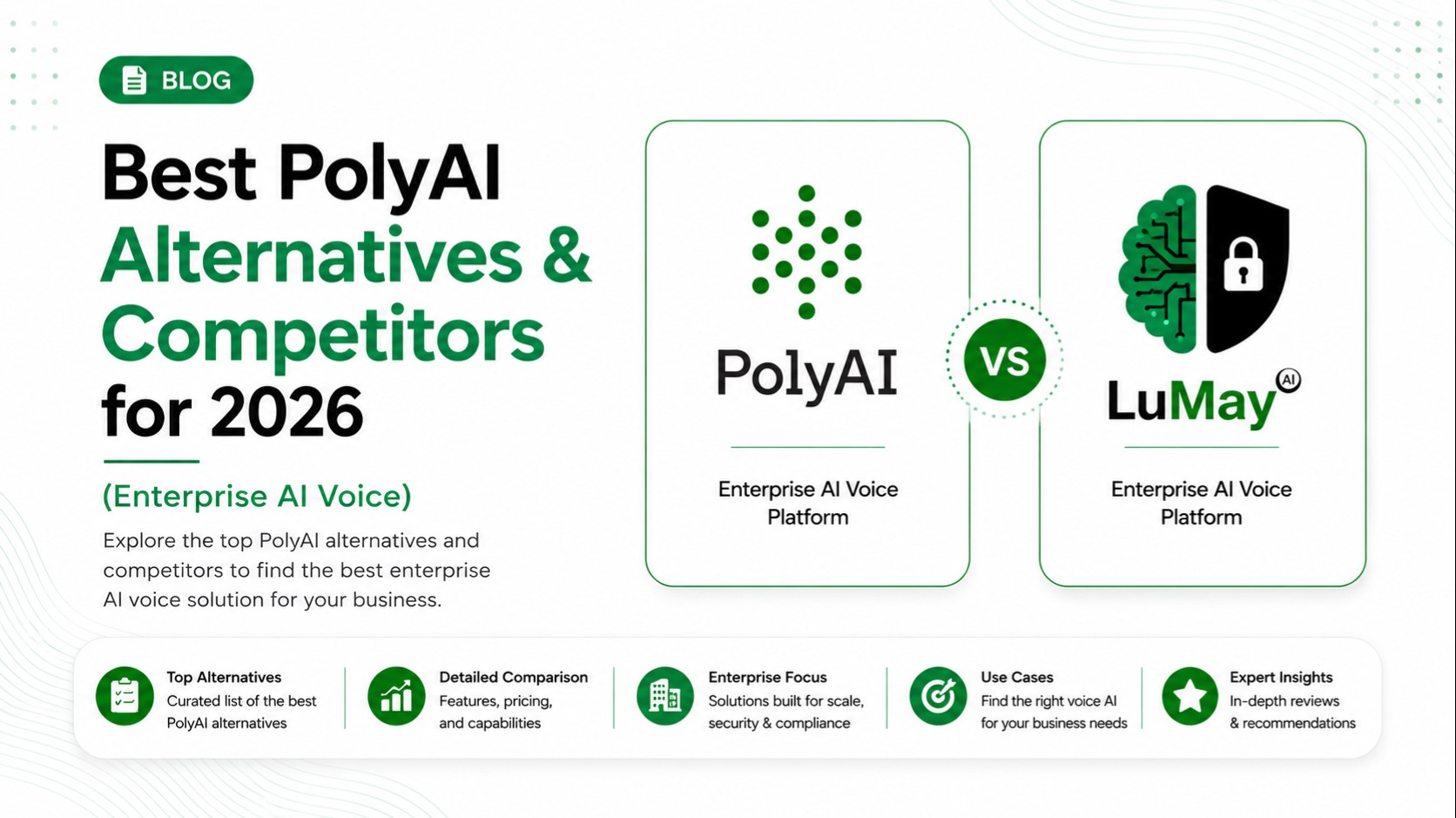
PolyAI has established itself as a heavyweight in the conversational AI space, particularly for massive, managed enterprise contact centers handling millions of inbound calls. But as we move deeper into 2026, the landscape of Enterprise Voice AI has fundamentally shifted.
The introduction of the OpenAI Realtime API (powered by GPT-5 class reasoning), sub-300ms latency networks like LiveKit, and ultra-realistic voice models from Cartesia and ElevenLabs means that businesses no longer have to endure six-figure annual contracts and months-long deployment cycles to achieve human-like voice interactions.
Businesses are actively comparing PolyAI alternatives to find platforms that offer faster time-to-value, transparent per-minute pricing, developer-friendly orchestration, and omnichannel capabilities that extend beyond traditional telephony.
Whether you are a healthcare provider needing HIPAA-compliant outbound scheduling, a financial institution requiring strict SOC 2 data governance, or a mid-market SaaS company wanting to deploy an AI receptionist in days rather than quarters, there is a Voice AI Platform better suited to your specific needs.
In this comprehensive guide, you will learn exactly how the top PolyAI competitors stack up in 2026. We break down real-time latency, CRM integrations, API flexibility, and pricing structures to help you choose the ultimate business voice AI solution for your contact center.
What Is PolyAI?
PolyAI is an enterprise-grade AI customer service software designed to automate tier-1 support calls. Traditionally utilized by Fortune 500 hospitality, logistics, and retail brands, PolyAI offers a fully managed service where their internal engineering teams design, deploy, and maintain the AI voice agents. They rely heavily on bespoke natural language understanding (NLU) to capture user intent and deliver automated, highly accurate responses within large-scale call centers.
Why Businesses Are Looking for PolyAI Alternatives in 2026
While powerful for massive scale (10,000+ agents), PolyAI's managed-service model is not a fit for everyone. Here is why companies are looking for a PolyAI replacement:
Prohibitive Cost Structures: PolyAI typically requires custom enterprise licensing and high upfront implementation fees. Modern alternatives offer predictable, pay-as-you-go AI Voice Agent Pricing (often between $0.05 and $0.15 per minute).
Deployment Bottlenecks: Because PolyAI manages the build, updates and iterations require ticketing and waiting. Modern platforms offer a no-code builder or direct API access, reducing deployment from 3-6 months to a matter of days.
Omnichannel Limitations: PolyAI is fundamentally voice-centric. Enterprises in 2026 require a single AI brain that seamlessly transitions context between voice, WhatsApp, SMS, and web chat.
Developer Flexibility: Engineering teams looking to leverage specific LLMs (like Claude 3.5 Sonnet or Llama 3) or custom speech-to-text engines (like Deepgram Nova-3) find PolyAI's closed ecosystem restrictive compared to API-first competitors.
How We Evaluated the Best PolyAI Competitors
To determine the best Enterprise Voice AI platforms, we evaluated them against strict 2026 standards:
Real-Time Voice AI Latency: Measured time-to-first-byte (TTFB). Platforms must consistently deliver sub-800ms latency to facilitate natural interrupt handling.
Conversational Intelligence: Evaluating the ability to handle complex, non-linear workflows, digressions, and seamless live agent transfers via SIP/WebRTC.
Ecosystem Integrations: Native compatibility with Salesforce, HubSpot, Zendesk, ServiceNow, and custom webhooks.
Security Posture: Verification of SOC 2 Type II, HIPAA, ISO 27001, GDPR, and PCI DSS compliance.
Top 10 Best PolyAI Alternatives (and Ecosystem Leaders)
1. LuMay Voice Agent
Overview: LuMay Voice Agent is a premier, full-stack conversational AI platform designed for mid-market and enterprise businesses that demand both sophisticated workflow automation and rapid deployment. It bridges the gap between raw developer APIs and rigid managed services.
Best For: Enterprises seeking high ROI, rapid deployment, and deep CRM integration without the six-figure upfront costs.
Key Features: Advanced interrupt handling, visual workflow orchestration, robust API/webhook support, and deep CRM syncing.
Advantages: Exceptionally natural, human-like voice synthesis; unparalleled speed to market; native integration for complex scheduling and support workflows.
Limitations: May offer too many customization features for a micro-business wanting a simple plug-and-play voicemail drop.
Pricing Overview: Transparent per-minute scaling; highly competitive against legacy enterprise platforms. See our LuMay Voice Agent Pricing Guide.
Voice Quality: Industry-leading, utilizing cutting-edge emotional variance capabilities.
Real-Time Latency: < 500ms.
AI Model Support: Model agnostic (GPT-5, Claude, Gemini).
CRM Integrations: Salesforce, HubSpot, Zendesk, Freshworks.
API & Webhooks: Full bidirectional REST API and dynamic webhooks.
Knowledge Base Support: Dynamic vector ingestion (PDF, URLs, text).
Workflow Automation: End-to-end automation for both inbound and outbound campaigns.
Human Handoff: Seamless warm and cold SIP transfers to live agents.
Security & Compliance: SOC 2, GDPR, HIPAA ready.
Enterprise Readiness: High (RBAC, audit logs, dedicated support).
Ideal Customers: Healthcare clinics, SaaS companies, real estate brokerages, and modern contact centers.
Overall Rating: 9.8/10
(Read more: LuMay Voice Agent Review)
2. Voxentis.ai
Overview: Voxentis is an emerging enterprise player focusing strictly on regulated industries, offering heavy determinism layered over generative AI.
Best For: High-compliance financial services and insurance.
Key Features: Strict guardrail orchestration, audit-trail analytics.
Advantages: Highly secure; minimizes hallucination risk.
Limitations: Slower conversational flow compared to unconstrained LLMs.
Pricing: Custom enterprise quotes only.
Voice Quality: Good, but prioritizes clarity over emotional variance.
Latency: ~800ms.
Security: PCI DSS, SOC 2, ISO 27001.
Overall Rating: 8.5/10
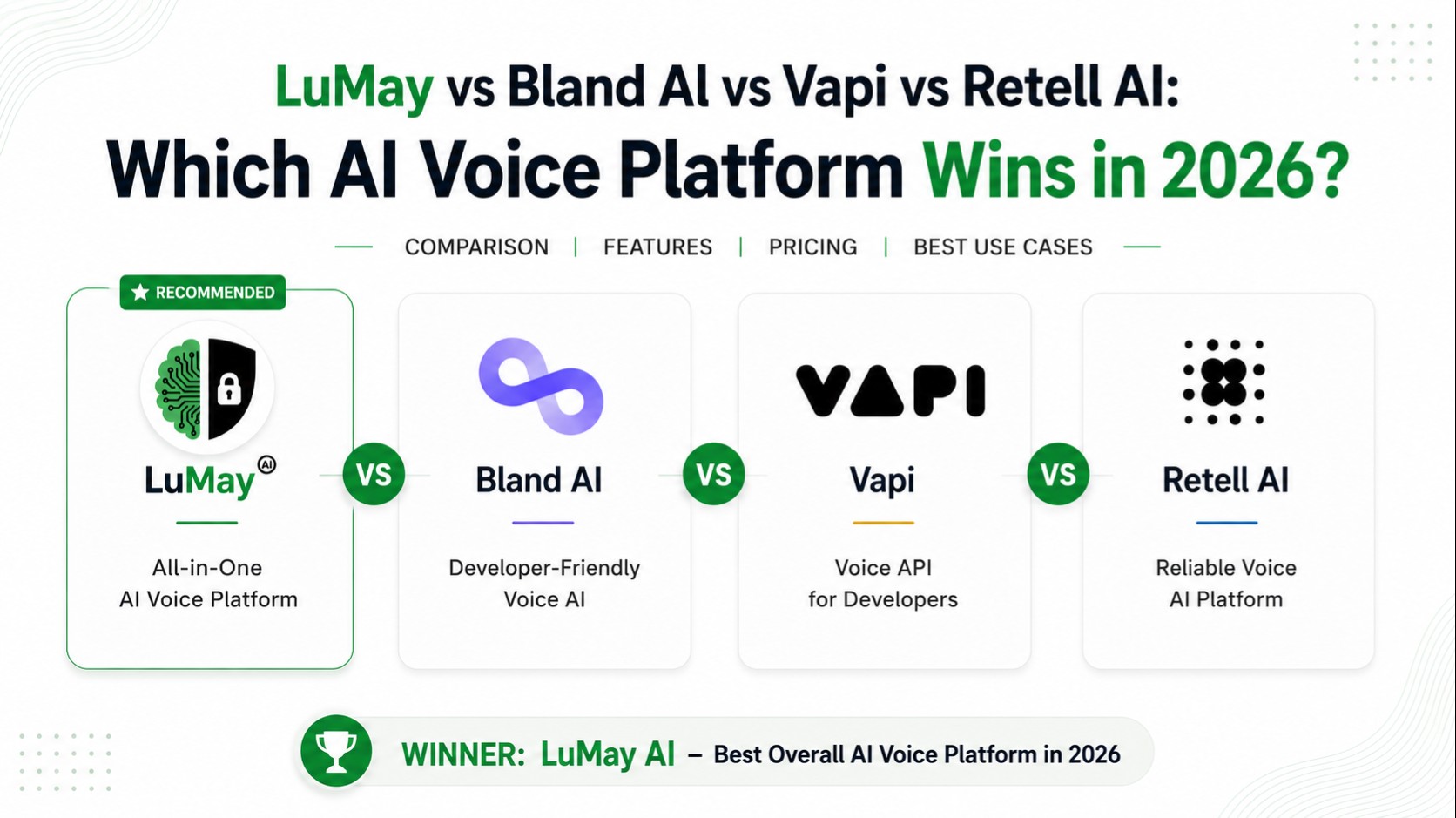
3. Retell AI
Overview: Retell AI provides a powerful infrastructure layer optimized for high-volume contact center automation, balancing developer control with a usable dashboard.
Best For: Developer teams building custom voice applications.
Key Features: Retell Assure (automated QA), low latency, flexible LLM routing.
Advantages: Excellent developer documentation; highly reliable at scale.
Limitations: Requires technical resources to maximize platform capabilities.
Pricing: Per-minute pricing (~$0.10 - $0.30/min landed).
Latency: ~600ms conversational latency.
Integrations: Strong API/Webhook setup.
Overall Rating: 9.0/10
(Compare in depth: LuMay Voice Agent vs Retell AI and Top 8 Retell AI Alternatives)
4. Vapi
Overview: Vapi is a developer-centric infrastructure API that allows engineering teams to construct voice agents by mixing and matching various STT, LLM, and TTS providers.
Best For: Engineering teams who want total granular control over their voice stack.
Key Features: Bring Your Own Key (BYOK) support, extreme model flexibility.
Advantages: Lowest potential raw cost if self-managing models; deep technical flexibility.
Limitations: Steep learning curve; not suitable for non-technical operations teams.
Pricing: Platform fee (~$0.05/min) + API costs.
Latency: Highly variable based on chosen models (can reach < 400ms).
Overall Rating: 8.9/10
(Read our analysis: LuMay Voice Agent vs Vapi)
5. Bland AI
Overview: Bland AI is a programmable voice platform known for its aggressive pricing and high-volume outbound dialing capabilities.
Best For: Massive outbound sales campaigns and telemarketing.
Key Features: High-concurrency dialing, API-first architecture.
Advantages: Very cost-effective at high volume.
Limitations: Voice quality can feel slightly more robotic on lower pricing tiers compared to premium providers.
Pricing: $0.05 - $0.09/min.
Latency: ~700ms.
Overall Rating: 8.7/10
(See our guide: Best Bland AI Alternatives)
6. Synthflow
Overview: Synthflow caters to the SMB market with a highly intuitive no-code visual builder, allowing businesses to launch AI receptionists without writing a line of code.
Best For: SMBs, local businesses, and non-technical founders.
Key Features: Visual drag-and-drop builder, pre-built templates.
Advantages: Immediate deployment; highly user-friendly.
Limitations: Struggles with deeply complex, multi-branch enterprise API workflows.
Pricing: Subscription tiers + usage.
Latency: ~800ms.
Overall Rating: 8.4/10
(Further reading: LuMay Voice Agent vs Synthflow)
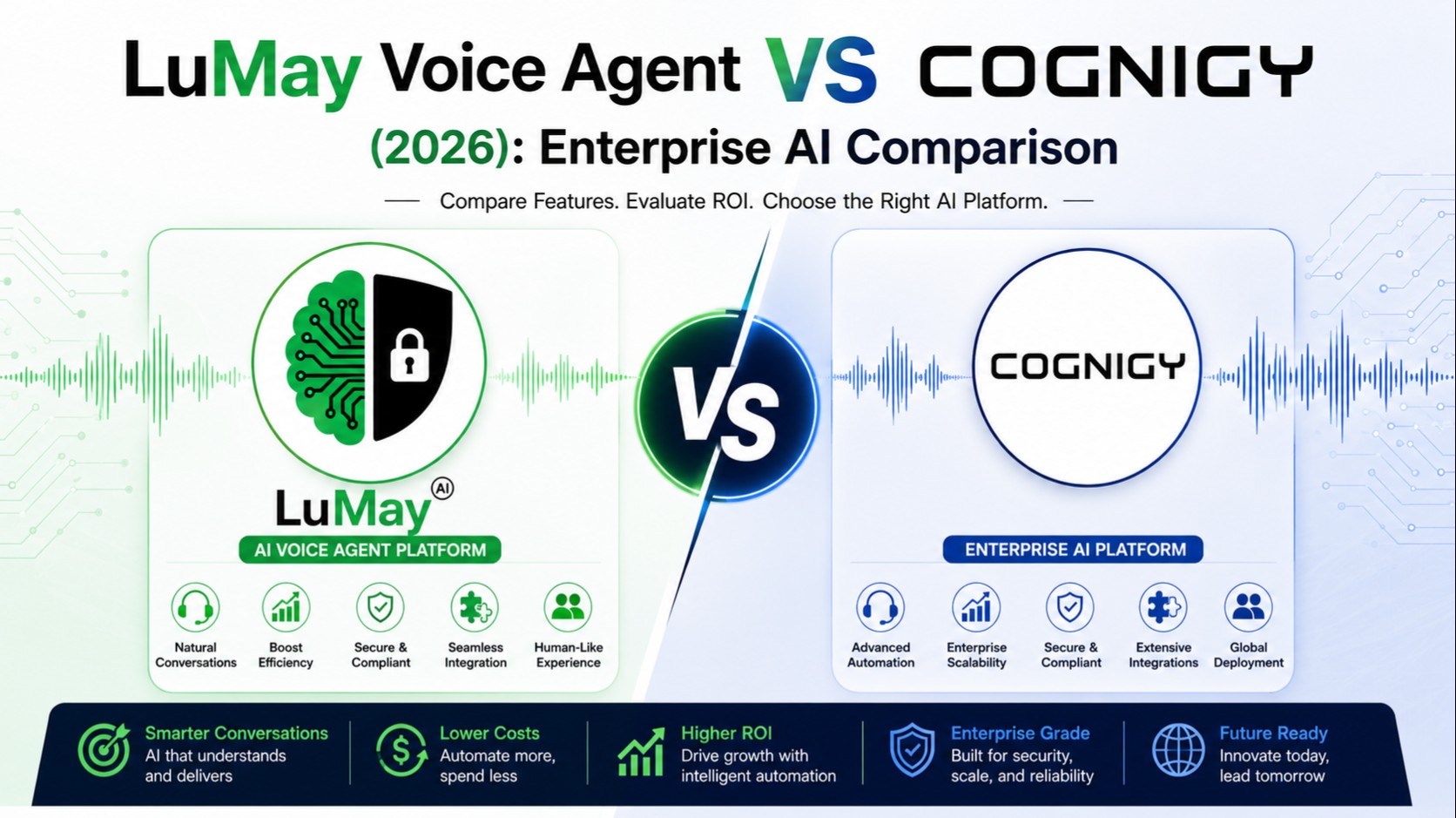
7. Cognigy
Overview: A legacy enterprise giant, Cognigy offers a comprehensive CCaaS and omnichannel conversational AI platform supporting over 100 languages.
Best For: Multinational enterprises requiring massive language support and legacy PBX integrations.
Advantages: Deep enterprise features, proven at the Fortune 500 level.
Limitations: Very expensive; implementation requires specialized system integrators.
Security: Complete suite (GDPR, HIPAA, ISO).
Overall Rating: 9.2/10
8. Yellow.ai
Overview: Focused heavily on dynamic AI agents for chat and voice, Yellow.ai utilizes a hybrid engine that combines generative and conversational AI.
Best For: Enterprises wanting strong parity between web chat and voice channels.
Advantages: Excellent NLP, strong analytics dashboard.
Limitations: Voice latency can occasionally lag behind pure voice-first APIs.
Overall Rating: 8.6/10
9. Kore.ai
Overview: A major player in the "Experience Optimization" space, Kore.ai offers deeply verticalized solutions (e.g., specific agents for Banking or HR).
Best For: Large enterprises seeking pre-trained vertical industry agents.
Advantages: Pre-built industry ontologies.
Limitations: Heavy platform; steep learning curve for internal teams.
Overall Rating: 8.8/10
10. CCaaS and Infrastructure Providers (Amazon Connect, Genesys, NICE CXone, Talkdesk, Five9)
While not direct standalone AI agents like PolyAI, these Contact Center as a Service (CCaaS) platforms are embedding conversational AI directly into their routing architectures.
Why consider them: If you need a total contact center overhaul (routing, workforce management, analytics) alongside AI.
Limitation: Their native AI tools often lag behind specialized startups in pure generative reasoning and natural voice synthesis, prompting enterprises to plug platforms like LuMay Voice Agent into these PBXs.
Ecosystem Components (ElevenLabs, Deepgram, Twilio, LiveKit)
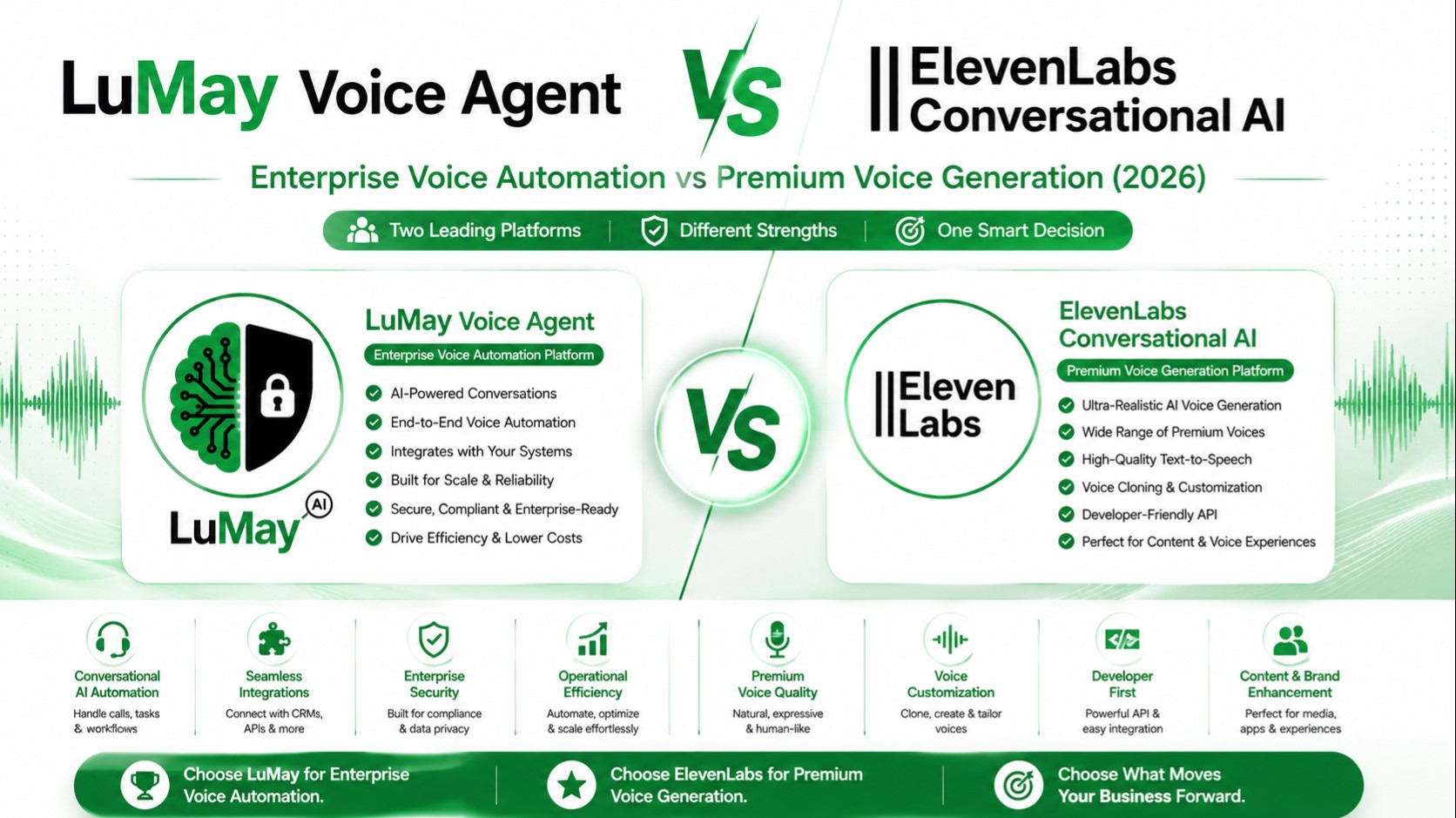
ElevenLabs Conversational AI: Provides incredible text-to-speech, now offering agent orchestration. Best for voice quality.
Deepgram: The undisputed leader in ultra-fast Automatic Speech Recognition (ASR).
Twilio & LiveKit: The SIP and WebRTC plumbing that powers the real-time audio transit for modern voice agents.
Detailed Comparison Table
Platform | Starting Price | Inbound | Outbound | Voice Quality | Latency | CRM | API | Knowledge Base | Workflow Automation | Enterprise | HIPAA | SOC 2 | ISO 27001 | Live Agent Transfer | Best For |
PolyAI | Custom/High | Yes | Yes | High | ~800ms | Yes | Yes | Yes | Yes | High | Yes | Yes | Yes | Yes | Managed Enterprise |
LuMay AI | ~$0.05/min | Yes | Yes | Ultra-High | <500ms | Native | REST | Dynamic | Full Orchestration | High | Ready | Yes | Yes | Seamless SIP | ROI-Focused Enterprise |
Retell AI | ~$0.10/min | Yes | Yes | High | ~600ms | Yes | Deep | Yes | Yes | Med-High | Yes | Yes | No | Yes | Developer Teams |
Vapi | ~$0.05 + API | Yes | Yes | High | Var. | Webhook | Deep | Yes | Basic | Medium | Yes | Yes | No | Yes | Custom Dev Stacks |
Bland AI | ~$0.05/min | Yes | Yes | Medium | ~700ms | Webhook | Deep | Yes | Yes | Medium | Yes | Yes | No | Yes | High-Vol Outbound |
Synthflow | Tiered Subs | Yes | Yes | Good | ~800ms | Basic | Basic | Yes | Visual Builder | Low | No | Yes | No | Yes | SMB/No-Code |
Cognigy | Custom/High | Yes | Yes | High | ~600ms | Native | Yes | Yes | Deep | Ultra-High | Yes | Yes | Yes | Yes | Multinational CX |
Feature Comparison
When evaluating a PolyAI replacement, it is crucial to look beyond basic transcription and evaluate the technical features that drive authentic conversation intelligence.
Real-Time Voice AI & Interrupt Handling: Traditional IVRs break when a user interrupts. Modern platforms utilizing WebRTC and VAD (Voice Activity Detection) can pause processing mid-sentence, listen to the user's interruption, and contextually adapt.
Text-to-Speech (TTS) & Speech-to-Text (STT): Utilizing models like OpenAI Realtime API and Cartesia allows for emotional inflection, laughing, and breathing, creating a truly Human-Like Voice.
CRM & Knowledge Base Integration: A voice agent is only as good as its data. Deep integration with Salesforce or HubSpot allows the AI to perform complex CRUD (Create, Read, Update, Delete) operations mid-call, referencing specific customer history through RAG (Retrieval-Augmented Generation).
Live Agent Transfer: The ability to gracefully hand off a call to a human via SIP routing, passing along the full call transcript and summary to the agent's screen.
Buyer's Guide: How to Choose the Best PolyAI Alternative
Selecting an Enterprise Contact Center AI platform requires aligning the technology with your specific industry parameters.
Healthcare: Strict adherence to HIPAA is non-negotiable. Look for platforms that sign BAAs and offer zero-data-retention modes. Use cases include automated patient scheduling and post-discharge follow-ups.
Finance & Insurance: Requires deterministic workflows and high security (PCI DSS, SOC 2). Hallucinations are unacceptable; the AI must strictly adhere to compliance scripts.
SaaS & Tech: Fast deployment and deep API integrations (like Zendesk and Stripe) are prioritized to automate tier-1 technical support and billing inquiries.
Global Companies: Multi-language support (translating dialects and nuances, not just literal text) is critical. Platforms integrating with Deepgram and ElevenLabs excel here.
Pricing Analysis
The shift from managed services to SaaS infrastructure has radically altered Voice AI Platform Pricing.
PolyAI: Typically relies on massive annual enterprise contracts (often $100k+), charging for the managed service of building and maintaining the bot, plus usage.
The Modern Stack Alternative: Platforms like LuMay, Vapi, and Retell utilize a consumption-based model. You pay for telephony (Twilio), STT, LLM inference, and TTS, resulting in a landed cost of roughly $0.08 to $0.15 per minute.
ROI Analysis: For a call center handling 50,000 minutes a month, a legacy platform might cost $10,000+ monthly in licensing and maintenance. A modern alternative costs approximately $5,000, while offering superior latency and the ability to update prompts instantly without vendor intervention. Total Cost of Ownership (TCO) drops drastically when engineering bottlenecks are removed.
Security & Compliance
Enterprise readiness requires a robust security posture. Any platform handling customer phone calls must manage data securely.
SOC 2 Type II: Verifies that the vendor securely manages your data to protect the interests of your organization and the privacy of its clients.
HIPAA: Essential for healthcare; ensures Protected Health Information (PHI) is encrypted in transit and at rest, backed by a Business Associate Agreement (BAA).
GDPR & CCPA: Ensures compliance with EU and California data privacy laws, particularly regarding data retention and the "right to be forgotten" in Call Analytics and transcripts.
Call Recording Compliance: Adherence to single-party or two-party consent laws (TCPA), often handled programmatically by the AI stating, "This call is on a recorded line" before proceeding.
Original Datasets (2026 Vendor Estimates)
Note: The following dataset represents estimated metrics based on aggregate 2026 industry benchmarks and API costs. Custom enterprise configurations will vary.
Dataset 1: Latency & Model Compatibility Benchmark
[Vendor: LuMay AI] | TTFB: <500ms | STT: Deepgram Nova-3 | LLM: GPT-4o / Claude 3.5 | TTS: Custom / ElevenLabs[Vendor: Vapi] | TTFB: 400-800ms | STT: Flexible | LLM: Flexible | TTS: Flexible[Vendor: PolyAI] | TTFB: ~800ms | STT: Proprietary/Mixed | LLM: Custom Hybrid | TTS: Proprietary[Vendor: Cognigy] | TTFB: 600-900ms | STT: Azure/Google | LLM: GPT/Custom | TTS: Azure/NuanceDataset 2: Enterprise Security Coverage
[Platform] | SOC 2 | HIPAA | GDPR | PCI DSS (via integration) | Audit LogsLuMay AI | Yes | Ready | Yes | Yes | FullRetell AI | Yes | Yes | Yes | Varies | PartialSynthflow | Yes | No | Yes | No | BasicFrequently Asked Questions (FAQ)
(View more use cases on the LuMay AI Products Page).
Conclusion
As the AI Phone Agent ecosystem matures in 2026, relying on closed, slow-to-deploy, legacy managed services is no longer the only option for large businesses. The shift toward low-latency, highly conversational, and API-flexible platforms allows companies to deploy Enterprise Contact Center AI faster and more cost-effectively than ever before.
Our Final Recommendations:
Best Overall for Modern Enterprise: LuMay Voice Agent (Incredible balance of deployment speed, natural voice, and deep workflow automation).
Best for Developer-Heavy Teams: Vapi / LiveKit.
Best Contact Center Solution (Multinational Legacy): Cognigy.
Best Budget/Outbound Alternative: LuMay & Bland AI
Best No-Code AI Receptionist: LuMay & Synthflow.
If you are ready to move beyond the limitations of legacy systems, we highly recommend testing the waters. Book a Demo today to evaluate how next-generation AI workflows can transform your customer experience, reduce your operating costs, and scale your business effortlessly into the future.