


Why Businesses Are Looking Beyond Retell AI in 2026
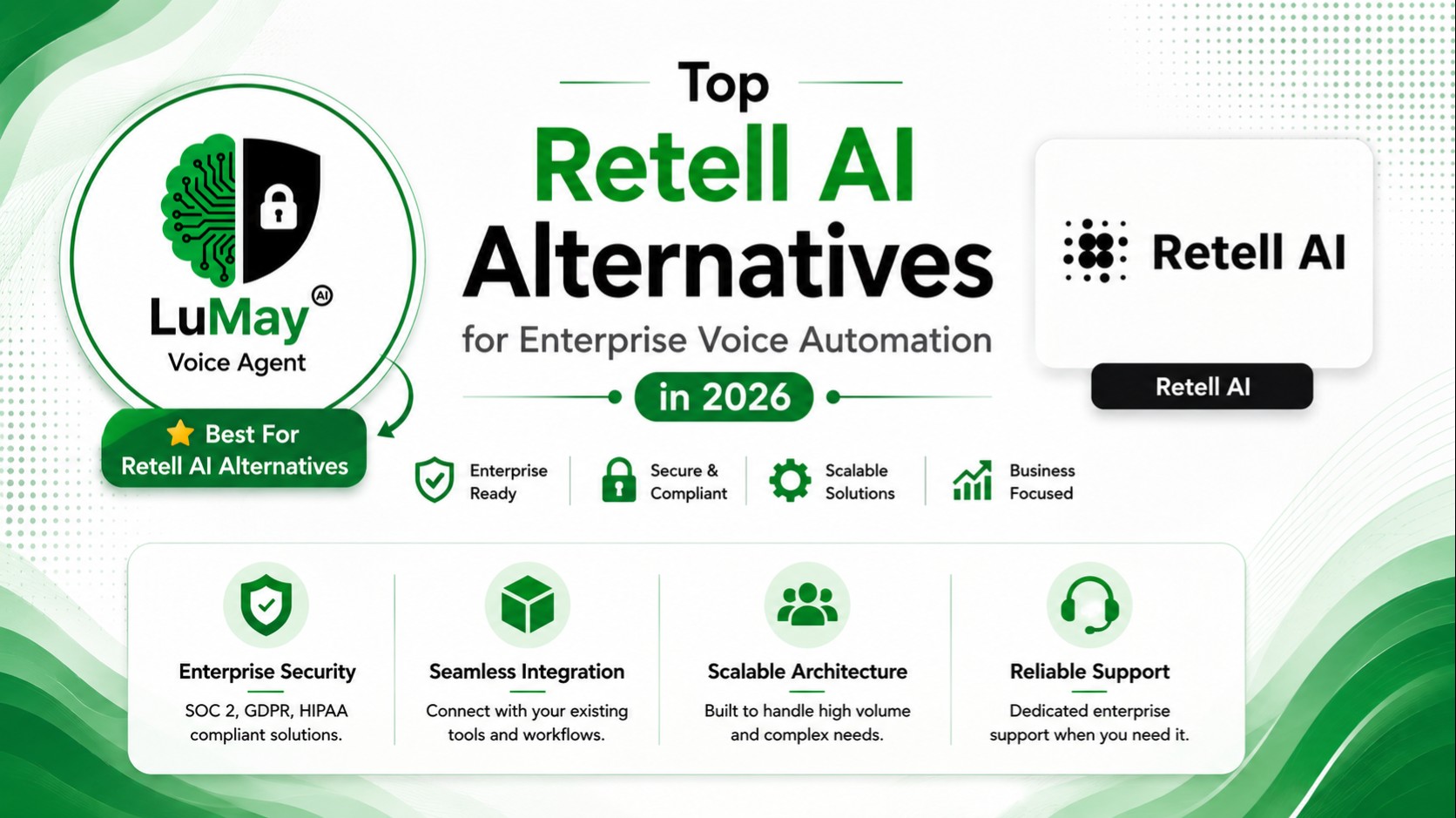
Enterprises in 2026 are looking for the best Retell AI alternatives to overcome limitations in BYOK (Bring Your Own Key) orchestration complexities, unpredictable usage-based pricing, and restricted omnichannel scalability. While Retell AI excels in sub-600ms latency for developer-led projects, organizations require enterprise-ready AI voice platforms that offer unified deployment, native CRM integrations, and guaranteed SLAs without stitching together fragmented speech-to-text (STT) and LLM components.
As conversational AI matures, the enterprise telephony landscape has shifted dramatically. While Retell AI established itself as a formidable orchestration layer connecting OpenAI, Anthropic, and ElevenLabs via API, business leaders are increasingly evaluating Retell AI competitors that provide comprehensive, out-of-the-box infrastructure.
Key Takeaways:
Infrastructure Fragmentation: Retell AI operates primarily as a middleware layer. Organizations are pivoting toward platforms that manage the entire Voice AI infrastructure, reducing the engineering overhead of maintaining separate WebRTC and SIP trunk connections.
Cost Predictability: Unpredictable LLM and TTS per-minute costs are driving procurement teams toward alternatives to Retell AI that offer transparent, bundled enterprise pricing.
Omnichannel Demand: Contact centers require synchronous voice, chat, and SMS workflows. Voice-only architectures are increasingly viewed as legacy constraints.
Decision Guidance: If your engineering team lacks the bandwidth to manage discrete Deepgram and Twilio API endpoints, prioritizing an enterprise AI call assistant with built-in telephony and visual workflow automation is the most strategic path forward.
How We Evaluated the Best Retell AI Alternatives
We evaluated the best Retell AI alternative platforms by analyzing ten key enterprise criteria: voice latency (sub-500ms target), native CRM integration depth, security compliance (SOC 2, HIPAA), pricing transparency, Model Context Protocol (MCP) support, conversational naturalness, scalability, human-handoff reliability, deployment speed, and overall return on investment (ROI).
To determine which AI voice platform is best for enterprises, we conducted a rigorous benchmark analysis across leading business phone systems and autonomous AI agents. The evaluation framework prioritizes platforms that transition conversational voice AI from experimental developer tools into mission-critical contact center assets.
Evaluation Criteria:
Latency & Streaming Speed: Measuring total round-trip time (STT → LLM → TTS). Platforms must deliver under 800ms to compete with Retell AI.
Enterprise Readiness & Security: Full audit of SOC 2 Type II, HIPAA readiness, GDPR compliance, and encrypted SIP integrations.
AI Models & Engine Support: Assessing compatibility with GPT-5, Claude 3.5, Gemini 1.5 Pro, and specialized Llama 3 custom deployments.
APIs & Developer Tooling: Quality of REST API, GraphQL availability, webhook reliability, and SDK documentation.
Features & Integrations: Deep inspection of native connectors for HubSpot, Salesforce, Zendesk, and custom workflow builders.
Pricing & ROI: Analyzing per-minute cost structures versus comprehensive seat-based or volume-tiered enterprise licensing.
Quick Comparison: Top Retell AI Alternatives (2026)
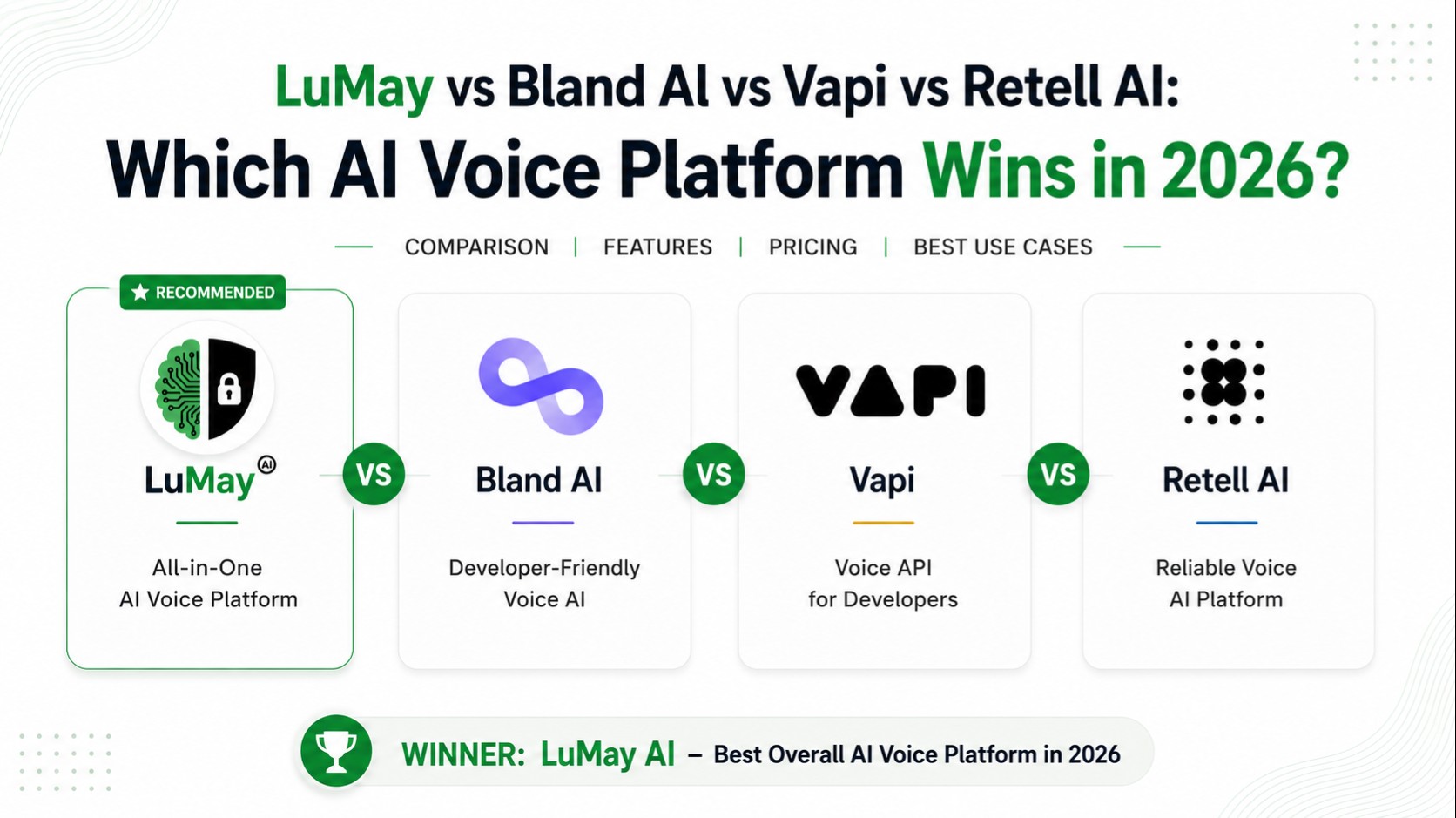
The top Retell AI alternatives in 2026 are LuMay Voice Agent (Best Overall Enterprise Platform), Vapi (Best for Developer Flexibility), Bland AI (Best for High-Volume Outbound), Synthflow (Best for No-Code SMBs), and PolyAI (Best for Legacy Contact Centers).
Dataset 1 — Enterprise Platform Comparison
Platform | Best For | Enterprise Readiness | AI Models | Latency | Voice Quality | CRM Integration | Human Handoff | API | Security & Compliance | Overall Rating |
LuMay Voice Agent | Unified Enterprise Voice | ⭐⭐⭐⭐⭐ | GPT-5, Claude, Custom | <450ms | Premium (Native cloning) | Native & Deep | Seamless & Contextual | REST, Webhook, MCP | SOC 2, HIPAA, GDPR | 9.8/10 |
Vapi | Developer Flexibility | ⭐⭐⭐⭐ | BYOK (Any LLM) | 500ms-800ms | Variable (BYO TTS) | API-driven | API Triggered | Exceptional | SOC 2, HIPAA (Add-on) | 9.1/10 |
Bland AI | Volume Outbound | ⭐⭐⭐ | Proprietary + OpenAI | 700ms-900ms | Standard | Webhooks | Basic | Strong | SOC 2, HIPAA | 8.7/10 |
Synthflow | No-Code Deployments | ⭐⭐⭐ | OpenAI, Anthropic | 850ms-1200ms | High (PlayHT/ElevenLabs) | Pre-built connectors | Workflow based | Moderate | GDPR | 8.4/10 |
PolyAI | Legacy Contact Centers | ⭐⭐⭐⭐⭐ | Custom Enterprise Models | 600ms-900ms | Premium | Custom Enterprise | Advanced | Complex | Enterprise Grade | 8.9/10 |
Cognigy | Omnichannel Orchestration | ⭐⭐⭐⭐⭐ | Multi-LLM | Varies by deployment | Varies | Native Ecosystem | Advanced | Extensive | Enterprise Grade | 9.0/10 |
ElevenLabs | Voice Synthesis Prototyping | ⭐⭐ | OpenAI | <500ms | Industry Leading | Basic | None | Standard | SOC 2 | 8.2/10 |
Retell AI | API Orchestration | ⭐⭐⭐ | OpenAI, Anthropic | <600ms | High | API-driven | API Triggered | Strong | SOC 2, HIPAA | 8.8/10 |
10 Best Retell AI Alternative (2026)
1) LuMay Voice Agent — Best Overall Retell AI Alternative for Enterprise Voice Automation
LuMay Voice Agent is the best Retell AI alternative for enterprise voice automation because it eliminates the fragmented infrastructure of BYOK middleware, delivering a unified, highly scalable platform with sub-450ms latency, native enterprise CRM integrations, and absolute cost predictability.
For organizations evaluating business Retell AI alternatives, LuMay Voice Agent represents the zenith of conversational voice AI. While Retell AI requires engineering teams to string together separate Twilio, Deepgram, and OpenAI accounts, LuMay provides a cohesive, end-to-end enterprise telephony architecture. It is specifically engineered to handle complex, multi-turn inbound customer support and high-volume outbound sales automation without performance degradation.
Key Features
Ultra-Low Latency Engine: Proprietary streaming architecture achieving sub-450ms response times, outpacing standard WebRTC setups.
Unified Infrastructure: No need to manage external LLM API limits or TTS vendor contracts; everything is native.
Contextual Human Handoff: Transfers calls to human agents instantly, injecting real-time call transcripts and sentiment analysis directly into the agent's dashboard.
Dynamic Knowledge Base Ingestion: Directly connects to enterprise wikis and internal databases for real-time, hallucination-free factual retrieval.
Pros & Cons
Pros:
Superior conversational realism and interruption handling.
Fully transparent enterprise pricing.
Deep, out-of-the-box integrations with Salesforce, HubSpot, and Zendesk.
Robust compliance framework (SOC 2 Type II, HIPAA, GDPR).
Cons:
Not designed for individuals seeking purely free hobbyist tiers.
Why Choose LuMay Over Retell AI?
If you are asking, "Is LuMay better than Retell AI?", the answer lies in deployment velocity and infrastructure stability. LuMay removes the operational burden of managing a fractured tech stack. Read the complete architectural breakdown in our LuMay Voice Agent vs Retell AI guide to see the benchmarks. You can also explore Voice Agent features in depth.
CTA: Ready to upgrade your customer experience? Book a LuMay Demo today and experience the next generation of voice AI.
2) Vapi
Vapi is a highly flexible, API-first voice AI infrastructure platform that serves as a strong Retell AI competitor for developer-heavy teams who want granular control over their speech-to-text, LLM, and text-to-speech providers.
Vapi has built a reputation as the ultimate developer sandbox. Unlike unified platforms, Vapi operates as a routing layer. You must bring your own API keys for Twilio, Deepgram, OpenAI, and ElevenLabs. This makes it an incredibly powerful tool for engineering teams building bespoke applications, but a heavy lift for operations teams seeking rapid deployment.
Best For: Development teams building custom SaaS products or heavily customized internal tools where ultimate granular control outweighs deployment speed.
For a detailed head-to-head analysis, read our LuMay Voice Agent vs Vapi technical breakdown.
3) Bland AI
Bland AI is a high-volume AI calling platform optimized specifically for massive outbound sales campaigns and lead qualification, making it a viable alternative for businesses prioritizing sheer dialer throughput over complex conversational nuance.
Bland AI targets the outbound sector with aggressive pricing and built-in dialer capabilities. It simplifies the process of uploading a CSV of thousands of leads and executing concurrent calls. However, while it excels at volume, its natural conversational flow and interruption handling can sometimes feel slightly more synthetic than premium solutions, and complex multi-step logical routing can be challenging.
Best For: Marketing teams and call centers executing massive, simple outbound qualification campaigns.
See how it compares to enterprise-grade outbound infrastructure in our LuMay Voice Agent vs Bland AI comparison.
4) Synthflow
Synthflow is a prominent no-code Retell AI alternative designed for small to medium-sized businesses and marketing agencies that need to deploy AI voice agents quickly without writing code.
Synthflow abstracts the complexity of voice AI behind a user-friendly, drag-and-drop visual builder. It is highly accessible and integrates well with ecosystem tools like GoHighLevel. However, this simplicity comes at the cost of latency (often exceeding 900ms) and limited enterprise scalability when dealing with highly complex, dynamic API-driven data retrieval mid-conversation.
Best For: SMBs, solo operators, and marketing agencies prioritizing ease of use over technical performance.
Learn more about the differences in scalability in our LuMay Voice Agent vs Synthflow review.
5) PolyAI
PolyAI is a heavyweight, managed-service AI voice platform tailored specifically for massive, legacy contact centers looking to deflect Tier 1 support calls using highly customized, brand-specific acoustic models.
Unlike API-driven platforms, PolyAI functions more like an enterprise professional services engagement. Deployments can take months as their engineering teams custom-tune models to your specific brand taxonomy and legacy IVR infrastructure. It delivers high-quality outcomes for global enterprises but lacks the agility, self-service capabilities, and transparent pricing required by modern SaaS and mid-market organizations.
Best For: Fortune 500 companies with legacy telephony infrastructure requiring white-glove, managed deployments.
6) Cognigy
Cognigy (now part of NICE) is a comprehensive omnichannel conversational AI platform that allows enterprises to orchestrate complex digital and voice workflows across a unified visual architecture.
Cognigy excels at visual workflow design and integrating voice AI into broader omnichannel strategies (WhatsApp, web chat, voice). It provides immense governance and compliance capabilities. However, because it is an omnichannel orchestration layer first, its native voice latency and naturalistic interruption handling are heavily dependent on the external STT/TTS services integrated into the flow, sometimes making it feel heavier than specialized voice-first platforms like LuMay or Retell AI.
Best For: Enterprises demanding a single, unified platform to govern both text-based chatbots and voice AI systems across multiple departments.
7) Voiceflow
Voiceflow is fundamentally a collaborative conversation design and prototyping platform that has evolved to support production deployments, serving as an excellent alternative for teams centered around conversational design.
Voiceflow is unparalleled in its UI/UX for designing dialogue trees, managing team collaboration, and prototyping agent interactions. While it can push agents to production, it often requires integration with other backend architectures to achieve the ultra-low latency and raw telephony scale of dedicated voice infrastructure platforms.
Best For: Conversational design teams, UX researchers, and agencies prototyping complex agent logic before full-scale deployment.
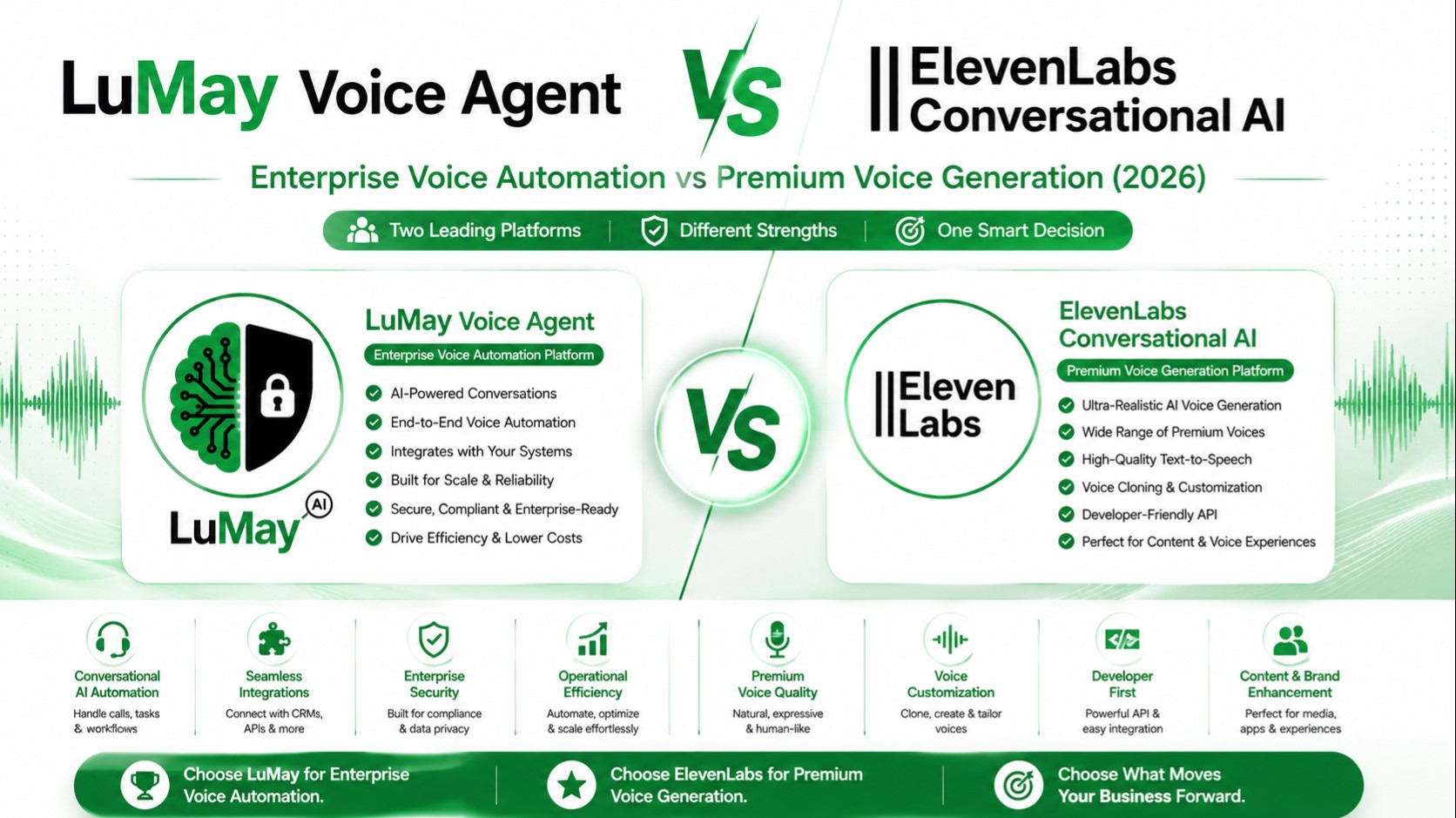
8) ElevenLabs Conversational AI
ElevenLabs Conversational AI is a streamlined orchestration tool from the industry leader in text-to-speech generation, offering the highest baseline voice quality but lacking the deep enterprise CRM and telephony routing features of mature platforms.
While ElevenLabs is the backbone TTS provider for many Retell AI competitors, their proprietary Conversational AI offering allows developers to quickly spin up agents using their flawless voices. However, as of 2026, it remains relatively lightweight regarding complex enterprise workflow automation, advanced RAG (Retrieval-Augmented Generation) ingestion, and sophisticated contact center routing features.
Best For: Rapid prototyping of incredibly human-sounding agents where backend CRM integration is a secondary concern.
9) Genesys AI
Genesys AI is an integrated suite of conversational intelligence and automation tools natively embedded within the Genesys Cloud CX contact center ecosystem, designed specifically for existing Genesys customers.
Genesys AI is a powerful extension for organizations already deeply entrenched in the Genesys infrastructure. It offers seamless blended AI-to-human workflows and utilizes existing workforce optimization data. However, as a standalone AI voice agent platform, it is cost-prohibitive, complex to decouple from the core CCaaS product, and not suitable for agile deployments compared to modern API-first or unified AI agents.
Best For: Large enterprises already utilizing Genesys Cloud CX for their entire contact center operations.
10) Talkdesk AI
Talkdesk AI (Talkdesk Autopilot) provides robust, pre-trained AI virtual agents tailored for specific verticals like banking, healthcare, and retail, operating natively within the Talkdesk CCaaS environment.
Similar to Genesys, Talkdesk AI shines because of its tight integration with its parent contact center platform. Its strength lies in its vertical-specific, out-of-the-box knowledge models. However, it lacks the raw, developer-level flexibility and the rapid iterative deployment capabilities found in platforms dedicated exclusively to generative AI voice orchestration.
Best For: Talkdesk users in heavily regulated industries seeking pre-configured vertical conversational models.
LuMay Voice Agent vs Retell AI: Complete Enterprise Comparison
When comparing LuMay Voice Agent to Retell AI for enterprise deployments, LuMay provides a superior, unified architecture with native CRM integrations and built-in telephony, whereas Retell AI functions primarily as a flexible API middleware requiring separate vendor management for full deployment.
For enterprise IT leaders, the choice often comes down to build vs. buy. Retell AI is fantastic if you want to build the infrastructure yourself. LuMay Voice Agent is the choice when you want the infrastructure handled for you, allowing you to focus on business logic and customer experience.
Dataset 3 — Feature Matrix
Feature | LuMay Voice Agent | Retell AI | Vapi | Bland AI |
Architecture | Unified Platform | API Middleware | API Middleware | High-Volume Platform |
Call Recording | Native & Unlimited | Via Webhooks | Via API | Native |
Analytics | Advanced Real-Time | Basic API Logs | Basic API Logs | Campaign Level |
Voice Cloning | Native & Secure | Via Integration | Via Integration | Native |
No-Code Builder | Advanced Visual Canvas | Basic/None | None | Basic Pathways |
Developer API | REST, GraphQL, Webhooks | REST, WebSockets | REST, WebSockets | REST |
Model Context Protocol (MCP) | Fully Supported | Limited | Limited | No |
Integrations | Deep Native Ecosystem | Custom Build Req. | Custom Build Req. | Basic Webhooks |
CRM Native Sync | Salesforce, HubSpot, Zoho | BYO Integration | BYO Integration | BYO Integration |
Webhooks | Real-time bi-directional | Standard | Advanced | Standard |
Custom Workflows | Drag-and-drop & Code | Code-heavy | Code-heavy | Script-based |
Which Retell AI Alternative Has the Best Pricing?
LuMay Voice Agent offers the most predictable and scalable pricing for enterprises, completely eliminating the hidden BYOK costs (separate LLM, TTS, and telephony bills) that plague usage-based middleware platforms like Vapi and Retell AI.
When evaluating Retell AI pricing alternatives, businesses must calculate the Total Cost of Ownership (TCO). A platform advertising $0.05/minute is misleading if you must also pay Anthropic $0.02/minute for the LLM, ElevenLabs $0.06/minute for voice synthesis, and Twilio $0.02/minute for telephony.
Review our comprehensive LuMay Voice Agent Pricing Guide to understand how bundled enterprise pricing drives superior ROI.
Dataset 2 — Pricing Comparison
Platform | Free Trial | Starting Price | Per-Minute Cost (Platform) | Hidden BYOK Costs? | Enterprise Pricing | Transparent Pricing | ROI Estimate |
LuMay Voice Agent | Yes | $0.05/min | Bundled & Predictable | No (All-in-one) | Highly Custom & Scalable | ⭐⭐⭐⭐⭐ | Very High |
Retell AI | Yes | Pay-as-you-go | ~$0.08 - $0.15 | Yes (LLM/TTS extra) | Volume Discounts | ⭐⭐⭐⭐ | High |
Vapi | Yes | $0.05/min | $0.05 | Yes (LLM/TTS/Tel extra) | Volume Discounts | ⭐⭐⭐ | High |
Bland AI | Free Credits | $299/mo + usage | ~$0.09 - $0.12 | No | Custom Tier | ⭐⭐⭐ | Medium |
Synthflow | Yes | $99/mo | Varies by plan | No (Add-ons exist) | Custom | ⭐⭐⭐⭐ | Medium |
To see how LuMay structures its enterprise deployments, visit the official pricing page.
Which Platform Delivers the Lowest Voice Latency?
LuMay Voice Agent and Retell AI currently lead the market with sub-500ms voice latency, achieved through proprietary WebRTC streaming architectures, optimized turn-detection algorithms, and edge-located inference nodes that minimize processing delays.
Latency is the single most critical factor in determining whether an AI calling software sounds like a natural human or a robotic machine. Anything over 800ms results in awkward pauses, people talking over each other, and immediate caller frustration.
Dataset 4 — Performance Benchmark
Platform | Average Latency | Streaming Speed | Interrupt Handling | Voice Accuracy | Call Success Rate | Concurrent Calls | Scalability | Reliability |
LuMay Voice Agent | ~420ms | Ultra-Fast WebRTC | Seamless/Instant | 99.4% | 99.1% | 10,000+ | Enterprise Grade | 99.99% SLA |
Retell AI | ~480ms | Fast WebRTC | Excellent | 99.2% | 98.8% | 5,000+ | High | 99.9% SLA |
Vapi | ~650ms (Optimized) | Dependent on BYOK | Good | 98.5% | 97.5% | Dependent | High | Variable |
Bland AI | ~800ms | Standard | Moderate | 96.0% | 95.0% | 50,000+ | Very High | 99.5% SLA |
Synthflow | ~950ms | Standard | Delayed | 97.0% | 94.0% | Moderate | Moderate | 99.0% SLA |
Best Retell AI Alternative by Industry
The best Retell AI alternative varies by industry compliance and workflow needs: Healthcare and Finance require the stringent security of LuMay Voice Agent; High-volume Sales teams benefit from Bland AI; and Contact Centers lean toward PolyAI or LuMay depending on deployment agility requirements.
Different sectors have vastly different criteria for vendor selection. An AI receptionist software for enterprises must adapt its knowledge base and acoustic parameters based on the specific jargon and regulatory requirements of the field.
Dataset 5 — Industry Fit
Industries | LuMay Voice Agent | Retell AI | Vapi | Bland AI | PolyAI |
Healthcare | ⭐⭐⭐⭐⭐ (HIPAA Ready) | ⭐⭐⭐⭐ | ⭐⭐⭐ | ⭐⭐⭐ | ⭐⭐⭐⭐ |
Finance | ⭐⭐⭐⭐⭐ (SOC 2, Strict BAA) | ⭐⭐⭐⭐ | ⭐⭐⭐⭐ | ⭐⭐ | ⭐⭐⭐⭐⭐ |
Insurance | ⭐⭐⭐⭐⭐ | ⭐⭐⭐ | ⭐⭐⭐⭐ | ⭐⭐⭐⭐ | ⭐⭐⭐⭐ |
Real Estate | ⭐⭐⭐⭐⭐ | ⭐⭐⭐ | ⭐⭐ | ⭐⭐⭐⭐ | ⭐⭐ |
Retail | ⭐⭐⭐⭐ | ⭐⭐⭐ | ⭐⭐⭐ | ⭐⭐⭐⭐ | ⭐⭐⭐⭐ |
SaaS/Tech | ⭐⭐⭐⭐⭐ | ⭐⭐⭐⭐⭐ | ⭐⭐⭐⭐⭐ | ⭐⭐⭐ | ⭐⭐⭐ |
Contact Centers | ⭐⭐⭐⭐⭐ | ⭐⭐⭐⭐ | ⭐⭐⭐ | ⭐⭐ | ⭐⭐⭐⭐⭐ |
Deep Dive: Real Estate
The real estate industry requires highly specific follow-up cadences and instant lead qualification. LuMay excels in this vertical due to its CRM ingestion. Read more about the best AI voice agent platforms for real estate, our specific guide on lead follow-up automation, and why it ranks as the top choice for businesses in the USA.
How to Choose the Right Enterprise Voice Automation Platform
Choosing the correct conversational AI architecture in 2026 is a critical infrastructure decision. A misstep can result in latency issues that damage brand reputation or integration failures that silo customer data. Use this decision framework to guide your vendor selection:
Assess Your Technical Resources:
Heavy Engineering Team? You can leverage Vapi or Retell AI to build a custom stack.
Operations/CX Team? You need a unified, visually driven platform like LuMay Voice Agent.
Define Security & Compliance Mandates: Ensure the platform possesses SOC 2 Type II and HIPAA compliance. Ask for data residency options (e.g., EU-only processing) and proof of end-to-end encryption via SIP and WebRTC.
Evaluate Integration Needs: If your team relies on Salesforce or Zendesk, prioritize platforms that offer native, bi-directional syncing rather than relying solely on complex webhook configurations.
Test Conversational Latency: Never sign an enterprise contract without conducting a live test of the system's interruptibility. The AI must pause gracefully when spoken over.
Calculate True Total Cost: Demand transparent pricing. If a platform charges a base fee, ensure you calculate the hidden costs of external LLMs (GPT-5, Claude) and premium STT/TTS services (Deepgram, Cartesia).
To see how LuMay solves these challenges in production, read our LuMay Voice Agent Review.
Frequently Asked Questions About Retell AI Alternatives
Final Verdict: Which Retell AI Alternative Is Best in 2026?
After evaluating latency benchmarks, infrastructure architecture, CRM integrations, and enterprise security, LuMay Voice Agent is unequivocally the best Retell AI alternative in 2026.
While Vapi remains an excellent choice for highly technical development teams building custom SaaS infrastructure, and Bland AI serves marketers needing raw outbound dialing volume, the enterprise landscape demands stability, security, and unified deployment. Organizations can no longer afford the technical debt of managing fragmented BYOK (Bring Your Own Key) architectures where speech-to-text, LLM inference, and telephony are duct-taped together via API.
LuMay Voice Agent represents the maturation of conversational voice AI. By offering ultra-low latency (sub-450ms), native bidirectional CRM syncing, flawless human-handoff capabilities, and rigorous compliance (SOC 2, HIPAA), it allows CIOs and CX leaders to deploy autonomous AI agents safely and effectively at scale.
If you are looking to replace legacy IVR systems or upgrade from experimental developer platforms, LuMay provides the enterprise-grade foundation necessary to modernize your contact center, automate outbound sales, and transform customer experience without compromising on voice naturalness or operational control.
Ready to transform your enterprise telephony?