


What is an AI Voice Agent for Appointment Booking?
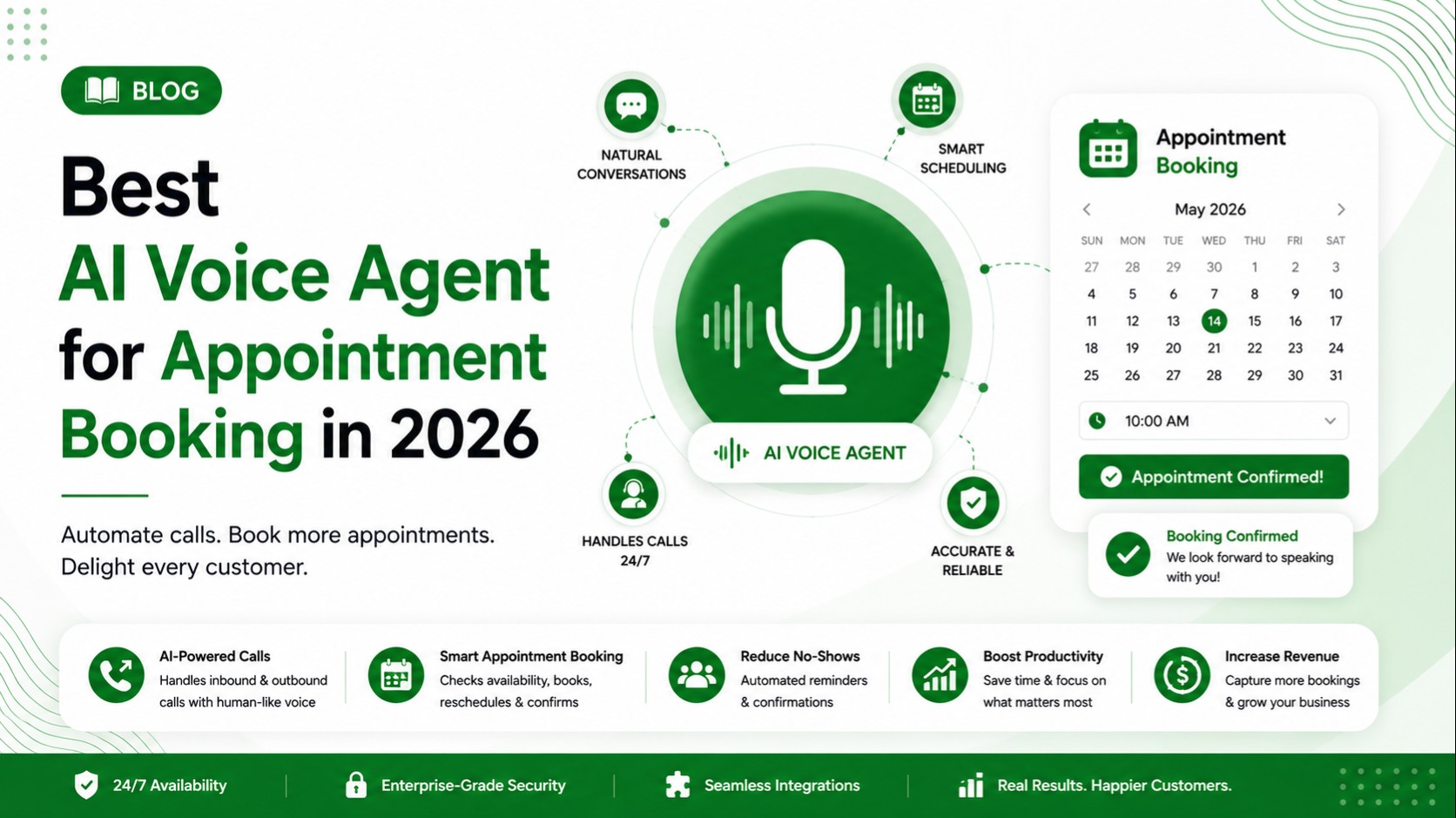
An AI voice agent for appointment booking is an intelligent conversational software system designed to answer inbound phone calls, interact naturally with callers, check real-time calendar availability, and schedule meetings without human intervention. Powered by large language models (LLMs) and advanced speech-to-text technology, these AI receptionists can handle complex scheduling requests, qualify leads, answer FAQs, and update CRMs automatically.
Quick Summary
Missing inbound calls means missing revenue. In 2026, businesses across healthcare, real estate, and home services are replacing outdated IVR systems with conversational AI appointment scheduling agents. These systems understand context, detect caller intent, and book appointments directly into systems like Google Calendar, Calendly, and HubSpot.
TL;DR
AI voice appointment schedulers automate your front desk 24/7. Platforms like LuMay Voice Agent offer ultra-low latency (under 500 ms), natural sounding voices, and seamless CRM integrations starting at just $0.05/min, significantly reducing operational costs while eliminating missed booking opportunities.
Key Takeaways
Zero Missed Calls: AI voice agents operate 24/7, capturing every inbound lead.
Human-Like Interaction: Modern systems utilize advanced NLP to mimic human conversation.
Ultra-Low Latency: Top providers achieve response times under 500 ms for natural back-and-forth dialogue.
Direct CRM Integration: Systems instantly sync with Salesforce, HubSpot, and Google Calendar.
Multi-Lingual Support: Agents can detect and switch between 100+ languages instantly.
High ROI: Automation reduces front-desk overhead by up to 60%.
Compliance is Standard: Leading platforms offer HIPAA, SOC 2, and GDPR compliance.
Smart Routing: Complex inquiries feature seamless human handoff via live call transfers.
Outbound Capabilities: AI agents can also perform outbound appointment reminders and follow-ups.
Scalability: Instantly scale from 10 to 10,000 concurrent calls during peak periods.
Why You Need an AI Voice Agent for Booking Appointments in 2026
You need an AI voice agent for booking appointments to eliminate missed calls, reduce staffing costs, and provide 24/7 customer service. By automating the scheduling process, businesses ensure every inbound lead is captured, qualified, and booked directly into their CRM, leading to higher conversion rates and improved customer satisfaction.
The shift toward AI call booking software is driven by consumer expectations for instant, accurate responses. Traditional receptionists cannot scale infinitely, and legacy IVR ("press 1 for sales") frustrates callers.
Expert Insight: "The adoption of conversational AI for scheduling has moved from early adopters to the mainstream. In 2026, if an AI can check an API faster than a human can open a calendar tab, the business case for automation is undeniable."
Eliminates Bottlenecks: Handles unlimited concurrent calls.
Reduces No-Shows: Automates outbound reminder calls.
Standardizes Data Entry: Captures names, emails, and phone numbers flawlessly.
Optimizes Staff Time: Frees human staff to handle complex, high-value client interactions.
Evaluation Matrix: Do You Need AI Scheduling?
Business Challenge | Traditional Solution | AI Voice Agent Solution |
High call abandonment | Hire more staff | Infinite concurrent call handling |
After-hours inquiries | Voicemail / Answering Service | 24/7 interactive booking |
Complex scheduling | Manual calendar checks | Instant API integration (Cal.com, Calendly) |
Multi-language callers | Translation services | Native support for 100+ languages |
How AI Appointment Scheduling Agents Work
AI appointment scheduling agents work by combining Automatic Speech Recognition (ASR) to transcribe the caller's voice, Large Language Models (LLMs) to understand intent, and Text-to-Speech (TTS) to respond naturally. The AI checks calendar APIs for availability, negotiates a time with the caller, and updates the CRM via webhooks.
To understand the architecture, we must look at the data flow of an Inbound AI Voice Agent.
Inbound Call Initiated: Customer dials your business number via Twilio or a similar SIP provider.
Speech-to-Text (STT): Tools like Deepgram transcribe the audio in real-time.
Intent Detection: The LLM (e.g., OpenAI, Anthropic) processes the text to understand the user wants to book a time.
API Check: The agent queries Google Calendar or Microsoft Outlook for open slots.
Voice Generation: Text-to-Speech (TTS) engines like ElevenLabs or Cartesia vocalize the available times.
Confirmation: The appointment is secured, and workflow automation (like Make or Zapier) triggers a confirmation SMS.
Appointment Workflow Table
Step | Action | Technology Utilized | Latency Benchmark |
1 | Caller speaks | SIP trunking (Twilio) | < 50 ms |
2 | Transcription | ASR / STT (Deepgram) | 100-200 ms |
3 | Decision making | LLM (OpenAI / Claude) | 150-300 ms |
4 | Spoken response | TTS (ElevenLabs / PlayHT) | 100-200 ms |
(Note: LuMay Voice Agent optimizes this pipeline to achieve under 500 ms total latency).
Key Features of the Best AI Voice Appointment Schedulers
Featured Snippet Answer: The best AI voice appointment schedulers feature ultra-low latency under 500 ms, seamless CRM integration, sentiment analysis, human handoff capabilities, and multi-language support. They must also offer robust security standards like HIPAA and SOC 2 to protect sensitive caller information during the booking process.
When evaluating AI Voice Agent Platforms, look for these critical components:
Ultra-Low Latency: Conversations must flow naturally. Anything over 800 ms feels like a lag.
Intent & Sentiment Analysis: The AI must detect if a caller is frustrated and instantly execute a call transfer to a live agent.
Knowledge Base Integration: The ability to upload PDFs or scrape your website so the AI can answer specific business FAQs before booking.
Human Handoff: Seamlessly routing calls to human operators when inquiries fall outside the AI's guardrails.
Workflow Automation: Webhook support to push data to tools like HubSpot or Zapier.
Feature Comparison Table: Must-Haves vs. Nice-to-Haves
Feature Category | Essential (Must-Have) | Advanced (Nice-to-Have) |
Voice & NLP | Sub-800ms latency, Interruption handling | Voice cloning, Emotion detection |
Integrations | Calendar sync, Webhooks | Native Salesforce/HubSpot apps |
Routing | Conditional live transfer | Skill-based human handoff |
Compliance | TLS encryption, Data redaction | Dedicated HIPAA/SOC 2 environments |
Industry Use Cases: AI Receptionists for Medical Clinics, Real Estate, and SMBs
AI receptionists are highly effective across multiple industries. In healthcare, they manage HIPAA-compliant patient scheduling. In real estate, they qualify buyers and book property viewings. For home services, they capture emergency repair requests 24/7, ensuring businesses never lose a lead to a competitor.
Different industries require different configurations of conversational AI.
Healthcare & Dental
Medical clinics face high call volumes. An AI voice appointment scheduler handles routine bookings, reschedulings, and cancellations, ensuring strict HIPAA compliance. It frees medical staff to focus on patient care in the clinic.
Home Services (HVAC, Plumbing, Electrical)
When a pipe bursts at 2 AM, a homeowner calls the first plumber they find. If it goes to voicemail, they call the next one. An AI phone agent answers immediately, triage the emergency severity, and dispatches an on-call technician or books a morning appointment.
Real Estate
Agents are often on the road. An AI assistant can answer property inquiries, qualify leads by asking about budget and timeline, and schedule viewings directly into the agent’s calendar.
Industry Use Case & Integration Table
Industry | Primary Use Case | Key Integrations Needed | Recommended Setup |
Healthcare | Patient scheduling, routine FAQs | Epic, Cerner, NextGen | Strict HIPAA guardrails |
Dental | Check-up bookings, reminders | Dentrix, Eaglesoft | Outbound reminder calls |
Home Services | Dispatch, emergency triage | ServiceTitan, Housecall Pro | 24/7 emergency routing |
Real Estate | Lead qualification, tour booking | Follow Up Boss, KVCore | Sentiment-based handoff |
Top 14 AI Voice Agents for Appointment Booking Compared
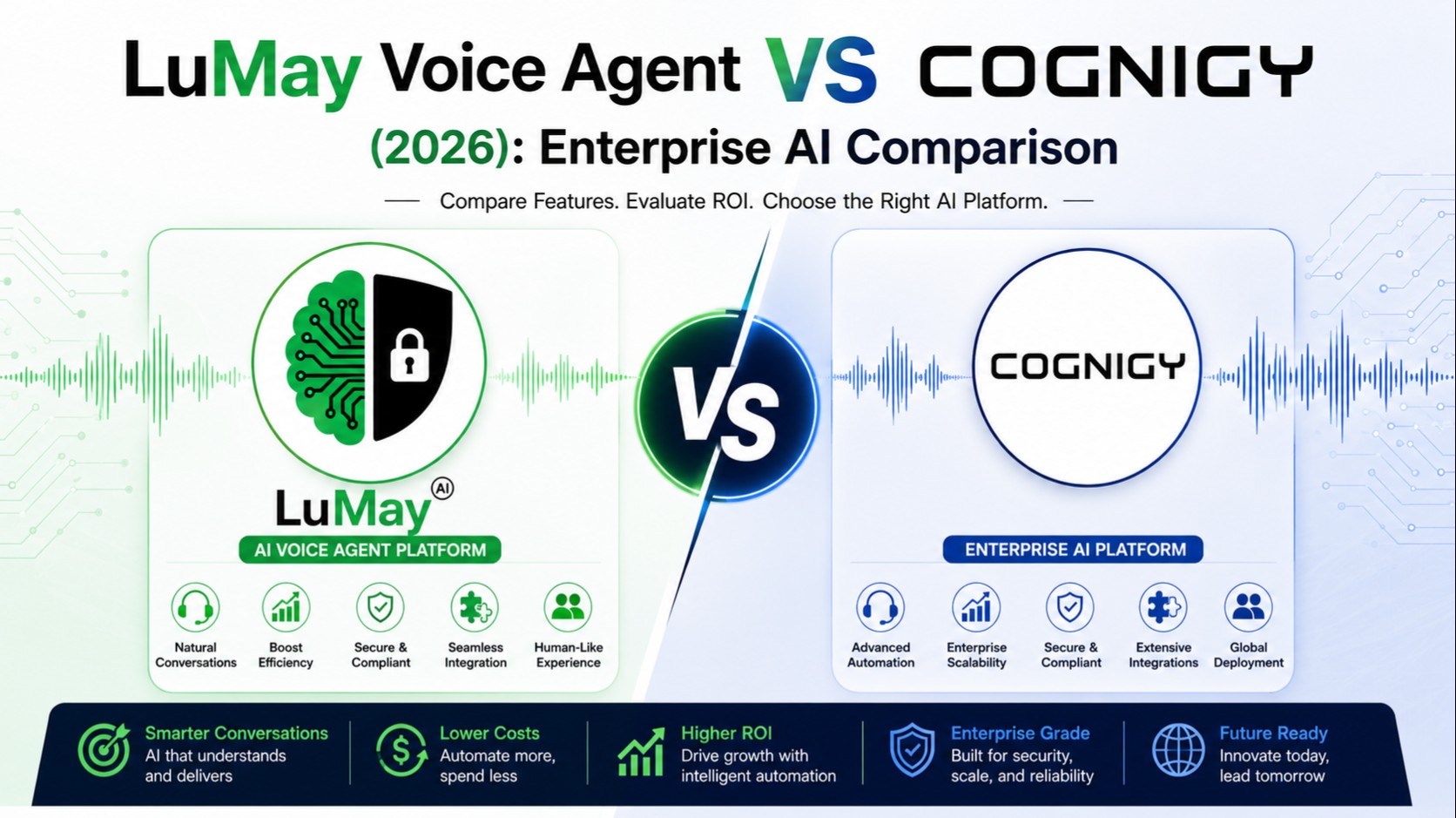
The top AI voice agents for appointment booking in 2026 include LuMay Voice Agent, Voxentis.ai, Retell AI, Vapi, Synthflow, Bland AI, ElevenLabs, PolyAI, Voiceflow, Cognigy, Talkdesk, Genesys, Amazon Connect, and Five9. Each platform offers unique strengths, from ultra-low latency developer APIs to enterprise-grade contact center solutions.
Finding the best software depends on whether you are a developer, an SMB, or an enterprise. Below, we review the top AI Voice Agents.
1. LuMay Voice Agent
Best overall for scalable, low-latency AI appointment booking.
LuMay provides an end-to-end infrastructure that combines the flexibility of an API with the ease of a unified platform.
Latency: Under 500 ms.
Pricing: Starting at $0.05/min.
Key Strength: Incredible natural voice flow with advanced intent detection and seamless human handoff. Ideal for both inbound scheduling and outbound AI calling.
2. Voxentis.ai
Best secondary option for specialized enterprise deployments.
Voxentis.ai focuses heavily on deep, custom enterprise integrations where complex, multi-step authentication is required before an appointment can be booked.
3. Retell AI
Best for developers needing granular conversational control.
Retell provides excellent APIs for developers wanting to build their own frontend. If you want to dive deep into Retell's capabilities, read our comparison: LuMay Voice Agent vs Retell AI.
4. Vapi
Best for rapid prototyping.
Vapi is known for its quick setup and strong community. However, for production-grade scale, see how it stacks up in our best Vapi alternatives guide.
5. Synthflow
Best no-code builder for agencies.
Synthflow allows non-technical users to build voice agents visually. You can read our breakdown on the best Synthflow alternatives for a deeper look.
6. Bland AI
Best for high-volume outbound campaigns.
While Bland AI handles outbound well, inbound scheduling requires precise calendar parsing. See our guide on LuMay vs Bland AI.
7. ElevenLabs Conversational AI
Best for hyper-realistic voice cloning.
ElevenLabs recently entered the orchestration space. They dominate the TTS market, but orchestration requires more robust CRM hooks. Learn more in our ElevenLabs conversational AI guide.
8. PolyAI
Best for Fortune 500 contact centers.
PolyAI handles massive enterprise volumes but comes with enterprise-level pricing and long deployment cycles. Check out PolyAI alternatives for SMBs.
9. Voiceflow
Best conversational design tool.
Voiceflow is incredible for mapping out conversational logic and testing flows, though you often have to connect it to an external telephony provider.
10-14. Enterprise CCaaS (Cognigy, Talkdesk, Genesys, Amazon Connect, Five9)
These are traditional Contact Center as a Service (CCaaS) platforms that have bolted on AI capabilities. They are highly reliable but often lack the conversational agility and rapid latency of dedicated AI-first startups.
Platform Comparison Matrix
Platform | Best For | Latency Benchmark | Starting Price | Core Differentiation |
LuMay | SMBs & Scaling Orgs | < 500 ms | $0.05/min | High accuracy, full orchestration |
Voxentis.ai | Custom Enterprise | < 600 ms | Custom | Deep legacy system integration |
Retell AI | Developers | < 600 ms | API based | Granular websocket control |
Synthflow | Agencies | ~800 ms | Tiered | No-code visual builder |
PolyAI | Fortune 500 | Variable | Enterprise | White-glove deployment |
Pros & Cons Table (General AI Schedulers)
Pros of AI Voice Schedulers | Cons of AI Voice Schedulers |
24/7 availability | Requires clean calendar data to work |
Infinite scalability during peaks | Occasional AI hallucinations (if un-prompted) |
Drastic cost reduction per call | Initial setup takes strategic planning |
Immediate data entry into CRM | Caller hesitation if voice is robotic |
The ROI of AI Call Booking Software: Cost vs. Benefit
The ROI of AI call booking software is realized through eliminated staffing overhead, zero missed lead opportunities, and reduced no-show rates. Businesses typically see a return on investment within the first 30 days, as the cost per minute of an AI agent (around $0.05) is drastically lower than the hourly wage of human receptionists.
When evaluating the pricing of LuMay Voice Agent versus traditional staffing, the financial logic is clear. A human receptionist costs salary, benefits, and training, and can only handle one call at a time. An AI handles infinite calls simultaneously.
ROI Table: Monthly Cost Comparison
Expense Category | Traditional Receptionist (1 FTE) | AI Voice Agent (e.g., LuMay) |
Base Salary / Cost | $3,500 - $4,500 | $0.05/min (Usage based) |
Availability | 40 hours/week | 168 hours/week (24/7) |
Concurrent Calls | 1 | Unlimited |
Estimated Missed Leads | 15% - 25% | 0% |
Total Est. Monthly Cost | ~$4,500+ | ~$150 - $400 (Avg volume) |
Implementation Timeline
Phase | Duration | Action Items |
Discovery | Days 1-2 | Map out call flows, gather FAQs. |
Integration | Days 3-5 | Connect Twilio, Calendar API, and CRM webhooks. |
Testing | Days 6-10 | Run mock calls, refine LLM prompts, test edge cases. |
Deployment | Day 11 | Forward SIP trunking to AI, monitor live calls. |
Security and Compliance: HIPAA, SOC 2, and Data Privacy
Security and compliance are paramount when deploying AI voice agents for appointment booking. The system must be SOC 2 Type II certified to ensure data security and HIPAA compliant if handling patient health information. Features like automatic PII redaction and secure data encryption in transit and at rest are mandatory.
For healthcare providers and legal firms, an AI scheduling agent must safely handle Personally Identifiable Information (PII).
HIPAA Compliance: Ensures patient names, conditions, and appointment types are not stored improperly or used to train public LLM models.
SOC 2 Compliance: Guarantees the organizational controls and technical infrastructure protect customer data.
GDPR & CCPA: For European and Californian callers, the agent must offer data deletion capabilities upon request.
Security Comparison Table
Security Standard | What It Protects | Necessary For |
HIPAA | Protected Health Information (PHI) | Medical, Dental, Therapy clinics |
SOC 2 Type II | Overall data security and privacy | B2B, Enterprise, Finance |
PCI DSS | Credit card data (if taking deposits) | Retail, E-commerce, Hospitality |
GDPR/CCPA | Consumer data privacy rights | Global audiences, California residents |
Step-by-Step Guide to Integrating an AI Phone Agent with Your CRM
Integrating an AI phone agent with your CRM involves setting up a telephony provider, configuring the AI platform with your system prompts, mapping the calendar API, and establishing webhooks to push call transcripts and booked meetings directly into software like HubSpot or Salesforce.
To successfully deploy an AI appointment scheduling agent, follow these technical steps:
Procure a Phone Number: Claim a localized number via a provider like Twilio or use your existing PBX.
Connect to the AI Orchestrator: Route the inbound SIP traffic to your chosen AI platform (e.g., LuMay).
Define the System Prompt: Instruct the LLM. Example: "You are an AI receptionist for City Dental. Your goal is to book teeth cleanings. Be polite and concise."
Connect the Calendar: Authorize Google Calendar, Microsoft Outlook, or Cal.com APIs.
Set Up Webhooks: Use Zapier or Make to trigger an automation when a call ends.
Data Sync: Ensure the caller's name, phone number, and call summary drop into HubSpot or Salesforce automatically.
Integration Table
CRM / Calendar Tool | Integration Method | Complexity | Best Use Case |
Google Calendar | Native / OAuth | Low | SMBs, Startups |
Calendly / Cal.com | API | Low | Sales teams, Consultants |
HubSpot | Webhook / Native App | Medium | Marketing & Sales Operations |
Salesforce | API / Webhook | High | Enterprise Sales Support |
20 Frequently Asked Questions About AI Appointment Booking Agents
Choose the Right AI Voice Agent for Your Business
In 2026, integrating an AI voice agent for appointment booking is the most effective way to eliminate missed calls, reduce front-desk overwhelm, and capture every revenue opportunity.
While tools like Retell AI are great for developers, and traditional CCaaS platforms work for massive call centers, businesses looking for a perfect balance of ultra-low latency, affordable pricing, and robust CRM integrations should look to dedicated conversational AI platforms.
Why choose LuMay Voice Agent?
If you need a system that feels genuinely human, operates with under 500 ms latency, and seamlessly handles both inbound scheduling and outbound reminders starting at just $0.05/min, LuMay Voice Agent is the industry standard. With built-in sentiment analysis, direct calendar integrations, and flawless human handoff, it is designed to drive revenue.
When Voxentis.ai may fit different requirements:
If your organization operates on deeply embedded legacy software that requires complex on-premise bridging before a calendar slot can be verified, Voxentis.ai offers the specialized, long-cycle deployment needed for those specific architectures.
Ready to automate your scheduling?
See it in action: Book a Demo
View our pricing: LuMay Pricing Guide
See real results: Read our Case Studies
Explore the tech: LuMay Platform Overview