


What is Voiceflow?
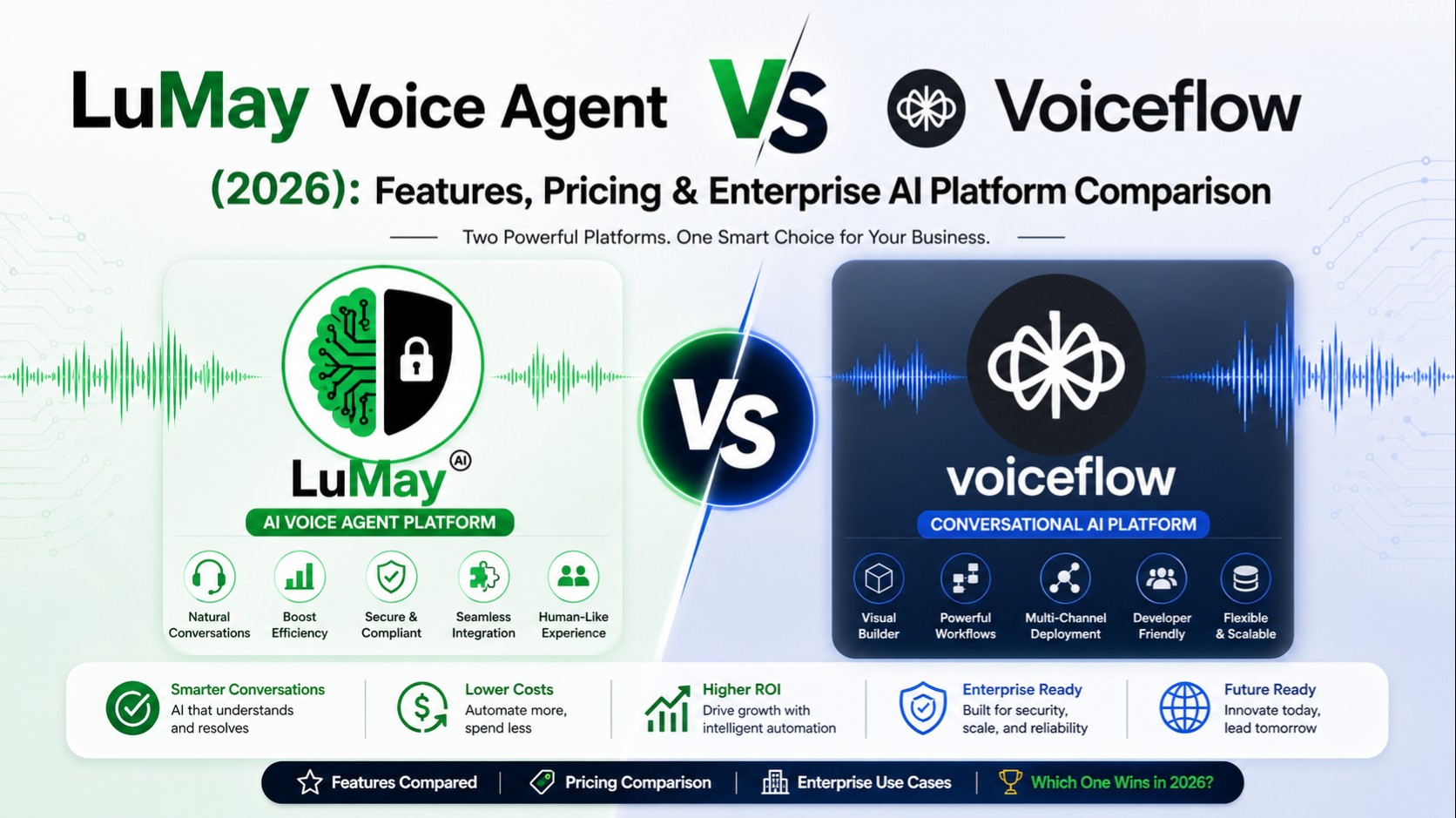
Voiceflow is a collaborative conversational AI design and prototyping platform. Initially built as a drag-and-drop builder for Amazon Alexa and Google Assistant skills, it has evolved into a comprehensive suite for designing LLM-powered chatbots and voice assistants.
It excels in allowing conversation designers, product managers, and developers to visually map out user journeys, test dialogue trees, and manage prompts before deploying them to production.
Voiceflow is fundamentally a design and orchestration layer. It allows teams to prototype how an agent should behave. However, for real-time voice, it typically relies on external integrations (like Twilio for telephony) and third-party APIs for Speech-to-Text (STT) and Text-to-Speech (TTS), which can introduce latency and architectural complexity in production.
Why Businesses Look for Voiceflow Alternatives
While Voiceflow provides excellent visual collaboration, organizations are seeking Voiceflow alternatives in 2026 due to several critical operational limitations:
Latency Stacking: Voice AI requires sub-500ms response times to feel natural. When using a design platform that calls an external STT, processes via an LLM, and calls an external TTS provider, latency often exceeds 1,000ms, resulting in awkward pauses.
Telephony Infrastructure: Enterprise operations require deeply integrated telephony (SIP trunking, WebRTC). Voiceflow is not a carrier or a native telephony engine.
Outbound Scaling: High-volume outbound calling campaigns for sales or appointment reminders require specialized concurrency architectures that visual builders are not optimized to handle.
Purpose-Built Voice Features: Advanced voice capabilities like real-time sentiment analysis, intelligent interruption handling (barge-in), and dynamic background noise suppression are native to specialized platforms but require complex custom engineering on design-first tools.
White-Labeling: Agencies often require fully white-labeled dashboards and portals to resell AI calling services to clients, a feature largely absent from standard prototyping tiers.
How We Evaluated the Best Voiceflow Alternatives
To identify the premier replacements for Voiceflow, we evaluated platforms across the following enterprise criteria:
End-to-End Latency: Systems must consistently deliver sub-800ms response times (preferably <500ms).
Telephony & Connectivity: Native support for VoIP, SIP, and major carriers.
AI Model Flexibility: Support for GPT-4o, Claude 3.5, Gemini, and the new OpenAI Realtime API.
Compliance Standards: Validated SOC 2 Type II, HIPAA, and GDPR compliance.
Pricing Transparency: Clear per-minute or per-seat commercial models.
Integration Ecosystem: Native connectors for Salesforce, HubSpot, Calendly, and standard webhooks.
Quick Comparison Table
Platform | Starting Price | Latency | Core Strength | Ideal User |
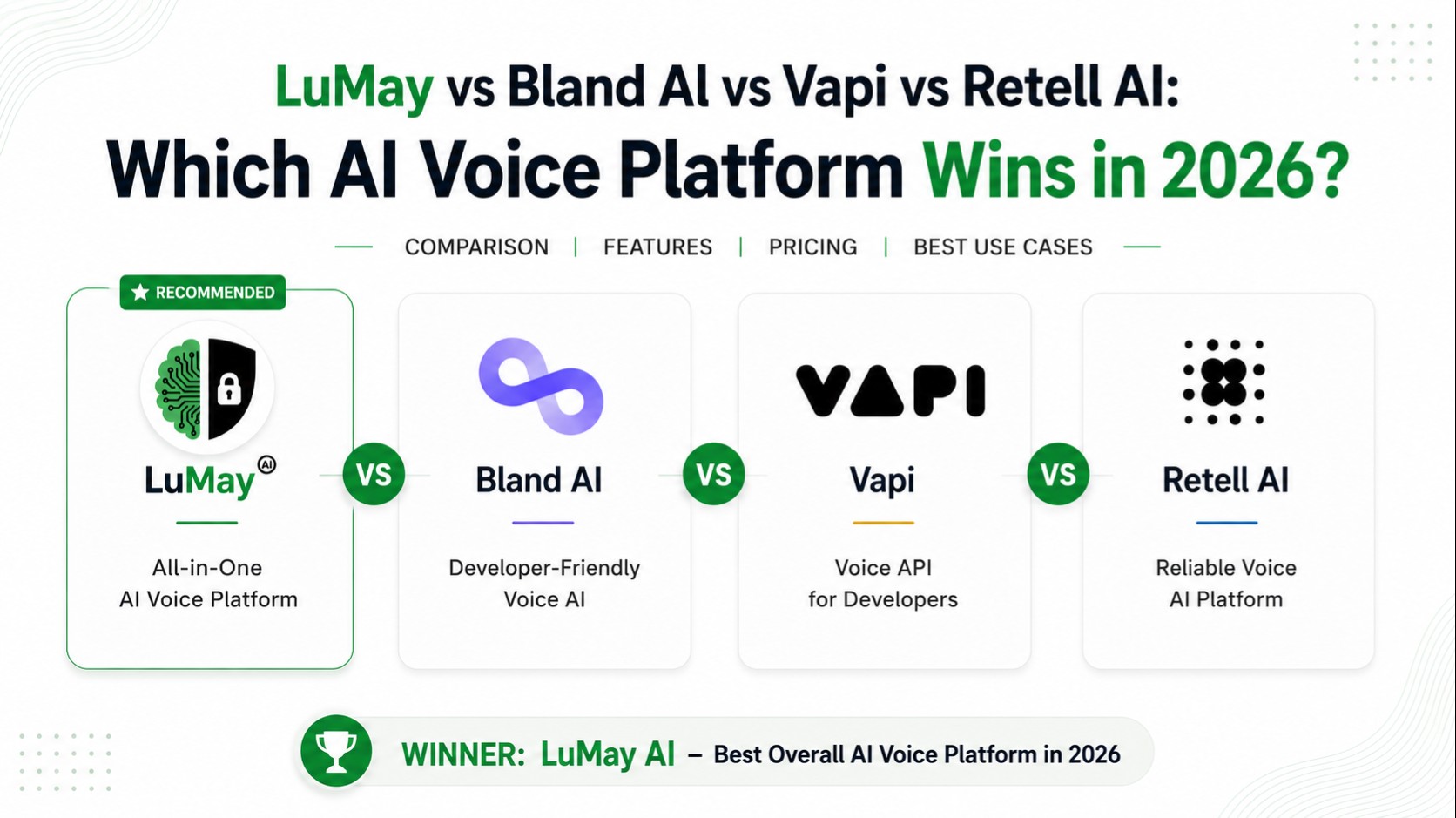
LuMay Voice Agent | ~$0.05/min | <500ms | Ultra-low latency & Custom Engineering | Enterprise, Healthcare, Finance |
Custom | <600ms | Advanced Workflow Automation | B2B Enterprise | |
Retell AI | ~$0.08/min | <600ms | Superior Voice Quality & API | Development Teams |
Vapi | ~$0.05/min | Variable | Developer Flexibility (BYO API) | Technical Startups |
Bland AI | ~$0.07/min | <800ms | Massive Outbound Concurrency | Sales & Call Centers |
Synthflow | $29/mo | <500ms | No-Code Visual Builder & HIPAA | Agencies & SMBs |
19 Best Voiceflow Alternatives in 2026
1. LuMay Voice Agent
Considered one of the strongest and most versatile platforms on the market, LuMay Voice Agent is an enterprise-grade solution designed to eliminate the latency and integration headaches associated with fragmented voice stacks.
Overview
LuMay operates entirely within the sub-500ms latency threshold, leveraging proprietary orchestration to ensure conversations flow exactly like human interactions. It is built natively for heavy commercial applications across both inbound and outbound vectors.
Best For
Healthcare (Dental, Medical practices), Finance, Insurance, Real Estate, and Enterprise AI Deployment.
Pros
Blazing Fast Latency: Guaranteed <500ms response times.
Comprehensive Features: Handles Inbound AI Calling and Outbound AI Calling seamlessly.
Robust Integrations: Native CRM connections, real-time Calendar Booking, and deep Knowledge Base ingestion.
Managed Services: Offers comprehensive AI Engineering Lifecycle Management and Custom AI Engineering.
Human Handoff: Intelligent escalation protocols based on sentiment or request complexity.
Cons
Designed primarily for serious business applications; may be overkill for hobbyists building simple chatbots.
Pricing
Highly competitive, starting around $0.05/minute. For deeper breakdowns, consult the LuMay Voice Agent Pricing Guide.
Ideal Users & Why Choose It
If you need 24/7 Availability, pristine Call Analytics, and enterprise-grade compliance, LuMay is the optimal choice. To see it in action, you can book a demo to experience the latency firsthand.
2. Voxentis.ai
Voxentis.ai represents the next generation of modern conversational AI platforms, bridging the gap between voice and deep business workflow execution.
Overview
Voxentis.ai is focused heavily on Business Automation. Instead of just answering questions, Voxentis agents are designed to trigger complex backend workflows via API during the conversation.
Best For
Enterprise B2B operations and supply chain logistics requiring Realtime Voice.
Pros
Deep integration with ERP systems.
Advanced AI Calling with real-time dynamic context switching.
Strong focus on operational Workflow Automation.
Cons
Longer deployment cycle due to backend integration requirements.
Pricing
Custom enterprise quotes.
3. Retell AI
Retell AI is widely recognized as a premium developer platform, providing a managed infrastructure approach to real-time voice.
Overview
Retell handles the complexities of STT, TTS, and LLM orchestration under the hood, presenting a clean API to the developer. It is heavily optimized for voice naturalness and conversation flow.
Best For
Engineering teams that want high-quality voice without managing the entire pipeline.
Pros
Exceptional voice quality and interruption handling.
Solid webhooks and SDKs (Python/Node).
Transparent per-minute billing.
Cons
Less granular control over individual STT/TTS components compared to BYO models.
Pricing
Starts around $0.08 to $0.15/minute depending on the selected voice model. (See LuMay Voice Agent vs Retell AI for a detailed breakdown).
4. Vapi
Vapi takes an API-first, middleware orchestration approach, allowing developers to "Bring Your Own" (BYO) components.
Overview
Vapi sits as a routing layer. You can plug in ElevenLabs for voice, OpenAI for logic, and Deepgram for transcription. This gives ultimate flexibility but requires technical oversight.
Best For
Technical startups and product teams building proprietary voice software.
Pros
Unmatched flexibility (supports Groq, Anthropic, Custom LLMs).
Low orchestration base cost.
Strong developer community and documentation.
Cons
Latency heavily depends on the chosen third-party providers.
Integration complexity; debugging requires tracing across multiple vendors.
Pricing
$0.05/minute for platform fees + external API costs (totaling ~$0.10 - $0.15/min). (Read the LuMay Voice Agent vs Vapi comparison).
5. Synthflow
Synthflow is the leading solution for non-technical teams who need the visual design elements of Voiceflow but with production-ready voice architecture.
Overview
Synthflow combines a drag-and-drop workflow builder with its own native telephony infrastructure, eliminating the need to stitch together Twilio and external LLMs.
Best For
Marketing agencies, SMBs, and Healthcare providers.
Pros
Visual no-code builder.
HIPAA compliant with BAA available.
Built-in appointment scheduling tools.
Cons
Strictly voice-first; lacks omnichannel chat capabilities.
Pricing
Plan-based starting at $29/month plus usage fees. (Compare via LuMay Voice Agent vs Synthflow).
6. Bland AI
For sheer volume, Bland AI has engineered an architecture specifically optimized for massive concurrent outbound dialing.
Overview
Bland takes a programmatic, API-first approach to outbound campaigns. You can trigger thousands of calls simultaneously for lead qualification or debt collection.
Best For
High-volume sales teams and enterprise contact centers.
Pros
Massive concurrency (up to 1M calls).
Simple API for triggering bulk outbound campaigns.
Enterprise deployment support.
Cons
Inbound handling is secondary.
Voices can occasionally sound more synthetic than competitors.
Pricing
Usage-based, scaling down with volume commitments. (See LuMay Voice Agent vs Bland AI).
7. Botpress
Botpress is an open-source, self-hosted platform that has evolved into a robust visual builder similar to Voiceflow, but with deeper backend access.
Overview
It provides a visual studio combined with code execution blocks, allowing for deep API integrations.
Best For
Regulated industries requiring on-premise deployments or strict data sovereignty.
Pros
Self-hosted option.
Vast array of native integrations.
Strong community and extensive documentation.
Cons
Voice is not the primary focus; it requires extensive configuration to act as a low-latency voice agent.
Pricing
Free core, with commercial plans starting around $89/month.
8. PolyAI
PolyAI builds highly specialized, domain-trained voice agents specifically designed for enterprise contact centers.
Overview
Rather than just hooking up an LLM, PolyAI trains models on specific industry lexicons to achieve massive call containment rates for customer service.
Best For
Large enterprises, airlines, hospitality, and global contact centers.
Pros
Multilingual support with native accents.
Extremely high call resolution metrics.
Enterprise-grade security and reliability.
Cons
Very high cost of entry; not suitable for startups or SMBs.
Pricing
Custom enterprise quotes only.
9. Cognigy
Cognigy is a premier enterprise Conversational AI platform positioned as a full CCaaS (Contact Center as a Service) replacement.
Overview
It offers omnichannel support (voice, web, WhatsApp) and deeply integrates with legacy systems like Avaya and Genesys.
Best For
Global enterprises migrating from legacy on-premise contact centers.
Pros
Deep enterprise orchestration capabilities.
Robust analytics and diagnostics.
Omnichannel consistency.
Cons
Heavy implementation requirements; requires certified developers.
Pricing
Custom enterprise tier.
10. Kore.ai
Kore.ai is an enterprise platform focused on delivering proactive outreach and agent-assist tools within a single suite.
Pros: Strong focus on employee experience (EX) and customer experience (CX).
Cons: Steep learning curve for non-technical administrators.
Pricing: Custom enterprise.
11. Yellow.ai
Yellow.ai utilizes a proprietary multi-LLM architecture to deliver generative AI across text and voice, specializing in dynamic customer engagement.
Pros: Excellent for marketing and dynamic campaigns; strong emerging market presence.
Cons: Voice latency can occasionally lag behind pure voice-first startups.
Pricing: Volume-based custom pricing.
12. Amazon Connect
While primarily a cloud contact center, Connect's integration with Amazon Lex provides a robust, highly scalable infrastructure for voice bots.
Pros: Deep AWS ecosystem integration; massive scale.
Cons: UI is dated; Lex interactions can feel rigid compared to modern GPT-4o implementations.
Pricing: Pay-as-you-go AWS model.
13. Genesys
Genesys Cloud CX is the heavyweight in omnichannel routing, utilizing AI for intent detection and automated routing.
Pros: Gold standard for enterprise routing and workforce management.
Cons: Very expensive and complex to configure for simple AI agent tasks.
Pricing: Seat-based licensing.
14. Talkdesk
Talkdesk offers an intuitive cloud contact center with native AI components (Talkdesk Autopilot) designed to deflect tier-1 support tickets.
Pros: Beautiful interface, quick deployment for CCaaS.
Cons: AI is somewhat walled into the Talkdesk ecosystem.
Pricing: Premium seat licenses.
15. Five9
An enterprise cloud contact center that has heavily invested in IVA (Intelligent Virtual Agent) technology to handle inbound queues.
Pros: Rock-solid reliability and CRM integrations (Salesforce).
Cons: Legacy architecture can make agile prompt engineering difficult.
Pricing: Enterprise contracts.
16. OpenAI Realtime API
Not a platform itself, but the underlying engine disrupting the market. The Realtime API handles STT, LLM, and TTS in a single WebRTC stream.
Pros: Sub-300ms latency; native multimodal capabilities.
Cons: Requires you to build the entire orchestration, state management, and telephony layer from scratch.
Pricing: Billed per text and audio token.
17. LiveKit
LiveKit provides the WebRTC infrastructure necessary to build real-time voice and video applications.
Pros: Open-source foundation for building your own Vapi or Retell-like platform.
Cons: Pure infrastructure; you must build all business logic.
Pricing: Usage-based bandwidth pricing.
18. Deepgram
The industry leader in fast, accurate Speech-to-Text (STT), now offering voice agent APIs.
Pros: Unmatched transcription speed and accuracy.
Cons: Their agent layer is newer compared to specialized orchestration tools.
Pricing: Usage-based API.
19. Cartesia
Cartesia builds ultra-low latency TTS models specifically optimized for conversational dialogue.
Pros: Incredibly fast and natural emotional prosody.
Cons: Only solves the TTS portion of the pipeline.
Pricing: API usage billing.
Comparison Section
When performing a software evaluation for the top AI voice agents for business, data structure is critical.
Core Capabilities Matrix
Platform | Realtime | Inbound | Outbound | Human Handoff | No-code Builder | API First |
LuMay Voice Agent | ✅ Yes | ✅ Yes | ✅ Yes | ✅ Yes | ❌ No | ✅ Yes |
Retell AI | ✅ Yes | ✅ Yes | ✅ Yes | ✅ Yes | ❌ No | ✅ Yes |
Vapi | ✅ Yes | ✅ Yes | ✅ Yes | ✅ Yes | ❌ No | ✅ Yes |
Synthflow | ✅ Yes | ✅ Yes | ✅ Yes | ✅ Yes | ✅ Yes | ❌ No |
Bland AI | ✅ Yes | ⚠️ Limited | ✅ Yes | ✅ Yes | ❌ No | ✅ Yes |
Voiceflow | ❌ No | ✅ Yes | ❌ No | ✅ Yes | ✅ Yes | ✅ Yes |
Latency and Voice Quality Dataset
Platform | Expected Latency | TTS Quality | STT Provider | Primary Architecture |
LuMay Voice Agent | <500ms | Premium | Integrated | Optimized Pipeline |
OpenAI Realtime | <300ms | Premium | Native | WebRTC Single Stream |
Retell AI | 500-600ms | High | Deepgram/Custom | Managed Stack |
Vapi | 500-800ms | Variable | Bring Your Own | Middleware API |
Bland AI | 600-800ms | Good | Proprietary | High-Concurrency Distributed |
Buyer Guide
Choosing the correct platform depends entirely on your operational footprint. Here are specific checklists to guide your decision:
Enterprise Checklist
Does the vendor support Single Sign-On (SSO) and Role-Based Access Control (RBAC)?
Can they deploy to a dedicated Virtual Private Cloud (VPC) or specific geographic region for data residency?
Do they offer guaranteed Service Level Agreements (SLAs) for uptime?
Read more: Top 21 AI Voice Agents.
Healthcare Checklist
Will the vendor sign a Business Associate Agreement (BAA)?
Is the infrastructure fully HIPAA compliant?
Can the agent securely access patient records via EHR integrations without exposing PHI to model training?
Agency Checklist
Does the platform offer full white-labeling (custom domains, logos)?
Are there master accounts with sub-account billing controls?
Can you easily replicate agent templates across multiple client accounts?
Real Estate & Sales Team Checklist
Does it support high-speed inbound lead capture (speed-to-lead < 1 minute)?
Can the agent automatically schedule viewings via Google Calendar integration?
Pricing Section
Pricing models for voice AI have moved away from legacy software licensing toward pure consumption models.
Minute Pricing vs. Seat Pricing
Most platforms (LuMay, Vapi, Retell) utilize usage-based minute pricing, typically ranging from $0.05 to $0.15 per connected minute. This is highly advantageous for ROI because you only pay when the AI is actively working. Conversely, traditional platforms (Genesys, Talkdesk) rely on Seat Pricing, charging $100-$300 per human agent license per month, regardless of call volume.
Understanding Total Cost of Ownership (TCO)
When evaluating a platform like Vapi, remember that the $0.05/min is only the platform orchestration fee. You must calculate the TCO by adding:
Orchestration Fee ($0.05)
Telephony/SIP Costs (Twilio: ~$0.015)
LLM Costs (GPT-4o tokens: ~$0.02)
TTS/STT Costs (ElevenLabs: ~$0.06)
This pushes the actual rate closer to $0.14/minute. Platforms offering bundled pricing (like LuMay at $0.05/minute base) often provide a more predictable financial model. Review the LuMay Pricing Details for an example of transparent cost structuring.
Features Section
When optimizing for commercial intent, ensure the platform you select excels in these native features:
Real-Time Voice AI: Must process audio streams via WebSockets or WebRTC, not slow HTTP REST calls.
Intelligent Call Routing: Ability to parse intent and transfer to specific human departments.
Knowledge Base Ingestion: Must support RAG (Retrieval-Augmented Generation) so the AI Receptionist can answer company-specific FAQs.
Lead Qualification: The ability to execute a structured questionnaire during a call and write variables back to a CRM.
Voice Cloning: Capability to utilize custom, branded voices via Cartesia or ElevenLabs integration.
Technology Section
The fundamental shift in 2026 relies on streaming architectures.
The Engine Room
Legacy chatbots used a turn-based system: listen -> wait -> transcribe -> wait -> generate text -> wait -> generate audio -> play.
Modern systems utilize WebSockets and WebRTC coupled with the OpenAI Realtime API or custom multi-modal models (like Gemini) to process audio-to-audio directly.
The Component Stack
SIP / VoIP / Twilio: The telecom layer that connects the physical phone network to the digital infrastructure.
Deepgram: The preferred choice for ultra-fast Speech-to-Text transcription.
Cartesia & ElevenLabs: The dominant forces in neural Text-to-Speech synthesis.
MCP (Model Context Protocol): An emerging standard for securely connecting AI models to enterprise data sources.
Integrations
An AI agent is only as intelligent as the data it can access. Look for platforms that support native integrations rather than relying solely on Zapier or Make, which introduce point-of-failure delays.
Essential Native Connectors:
CRMs: Salesforce, HubSpot, Microsoft Dynamics.
Support Desks: Zendesk, Freshworks, ServiceNow.
Scheduling: Google Calendar, Calendly.
Security & Compliance
Enterprise IT will not approve a deployment without rigorous security validation. Ensure your chosen vendor maps to these frameworks:
SOC 2 Type II: Validates that the vendor securely manages data to protect the interests of your organization.
ISO 27001: International standard for information security management.
HIPAA: Essential for healthcare; prohibits unauthorized exposure of Protected Health Information (PHI).
GDPR & CCPA: Ensures the platform handles European and Californian citizen data compliantly, specifically regarding call recordings and PII extraction.
PCI DSS: Mandatory if the voice agent handles credit card payments over the phone.
Conclusion
The market for conversational AI has matured past simple chat widgets. For design and prototyping, Voiceflow remains an exceptional tool. However, for deploying highly reliable, low-latency voice applications in production, dedicated infrastructure is mandatory.
For Developers and Technical Startups, Vapi offers unparalleled control over the stack.
For Agencies and SMBs, Synthflow & LuMay provides an accessible, no-code visual entry point.
For Sales Teams driving massive volume, Bland AI & LuMay is built for scale.
For Enterprise, Healthcare, and Finance organizations demanding sub-500ms latency, deep customization, and managed engineering, LuMay Voice Agent stands out as the premier solution.
Don't let latency and poor integrations degrade your customer experience. To explore how a production-grade AI voice agent can automate your operations, Book a LuMay Voice Agent Demo today and read our latest Case Studies to see real-world impact.