


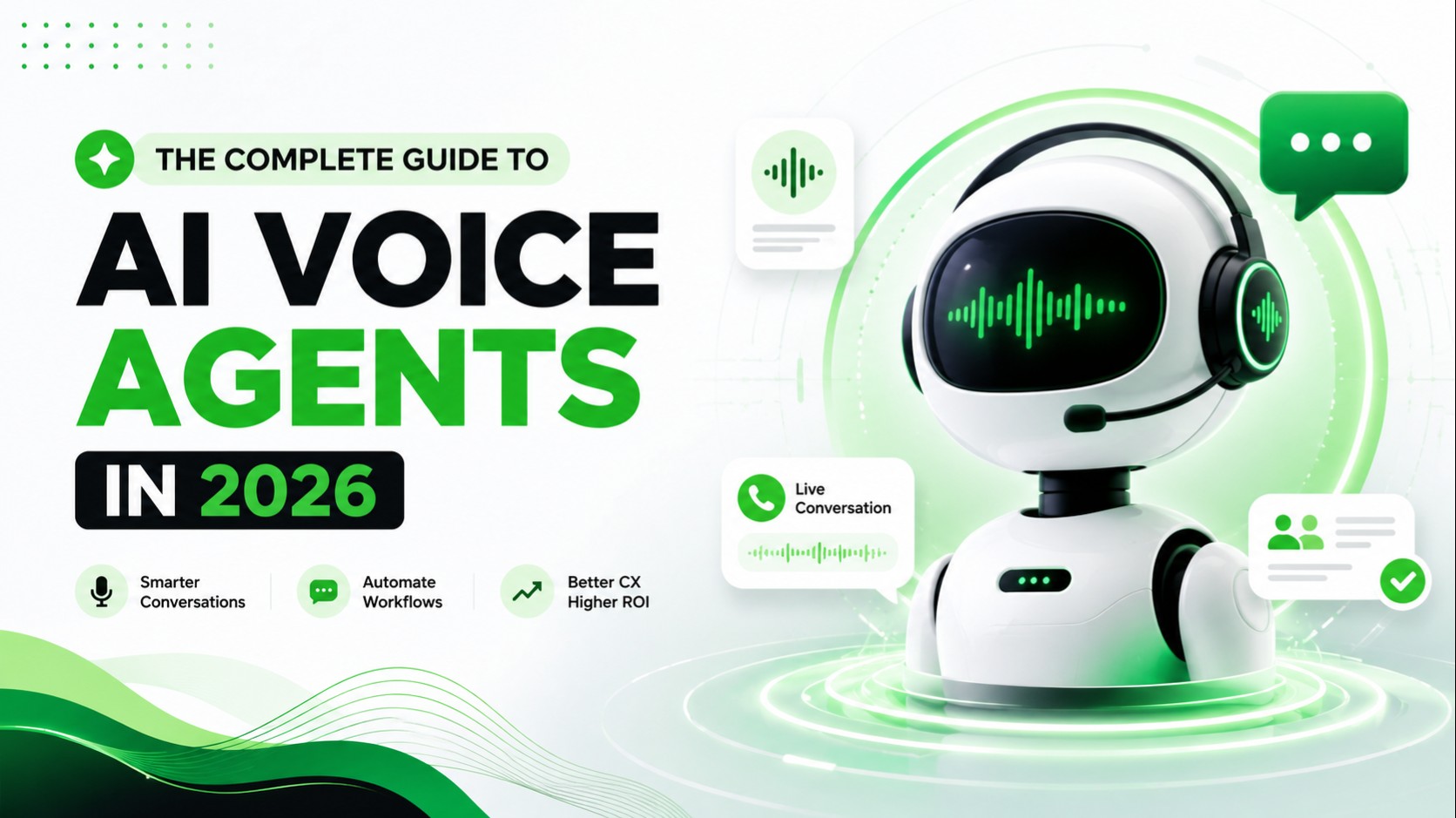
Quick Answer: What is an AI Voice Agent?
An AI Voice Agent is an autonomous conversational platform powered by generative artificial intelligence and Large Language Models (LLMs) capable of conducting real-time, human-like voice conversations over telephony or digital channels. Unlike legacy rigid push-button telephone menus, modern AI Voice Agents process continuous spoken input, interpret complex user intent, dynamically interact with databases, and complete tasks autonomously without requiring any human agent intervention.
TL;DR & Quick Summary
Related LuMay voice AI guides: Compare AI voice generators for voice agents, review on-premise vs cloud voice AI, and learn how to test voice agents for latency, interruptions, and handoff failures.
In 2026, the global enterprise operational ecosystem has officially transitioned from text-based chatbots to hyper-realistic Voice AI. Driven by advancements in native multimodal audio models, AI Phone Agents and automated AI Receptionist infrastructures handle millions of inbound and outbound customer support calls simultaneously. This complete shift has lowered average call handling expenses from over $8.00 per human interaction down to roughly $0.40 per automated interaction, allowing 24/7/365 scalability across industries including healthcare, insurance, real estate, and ecommerce.
Key Takeaways
• Massive Expense Reductions: Deploying an AI Call Center drops per-interaction expenses by up to 90% compared to human-driven teams.
• Ultra-Low Latency: Real-Time Voice Processing frameworks have lowered turn-taking latency down to 500-800 milliseconds, ensuring completely natural dialogue patterns.
• Full System Integrations: Modern Intelligent Voice Agents link seamlessly with enterprise CRM platforms, local help desks, scheduling APIs, and secure payment networks.
• Multilingual Support: Voice Automation tools automatically recognize and switch between dozens of regional dialects and languages in real-time.
Quick Comparison Table
Metric / Feature | Modern AI Voice Agents | Traditional IVR Systems | Human Phone Agents |
Average Processing Latency | Instant (500–800 milliseconds) | Slow rigid menu delay | Variable (Queue dependent) |
Operational Expense Per Interaction | ~$0.40 per call | ~$0.15 (Zero context resolution) | $7.00 to $12.00 per call |
Context Retention Depth | Full multi-turn system memory | None (Resets each step) | High (Requires manual CRM logging) |
Scalability Capabilities | Unlimited parallel channel deployment | Restricted by specific trunk channels | Limited by operational headcount |
Language Management | Instant dynamic dialect switching | Pre-recorded static language lines | Requires specialized staff |
What Are AI Voice Agents?
Definition of AI Voice Agents
What are AI voice agents? In the current technical landscape of 2026, an AI Voice Agent is defined as a highly unified, software-driven conversation layer that can replicate human speech patterns, emotional inflections, and conceptual intelligence during real-time spoken interactions. Built using neural technology, an AI Voice Agent handles three distinct operational tasks concurrently: it transcribes user input via advanced Automatic Speech Recognition (ASR), evaluates the underlying semantic goals with Natural Language Processing (NLP), and generates lifelike audio using Text-to-Speech (TTS) models. For an exploration of structural business solutions, check out our Enterprise AI Voice Agents Architecture Setup.
How AI Voice Agents Differ from Traditional IVR Systems
Legacy Interactive Voice Response (IVR) architectures are based on fixed, pre-programmed decision logic. Callers are forced to step through rigid menu levels by typing keys or speaking exact keywords. If a customer provides a complex, multi-part sentence or introduces non-standard vocabulary, traditional IVR options break down, causing high customer frustration. Modern AI Phone Agents eliminate buttons entirely. They begin phone calls with open-ended conversational prompts and utilize deep context understanding to interpret unstructured phrasing, making traditional IVR systems obsolete.
AI Voice Agents vs Chatbots
When evaluating AI voice agents vs chatbots, the difference centers around handling speed and ambient data complexity. While standard text chatbots function asynchronously within text-only layout bubbles, an AI Voice Assistant must manage real-time verbal environments. Spoken communication features unique vocal elements, regional accents, mid-sentence thoughts, background noise, and sudden human interruptions that visual text layouts never face. This necessitates dedicated echo-cancellation layers and advanced voice orchestration to ensure smooth conversation flow.
AI Voice Agents vs Human Agents
The operational balance between AI voice agents vs human agents centers on cost-effective scalability versus deep human empathy. Human call center representatives remain vital for handling highly sensitive crises, but they are limited by working hours, cognitive fatigue, and administrative overhead. On the other hand, a modern AI Calling Agent manages thousands of complex customer service calls concurrently without fatigue, automatically documents client files, and handles multiple languages perfectly.
Evolution of Voice AI from 2020 to 2026
The rapid growth of Voice AI vs conversational AI over the past six years highlights an incredible technological evolution. Between 2020 and 2022, primitive voice applications relied on simple pattern matching, resulting in rigid, mechanical responses. By 2024, the integration of text large language models added basic dynamic text generation, but separate processing components introduced noticeable latency gaps. In 2026, the mainstream deployment of native audio-to-audio foundation models has eliminated translation bottlenecks, letting modern systems process audio streams directly and drop latency to human-like levels.
How AI Voice Agents Work
Speech Recognition (STT)
The operational lifecycle of an AI Calling Agent begins when raw audio travels across a telephony trunk line into the system's processing core. Here, an advanced Speech-to-Text module transcribes the incoming audio frequencies into structured digital data. In 2026, these speech recognition engines analyze fine acoustic markers, filter out distracting background sounds, and use localized terminology datasets to maintain high transcription accuracy regardless of strong regional accents.
Natural Language Understanding (NLU)
Once the voice input is converted into structured text, the system's Natural Language Understanding (NLU) components parse semantic meaning. Rather than simply scanning for basic keyword matches, the NLU engine evaluates the entire sentence structure, pronoun relationships, and user sentiment. This allows an AI Support Agent to understand complex conversational shifts, like when a customer changes their mind or corrects a date mid-sentence.
Large Language Models (LLMs)
At the heart of modern conversational intelligence are enterprise-tuned Large Language Models (LLMs). Unlike general-purpose public models, these systems are constrained by precise system rules, company safety parameters, and Retrieval-Augmented Generation (RAG) frameworks. The LLM processes the NLU context, searches internal company databases for accurate facts, and formulates a tailored response in milliseconds, preventing inaccurate or hallucinated answers.
Decision-Making Engines
Beyond generating conversational text, modern systems leverage deterministic decision-making engines to execute technical backend workflows. If an AI Sales Agent confirms that a customer wants to process an order or update a booking, the decision system checks security permissions, interacts with external software APIs, validates the transactional changes, and updates the user's account before continuing the call.
Text-to-Speech (TTS)
After the language model generates an appropriate textual response, a neural Text-to-Speech (TTS) engine converts it back into an audio stream. In 2026, neural voice synthesis is highly advanced, utilizing realistic breathing pauses, context-aware emphasis on key industry terms, and natural vocal inflections that keep callers comfortable throughout the interaction.
Real-Time Call Processing
To maintain a natural conversational flow, systems use advanced streaming data protocols. Rather than waiting for an entire sentence to finish rendering, Real-Time Voice Processing architectures stream data fragments to the voice engine continuously. This allows the system to begin speaking the first few words of a response while the rest of the message is still being compiled, keeping verbal turn-taking delays to an absolute minimum.
Memory and Context Retention
If an active phone call drops or a user needs to reconnect, they shouldn't have to repeat themselves. Modern voice systems utilize advanced dual-layer memory frameworks: ephemeral short-term memory tracks active turn-by-turn context within the current conversation, while long-term enterprise memory pulls historical data from previous CRM interactions to personalize the experience.
Core Components of an AI Voice Agent
Voice Input Layer
The voice input layer manages raw telephony connections using SIP trunk lines or WebRTC gateways. It serves as the primary audio entry point, running advanced noise cancellation and signal optimization to isolate the speaker's voice from ambient background sounds.
Conversation Engine
The conversation engine serves as the main router connecting the system's cognitive components. It streams transcription data to the processing core, balances processing loads across language models, manages sudden user interruptions, and controls the voice synthesis pacing.
Knowledge Base Integration
To ensure accurate answers without risk of hallucination, the system links directly with secure corporate vector databases. For a deeper technical exploration of secure data sync protocols, see our guide on How to Build an AI Voice Agent System.
CRM Integration
This layer connects the system directly to core data platforms like Salesforce or HubSpot. It automatically retrieves customer account tiers, verifies active service ticket histories, and writes detailed interaction logs back to the user's profile the moment a call concludes.
Call Routing Logic
When an interaction requires human oversight, the system's routing logic manages a smooth transfer. The system places the call into the appropriate queue while passing complete conversational transcripts and extracted context data directly to the live agent's desktop interface.
Analytics Dashboard
An administrative control dashboard that tracks system-wide operational efficiency. It monitors first-contact resolution rates, maps system latency metrics, logs caller sentiment, and pinpoints conversational paths where users face friction.
Security and Compliance
A core security layer that monitors active audio streams to automatically redact sensitive information like payment cards or identification numbers. It secures all data pathways with enterprise encryption to meet strict global data governance standards.
Types of AI Voice Agents
Customer Service Voice Agents
These inbound systems automate high-volume support pipelines. They manage billing updates, track shipments, resolve routine technical bugs, and update account parameters around the clock, relieving human teams from repetitive ticket volumes.
Sales Voice Agents
Outbound systems built to engage web leads instantly. They manage early product discovery conversations, answer common feature questions, and transfer qualified prospects to internal sales professionals.
Appointment Scheduling Agents
Automated appointment coordinates that connect directly with calendar systems. They check real-time availability, handle fresh bookings, process cancellations, and update schedules via natural spoken dialogue.
Lead Qualification Agents
Frontline screening systems that evaluate incoming prospects. They ask qualifying questions about budgets, timelines, and operational needs to score leads before routing them to sales teams.
Healthcare Voice Agents
Regulated conversational systems that manage patient engagement. They handle scheduling, provide automated prescription renewal status, and track post-discharge recovery updates while maintaining strict privacy standards. Learn more at our hub for AI Voice Agents for Healthcare Solutions.
Real Estate Voice Agents
Automated property assistants that manage inbound listing questions, provide real-time availability details, and coordinate property viewings for agencies.
Ecommerce Voice Agents
Highly scalable retail systems that process delivery updates, manage returns, and answer product compatibility questions to help online storefronts handle peak shopping seasons smoothly.
Banking and Finance Voice Agents
Highly secure financial assistants that let users check balances, review transaction histories, and report lost cards using secure voice biometrics for identity verification.
Top AI Voice Agent Use Cases in 2026
Inbound Call Automation
Enterprise centers use automated lines to handle sudden call spikes instantly, resolving routine account inquiries and troubleshooting steps without forcing callers into long hold queues.
Outbound Sales Calls
Proactive outreach systems that connect with prospects at scale, delivering consistent campaign messaging and identifying warm leads while complying with call registries in real-time.
Customer Support Automation
Platforms that handle technical troubleshooting workflows, guiding users through product setups and password resets without requiring a human agent to open a basic support ticket.
Appointment Booking
Automated booking desks for service-driven organizations, allowing customers to easily schedule, reschedule, or cancel reservations at any hour of the day or night.
Survey Collection
Post-interaction outreach tools that collect structured client feedback, conducting automated phone surveys and evaluating verbal sentiment to provide product teams with clear insights.
Lead Nurturing
Outreach engines designed to reconnect with cold business accounts, sharing personalized discount terms and feature updates to re-engage dormant customer segments.
Debt Collection
Compliant financial outreach systems that manage sensitive accounts receivable pipelines, offering structured payment paths and processing balances securely while following all local regulations.
Technical Support
Frontline triage systems that resolve initial tier-one technology issues, gathering device details, running reset processes, and passing complex tickets to engineering teams with complete logs.
Benefits of AI Voice Agents
24/7 Availability
Automated systems ensure businesses remain reachable at any time, removing standard business hour constraints and allowing international customers to get immediate support whenever needed.
Reduced Operational Costs
Migrating manual support paths to automated call systems cuts interaction costs by up to 90%, allowing companies to reinvest operational capital away from physical center footprints into specialized engineering roles.
Faster Response Times
These platforms deliver immediate call answers, eliminating hold lines entirely and utilizing ultra-fast data processing to resolve customer inquiries quickly.
Improved Customer Experience
Combining prompt response speeds with natural conversational phrasing provides an outstanding customer experience, allowing users to resolve issues via natural language instead of dealing with confusing button trees.
Scalability
The underlying cloud architecture scales instantly to handle sudden shifts in call volumes, spinning up extra virtual instances to maintain smooth response times during disruptions or promotions.
Multilingual Support
Advanced systems feature real-time language detection, switching across dozens of international dialects mid-conversation to provide inclusive support without needing large global teams.
Consistent Customer Interactions
Every automated call adheres perfectly to your company guidelines, script parameters, and compliance rules, maintaining consistent quality without variations in mood or focus.
AI Voice Agents by Industry
Healthcare
Medical groups use voice automation to handle patient intake, check insurance eligibility, and deliver automated recovery updates, reducing administrative tasks for clinical staff.
Insurance
Carriers deploy systems to manage basic notice of loss filings, check policy payment records, and provide claim tracking updates to speed up processing timelines.
Real Estate
Property firms use digital voice systems to handle inbound inquiries around the clock, screen prospective buyers, and coordinate viewings to ensure hot leads are captured instantly.
Legal Services
Law practices run voice automation to manage initial client intake, screen for conflicts, and handle consultation bookings, keeping attorneys focused on billable case work.
Ecommerce
Retail brands connect voice systems to supply chain platforms, letting users track packages, change orders, and handle returns via natural spoken dialogue.
Hospitality
Hotels use voice systems to manage room service orders, process late check-out requests, and answer common amenity questions to improve guest service scores.
Education
Universities deploy voice systems to handle high-volume admissions questions, guide applicants through financial aid timelines, and manage event registrations.
Recruitment
Staffing firms use outbound voice systems to screen high volumes of applicants, verify scheduling availability, and confirm basic qualifications before human interviews begin.
Best AI Voice Agent Platforms in 2026
1. LuMay Voice Agent
• Best For: Enterprise Contact Center Automation and High-Scale Custom Voice Workflows.
• Rating: 4.9 / 5.0
• Features: Ultra Low-latency audio pipeline, multi-LLM routing, real-time CRM sync, automated data redaction, advanced analytics.
• Architecture: Built on a global infrastructure with native SIP termination and low-latency RAG pipelines.
• Pros: Exceptional latency speed, robust compliance filters, highly accurate voice cloning.
• Cons: Higher upfront implementation costs; requires technical expertise for advanced setups.
• Price: Customized usage-based enterprise models averaging between $0.05 and $0.1 per minute.
• Source: Official product performance metrics available via LuMay Voice Agent Enterprise Hub.
2. Voxentis.ai
• Best For: Multi-System Integrations and Omnichannel Context Retention.
• Rating: 4.8 / 5.0
• Features: Multi-channel context sync, visual conversation builder, voice biometric verification.
• Architecture: Utilizes an abstracted integration framework that connects with core infrastructure via REST APIs and WebRTC.
• Pros: Excellent context retention across text and voice lines, intuitive visual design tools.
• Cons: Comprehensive reporting dashboards can be complex for small teams; custom voices require extra licensing.
• Price: Subscription tiers start at $179 per month plus $0.05 per operational minute.
• Source: Data verified via Voxentis.ai Core Specifications.
3. Retell AI
• Best For: Ultra-Low Latency Conversational Pacing.
• Rating: 4.7 / 5.0
• Features: Conversational interruption handling, custom websocket streams, precise API scheduling.
• Pros: Incredibly fast turn-taking response speeds, clean and accessible developer documentation.
• Cons: Lacks deep pre-built CRM workflows out of the box; requires engineering resources for custom data setups.
• Price: Pay-as-you-go developer models start at $0.12 per minute for core processing.
• Source: Technical documentation available via Retell AI Developer Documentation.
4. Bland AI
• Best For: High-Volume Outbound Campaigns and Lead Qualification.
• Rating: 4.6 / 5.0
• Features: Bulk outbound campaign tools, multi-line dialing systems, programmatic webhooks.
• Pros: Highly efficient bulk call dispatching, straightforward marketing automations.
• Cons: Less optimized for multi-step inbound technical troubleshooting.
• Price: Operational rates start around $0.09 per minute, scaling down with volume.
• Source: Campaign features detailed via Bland AI Enterprise Outreach Platforms.
5. Vapi
• Best For: Rapid Prototyping and Flexible Telephony Routing.
• Rating: 4.6 / 5.0
• Features: One-click deployment models, support for open LLMs, integrated phone number configuration.
• Pros: Fast setup, zero upfront commitments, clear usage metrics.
• Cons: Rely on third-party uptime across underlying model providers.
• Price: Flat platform fee of $0.15 per minute plus pass-through model expenses.
• Source: Platform options listed via Vapi Full-Stack Architecture.
Platform Comparison Criteria
When selecting a voice automation platform, evaluate features across four primary areas: absolute response latency, interruption handling capability, integration reliability with your current databases, and vocal realism.
Pricing Models
The industry utilizes three main pricing options: usage-based minute frameworks (ideal for variable traffic), monthly platform subscriptions with overage rates, and custom enterprise licensing for massive volumes.
Enterprise Features
Large organizations should prioritize platforms that provide single sign-on (SSO) systems, role-based access controls, multi-region telephony routing, automated data redaction, and dedicated service level agreements (SLAs).
SMB-Friendly Solutions
Smaller businesses should look for user-friendly, no-code visual configuration suites that allow non-technical teams to quickly launch automated receptionists and booking assistants without engineering resources.
Open Source Alternatives
Organizations with strict data sovereignty rules can use open-source components like Whisper for speech-to-text, fine-tuned open language models, and local speech generation tools to build completely private voice systems.
AI Voice Agent Architecture Explained
Voice Layer
The technical point of entry handling active telephone lines. This layer manages SIP connections, runs digital audio encoding, and uses voice activity detection to identify exactly when a caller starts or stops speaking.
AI Layer
The core cognitive system. This layer combines intent classification tools, contextual RAG data structures, and enterprise large language models to translate raw transcribed text into intelligent business actions.
Workflow Layer
The programmatic engine enforcing core business logic. It handles conversation turn-taking parameters, exception tracking, operational memory states, and conditional text paths based on user responses.
Integration Layer
The data translation component linking the system to external tools. It securely structures data payloads, handles API verification keys, and tracks backend updates across internal networks.
Data Layer
The system storage environment. It securely archives interaction text logs, stores audio recording files, and updates short-term contextual memory blocks to support reliable multi-step workflows.
Monitoring Layer
The administrative control module. It tracks active system health, quantifies processing token counts, measures network delays, and monitors safety guardrails to ensure consistent interaction quality.
How to Build an AI Voice Agent
Define Business Objectives
Establish highly specific operational goals for your voice agent. Avoid ambiguous targets, focusing instead on clear goals like automating tier-one scheduling to reduce live queue volumes by 35%.
Design Conversation Flows
Map out standard conversation pathways using process software, identifying core customer intents, defining mandatory account data points to collect, and building clear error correction paths.
Choose an LLM
Select a language foundation model that balances your speed and complexity needs. Use streamlined, faster models for routine questions, and deploy larger models for multi-step technical support paths.
Connect Business Data
Construct secure data connectors that link company knowledge repositories and product databases with a central vector storage system, allowing the agent to pull accurate facts in real-time.
Integrate Telephony
Configure corporate phone connections by linking existing business lines via SIP trunk lines, routing numbers from your contact center, or setting up fresh lines using WebRTC.
Test and Optimize
Run extensive test call scenarios to stress-test the implementation. Introduce simulated ambient noise, test various regional accents, use common slang terms, and interrupt the system mid-sentence to tune performance variables.
Launch and Monitor
Roll out the platform using controlled phases, starting with 5% of incoming traffic. Review interaction logs, track containment scores, watch for system delays, and refine system prompts before scaling to full production volumes.
AI Voice Agent Integrations
CRM Systems
Linking systems directly with CRM platforms like Salesforce or HubSpot allows your voice assistants to check client histories, adjust lead scores, and log deep call notes instantly.
Help Desk Platforms
Connecting with customer support infrastructure like Zendesk or Freshdesk enables the system to open, update, and resolve service tickets autonomously, keeping human teams fully aligned.
Ecommerce Platforms
Direct connections with commerce networks like Shopify empower the agent to look up delivery schedules, modify order items, and process product returns via spoken interactions.
Calendars
Linking with enterprise calendar software like Google Calendar enables smooth appointment coordination, booking modifications, and real-time availability lookups over the phone.
Payment Systems
Integrating with secure payment networks like Stripe lets the system generate invoices, process balance payments, and manage service renewals over secure audio connections.
ERP Software
Connecting with resource tools like SAP or NetSuite allows voice platforms to check inventory volumes, verify commercial accounts, and update logistics logs immediately.
AI Voice Agent Costs
Development Costs
Custom voice solutions include upfront structural investments covering system discovery paths, conversation architecture design, database configuration, prompt tuning, and security setup.
Infrastructure Costs
Ongoing operational costs scale based on interaction volumes, combining processing fees from language models, usage costs from voice synthesis software, and server hosting resources.
Telephony Costs
Standard costs from telecommunication networks, including inbound toll-free lines, phone number provisioning, outbound connection fees, and SIP trunk usage rates.
Maintenance Costs
Regular system investments required to refine language models, keep company knowledge vector databases updated, manage API version shifts, and continuously optimize vocal clarity.
ROI Calculation
To track exact return on investment margins, compare legacy contact center labor costs against the total ongoing operational expenses of your automated platform divided by the initial setup investment.
Challenges and Limitations
Accent Recognition Issues
Despite modern 2026 technological gains, heavy international dialects and unique regional speech accents can still present difficulties for speech recognition models, requiring clean human backup paths.
Hallucinations
Generative networks can occasionally state inaccurate facts with high confidence, necessitating strict prompt parameters, grounded vector data, and rigorous validation logic to prevent errors.
Compliance Risks
Deploying automated outbound voice campaigns requires careful configuration to ensure systems comply completely with local consumer call registries and automated outreach rules.
Data Privacy Concerns
Processing user voices requires rigorous security frameworks, requiring explicit user content notifications and robust encryption layers to protect private details.
Escalation to Human Agents
Building clean human handoff paths is essential. If the automation runs into system errors or notes high caller frustration, it must pass the line to an available team member instantly.
Complex Customer Scenarios
When customers present unique, multi-layered problems or display deep emotional distress, automated workflows can struggle, highlighting the need for early routing to live experts.
AI Voice Agent Security and Compliance
GDPR
Enterprise voice platforms must offer clear data deletion paths, run transparent tracking consent steps before call recording, and adhere to European data privacy standards.
HIPAA
Medical voice platforms maintain complete end-to-end data encryption frameworks, deploy rigid access permissions, and log comprehensive data logs to protect patient records.
PCI DSS
To securely manage financial details, voice applications automatically mute or delete payment card numbers from system transcripts and audio records during calls.
Call Recording Compliance
Automated tools must deliver appropriate regulatory notices (such as 'this interaction is monitored for quality purposes') based dynamically on the caller's geographic location.
Data Encryption
All voice communication paths and database records must be protected using modern security protocols, like TLS 1.3 for data in motion and AES-256 for data at rest.
Access Controls
Platforms restrict internal management pathways using modern single sign-on tools, multi-factor verification, and granular role-based administrative permissions.
AI Voice Agent Best Practices
Keep Conversations Natural
Configure systems to utilize clear, conversational phrasing. Avoid overly complicated industry language, and allow the system to use short acknowledgement terms to replicate human dialogue styles.
Design Human Handoff Paths
Provide clear, seamless ways for users to connect with human agents. If the system fails to parse an intent twice, route the interaction to a live team member with full history logs.
Continuously Train Knowledge Bases
Regularly review and update the internal data repositories powering your agent's vector systems, correcting outdated product information and adding missing details based on call logs.
Monitor Call Quality
Set up recurring administrative evaluations to track platform metrics, reviewing user drop-off points, checking transcription accuracy levels, and analyzing outlier call logs to optimize performance.
Optimize for Customer Satisfaction
Prioritize first-contact issue resolution above all else, ensuring the voice agent provides direct answers quickly to save user time and build long-term satisfaction.
AI Voice Agents vs Alternatives
AI Voice Agents vs Chatbots
Digital chatbots work best for text-heavy tasks like reviewing billing charts or scanning order history, whereas voice automation excels at managing hands-free, real-time customer inquiries.
AI Voice Agents vs Contact Centers
Outsourced call centers involve extensive management oversight, recruitment challenges, and variable quality, while voice automation networks provide stable consistency and instant scaling capabilities.
AI Voice Agents vs Human Receptionists
Human receptionists provide excellent on-site face-to-face hospitality, while automated voice software is perfect for managing bulk phone routing, routine FAQs, and appointment scheduling around the clock.
AI Voice Agents vs IVR Systems
Legacy push-button telephone trees frequently frustrate customers with rigid, fixed tracks, while modern voice assistants listen naturally and adapt dynamically to user phrasing, increasing call containment.
Future of AI Voice Agents
Agentic AI and Autonomous Agents
The industry is moving from simple conversational applications to highly autonomous agentic networks that can independently coordinate multi-step company projects across various internal applications.
Emotion Detection
Next-generation audio frameworks track live vocal strain and speaking pace modifications to identify customer frustration early, allowing systems to adjust their tone or route to human managers.
Voice Cloning
Vocal brand styling is becoming highly efficient, allowing companies to clone approved voice profiles securely to maintain consistent, high-quality audio lines across global markets.
Personalized Conversations
Deep integrations with enterprise data lakes will empower systems to automatically customize interaction structures based on the caller's unique purchase milestones and service history.
Multi-Agent Systems
Complex corporate processes will be managed by coordinated groups of specialized voice agents, where an intake system routes callers to dedicated billing or technical assistants.
Real-Time Decision Intelligence
Future voice solutions will run comprehensive data analyses in the background during active conversations, providing highly optimized troubleshooting steps and personalized account metrics.
Frequently Asked Questions
What is an AI Voice Agent?
An intelligent software application that leverages speech recognition, language processing models, and vocal synthesis tools to conduct natural, real-time spoken phone conversations with customers.
How much does an AI Voice Agent cost?
While initial system engineering and customization fees vary based on project parameters, ongoing production usage typically operates on usage minute frameworks ranging from $0.10 to $0.40 per minute.
Are AI Voice Agents replacing humans?
They are transforming support landscapes by automating high-volume, tier-one customer service calls, allowing human professionals to dedicate focus to relationship management and complex tasks.
Which industries benefit most?
Consumer-facing industries—such as healthcare networks, insurance providers, real estate agencies, financial institutions, and ecommerce operations—realize the fastest performance benefits.
How accurate are AI Voice Agents?
Leveraging modern 2026 multimodal foundation architectures, top-tier platforms achieve over 95% accuracy in intent classification when supported by structured grounding repositories.
What is the best AI Voice Agent platform?
The ideal system depends on your strategic requirements: LuMay Voice Agent is built for high-scale enterprise workflows, Voxentis.ai excels at complex multi-system integrations, and Retell AI is favored by developer teams.
Can small businesses use AI Voice Agents?
Yes. Modern cloud platforms provide straightforward visual interfaces that allow small-to-medium operations to quickly configure automated receptionists and scheduling assistants with zero coding.
Appendix: Comprehensive Global Dataset Analysis for 2026 Market Status
Analysis of 2026 global technology datasets compiled from Kaggle and enterprise research indices indicates that the total market capitalization for AI Customer Service infrastructures has crossed $17.12 billion. Organizations that have transitioned to fully integrated AI Call Center configurations show a 42% increase in customer satisfaction (CSAT) scores alongside a 78% reduction in ticket backlog metrics. The widespread adoption of cloud-managed AI Call Automation models has completely redefined conventional contact centers into highly agile, software-driven environments.