LuMay Enterprise AI Framework
AI is no longer experimental. It is central to how organizations operate, compete, and grow. LuMay's Enterprise AI approach closes that gap with practical frameworks that work in real environments.
Why Enterprise AI Matters
AI is no longer experimental. It's central to how organizations operate, compete, and grow. But without the right foundation, data, architecture, governance, and execution discipline, AI initiatives often stall or deliver limited value. LuMay's Enterprise AI approach closes that gap with practical frameworks that work in real environments.
The LuMay Enterprise AI Framework
A structured path from strategy to sustained performance.
Define business priorities, measurable objectives, and high-impact AI opportunities aligned to enterprise goals.
Design secure, scalable foundations including data integration, system interoperability, governance controls, and agent-ready infrastructure.
Deploy targeted AI agents and intelligent workflows that deliver immediate operational value and user adoption.
Expand successful implementations through reusable components, standardized practices, and cross-functional integration.
Embed autonomous and semi-autonomous agents into enterprise workflows to enhance productivity, decision velocity, and operational consistency.
Continuously monitor performance, manage risk, strengthen governance, and validate measurable impact to ensure long-term reliability and trust.
Enterprise AI Systems - Real Impact
From Strategic Pilot to Enterprise-Wide Scale
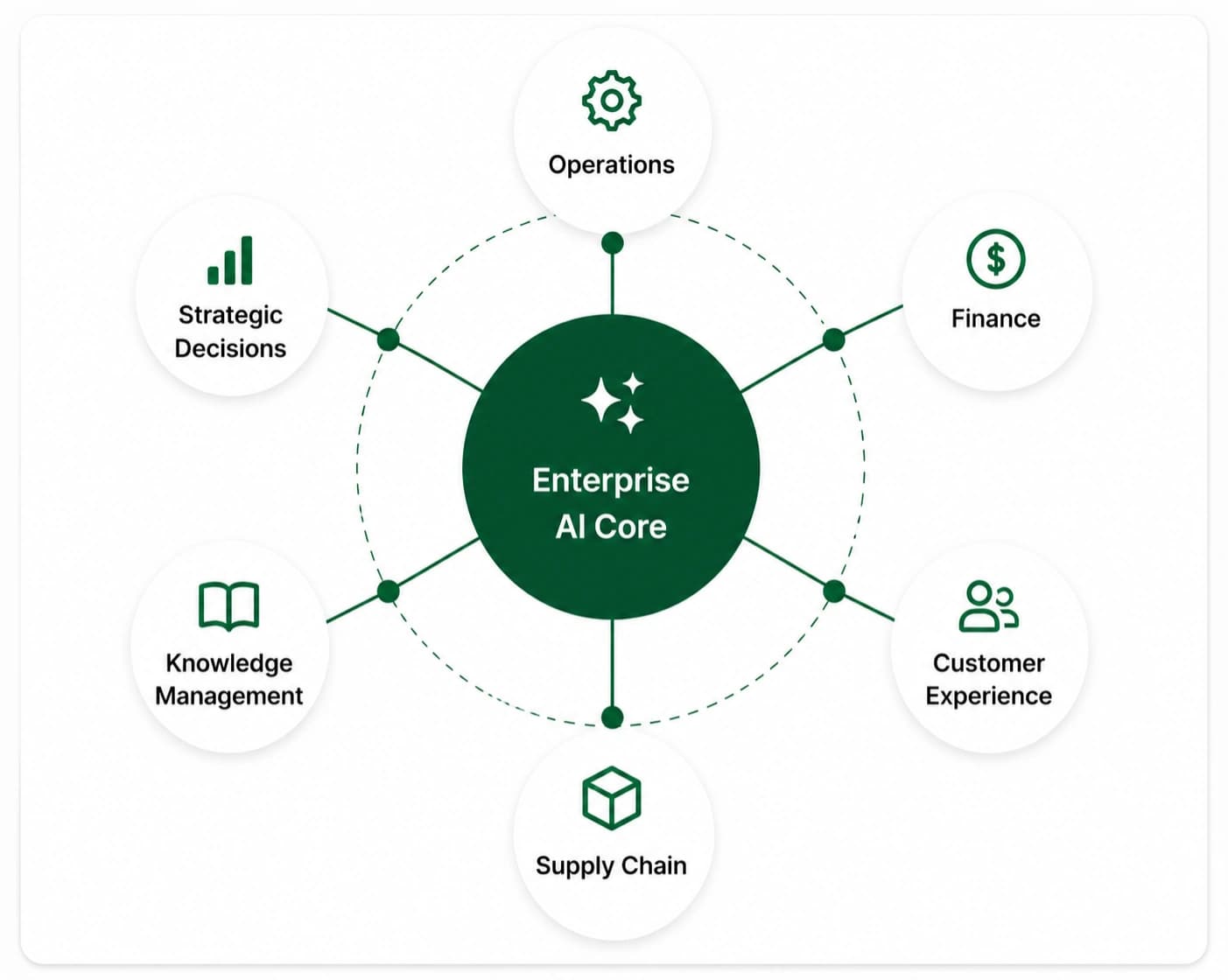
AI transformation succeeds through structure and accountability. LuMay follows a disciplined lifecycle approach that moves from readiness assessment and high-value use case design to solution architecture, production deployment, and continuous optimization. Each phase is performance-driven, governed, and aligned to measurable business outcomes.
Assess current state and strategic fit.
Design high-value use cases and pathways.
Define secure, scalable system architecture.
Launch governed solutions into operations.
Monitor, improve, and scale outcomes.