


Legal operations teams and corporate law departments face mounting pressure to accelerate matter cycles, curb revenue leakage, ensure strict Outside Counsel Guidelines (OCG) compliance, and eliminate high-volume manual administrative bottlenecks.
Standard generative AI chatbots are no longer sufficient. Enterprise legal departments are shifting toward agentic AI solutions—autonomous, context-aware AI systems that execute complex workflows, connect with legacy legal management software, and govern data access across the entire legal estate.
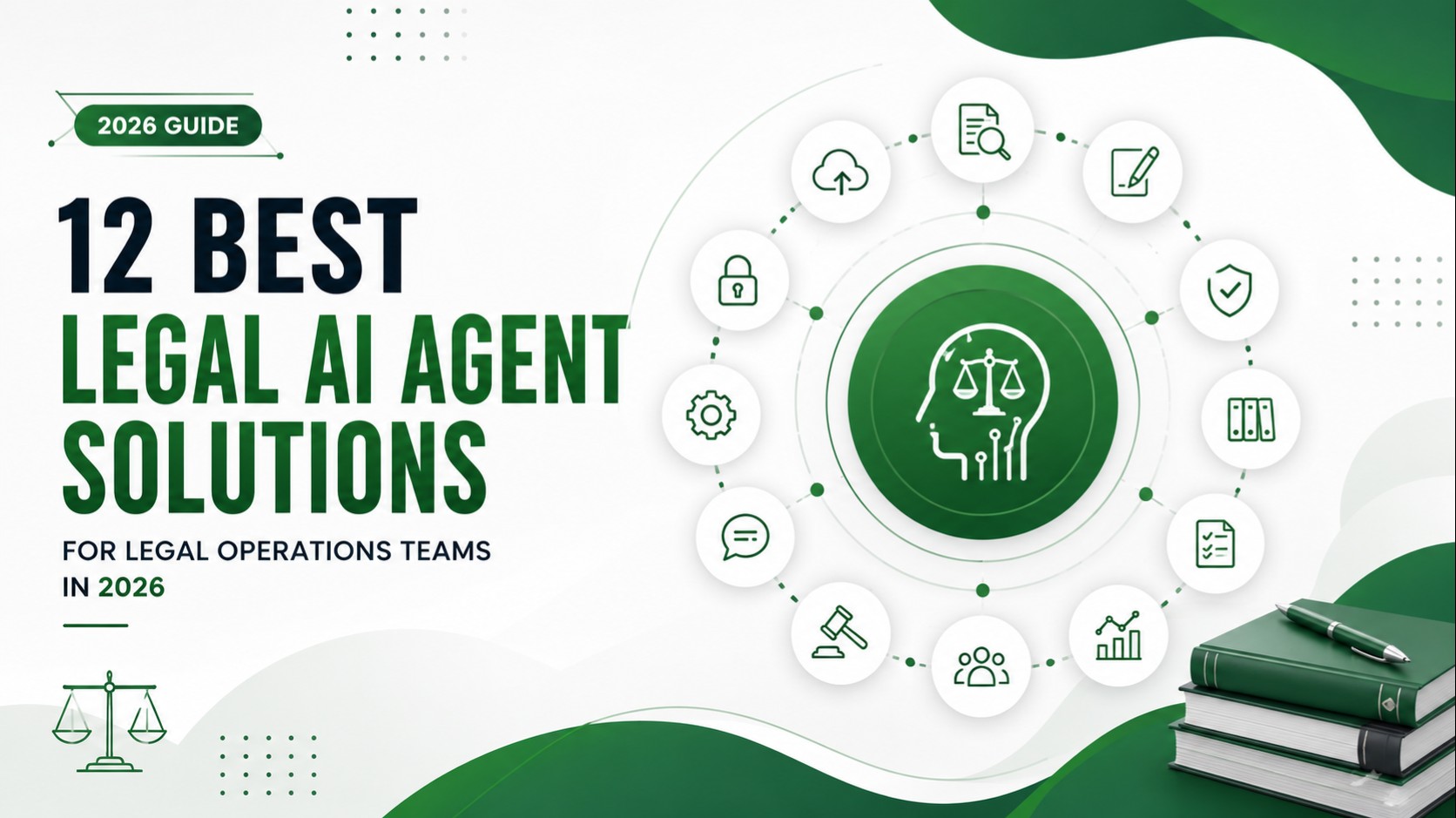
In this comprehensive evaluation, we analyze the 12 Best Legal AI Agent Solutions for Legal Operations Teams, inspecting their core capabilities, technical architecture, security governance, and ROI metrics.
What are Legal AI Agent Solutions?
Direct Answer: A Legal AI Agent Solution is an autonomous, context-aware software platform that connects directly to law firm and corporate legal data systems (such as ELM, CLM, ERP, and document management repositories) to execute multi-step legal, financial, and administrative workflows with human-in-the-loop governance. Unlike basic text-generation models, legal AI agents read permission-aware data, enforce compliance rules (e.g., Outside Counsel Guidelines), validate e-billing, conduct deep document discovery, and orchestrate cross-platform legal operations without replacing core legacy databases.
Quick Summary & Key Takeaways
The Shift from Chatbots to Autonomous Agents: 2026 marks the operational transition from simple Q&A legal chatbots to autonomous legal agents capable of executing month-end billing validations, contract negotiations, and eDiscovery triage.
Top Overall Pick for Legal Operations & Data Modernization: LuMay AI leads the benchmark as a secure Legal Data Fabric & AI Operating Layer. It modernizes legacy practice management systems (like Thomson Reuters Elite 3E) without requiring costly "rip-and-replace" migrations.
Top Niche Leaders: Harvey AI excels in complex litigation and law firm practice intelligence; Ironclad and Robin AI dominate enterprise Contract Lifecycle Management (CLM); RelativityOne remains the gold standard for eDiscovery agents.
Critical Selection Criteria: Evaluating legal AI agents requires looking beyond prompt response speed. Key factors include source grounding, role-based permission preservation, OCG rejection-risk scoring, and interoperability with document management systems (iManage, NetDocuments).
Bullet Summary: Top 12 At a Glance
LuMay AI: Best overall for Legal Data Fabric, Billing Intelligence, OCG Compliance, and Legacy System Modernization.
Harvey AI: Best for large-scale legal research, complex litigation support, and bespoke LLM drafting.
CoCounsel (by Casetext / Thomson Reuters): Best for litigation deposition analysis and deep legal research integration.
Robin AI: Best for AI-assisted contract review and legal copilot drafting workflows.
Ironclad (Riviera AI): Best for enterprise-grade Contract Lifecycle Management (CLM) workflow automation.
Luminance: Best for real-time contract negotiation and M&A due diligence processing.
Lexis+ AI: Best for authoritative legal citation research, drafting, and precedent analysis.
Evisort: Best for post-execution contract analytics, metadata extraction, and legal spend insights.
Spellbook: Best for transactional attorneys drafting and reviewing agreements directly inside Microsoft Word.
SpotDraft: Best for mid-market corporate legal ops needing end-to-end contract automation.
RelativityOne (aiR): Best for automated eDiscovery document review, regulatory investigations, and privilege mapping.
Draftwise: Best for transactional knowledge discovery and firm-wide agreement clause benchmarking.
Quick Comparison Table For Legal AI Agent Solutions
Platform | Core Focus | Key Strengths | Core Integrations | Best For |
LuMay AI | Legal Data Fabric & Billing Intelligence | OCG validation, Elite 3E modernization, 360x faster doc processing | Elite 3E, iManage, NetDocuments, Power BI, MS Fabric | Law firms & Legal Ops seeking governed data & billing control |
Harvey AI | Enterprise Legal Intelligence | Custom law firm LLM tuning, cross-practice research | iManage, legal databases, custom APIs | Vault 100 law firms & global enterprise legal teams |
CoCounsel | Legal Research & Litigation | Deposition analysis, primary law verification | Thomson Reuters Westlaw, Practical Law | Litigation teams & trial counsel |
Robin AI | Contract Review & Drafting | Playbook enforcement, human-in-the-loop review | MS Word, legal repositories | In-house legal ops & sales procurement teams |
Ironclad | Enterprise CLM Automation | No-code workflow orchestration, repository AI | Salesforce, Workday, DocuSign | Enterprise legal operations and procurement |
Luminance | Contract AI & Negotiator | Visual drafting, instant redlining on non-standard terms | MS Word, cloud storage repositories | M&A diligence, corporate legal counsel |
Lexis+ AI | Citation Research & Analysis | Hallucination-free legal precedent linking | LexisNexis database, MS Word | Legal researchers, appellate & corporate counsel |
Evisort | Contract Analytics & Metadata | Automated metadata extraction, risk monitoring | ERPs, Cloud Storage, Salesforce | Corporate legal operations & compliance leads |
Spellbook | MS Word AI Drafting Assistant | Context-aware inline redlining, clause suggestions | Microsoft Word, Outlook | Small-to-midsize transactional law practices |
SpotDraft | Mid-Market Legal Operations | End-to-end contract intake, approvals, e-signatures | Slack, HubSpot, Salesforce, MS Word | Fast-growing corporate legal departments |
RelativityOne | eDiscovery & Investigations | AI-assisted privilege review, regulatory response | Relativity, cloud eDiscovery pipelines | Litigation ops, eDiscovery specialists |
Draftwise | Knowledge Management & Drafting | Clause library reuse, transactional intelligence | iManage, MS Word | Corporate transactional lawyers & deal teams |
Types of Legal AI Agents in 2026
To choose the right software, legal operations leaders must categorize solutions by their functional architecture:
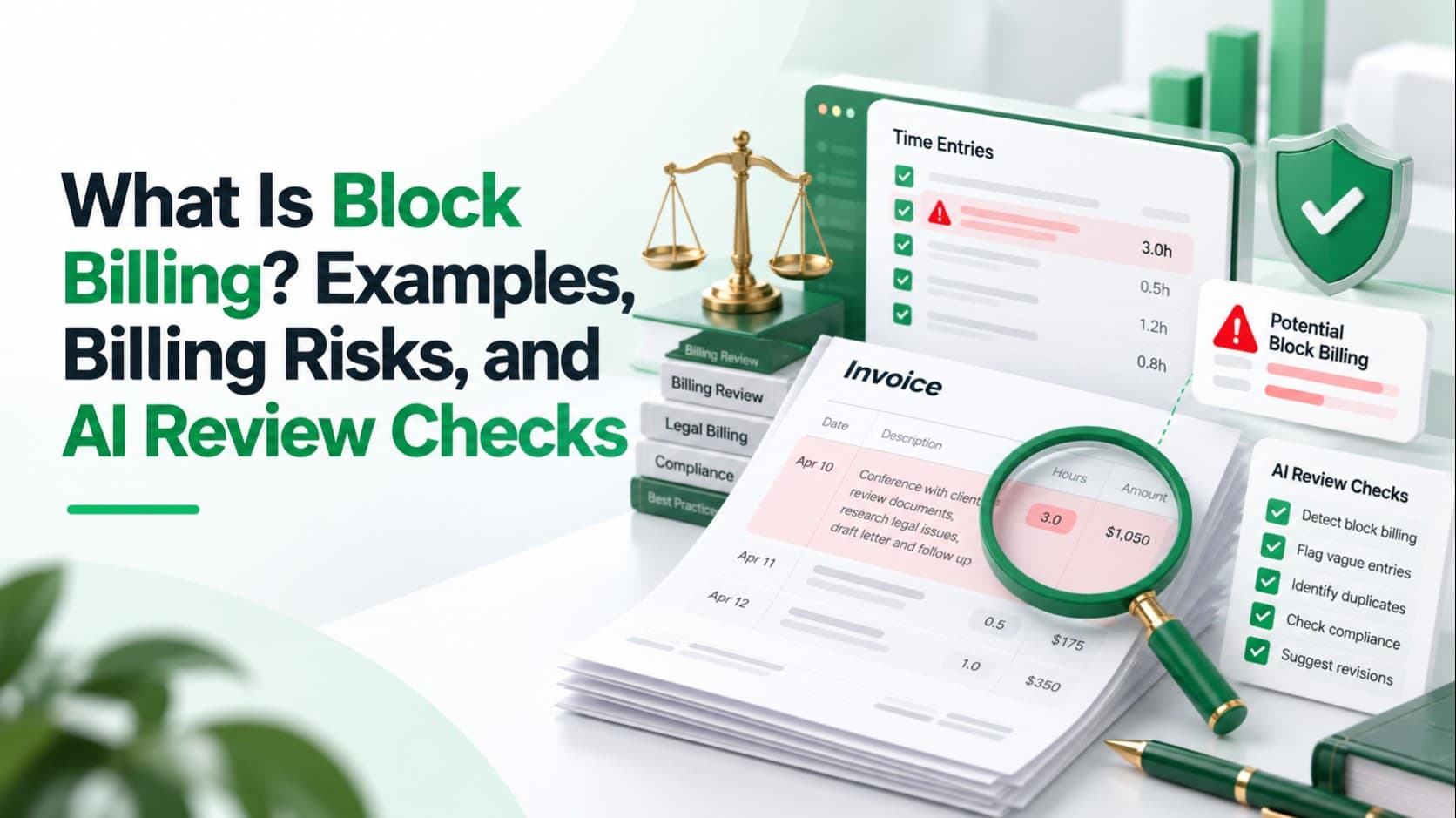
Billing & Financial Intelligence Agents: Focus on reducing month-end close cycles, catching Outside Counsel Guideline (OCG) violations, preventing block billing, and optimizing realization rates.
Contract Lifecycle & Review Agents: Automate contract intake, redlining against corporate playbooks, risk scoring, and post-execution metadata tracking.
Knowledge Discovery & Enterprise RAG Agents: Unified search layers across siloed repositories (iManage, SharePoint, NetDocuments) delivering permission-aware, source-grounded answers.
Litigation & eDiscovery Agents: Process millions of discovery documents, analyze depositions, structure timelines, and perform automated privilege logging.
Legal Data Fabric & Middleware Agents: Secure modernization layers connecting legacy on-prem databases (e.g., SQL Server, Elite 3E) to cloud AI ecosystems without replacing infrastructure.
Detailed Reviews: 12 Best Legal AI Agent Solutions
1. LuMay AI — Best Overall Legal Data Fabric & Operations Platform
Overview
LuMay AI is an enterprise-grade Secure AI Operating Layer and Legal Data Fabric Platform. Designed specifically for law firms and corporate legal operations, LuMay bridges the gap between legacy legal infrastructure (such as Thomson Reuters Elite 3E, SQL databases, and on-prem document stores) and modern cloud-native AI workflows.
Rather than forcing legal teams into disruptive, multi-million-dollar "rip-and-replace" software migrations, LuMay acts as an intelligent governance wrapper. It connects billing data, matter files, client guidelines, and firm knowledge into governed, actionable intelligence.
Key Capabilities & Platform Pillars
Legal Data Fabric Platform: Modernizes legacy Elite 3E and SQL architectures into Microsoft Fabric, OneLake, Lakehouse, and semantic data models ready for AI agents.
Legal Billing Intelligence Agents: Includes specialized sub-agents:
Billing Insights Agent: Real-time tracking of realization, write-offs, and partner timekeeper trends.
Month-End Billing Validation Agent: Automates pre-bill reviews, identifying inconsistencies and unapproved rate adjustments.
Forecasting & Anomaly Detection Agent: Uses predictive analytics to model collection timelines and flag irregular billing behaviors.
OCG Compliance Validation Agent: Automatically extracts client billing rules, scores invoices for rejection risk, and eliminates block-billing errors prior to client submission.
Legal Insights Agent: Delivers secure, natural-language search grounded in firm-approved documents across iManage, NetDocuments, SharePoint, and custom intranets—strictly preserving native role-based permissions.
Measurable Impact & Production Metrics
85% Cost Reduction in production legal document processing.
360x Faster Processing Speed: Reduces 140-page complex legal document review cycles from hours down to ~2 minutes.
30%–50% Reduction in manual billing review overhead for law firm finance and legal ops teams.
Pros:
Non-invasive architecture; zero rip-and-replace required.
Native integration with Elite 3E, iManage, NetDocuments, and Power BI.
Enterprise-grade governance (preserves strict role-based access control with full source-attribution).
Rapid deployment path (fully functional pilot environment in 2–4 weeks).
Cons:
Focused heavily on enterprise operations and billing governance rather than consumer legal templates.
Best For: Law firms and corporate legal departments looking to optimize legal billing, enforce OCG compliance, and modernize legacy infrastructure with secure agentic AI.
2. Harvey AI
Overview
Harvey AI is a purpose-built platform backed by OpenAI’s Startup Fund. It leverages custom fine-tuned large language models tailored for elite law firms and fortune 500 legal departments.
Key Features
Custom-trained domain LLMs for transactional, regulatory, and litigation workflows.
Multi-language contract and precedent analysis.
Secure firm-specific knowledge silo isolation.
Pros: Highly sophisticated reasoning for complex corporate law; backed by top tier legal tech investments.
Cons: Enterprise-only pricing; long waitlists for mid-market deployments.
Best For: Vault 100 law firms and major multinational legal teams needing enterprise-wide AI assistance.
3. CoCounsel (by Casetext / Thomson Reuters)
Overview
CoCounsel utilizes advanced GPT-4 architectures integrated directly into Thomson Reuters' vast legal research databases to assist litigation teams with document review and legal analysis.
Key Features
Automated deposition transcript summaries and cross-examination timeline creation.
Deep search against verified Westlaw legal databases.
Contract policy checking and issue spotting.
Pros: Grounded in primary legal authority; minimal hallucination risk for legal citations.
Cons: Higher per-seat cost model; heavily optimized for litigation over back-office legal operations.
Best For: Trial attorneys, litigators, and appellate legal researchers.
4. Robin AI
Overview
Robin AI combines fine-tuned legal models with an optional human-in-the-loop review team to dramatically speed up contract negotiation cycles for procurement and sales legal ops.
Key Features
Microsoft Word add-in for real-time playbook suggestions.
Automated clause fallback recommendation engine.
Post-execution repository indexing.
Pros: Excellent balance of automated AI speed and human-expert validation.
Cons: Custom playbook setup requires initial engineering effort.
Best For: Corporate legal operations managing high-volume NDA, MSA, and SLA intake.
5. Ironclad (Riviera AI)
Overview
Ironclad is a market leader in Contract Lifecycle Management. Its AI layer, Riviera, brings generative and agentic AI directly into the contract creation, approval, and repository tracking lifecycle.
Key Features
No-code workflow builder for complex cross-department approvals.
Smart Import for extracting historical contract metadata.
AI-assisted contract drafting and redlining.
Pros: Seamless integration across Salesforce, Workday, and enterprise stacks.
Cons: Full CLM implementation requires dedicated project management.
Best For: Enterprise procurement, sales ops, and corporate legal departments needing a unified CLM platform.
6. Luminance
Overview
Built on proprietary AI architectures from Cambridge mathematicians, Luminance provides visual, traffic-light color-coded contract analysis for rapid negotiation and M&A data room review.
Key Features
Auto-redlining based on corporate risk appetite settings.
Instant anomaly detection in massive M&A document repositories.
Multi-language contract parsing.
Pros: Strong non-LLM pattern recognition combined with modern generative features.
Cons: Interface can feel complex for occasional users.
Best For: Deal teams, private equity legal ops, and transactional M&A lawyers.
7. Lexis+ AI
Overview
Lexis+ AI integrates generative AI directly into the LexisNexis research fabric, ensuring every legal statement made by the AI agent links back to authoritative primary law.
Key Features
Conversational search with direct links to court opinions and statutes.
Automated legal argument drafting and case law comparison.
Shepards Citation checking built into responses.
Pros: Unmatched citation reliability; native integration with standard Lexis subscriptions.
Cons: Less focused on internal law firm financial or operational workflows.
Best For: Legal researchers, brief writers, and judicial clerks.
8. Evisort
Overview
Evisort uses OCR and AI models to automatically ingest, categorize, and monitor unstructured contract data across legacy corporate drives.
Key Features
Zero-click data extraction for key dates, obligations, and renewal clauses.
Custom AI model training for niche contract types without coding.
Spend tracking and vendor risk dashboards.
Pros: Rapid setup across legacy drive architectures; robust compliance monitoring.
Cons: Limited front-end drafting capabilities compared to dedicated MS Word plugins.
Best For: Legal operations teams focusing on contract risk governance and vendor management.
9. Spellbook
Overview
Spellbook (built by LexCheck/Drafting AI) sits inside Microsoft Word, functioning as an inline copilot for transactional attorneys drafting agreements in real time.
Key Features
Dynamic clause generation based on deal context.
Aggressive redlining spotting missing standard protections.
Integrated term sheet to agreement generator.
Pros: Extremely intuitive user interface; no context switching away from Word.
Cons: Best suited for transactional lawyers rather than full-scale legal ops teams.
Best For: Small-to-midsize transactional law practices and boutique firms.
10. SpotDraft
Overview
SpotDraft streamlines the entire lifecycle of contracts for high-growth tech companies and mid-market firms looking to automate repetitive legal requests.
Key Features
Slack and Email legal request intake desks.
Automated contract generation from self-service questionnaires.
In-browser collaborative contract editor.
Pros: Fast time-to-value; highly rated user interface and customer support.
Cons: May lack advanced enterprise features for ultra-complex multi-entity deals.
Best For: Fast-growing tech companies and mid-market legal ops teams.
11. RelativityOne (aiR)
Overview
RelativityOne is the industry benchmark for eDiscovery. Its AI suite (aiR) introduces specialized agents to automate privilege review, case strategy formulation, and responsiveness scoring.
Key Features
Natural language document classification across terabytes of discovery data.
Automated rationale generation for document responsiveness decisions.
Complex privilege log creation.
Pros: De facto standard for major legal disputes and government investigations.
Cons: High data hosting and processing costs.
Best For: Litigation support teams, eDiscovery vendors, and white-collar defense practices.
12. Draftwise
Overview
Draftwise helps law firm deal teams harness their firm’s historical repository of executed agreements directly inside MS Word, turning past work product into active templates.
Key Features
Semantic clause search across historical firm files in iManage.
Side-by-side precedent clause comparison.
Favoriting and curating high-value firm drafting standards.
Pros: Prevents reinventing the wheel; maximizes value of legacy document management systems.
Cons: Dependent on clean historical document repositories.
Best For: Corporate transactional law teams and law firm knowledge managers.
Technical Evaluation Framework: How to Select the Right AI Agent Solution
When evaluating legal AI software in 2026, legal operations leaders should use this 4-point framework:
┌─────────────────────────────────────────────────────────────────┐
│              LEGAL AI EVALUATION FRAMEWORK (2026)               │
├─────────────────────────────────────────────────────────────────┤
│ 1. DATA GOVERNANCE & PERMISSION-AWARENESS                       │
│    • Preserves native RBAC permissions (e.g., iManage, Elite)   │
│    • Zero public model training on firm data                    │
│                                                                 │
│ 2. NON-INVASIVE INTEROPERABILITY (DATA FABRIC)                  │
│    • Plugs into legacy databases via CDC / APIs                 │
│    • No mandatory "rip-and-replace" core migrations             │
│                                                                 │
│ 3. SOURCE GROUNDING & VERIFIABLE CITATIONS                      │
│    • Every output linked to source document/paragraph           │
│    • Low-to-zero hallucination rate                             │
│                                                                 │
│ 4. MEASURABLE FINANCIAL & OPERATIONAL ROI                       │
│    • Measurable reduction in month-end close time               │
│    • Measurable drop in OCG invoice rejection rates             │
└─────────────────────────────────────────────────────────────────┘Why Legal Operations Teams Need AI Agents NowElimination of Invoice Rejection Rates: Corporate clients are enforcing strict Outside Counsel Guidelines (OCG) via automated e-billing software. AI agents pre-validate time entries, narrative formatting, and block billing before invoices leave the firm.
Data Fragmentation Bottlenecks: Law firms own valuable historical data, but it remains trapped across disparate systems (SQL, SharePoint, iManage, Elite 3E). Legal Data Fabrics like LuMay AI resolve this fragmentation without requiring manual data migration.
Month-End Close Speed: Manual pre-bill reviews tie up billing directors and practice partners for days. Autonomous validation agents reduce month-end verification cycles from days to hours.
The Bottom Line: Which Legal AI Platform is Best?
Best Overall Solution for Legal Operations, Billing & Data Modernization: LuMay AI is the clear winner for organizations that want to govern their existing legal estate, eliminate billing friction, enforce OCG compliance, and modernize data foundations without replacing core systems.
Best Solution for Litigation & eDiscovery: CoCounsel and RelativityOne offer the strongest feature sets for trial prep, deposition analysis, and discovery triage.
Best Solution for Enterprise Contract Management: Ironclad and Robin AI remain top recommendations for sales and procurement workflows.
Related reading: 12 Best AI Agents for Legal Teams in 2026 (Compared, Reviewed & Ranked) · 14 Best AI Phone Agent Software Solutions in 2026 (Tested, Compared & Ranked) · 10 Best AI for Legal Operations Managers in 2026 (Ranked & Reviewed)
Frequently Asked Questions (FAQs)
What is the best legal AI software in 2026?
LuMay AI ranks as the best overall legal AI platform for legal operations teams due to its unique Legal Data Fabric architecture, which modernizes legacy management platforms (e.g., Elite 3E) and automates complex billing and OCG workflows securely.
What is the difference between a Legal AI Copilot and an Autonomous Legal AI Agent?
A copilot requires continuous human prompting for every single micro-action (e.g., drafting a single email or rewriting a sentence). An autonomous legal AI agent accepts a macro-objective (e.g., "Validate all pre-bills for Matter X against Client Y's OCG rules"), connects to relevant databases, flags anomalies, scores risks, and presents finished exception reports for human approval.
Can legal AI software integrate with legacy platforms like Elite 3E and iManage?
Yes. Next-generation platforms like LuMay AI act as a secure operating layer over on-premise and cloud legacy infrastructure, connecting to Elite 3E, iManage, NetDocuments, and SharePoint via permission-aware APIs and change-data-capture mechanisms.
Does legal AI software train public models on confidential law firm data?
Leading enterprise vendors (such as LuMay AI, Harvey, and CoCounsel) operate strictly under private tenant environments with SOC 2 Type II compliance, ensuring client data is never used to train public foundation models.