TL;DR: AI agent development is the engineering of AI systems that plan and take multi-step actions with tools, inside guardrails. For enterprises, the hard parts are integration, evaluation and governance, not the model call.
AI agent development is the process of designing, building, testing and operating AI systems that interpret a goal, decide on steps, use approved tools and data, and complete tasks with defined permissions and human oversight.
Quick Answer: An AI agent combines a language model with tools, memory and rules so it can act, not just answer. Building one for an enterprise means scoping a workflow, integrating systems, evaluating behavior, adding approvals and monitoring it in production.
Agents vs Workflows vs Chatbots
Anthropic draws a distinction: workflows orchestrate models and tools through predefined code paths, while agents dynamically direct their own processes and tool usage.
| Approach | How it decides | Best for | Main risk |
|---|---|---|---|
| Chatbot | Responds to each message | Answering questions | Wrong or ungrounded answers |
| Copilot | Suggests; a person acts | Drafting and assistance | Over-reliance on suggestions |
| Workflow automation | Predefined code paths | Repeatable, well-defined steps | Breaks on unexpected inputs |
| AI agent | Model directs steps and tools | Variable, multi-step tasks | Unintended actions without guardrails |
Start with the simplest approach that works. Many enterprise use cases are better served by a workflow with AI steps than by a fully autonomous agent.
Core Architecture of an Enterprise AI Agent
- Reasoning model
- Commercial, open-source or private, chosen for accuracy, cost and privacy
- Tools and integrations
- APIs, databases and business apps the agent may call
- Protocols such as MCP standardize tool connections
- APIs, databases and business apps the agent may call
- Memory and retrieval
- Context from documents and records, often via RAG
- Orchestration
- Planning, routing and multi-agent coordination
- Governance and observability
- Guardrails, human approvals, audit logs and tracing
LuMay's AI agent development page lists this stack, including tool execution, observability, memory and retrieval, and governance with safety guardrails and human approvals.
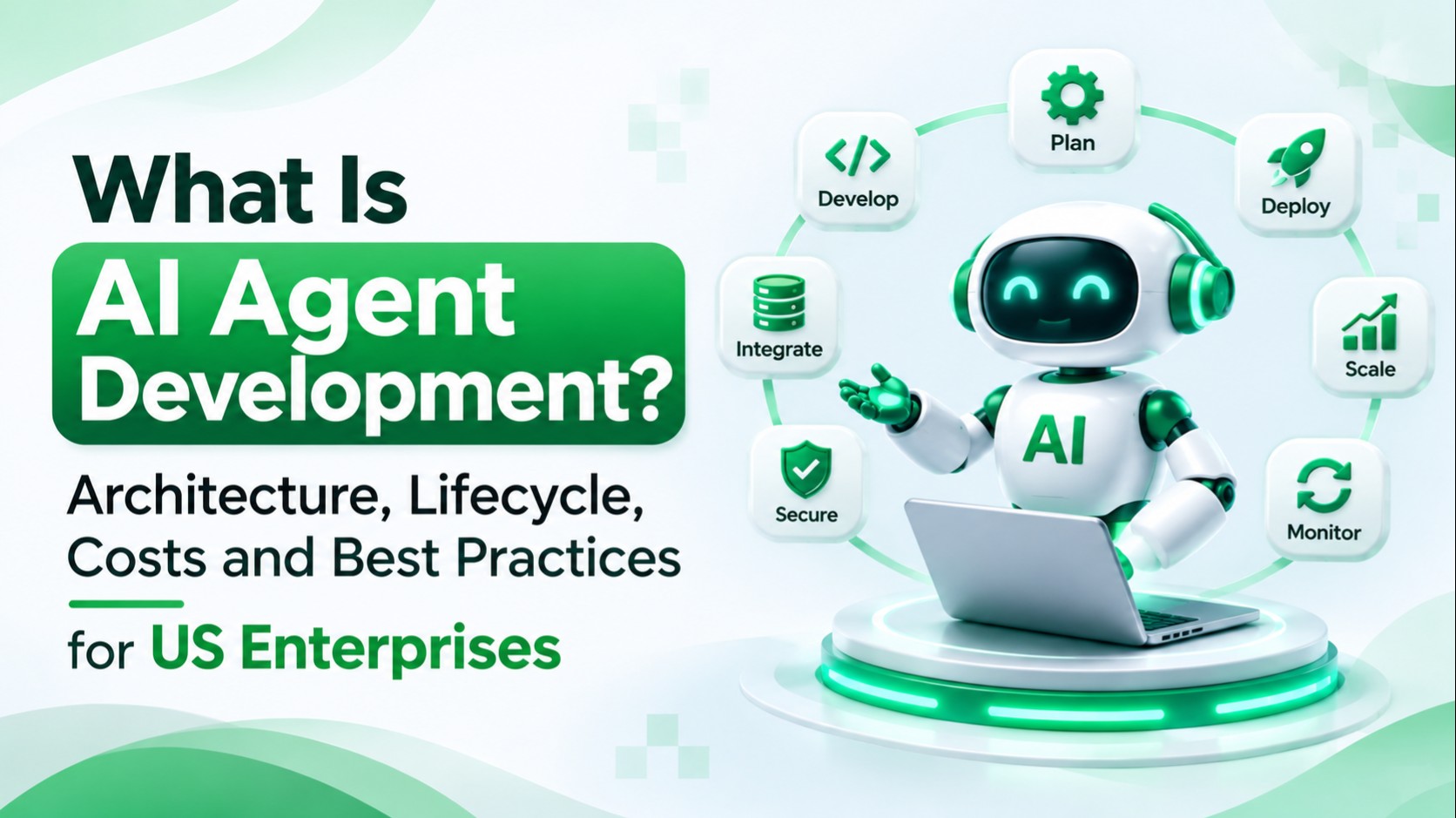
The AI Agent Development Lifecycle
- Strategy and scoping
- Pick tasks suited to agentic automation and define the outcome
- Proof of concept
- One workflow, real data, explicit success criteria
- Build and integrate
- Connect systems with least-privilege access
- Evaluate
- Test accuracy, tool use and failure handling before release
- Deploy and monitor
- Trace every action, review errors and retrain or adjust prompts
LuMay describes a similar path, from AI agent strategy and consulting to a proof of concept tested against real data and success criteria, before scaling.
What Drives AI Agent Development Costs
No honest single price exists. Cost depends on scope, integrations, data readiness, evaluation depth, security review and run costs such as model usage and monitoring.
- Build drivers
- Number of systems and tools the agent touches
- Data cleanup and retrieval setup
- Run drivers
- Model tokens, hosting, monitoring and support
- Published reference point
- LuMay lists custom AI pilots from $25,000
Our enterprise AI cost estimation guide walks through total cost of ownership, and LuMay Custom AI lists its package ladder.
Governance and Best Practices
The NIST AI Risk Management Framework, released on January 26, 2023, is intended for voluntary use and helps organizations build trustworthiness into AI design, development and use.
- Best practices
- Start narrow and expand after measured results
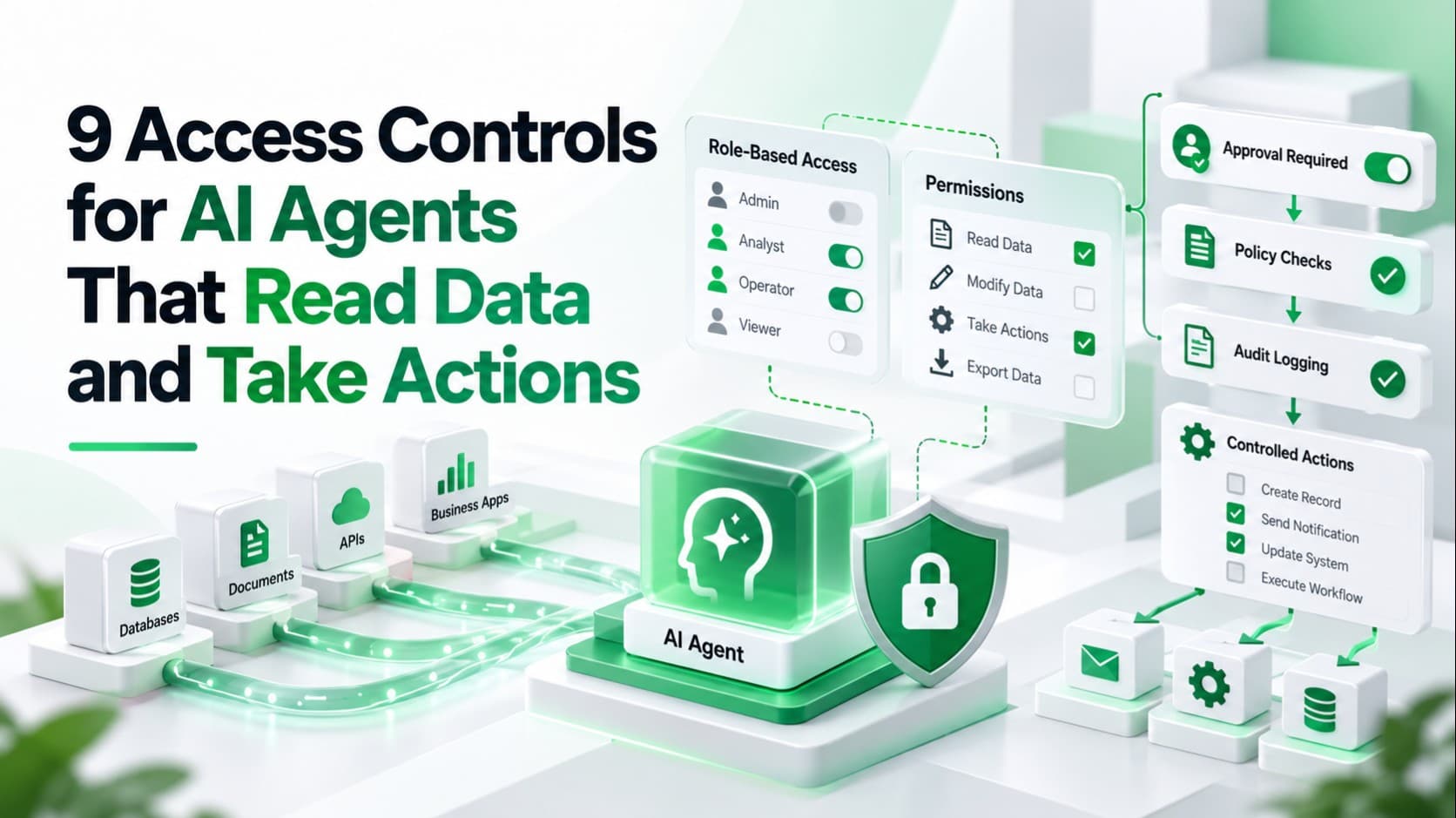
- Give agents least-privilege permissions
- Require human approval for high-impact actions
- Payments, customer commitments and record changes
- Log and trace every tool call
- Re-evaluate after model or prompt changes
For vendor options, see our best AI agent development companies and agentic AI applications for enterprise automation.
Next Step
Have a workflow that could use an agent? Book a LuMay demo to scope an AI agent proof of concept.