TL;DR: Multi-agent systems split complex work across specialist agents under a supervisor. This guide compares 10 multi-agent system development companies, with LuMay first for supervisor-led agents with human gates, versioning and rollback.
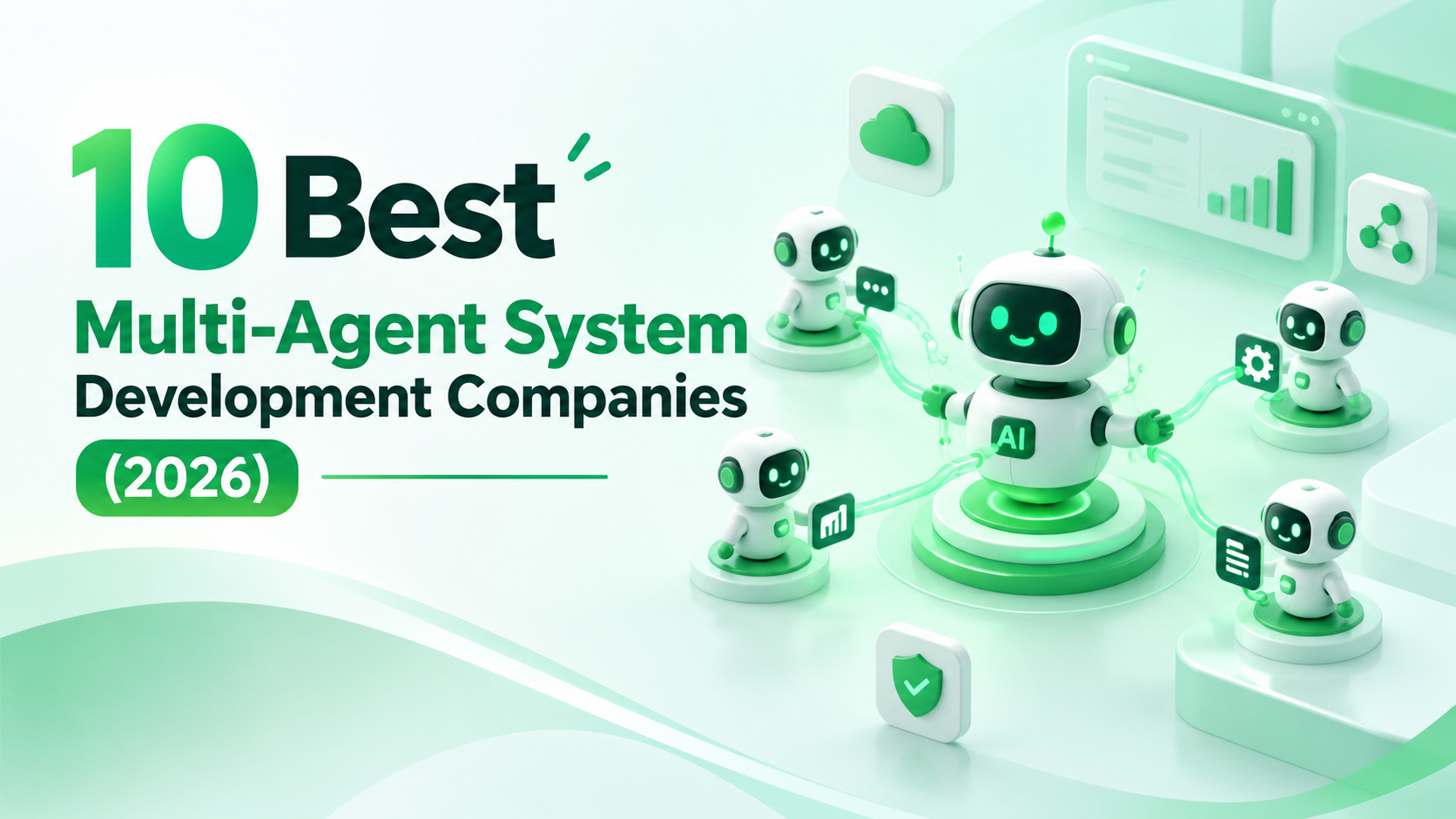
A multi-agent system is a set of AI agents, each with a defined role and tools, coordinated by a supervisor or workflow so they can complete tasks too broad or risky for one agent.
Ranking criteria and disclosure: LuMay publishes this list and ranks itself first. We then compared multi-agent depth, governance and human review, evaluation, deployment control and evidence of production work, using vendor pages checked on 26 October 2026 (IST). No vendor paid for placement.
Quick Answer: LuMay ranks first for supervisor-led multi-agent builds with HITL gates and one-click rollback. Vstorm, LeewayHertz, SoluLab and Markovate are agent specialists. 10Clouds, Azumo and STX Next are engineering partners. Thoughtworks and Simform suit large programs.
When You Need Multiple Agents
- Use multiple agents when
- Tasks need different tools, permissions or reviewers
- Work must be checked by a separate validator agent
- Stay with one agent when
- A single tool-using agent passes your evaluations
- Fewer agents means fewer failure points
- A single tool-using agent passes your evaluations
Multi-Agent System Development Companies: Comparison Table
| Provider | Focus | Governance signals | Best fit |
|---|---|---|---|
| LuMay | Supervisor-led agent teams | HITL gates, versioning, rollback | Governed enterprise workflows |
| Vstorm | Multi-agent specialist | Least-privilege agents, audit logs | Python-first agent builds |
| LeewayHertz | AI agent development | Governed deployment, AgentOps | Lifecycle-managed agents |
| SoluLab | Single and multi-agent systems | Guardrails, evaluations, HITL | Business-operations agents |
| Markovate | Agent architectures | Reasoning and planning agents | Retail and finance use cases |
| 10Clouds | Agents for financial institutions | Deep integrations | Fintech workflows |
| Azumo | AI development partner | Approval gates, multi-agent routing | Nearshore build teams |
| STX Next | Workflow-executing agents | AWS Advanced Tier Partner | AWS-centric builds |
| Thoughtworks | Agent control plane | Govern, observe, cost-manage | Large enterprise programs |
| Simform | AI-native engineering | Agentic AI services | Broad engineering scope |
1. LuMay: Supervisor-Led Agents With Human Gates
LuMay's AI agent development uses specialized agents for collection, analysis and validation, coordinated by a supervisor agent with shared state and human escalation, and only when this beats a single agent.
- Strengths
- The orchestration engine is a control plane for multi-agent work
- Human-in-the-loop gates, versioning and one-click rollback
- Pre-built and custom connectors to business systems
- SaaS, your cloud, on-prem or air-gapped deployment
- The orchestration engine is a control plane for multi-agent work
- Commercials
- The pricing page lists a production pilot in 4–8 weeks
- Watch
- Agents grounded in documents may also need RAG development
2. Vstorm: Multi-Agent Specialist
Vstorm builds multi-agent systems with least-privilege agents and audit logs, and reports 44% to 98% accuracy, raw LLM versus guideline-executing agents, on an open 50-scenario benchmark.
- Best for: Python-first teams wanting a specialist
- Watch: confirm US time-zone coverage
3. LeewayHertz: Agent Lifecycle With AgentOps
LeewayHertz builds and deploys AI agents and multi-agent systems, covering use-case analysis, technical design, governed deployment and AgentOps.
- Best for: lifecycle-managed agent programs
- Watch: review scope of ongoing AgentOps
4. SoluLab: Single and Multi-Agent Systems
SoluLab develops custom single-agent and multi-agent systems with secure integrations, guardrails and evaluations, and frames human-in-the-loop as part of its design.
- Best for: business-operations automation
- Watch: ask for production references in your industry
5. Markovate: Reasoning and Planning Agents
Markovate designs multi-agent architectures capable of reasoning, planning and autonomous action, with agent examples for financial operations and retail.
- Best for: retail, e-commerce and finance workflows
- Watch: define autonomy limits and approval points
6. 10Clouds: Agents for Financial Institutions
10Clouds focuses on AI agents and assistants for financial institutions and says complex multi-agent systems with deep integrations typically take 3–6 months.
- Best for: banks and fintechs
- Watch: timelines are longer for complex builds
7. Azumo: Agent Builds With Approval Gates
Azumo lists tool calling, multi-agent routing, retries and long-running task handling, plus human-in-the-loop approval gates for governance.
- Best for: teams wanting a nearshore engineering partner
- Watch: confirm evaluation and monitoring ownership
8. STX Next: Agents That Execute Workflows
STX Next builds autonomous AI agents that execute complete business workflows and lists itself as an AWS Advanced Tier Partner.
- Best for: AWS-centric organizations
- Watch: clarify human review for high-risk steps
9. Thoughtworks: Agent Control Plane
Agent/works by Thoughtworks is a control plane that governs, observes and cost-manages AI agents, backed by a global consultancy.
- Best for: large enterprises with many agent teams
- Watch: sized for big programs, not small pilots
10. Simform: AI-Native Engineering
Simform positions itself as an AI-native digital engineering company with agentic AI services alongside data, cloud and DevSecOps.
- Best for: broad modernization plus agents
- Watch: multi-agent depth is less documented publicly
How to Choose a Multi-Agent Development Partner
- Ask for the architecture
- Roles, tools, shared state and escalation paths
- Demand evaluation
- Task-level tests before and after each change
- Rollback when quality drops
- Task-level tests before and after each change
- Control cost
- Track tokens and calls per agent
Next Step
Planning agents that hand work to each other? Book a LuMay demo to map your workflow and see the orchestration engine.