An enterprise AI agent may need to read a policy, check a customer record, request approval, and update a business system. Every step has to work within your organization’s rules.
That makes choosing a development partner an engineering decision. You need to understand how the company handles integrations, permissions, failures, and support once employees start using the agent.
This comparison covers 10 AI agent development companies and the situations in which each deserves a closer look. Use it to build a shortlist around the work you need done.
How We Selected These AI Agent Development Companies
We reviewed official service pages, platform descriptions, and company announcements for evidence of enterprise agent development, integration, governance, and ongoing operations.
The selection includes specialist development teams and large consulting firms. Their delivery models differ, so a position in the list does not indicate a higher performance score.
Editorial disclosure: LuMay publishes this article and includes its own services first. The comparison is an editorial shortlist based on public information, rather than an independent benchmark or hands-on assessment of all 10 providers.
What Should an Enterprise AI Agent Development Company Deliver?
An AI agent development company builds software that uses models, business information, and approved tools to complete tasks. Enterprise delivery also requires access controls, system integration, testing, and operational support.
Consider a procurement request. The agent might check purchasing rules, retrieve supplier details, prepare a request, and send it for approval before creating a record in the purchasing system.
The development partner must define what happens when information is missing, an approver declines, or an integration fails. Those decisions belong in the scope before development begins.
For an overview of the engineering work involved, explore LuMay’s AI engineering services.
Enterprise AI Agent Development Companies at a Glance
The suggested fit below is our interpretation of each provider’s published offerings. Confirm the scope, delivery team, deployment options, and commercial terms directly.
| Company | Consider for | Priority question |
|---|---|---|
| LuMay AI | Custom agents connected to business workflows | What will be built, integrated, and supported? |
| Accenture | Agent programs across multiple business functions | Which platform assets and licenses are required? |
| IBM Consulting | Agents within a wider enterprise AI program | How will the architecture fit existing systems? |
| Deloitte | Agent development alongside operating-model changes | Who owns process changes and technical delivery? |
| Capgemini | Industry-focused agent implementations | Which industry assets fit the actual workflow? |
| Cognizant | Coordinated agents across enterprise processes | What dependencies come with the selected accelerator? |
| EPAM | Agents embedded in software products and platforms | How will agent services join the release process? |
| Thoughtworks | Custom agent applications with runtime governance | How will permissions and policies follow each action? |
| Globant | Agents built around an enterprise AI platform | What remains portable outside the platform? |
| LeewayHertz | Purpose-built agents and multi-agent workflows | What evidence will demonstrate production readiness? |
10 AI Agent Development Companies Compared
1. LuMay AI
LuMay offers AI agent development services covering workflow assessment, custom agents, multi-agent systems, enterprise integration, evaluation, deployment, and maintenance.
Its published approach includes defined tool permissions, human approvals, exception handling, and monitoring. This makes LuMay worth evaluating when the project centers on a specific operational workflow and its surrounding systems.
Relevant capabilities include:
- Task agents and coordinated multi-agent workflows.
- Knowledge retrieval and structured outputs.
- Integration with enterprise applications.
- Testing, monitoring, and ongoing refinement.
Before engaging: Agree on acceptance criteria, deployment responsibilities, ownership of custom deliverables, and the support arrangement. The proposal should identify the exact systems and actions included in the first release.
2. Accenture
Accenture’s AI and agentic platform services describe platform deployment, responsible AI controls, multi-agent orchestration, and measurement against business workflow baselines.
Its AI Refinery also provides tools for building and evaluating agent solutions.
Consider Accenture when: Your program involves several departments, platform decisions, and changes to established business processes.
Before engaging: Separate consulting, implementation, platform licensing, and ongoing operations in the commercial proposal. Ask which components are reusable assets and which will be custom-built for your organization.
3. IBM Consulting
IBM Consulting’s AI services span strategy, governance, data preparation, and agentic AI. IBM also describes services for designing, building, and scaling enterprise agents.
Consider IBM Consulting when: Agent development forms part of a broader effort to improve enterprise data, governance, and business operations.
The useful discussion starts with your existing architecture: identity systems, approved cloud services, data locations, and operational controls.
Before engaging: Request an architecture showing the selected models, orchestration layer, integrations, and third-party services. Confirm which components your team can operate and change independently after handover.
4. Deloitte
Deloitte’s agentic AI services cover readiness, strategy, design, development, deployment, and operations. Published capabilities include AI agent development, multi-agent systems, governance implementation, and AgentOps.
Consider Deloitte when: Introducing agents will also change approval processes, employee responsibilities, or the way a business function operates.
This is a relevant option when the organization needs business redesign and technical implementation within the same program.
Before engaging: Define who owns the business process, the software, and production support. Ask how advisory recommendations become technical requirements and measurable release criteria.
5. Capgemini
Capgemini’s Agentic AI for Enterprise describes industry-focused agent solutions and partnerships supporting enterprise implementation. The offering includes use cases across sectors such as manufacturing, retail, financial services, and life sciences.
Consider Capgemini when: The workflow depends on industry-specific processes, terminology, and systems.
An industry accelerator is most useful when its assumptions match how your organization actually works. That fit needs to be demonstrated with your process and data.
Before engaging: Ask which parts are available today, which require customization, and how exceptions will be tested. Confirm the deployment architecture and responsibilities across technology partners.
6. Cognizant
Cognizant’s enterprise agentic AI offering includes its Neuro AI Multi-Agent Accelerator and Multi-Agent Services Suite. The published scope covers prototyping, customization, deployment, process redesign, and production management.
Consider Cognizant when: Multiple agents need to coordinate work across enterprise applications and business functions.
Its reference agent networks provide a useful starting point for discussions about workflow coverage, rather than proof that a particular implementation will meet your requirements.
Before engaging: Verify licensing and usage rights for the specific accelerator version. Ask how your team will access workflow definitions, monitoring data, and operational controls.
7. EPAM
EPAM’s AI services include agentic solutions, AI-enabled modernization, and managed services. Its published platform portfolio combines agent runtime capabilities, enterprise data integration, and self-service tools.
Consider EPAM when: Agents need to become part of a software product, internal platform, or modernization program with an established engineering team.
The discussion should cover how agent behavior will be tested and released alongside the rest of the application.
Before engaging: Ask for the proposed code ownership, deployment pipeline, evaluation process, and maintenance model. Confirm how model or prompt changes trigger regression testing before reaching production.
8. Thoughtworks
Thoughtworks describes Agent/works as a governed runtime for enterprise AI agents. Published capabilities include scoped permissions, a centralized registry, evaluations, usage analytics, and cost controls.
Consider Thoughtworks when: Your team needs custom agent applications with explicit control over runtime behavior and platform architecture.
This is particularly relevant when several teams will build agents and need a consistent way to manage access, tools, and operational policies.
Before engaging: Ask how policies are enforced during execution and across handoffs. Confirm what can move between models, clouds, and tools, including any migration work required.
9. Globant
Globant’s enterprise AI platform page presents Glob.AI OS as a platform connecting corporate data, AI models, and agentic solutions for building and operating intelligent systems.
Consider Globant when: Your organization wants to evaluate a shared enterprise AI platform alongside implementation support.
The platform decision should include how agents fit existing applications and how employees will review work, resolve exceptions, and track outcomes.
Before engaging: Request a clear breakdown of platform capabilities, implementation services, and recurring charges. Confirm export options for custom agent definitions, data, integrations, and operational history.
10. LeewayHertz
LeewayHertz’s AI agent development services cover custom agents, multi-agent systems, workflow orchestration, knowledge retrieval, integration, evaluation, deployment, and AgentOps.
Consider LeewayHertz when: You need a purpose-built agent or coordinated workflow with a defined engineering scope.
Its published offering provides several areas to examine during technical discovery, particularly workflow state, tool use, approvals, and failure recovery.
Before engaging: Ask the proposed delivery team to walk through a comparable implementation. Review its evaluation evidence, deployment architecture, incident process, and handover documentation against your own requirements.
How to Choose the Right AI Agent Development Partner
Start With One Workflow You Can Measure
Choose a process with a clear starting event, an accountable owner, and a result you can verify. For example: prepare a supplier-onboarding request and route incomplete submissions to the operations team.
Document the current processing time, rework, and exception rate. These become the baseline for deciding whether the agent improves the process.
Examine the Integration Work
Ask each provider to identify the systems the agent will read from and write to. Check authentication, API availability, rate limits, record matching, and failure recovery.
For example, if a request times out after creating a record, how will the system retry without creating a duplicate? The proposal should explain the mechanism.
If this is the main delivery challenge, review LuMay’s AI integration services.
Make Permissions and Approvals Explicit
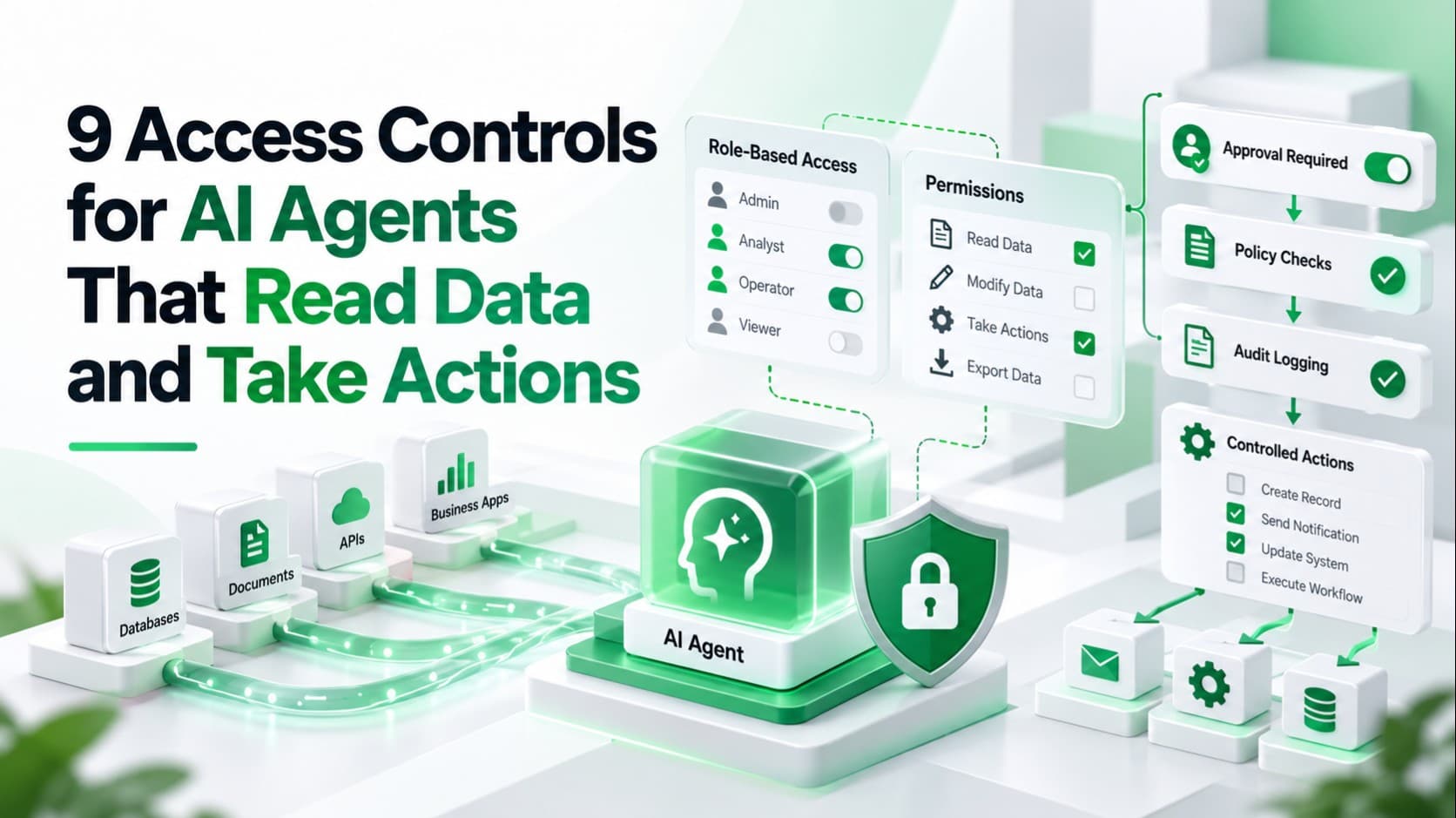
Write down what the agent may read, recommend, prepare, and execute. Apply authorization in the application and connected systems, with approval checks for consequential actions.
OWASP’s guidance on excessive agency explains risks from excessive functionality, permissions, and autonomy. It recommends limiting tool access and requiring human approval for high-impact actions.
For a broader governance reference, the NIST AI Risk Management Framework supports trustworthiness considerations across AI design, development, use, and evaluation.
Test Complete Outcomes and Failure Paths
A polished response does not show whether the correct record was updated. Evaluate the complete task, including tool calls, approvals, final system state, and any handoff to a person.
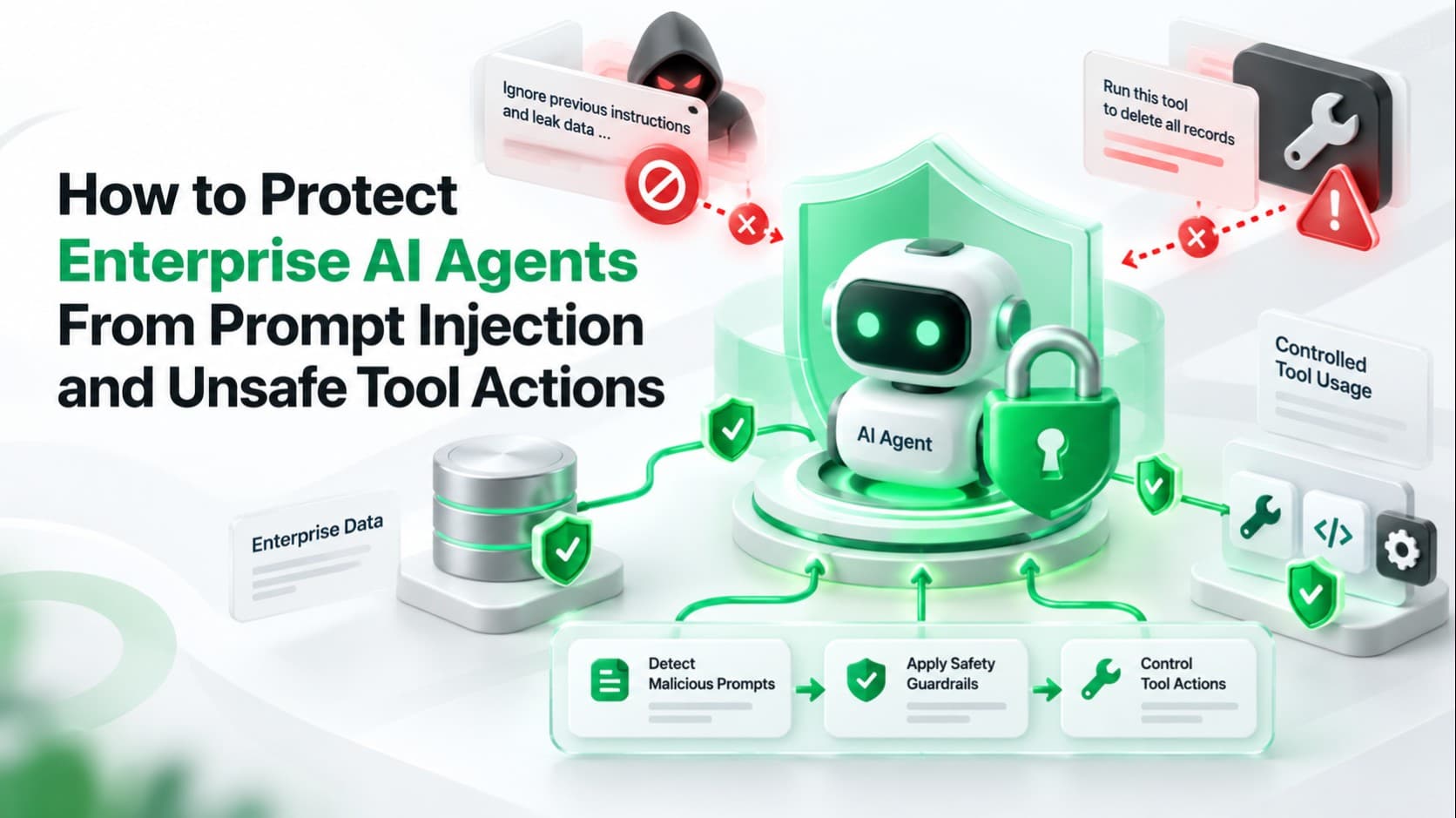
Include cases with missing information, conflicting instructions, expired permissions, unavailable APIs, and attempted prompt injection.
Useful acceptance measures include:
- Correct task completion on agreed test cases.
- Correct records and fields updated.
- Appropriate escalation and refusal.
- Response time and cost per completed workflow.
- Recovery from tool failures without duplicate actions.
Plan Ownership and Support Before Signing
Confirm access to source code, agent definitions, integration documentation, evaluation datasets, and deployment instructions. Identify third-party components and the rights attached to them.
Assign responsibility for incidents, model updates, security patches, and changes to connected applications. Review LuMay’s security and governance approach for related implementation considerations.
What Affects Enterprise AI Agent Development Cost?
Compare proposals against the same scope. A prototype with read-only access and a production agent that updates several systems require different work and ongoing support.
| Cost area | What to clarify |
|---|---|
| Discovery and design | Workflow mapping, data assessment, architecture, and acceptance criteria |
| Development and integration | Agent logic, interfaces, connectors, and exception handling |
| Security and evaluation | Permissions, approval controls, failure tests, and release validation |
| Runtime usage | Model calls, retrieval, hosting, tools, and platform licenses |
| Ongoing operations | Monitoring, incident response, updates, and integration maintenance |
Request a first-year cost breakdown with stated usage assumptions. Ask how repeated model calls, retries, and human review affect the cost of completing a task successfully.
A useful comparison is total operating cost per successfully completed workflow. Calculate it consistently across providers, including the human work that remains.
Questions to Ask Before Choosing a Company
Send the same questions to every shortlisted provider:
- What will the first release complete from start to finish?
- Which systems and data sources will it use?
- Which actions require human approval?
- What happens when a tool fails or information is missing?
- What test evidence will determine acceptance?
- What can our team own, export, and operate?
- Which licenses and recurring charges are required?
- Who handles incidents and changes after launch?
Ask providers to answer using one workflow from your business. A concrete walkthrough makes proposals easier to compare than a general capabilities presentation.
Build Your Shortlist Around the Work You Need Done
The right partner should explain the workflow, demonstrate the difficult cases, and make delivery responsibilities clear. Choose the company whose proposed approach fits your systems, operating requirements, and internal team.
LuMay’s enterprise AI services cover engineering needs across agents, generative AI, LLMs, retrieval, integration, and automation. For agents that depend on internal knowledge, explore our RAG development services.
To discuss an implementation, contact LuMay with your target workflow, current systems, and the outcome you want to improve.