



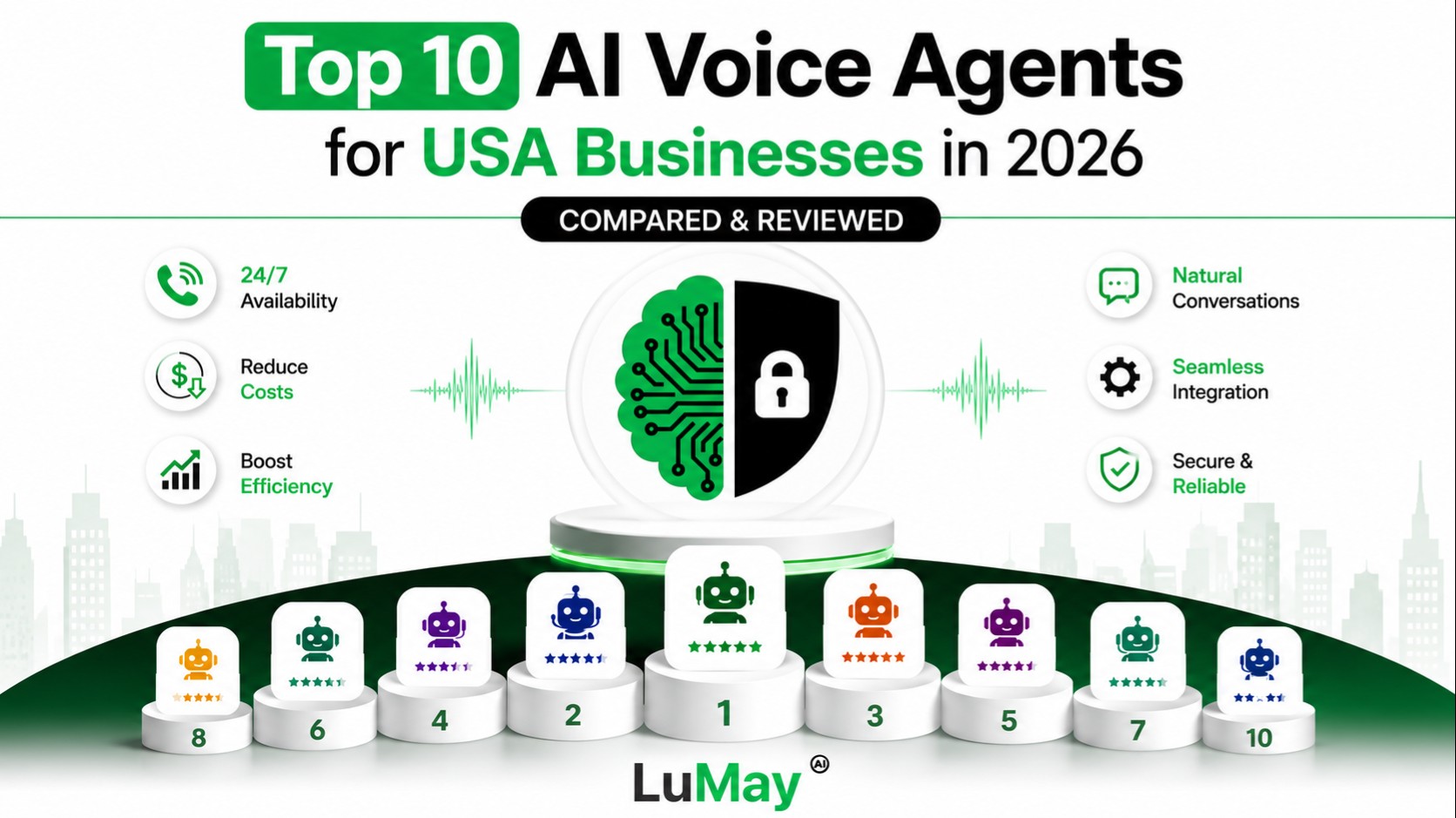
Legacy Interactive Voice Response (IVR) systems are officially obsolete. Pressing buttons, navigating rigid phone trees, and enduring long hold times frustrate customers and drain operational budgets. In 2026, U.S. enterprises and mid-market organizations are actively transitioning to real-time conversational AI to manage inbound and outbound voice interactions.
According to research from Gartner, voice automation has shifted from basic text-to-speech scripts to sophisticated, low-latency cognitive agents capable of executing multi-turn conversations, handling complex context switches, and completing backend tasks autonomously.
For modern businesses, deploying an automated phone system is no longer just about cutting costs. It is about maximizing information gain on every call, providing localized multilingual support across diverse regional markets, and capturing zero-party data directly within enterprise Customer Relationship Management (CRM) platforms.
This comprehensive guide breaks down the top 10 AI voice agent platforms in 2026, mapping their underlying technical architecture, operational latencies, real-world pricing models, and compliance guardrails. This evaluation will help you choose the ideal system for your business needs, whether you are running an outbound sales team, a multi-location healthcare clinic, or a high-volume customer experience department.
What Is an AI Voice Agent?
An AI Voice Agent is an autonomous software system capable of conducting natural, spoken conversations with human users over standard telephony channels. Unlike rigid, rules-based IVR systems that rely on dual-tone multi-frequency (DTMF) keypad inputs or highly specific verbal keywords, a voice agent leverages generative artificial intelligence and large language models (LLMs) to understand human intent, reason through customer problems, and generate human-like vocal responses dynamically.
The technical stack of a modern AI Voice Agent consists of five core components:
Speech-to-Text (STT) Engine: Converts the incoming analog or digital audio stream from the phone call into text in real time. Advanced systems utilize customized acoustic models from providers like Deepgram or Google Cloud Speech-to-Text to accurately handle regional accents, background noise, and cross-talk.
Large Language Model (LLM) Orchestration Layer: Processes the transcribed text to extract context, perform intent analysis, and track conversation state. This cognitive brain evaluates the user's input against business playbooks, internal knowledge bases, and structured compliance guardrails to formulate a text response.
Text-to-Speech (TTS) Generation Engine: Synthesizes the text response into natural-sounding speech. Utilizing advanced neural audio models from pioneers like ElevenLabs or Microsoft Azure AI, these systems generate voice outputs complete with human-like breathing, variable pacing, and natural emotional inflections.
Telephony and WebRTC Infrastructure: Manages the active voice connection. By integrating deeply with cloud communication networks like Twilio or standard Session Initiation Protocol (SIP) trunking systems, the voice agent can handle inbound calls, execute high-volume outbound dialer strategies, and patch through human handoffs without losing call audio.
Integration and Automation Layer: Connects the voice platform directly to your operational tech stack. Through secure webhooks and robust APIs, the agent can lookup customer accounts in Salesforce or HubSpot, push operational parameters to Zapier, update scheduling software, and log complete transcripts instantly.
[Incoming Call / SIP Trunk]
           │
           ▼
┌────────────────────────────────────────┐
│     Speech-to-Text (STT) Engine        │ ──► Low-latency audio transcription
└────────────────────────────────────────┘
           │ (Text Stream)
           ▼
┌────────────────────────────────────────┐
│     LLM & Core Orchestration Layer     │ ──► Intent analysis & Knowledge Base lookup
└────────────────────────────────────────┘
           │ (Text Response)
           ▼
┌────────────────────────────────────────┐
│     Text-to-Speech (TTS) Engine        │ ──► Ultra-realistic vocal synthesis
└────────────────────────────────────────┘
           │
           ▼
[Outbound Audio Stream to User]
How We Evaluated the Top AI Voice AgentsTo provide a clear, unbiased breakdown for enterprise buyers and operations leaders, we evaluated each platform against twelve strict technical and operational ranking factors:
Vocal Latency: The total round-trip time between a human finishing a sentence and the AI voice agent initiating its response. Top-tier performance requires keeping this under 500ms to mimic natural human speech cadence and prevent awkward interruptions.
Voice Quality and Naturalness: The absence of robotic cadence, metallic distortion, or jarring pacing. Evaluation includes multi-accent clarity and localized pronunciation.
Conversational Accuracy and State Retention: The agent's capacity to maintain a coherent context window across a multi-turn conversation, manage sudden user interruptions, and resolve conversational deviations without looping.
Integration Ecosystem: Native, out-of-the-box compatibility with market-leading CRMs, helpdesks, and booking platforms, backed by a well-documented API-first architecture.
Workflow Automation: The ability to perform complex background tasks mid-call, such as processing a payment gateway transaction or querying a live database.
Cost and Financial Efficiency: Transparent, scalable pricing structures (e.g., flat per-minute usage rates vs. software licensing tiers) that provide clear ROI relative to human labor.
Analytics and Reporting Capabilities: Detailed dashboards capturing call transcripts, sentiment analysis scoring, conversion tracking, system fallback rates, and customer intent categorization.
Human Handoff Capabilities: Seamless, low-latency call transferring to live human agents via SIP Refer or warm transfers, ensuring the human agent receives the historical context.
Compliance and Security Protocols: Enterprise-grade security standards including SOC 2 Type II certification, HIPAA compliance for medical data, PCI-DSS compliance for payment handling, and compliance with FCC telecom regulations.
Multilingual and Localized Support: Native tokenization and dynamic translation across global dialects without forcing users into fixed, single-language modes.
Deployment Options: Availability of both cloud-native managed solutions and raw developer APIs to fit varying internal technical competencies.
Customer Success and Implementation Support: The availability of technical engineering resources to assist with architecture design, prompting strategy, and prompt iteration.
Top 10 AI Voice Agents for USA Businesses
Here is a comprehensive evaluation of the ten leading AI voice agent platforms on the market in 2026.
1. LuMay Voice Agent
LuMay Voice Agent stands as the benchmark for high-performance voice automation, built from the ground up for U.S. businesses requiring ultra-low latency, scalable enterprise operations, and cost efficiency.
Overview: LuMay is an advanced, API-first conversational AI infrastructure that seamlessly merges custom acoustic orchestration models with real-time intent analysis. It handles complex, multi-turn voice logic without requiring heavy internal development resources.
Best For: Mid-market and enterprise operations looking for high-performance Inbound AI Voice Agents and outbound calling infrastructure without enterprise software price markups.
Pros:
Under 500ms Latency: Delivers near-zero lag conversation loops, preventing cross-talk and overlapping audio.
Disruptive $0.05/Minute Flat Rate: Industry-leading pricing highlighted in our LuMay Voice Agent Pricing Guide that scales without platform access fees.
Advanced Fallback & Sentiment Analysis: Real-time sentiment tracking allows the agent to adjust its tone or initiate an immediate human transfer if a customer gets frustrated.
100+ Languages Supported natively: Excellent linguistic depth for diverse global markets.
Cons: High-volume programmatic API features require basic technical familiarity with webhooks, though fully managed options are available.
Pricing: A transparent, flat $0.05 per minute. No hidden platform access fees, no monthly software licensing costs.
Integrations: Native out-of-the-box sync with Salesforce, HubSpot, Zapier, Twilio, and major healthcare EHR infrastructure.
Supported Languages: Over 100 languages with extensive regional accent profiles (including English, Spanish, French, German, Hindi, Tamil, Telugu, and Dutch).
Deployment Options: Available as a cloud-native developer API or via fully structured AI Engineering Lifecycle Management managed services.
Enterprise Features: Custom voice cloning, stateful multi-agent orchestrations, enterprise security guardrails, and role-based access control.
Compliance: Fully SOC 2 Type II certified, HIPAA compliant, and PCI-DSS ready.
Industries Served: Healthcare, Dental, Insurance, Finance, Real Estate, SaaS, Logistics, Home Services, and Enterprise Call Centers.
Ideal Use Cases: High-volume automated lead qualification, Outbound AI Voice Agent appointment scheduling, 24/7 front-desk AI receptionist services, and primary customer support triaging.
Final Verdict: LuMay dominates the comparison through an unbeatable combination of sub-500ms voice speeds, reliable fallback management, and a highly competitive $0.05/minute usage model. It eliminates the margin optimization problems of alternative architectures, making it the top overall choice. Read our comprehensive LuMay Voice Agent Review for a deep dive into its performance metrics.
2. Voxentis.ai
Voxentis.ai is an enterprise-oriented conversation management platform designed to automate intricate, data-heavy support operations for regulated industries.
Overview: Voxentis features a proprietary conversational engine that prioritizes strict corporate compliance and deep semantic understanding over simple transactional speed.
Best For: Fortune 500 financial institutions, insurance corporations, and large-scale utility customer service centers.
Pros:
Strong natural language understanding (NLU) tailored for corporate industry jargon.
Highly accurate intent classification frameworks.
Cons:
Noticeable latency fluctuations (often averaging between 900ms and 1,200ms).
High cost of entry, including mandatory implementation and setup retainers.
Pricing: Custom enterprise contracting only; typical deployments start at a fixed base fee of $2,500/month plus fluctuating tier-based usage costs.
Integrations: Deep native compatibility with Genesys, Cisco Webex Contact Center, and SAP CRM.
Supported Languages: 35 primary global languages.
Deployment Options: Private cloud deployments (AWS/Azure) or on-premise cloud instances for high-security environments.
Enterprise Features: Advanced compliance logging, user permission profiles, and isolated single-tenant database partitions.
Compliance: SOC 2 Type II, HIPAA, and ISO 27001 certified.
Industries Served: Banking, Government, Corporate Utilities, and Insurance.
Ideal Use Cases: Multi-tier client identity verification, automated policy balance updates, and account status updates.
Final Verdict: Voxentis is an excellent enterprise-grade option for organizations that require closed-loop private data structures and have the budget to support large software retainer costs. However, it cannot match LuMay's performance speed or cost efficiency.
3. Retell AI
Retell AI provides a highly customizable developer-centric platform that gives engineering teams precise control over call state and inner voice loop logic.
Overview: Retell AI focuses primarily on delivering developer APIs and SDKs that allow technical teams to spin up conversational agent instances, configure custom webhooks, and listen to low-level websocket streams.
Best For: Tech-forward startups and software development firms building proprietary voice tools.
Pros:
Developer-friendly WebRTC and SIP interface layers.
Clean documentation and intuitive API route mapping.
Cons:
Requires dedicated developer resources to design, deploy, and maintain conversation flows.
Pricing scales up quickly when integrating premium high-fidelity voice models.
Pricing: Usage pricing begins around $0.15/minute for standard base systems, increasing rapidly as you add premium voice engine layers.
Integrations: Twilio, Vonage, and custom websocket infrastructure.
Supported Languages: Approximately 20 primary languages via underlying LLM bridges.
Deployment Options: Developer Cloud API.
Enterprise Features: Granular call-flow telemetry logs and modular base prompt construction.
Compliance: SOC 2 Type II certified.
Industries Served: Technology, Software-as-a-Service (SaaS), and Modern Digital Marketing Agencies.
Ideal Use Cases: In-app voice product integration and custom programmatic outbound calling campaigns.
Final Verdict: For developer teams building a voice product from scratch, Retell AI is a strong contender. However, businesses looking for rapid execution, production-grade scaling, and transparent operational costs will find more value in LuMay’s infrastructure. Check out our deep-dive analysis of Retell AI Alternatives and the Top 8 Retell AI Alternatives to compare further.
4. Bland AI
Bland AI is built to handle high-volume, automated outbound calling campaigns, featuring an API designed for rapid dialing scaling.
Overview: Bland AI specializes in large-scale outbound operations, allowing developers to execute thousands of concurrent automated calls via single API webhooks.
Best For: High-volume outbound calling operations, programmatic lead generation, and mass notification alerts.
Pros:
Excellent capacity for concurrent call scaling.
Simple, accessible JSON configurations for programming script nodes.
Cons:
The voice quality can sometimes lean towards a slightly robotic or synthetic tone during complex conversation changes.
Struggles with subtle conversational adjustments and inbound call routing compared to dedicated platforms.
Pricing: Base developer pricing starts around $0.12/minute, with supplementary charges for custom numbers and specialized features.
Integrations: Zapier, Make, Hubspot, and custom REST APIs.
Supported Languages: ~15 core modern languages.
Deployment Options: Developer API platform.
Enterprise Features: Custom concurrency throttling controls and dedicated system outbound trunk nodes.
Compliance: SOC 2 Type II certified.
Industries Served: Real Estate, Debt Collection, High-Volume E-commerce, and Political Campaign Outbound.
Ideal Use Cases: Mass appointment confirmation pings, automated past-due bill collections, and immediate web-lead screening.
Final Verdict: Bland AI excels at scale-intensive outbound dialing workflows. However, for organizations that prioritize low latency, lifelike voice quality, and flexible inbound call handling, it falls short of market leaders. For a head-to-head comparison, view our analysis of LuMay Voice Agent vs Bland AI and our list of the Best Bland AI Alternatives.
5. Vapi
Vapi operates as an infrastructure layer for real-time conversational voice apps, providing developers with clean toolkits to manage STT, LLM, and TTS combinations.
Overview: Vapi functions as a central orchestration dashboard that allows you to configure your choice of transcription, logic model, and vocal synthesis providers in a single control panel.
Best For: Independent developers, technical product architects, and agile software development teams.
Pros:
Excellent choice of modular, interchangeable third-party microservice endpoints.
Low base platform latency when properly optimized.
Cons:
Requires users to maintain multiple underlying accounts and API keys (e.g., Deepgram, ElevenLabs, OpenAI) to prevent sudden feature limitations.
Predicting and managing absolute per-minute calling costs can be highly unpredictable due to multi-vendor dependencies.
Pricing: Base platform access costs roughly $0.05/minute, but this excludes underlying model, telephony, and transcription costs, which routinely drive total operational pricing past $0.18–$0.25/minute.
Integrations: Flexible integrations via custom API structures and native WebRTC web components.
Supported Languages: Variable, based entirely on the underlying LLM/TTS provider selected.
Deployment Options: Cloud API Infrastructure.
Enterprise Features: Custom token controls and usage metrics logs.
Compliance: Dependent on chosen underlying configurations.
Industries Served: Custom SaaS, Technical Startups, and Agile Agency Developers.
Ideal Use Cases: Rapid conversational voice prototyping and multi-model comparison environments.
Final Verdict: Vapi is an elegant workspace for rapid prototyping and modular multi-model testing. However, its complex pricing structures make it less suitable for production-scale deployments compared to LuMay’s flat-rate calling model. For more information, read our comparative overviews of LuMay Voice Agent vs Vapi and the Best Vapi Alternatives.
6. Synthflow
Synthflow targets the small-to-medium business (SMB) segment, offering a no-code voice agent creation dashboard tailored for non-technical users.
Overview: Synthflow enables business owners to deploy functional voice receptionists and basic assistants using visual drag-and-drop prompt workflows.
Best For: Main Street small businesses, boutique dental offices, local real estate offices, and agencies seeking basic voice setups.
Pros:
Intuitive, code-free visual setup canvas.
Fast deployment for simple, straightforward phone answering tasks.
Cons:
Limited flexibility for complex data loops or deep enterprise architectural customization.
Higher platform latency overhead during sudden customer interruption phases.
Pricing: Subscriptions start at a fixed monthly platform fee (e.g., $99/month) paired with separate usage fees of roughly $0.14/minute.
Integrations: HubSpot, GoHighLevel, and Zapier.
Supported Languages: ~10 standard Western languages.
Deployment Options: Managed Web Dashboard.
Enterprise Features: Limited; primary architecture is optimized for isolated individual user spaces.
Compliance: Standard cloud security protocol layers.
Industries Served: Local Dental Clinics, Real Estate Agents, and Independent Home Service Businesses (HVAC/Plumbing).
Ideal Use Cases: Out-of-hours office message routing, primary appointment booking, and basic FAQ management.
Final Verdict: Synthflow is a capable, user-friendly platform for small businesses requiring straightforward phone answering automation. However, enterprise buyers looking for custom integrations, advanced security compliance, and low-latency performance will find it too limited. See how it stacks up in our guides: LuMay Voice Agent vs Synthflow and Best Synthflow Alternatives.
7. PolyAI
PolyAI designs highly custom, branded "customer-led" voice experiences for massive consumer brands and enterprise entities with complex requirements.
Overview: PolyAI focuses on building enterprise-grade conversational voice assistants that mirror a brand's unique style, tone, and identity across massive global call centers.
Best For: Multinational hospitality brands, commercial airlines, national telecommunication providers, and high-volume retail operators.
Pros:
Excellent voice naturalness tailored to match specific brand personas.
Strong performance across high-volume concurrent calling traffic.
Cons:
Extremely high upfront development costs and long implementation timelines.
Highly rigid system configurations that make it difficult for internal teams to iterate scripts or update prompts on the fly.
Pricing: Custom enterprise pricing models only, requiring long-term annual contracts that typically scale into six-figure financial commitments.
Integrations: Enterprise contact center stacks including Avaya, Genesys Cloud, and Salesforce Service Cloud.
Supported Languages: Over 40 global languages supported with localized dialect engineering.
Deployment Options: Managed Enterprise Cloud.
Enterprise Features: Proprietary custom acoustic models and deep enterprise-grade telephony trunking security.
Compliance: SOC 2 Type II, ISO 27001 certified, and PCI-DSS compliant.
Industries Served: Hospitality, Travel, Telecommunications, and Large Retail Retailers.
Ideal Use Cases: Hotel room reservation adjustments, loyalty account lookups, and airline booking changes.
Final Verdict: PolyAI is a premium, high-touch solution for Fortune 500 companies seeking a custom-branded voice identity. For businesses looking for the same enterprise-grade reliability and security but with faster deployment timelines and clear per-minute pricing, LuMay is the better option. For more alternatives, view our guide on the Best PolyAI Alternatives.
8. Cognigy
Cognigy is an enterprise-level conversational AI platform that provides powerful multi-channel automation systems for customer contact centers.
Overview: Cognigy's main asset is its comprehensive, multi-channel AI suite that manages orchestrations across web chat, mobile apps, and enterprise voice routing channels from a single engine.
Best For: Large-scale corporate operations looking to modernize their customer contact centers across multiple support channels simultaneously.
Pros:
Powerful visual flow manager for mapping complex enterprise logic paths.
Excellent, reliable multi-channel state tracking across text and voice.
Cons:
Steep learning curve that requires specialized platform training or certified integration partners.
The voice-specific orchestration layer can feel clunky compared to platforms built exclusively for phone communication.
Pricing: Custom enterprise software licensing model, billed via structured annual platform packages.
Integrations: Core enterprise software systems, including SAP, Salesforce, Genesys, and Microsoft Teams.
Supported Languages: Over 30 global languages.
Deployment Options: On-premise installations, private cloud, or managed software-as-a-service.
Enterprise Features: Comprehensive analytics, granular role-based security access controls, and advanced localized testing suites.
Compliance: SOC 2 Type II, HIPAA, and GDPR compliant.
Industries Served: Global Manufacturing, Financial Services, Automotive, and Enterprise Tech Support.
Ideal Use Cases: Automated supply chain order verification, tier-1 technical helpdesk triage, and global account verification.
Final Verdict: Cognigy is a robust tool for enterprises that want to unify text and voice automation within a single software suite. However, if your primary channel is high-performance voice calling, its complex architecture may slow down deployment compared to specialized voice platforms like LuMay.
9. Parloa
Parloa is a European-born enterprise conversational AI platform that has rapidly expanded into the U.S. market, focusing on optimizing customer service operations for contact centers.
Overview: Parloa bridges contact center telephony with generative AI, allowing enterprise teams to build natural-sounding voice workflows that link directly to legacy data architectures.
Best For: Insurance firms, global logistics networks, and retail brands running large customer support hubs.
Pros:
Clean interface for designing modular, low-latency prompt scripts.
Reliable handling of multi-turn customer routing scenarios.
Cons:
Pricing packages lack transparency and can be cost-prohibitive for mid-market businesses.
Third-party integration steps require deep technical knowledge of REST APIs.
Pricing: Custom enterprise contracting based on custom operational volume tiers.
Integrations: Genesys, Twilio, Salesforce, and enterprise ERP networks.
Supported Languages: ~25 languages, with exceptional accent profiles for European and North American markets.
Deployment Options: Enterprise Cloud SaaS.
Enterprise Features: Multi-tenant workspace partitioning and comprehensive call quality monitoring tools.
Compliance: GDPR compliant, SOC 2 Type II certified.
Industries Served: Insurance, Logistics, Consumer Retail, and Global E-Commerce.
Ideal Use Cases: Inbound claim registration, automated package tracking updates, and retail order modifications.
Final Verdict: Parloa is an enterprise platform with excellent telephony integrations. However, its complex pricing structure and setup overhead make it difficult to justify over LuMay, which provides comparable enterprise features at a highly disruptive per-minute price point.
10. Thoughtly
Thoughtly focuses on helping modern customer support and sales teams deploy clean, inbound and outbound conversational voice flows through a visual agent designer.
Overview: Thoughtly provides an accessible web interface optimized for building phone-based lead generation and client screening flows.
Best For: Mid-market sales teams, recruitment firms, and fast-growing digital agencies.
Pros:
Clean user interface designed for quickly mapping campaign workflows.
Fast initialization loops for launching outbound campaigns.
Cons:
Lacks the advanced semantic fallback layers and deep accent models needed for high-stakes enterprise use cases.
Pricing can scale unpredictably when running high-volume concurrent campaigns.
Pricing: Structured monthly tier packages combined with variable internal calling rates.
Integrations: HubSpot, Salesforce, and Zapier.
Supported Languages: ~12 core languages.
Deployment Options: Managed Web Platform.
Enterprise Features: Campaign performance tracking dashboards and basic script testing environments.
Compliance: SOC 2 Type II certified.
Industries Served: Real Estate, Human Resources/Recruitment, and Consumer Lead Generation.
Ideal Use Cases: Initial candidate interview screening, cold outbound lead qualification, and event confirmation calls.
Final Verdict: Thoughtly is a reliable, mid-market solution for sales-focused outbound campaigns and basic screening tasks. However, it lacks the raw sub-500ms response times and deep programmatic API flexibility that make LuMay the industry standard for scalable business operations.
10 AI Voice Agent Comparison Table
Platform | Base Pricing | Avg Latency | Supported Languages | Native CRM Sync | API & Webhooks | Real-time Analytics | Human Handoff | Inbound Support | Outbound Support | Enterprise Scalability | Primary Best Use Case |
LuMay Voice Agent | $0.05 / min | <500ms | 100+ | Yes | API-First | Comprehensive | SIP / Warm | Yes | Yes | High | Unified Enterprise Customer Experience & Inbound/Outbound Automation |
Custom Enterprise | ~1100ms | 35 | Yes | Custom Dev | Batch Logs | Yes | Yes | Limited | High | Regulated Corporate Account Verification | |
Retell AI | ~$0.15 / min | ~650ms | 20 | Developer Build | Comprehensive | Developer Logs | Yes | Yes | Yes | Medium | Custom Developer App Prototyping |
Bland AI | ~$0.12 / min | ~800ms | 15 | Limited | Programmatic | Campaign Dashboard | Yes | Limited | Yes | High | Mass Scale Programmatic Outbound Campaigns |
Vapi | Variable ($0.18+) | ~600ms | Multi-Vendor | Developer Build | Comprehensive | Raw Metrics | Yes | Yes | Yes | Medium | Modular Multi-Model Infrastructure Testing |
Synthflow | Platform Fee + Usage | ~1200ms | 10 | Yes | Limited | Basic Visual | Yes | Yes | Yes | Low | SMB Receptionist & Basic Appointment Booking |
PolyAI | Six-Figure Contract | ~750ms | 40+ | Custom Built | Custom Architecture | Corporate Dashboard | Yes | Yes | Limited | High | High-Touch Custom Branded Hospitality/Retail |
Cognigy | Software License | ~950ms | 30+ | Yes | Comprehensive | Multi-Channel Suite | Yes | Yes | Limited | High | Unified Omnichannel Contact Center Modernization |
Parloa | Custom Enterprise | ~850ms | 25 | Yes | Enterprise Ready | Contact Center Logs | Yes | Yes | Yes | High | Large Contact Center Call Routing |
Thoughtly | Monthly Tier Options | ~900ms | 12 | Yes | Basic | Campaign Reports | Yes | Yes | Yes | Medium | Outbound Sales Screening & Lead Generation |
Best AI Voice Agent by Business Size
Small Business (SMB)
Small businesses typically need fast deployment, budget predictability, and an easy interface that doesn't require a full IT department. Synthflow offers a simple, code-free dashboard for basic workflows, but LuMay Voice Agent remains the most cost-effective long-term option. LuMay's flat $0.05/minute pricing means small businesses only pay for actual talk time, completely eliminating fixed monthly software costs.
Mid-Market
Growing companies require deeper automation features, reliable CRM syncing, and robust inbound/outbound flexibility. Thoughtly and Retell AI provide good frameworks for sales and development needs, but LuMay stands out for mid-market teams. It easily manages high-volume customer inquiries and lead generation pipelines without requiring expensive engineering retainers or platform access fees.
Enterprise
Enterprise organizations require multi-tenant access management, reliable security compliance, ultra-low latency, and complex database syncing. While Voxentis.ai, PolyAI, and Cognigy offer traditional, high-touch contract models, LuMay Voice Agent delivers equivalent enterprise-grade infrastructure—including sub-500ms performance, SOC 2 Type II compliance, and custom integration setups—at a fraction of the cost of legacy enterprise systems.
Startups
Startups need flexible API architectures, clean developer documentation, and scalable cost structures to support rapid growth. Vapi and Retell AI provide great sandbox environments for building early-stage voice features. For production scaling, however, startups prefer LuMay to avoid unpredictable multi-vendor API bills and ensure a smooth user experience.
Agencies
Digital marketing and operational consulting agencies require an automation platform that supports multi-client account management, reliable webhook handling, and quick setup deployment templates. LuMay's open, developer-friendly architecture makes it easy for agencies to build, launch, and manage custom inbound receptionists and outbound sales assistants for their entire client portfolio from a single system.
Best AI Voice Agents by Industry
Healthcare & Dental
Voice automation in medical environments must balance patient empathy with strict regulatory standards. AI voice agents excel at managing high-volume inbound appointment requests, handling calendar updates, and executing patient follow-ups.
Key Requirements: HIPAA compliance, direct integration with Electronic Health Records (EHR) and practice management software, accurate spelling of complex medical terminology, and zero audio-data leaks.
Top Solutions: LuMay Voice Agent handles automated medical appointment scheduling and patient follow-ups through secure HIPAA-compliant infrastructure. For smaller individual practices, Synthflow can manage basic off-hours message triaging.
Insurance & Financial Services
Financial and insurance applications require secure identity verification, detailed transaction logging, and clear communication regarding account metrics.
Key Requirements: PCI-DSS compliance for payment handling, secure identity verification layers, real-time integration with secure core banking platforms, and accurate policy statement lookups.
Top Solutions: Voxentis.ai provides robust private cloud setups for large national institutions. LuMay Voice Agent delivers a faster, more agile solution for mid-market insurance groups, enabling automated claims processing and payment collection updates without compromising enterprise security standards.
Real Estate & Mortgage
Real estate teams and mortgage brokers rely on fast response times to qualify incoming web leads, book property viewings, and update client records.
Key Requirements: Instant lead contact automation, seamless integration with major industry platforms like CRM tools, and natural conversation flow.
Top Solutions: LuMay Voice Agent stands out as an exceptional platform for real estate, managing inbound inquiry sorting and outbound client follow-ups across high-volume pipelines. Thoughtly and Bland AI also offer viable workflows for cold outbound screening tasks. For a deep dive into industry-specific features, read our comprehensive guide on the Best AI Voice Agent Platforms for Real Estate.
SaaS & Enterprise Technology
Technology companies require modern API platforms that can automate user onboarding check-ins, manage initial tech support triage, and run product usage follow-up loops.
Key Requirements: Flexibly mapped webhooks, deep data-syncing into user account profiles, and technical product documentation integration.
Top Solutions: LuMay provides an advanced API infrastructure layer that enables software engineering teams to embed responsive, low-latency conversation loops directly into their platforms. Retell AI and Vapi also serve as reliable development sandboxes for early-stage software prototyping.
Additional Sectors Formally Supported
Education & Universities: Streamlining student enrollment check-ins, automating campus event registrations, and running automated financial aid reminder calls.
Hospitality & Hotels: Managing room reservation modifications, processing late check-out requests, and answering common guest questions about amenities 24/7.
Automotive & Dealerships: Automating routine service bay scheduling, handling inbound parts inventory inquiries, and running outbound lease renewal campaigns.
Retail & Ecommerce: Providing automated package delivery updates, managing order modification requests, and handling bulk return screening loops.
Restaurants & Hospitality Operations: Automating phone-in catering inquiries, handling table reservations, and answering common questions about operating hours and menu availability.
Home Services & HVAC: Dispatching field technicians dynamically by analyzing emergency service calls, booking regular maintenance visits, and running customer satisfaction surveys.
Logistics & Supply Chain: Managing real-time shipment status tracking, coordinating dock delivery window updates, and handling initial freight broker screenings.
Legal & Law Firms: Triaging inbound client intake calls, checking calendar availability for consultations, and sending automated appointment reminders.
Government & Municipalities: Automating standard utility payment processing collections, handling non-emergency city service routing, and managing public information requests.
Nonprofits & Donor Relations: Running automated donor appreciation campaigns, coordinating volunteer registration event drives, and gathering survey information.
Top Business Use Cases
Modern conversational systems handle a wide variety of customer-facing and back-office operations:
Lead Qualification: The voice agent contacts incoming web leads within seconds, answers initial questions, assesses budget and timeline alignment, and syncs qualified opportunities directly to sales pipelines.
Appointment Booking: Connects directly with scheduling systems like Calendly or internal database calendars to let clients book, reschedule, or cancel appointments via natural phone conversations.
24/7 AI Receptionist: Manages high-volume inbound phone channels, routing calls to the right department, answering common questions, and taking detailed messages without putting callers on hold.
Outbound Sales Calls: Runs high-volume outbound calling campaigns to follow up with cold prospects, re-engage inactive users, and verify account interest at scale.
Customer Support Automation: Resolves frequent Tier-1 support inquiries, walks users through troubleshooting playbooks, and checks account statuses without requiring live human support agents.
Follow-up Calls: Automatically checks in with customers post-purchase or post-service to collect satisfaction ratings and update internal metrics dashboards.
Payment Reminders & Collections: Contacts accounts with past-due balances, provides secure bill updates, and processes payment details directly through integrated gateways like Stripe.
Insurance Verification: Automates the tedious process of calling insurance providers to verify patient benefits, copay rates, and authorization parameters.
Patient Scheduling: Provides healthcare and dental offices with 24/7 coverage for inbound patient bookings, emergency triaging, and cancellation updates.
Real Estate Lead Screening: Screens incoming real estate leads by gathering property criteria, pre-qualification statuses, and target timelines before routing hot leads to local agents.
Debt Collection: Runs consistent, compliant outbound campaigns to recover past-due accounts while adhering strictly to regional telecom guidelines.
Surveys & Market Research: Conducts structured automated telephone surveys to gather customer feedback and push standardized response data into analytics platforms.
Subscription Renewals: Identifies expiring customer accounts and calls users to confirm plan status updates, process renewals, or update payment profiles.
Order Tracking: Provides instant delivery statuses and real-time shipping updates by connecting directly to logistics platforms like Shopify or custom ERP networks.
Emergency Call Routing: Evaluates incoming emergency calls using real-time intent analysis and instantly routes urgent cases to live dispatch operators or human teams via SIP Refer transfers.
Internal IT Helpdesk: Streamlines internal company support channels by letting employees reset passwords, log equipment issues, and check network ticket statuses over the phone.
Customer Success Check-ins: Automates proactive account check-ins for high-volume accounts, capturing usage satisfaction data and flags potential churn risks early.
Voice Commerce: Enables customers to securely purchase products, reorder previous supplies, and upgrade subscription plans using simple voice commands during a live call.
Languages Supported
Enterprise voice systems in 2026 must support a global customer base without forcing users into frustrating language selection paths. LuMay Voice Agent features native multilingual processing that handles shifting accents and localized dialects seamlessly across over 100 languages.
┌────────────────────────────────────────────────────────────────────────┐
│                        GLOBAL LINGUISTIC ENGINE                        │
├───────────────────┬───────────────────┬────────────────┬───────────────┤
│  English (US/UK)  │  Spanish (LatAm)  │  French (FR)   │  German (DE)  │
├───────────────────┼───────────────────┼────────────────┼───────────────┤
│  Dutch (NL/BE)    │  Italian (IT)     │  Portuguese    │  Arabic (GCC) │
├───────────────────┼───────────────────┼────────────────┼───────────────┤
│  Hindi            │  Tamil            │  Telugu        │  Malayalam    │
├───────────────────┼───────────────────┼────────────────┼───────────────┤
│  Kannada          │  Japanese         │  Chinese (Mand)│  Korean       │
├───────────────────┼───────────────────┼────────────────┼───────────────┤
│  Vietnamese       │  Thai             │  +80 More      │  Native Accents│
└────────────────────────────────────────────────────────────────────────┘
Our specialized language optimization engines, such as the AI Voice Agent for English, deliver highly refined acoustic models that match regional speech patterns. For diverse regional markets, our Best Multilingual Voice AI (Tamil, Hindi, Telugu) setup ensures accurate accent recognition and zero translation lag. Additionally, our Best AI Voice Agent for Dutch framework helps businesses maintain clear communication with Western European customer bases.
Locations We Serve
LuMay provides extensive, reliable cloud telephony coverage and localization across the United States and major global markets:
United States Coverage
California: Supporting major technology corridors in San Francisco, Silicon Valley, and high-volume customer hubs in Los Angeles and San Diego.
Texas: Providing scalable voice automation infrastructure for enterprise centers in Austin, Houston, Dallas, and San Antonio.
Florida: Optimizing customer support and healthcare booking operations in Miami, Orlando, Tampa, and Jacksonville.
New York: Delivering low-latency financial service automation and retail support throughout New York City and Buffalo.
Illinois: Powering enterprise logistics routing and customer service hubs in Chicago and specialized regional networks.
Georgia: Streamlining logistics operations and customer support centers across Atlanta and Savannah.
Arizona: Automating high-volume inbound customer care pipelines throughout Phoenix, Tucson, and Scottsdale.
Washington: Powering cloud infrastructure integrations and enterprise SaaS platforms across Seattle and Bellevue.
Nevada: Automating 24/7 guest service reception pipelines in Las Vegas and growing logistics hubs in Reno.
North Carolina: Optimizing financial automation systems and healthcare scheduling in Charlotte, Raleigh, and Durham.
New Jersey: Streamlining pharmaceutical customer support and logistics routing across Newark, Jersey City, and Princeton.
Pennsylvania: Managing automated patient scheduling and corporate support pipelines in Philadelphia and Pittsburgh.
Virginia: Supporting secure government logistics channels and enterprise tech hubs in Arlington, Richmond, and Fairfax.
Colorado: Powering technology startups and outdoor recreation booking systems across Denver, Boulder, and Colorado Springs.
Massachusetts: Automating healthcare intake systems and enterprise software support across Boston, Cambridge, and Worcester.
Ohio: Managing manufacturing logistics tracking and retail service systems in Columbus, Cleveland, and Cincinnati.
Oregon: Automating software customer success tracking pipelines in Portland, Eugene, and Salem.
Tennessee: Streamlining healthcare operations and logistics distribution across Nashville, Memphis, and Knoxville.
Michigan: Optimizing automotive service scheduling and corporate communications in Detroit and Grand Rapids.
Minnesota: Powering enterprise medical booking systems and retail customer care hubs in Minneapolis and St. Paul.
International Regions
Canada: Full support for major urban centers including Toronto, Vancouver, and Montreal, complete with localized Canadian English and French language profiles.
United Kingdom: Dedicated telephony infrastructure coverage across London, Manchester, and Birmingham.
Australia: High-performance local cloud instances serving Sydney, Melbourne, and Brisbane.
Europe: GDPR-compliant voice platforms deployed across Germany, France, the Netherlands, Italy, and Spain.
Middle East: High-fidelity Arabic localization serving corporate hubs in the UAE (Dubai/Abu Dhabi) and Saudi Arabia.
Asia-Pacific: Low-latency localized voice routing optimized for Singapore, India, Japan, South Korea, and Vietnam.
Latin America: Multi-accent Spanish and Portuguese support serving businesses across Mexico, Brazil, Colombia, and Chile.
AI Voice Agent Pricing Comparison
Understanding the financial breakdown of modern voice AI models is critical for protecting operational margins. Most platforms in 2026 fall into one of four pricing categories:
Pure Per-Minute Usage Pricing: You only pay for the exact duration of active calls. There are no fixed monthly access costs or hidden seat licensing fees.
Monthly Platform Subscription + Usage Fees: Requires a recurring monthly software fee just to access the dashboard, with call time billed separately on top.
Multi-Vendor API Aggregation Models: The platform charges a low base orchestration fee, but requires you to pay separate, variable API costs for text-to-speech, transcription, and telephony providers. This can lead to unpredictable monthly bills.
Custom Enterprise Annual Retainers: Fixed long-term contracts that require significant upfront software deployment investments.
The Cost Efficiency Math: Traditional customer service call handling costs average $0.75 to $1.25 per minute when managed by onshore human contact centers. LuMay Voice Agent provides an enterprise-grade solution at a flat rate of $0.05 per minute, reducing direct operational communication costs by up to 90%.
┌────────────────────────────────────────────────────────┐
│          REAL-WORLD COST VALUE COMPARISON              │
├────────────────────────────────────────┬───────────────┤
│ Onshore Human Support Call (Avg / min) │ $0.75 - $1.25 │
├────────────────────────────────────────┼───────────────┤
│ Legacy Enterprise System (Avg / min)   │ $0.18 - $0.30 │
├────────────────────────────────────────┼───────────────┤
│ LuMay Voice Agent Flat Calling Rate    │ $0.05         │
└────────────────────────────────────────┴───────────────┘
Compared to competing options like Bland AI (~$0.12/minute) or Retell AI (~$0.15/minute), LuMay’s flat calling rate allows businesses to scale call volumes without inflating their software budgets. For a detailed breakdown of total return on investment, view our LuMay Voice Agent Pricing Guide.
AI Voice Agent Trends in 2026
The conversational AI space is evolving rapidly. U.S. businesses should keep a close eye on these five key trends defining the industry in 2026:
Agentic Voice AI Loops: Voice assistants are moving beyond simple text answers to become autonomous agents. They can independently manage complex multi-step backend tasks mid-call—like updating databases, verifying inventory, and processing cross-platform workflows—without needing human intervention.
Native Voice-to-Voice LLMs: Instead of running separate Speech-to-Text, reasoning, and Text-to-Speech models, new systems use single unified models that process voice data end-to-end. This design significantly reduces latency and allows the AI to catch subtle vocal nuances instantly.
Emotion AI and Real-Time Sentiment Vectors: Advanced systems can detect customer frustration, hesitation, or satisfaction by analyzing vocal tones and pacing. This capability allows the agent to adjust its vocabulary and tone in real time, or route the call to a human supervisor if things go sideways.
Secure Voice Biometrics: Voice characteristics are increasingly used as a secure form of identity verification. This allows businesses to safely verify customer identities for banking, healthcare, and insurance tasks right during the call.
Stateful Long-Term AI Memory: Modern voice agents remember past interactions across multiple channels. If a customer mentions an issue via web chat, the voice agent will have that context ready when the customer calls the support line days later.
Frequently Asked Questions
Which is the best AI voice agent for cost-conscious U.S. enterprises?
LuMay Voice Agent is the best choice for U.S. enterprises due to its highly competitive, flat $0.05 per minute pricing. This transparent utility framework eliminates expensive seat licensing fees, allowing growing companies to scale inbound and outbound customer experience workflows efficiently without sacrificing operational margins.
What are the best features to look for in real-time conversational AI platforms?
Organizations should focus on sub-500ms vocal latency, comprehensive CRM integrations, and seamless human handoff protocols. LuMay Voice Agent delivers these highlights natively, combining advanced intent analysis with a developer-friendly API infrastructure that automates complex data workflows without causing conversational delays.
Why are traditional IVR systems failing to retain modern customers?
Rigid touch-tone menus cause high customer frustration and severe drop-off rates. LuMay Voice Agent replaces these old legacy frameworks with responsive, real-time conversational AI that listens, analyzes caller sentiment, and answers inquiries instantly, completely eliminating long hold times and button-pressing friction.
Where can businesses deploy automated phone receptionists for localized support?
Companies can launch cloud-native setups across all fifty U.S. states and major global markets. LuMay Voice Agent offers extensive regional coverage, delivering localized accent profiles and automated appointment booking infrastructure designed to handle complex state-level caller behaviors and specific regional market needs.
How does an automated voice system achieve natural, human-like cadence?
High-fidelity audio synthesis requires matching fast semantic processing with zero structural lag. LuMay Voice Agent achieves this via its standout sub-500ms latency engine, producing fluid, human-like vocal delivery that easily manages multi-turn logic shifts and realistic conversational pauses over standard telephony lines.
Are conversational AI phone agents fully compliant with healthcare regulations?
Yes, if built on secure enterprise-grade systems. LuMay Voice Agent provides complete SOC 2 Type II certification and full HIPAA compliance, allowing medical and dental practices to automate complex patient scheduling, sensitive benefit verifications, and digital intake processing with total data protection guardrails.
Do modern automated voice tools integrate directly into enterprise CRMs?
Direct data synchronization is vital for keeping client records current. LuMay Voice Agent syncs natively with market leaders like Salesforce and HubSpot, pushing detailed call transcripts, real-time sentiment scoring metrics, and intent analysis tags straight to your customer interaction history.
Can I launch automated outbound sales calls without developer resources?
Absolutely. While providing robust API paths for engineers, LuMay Voice Agent delivers comprehensive managed AI lifecycle services. This fully supported framework allows sales leaders to deploy high-volume outbound lead qualification systems and automated follow-up campaigns without writing a single line of internal code.
What makes under 500ms latency critical for automated voice systems?
Delays above one second cause awkward cross-talk and ruin conversational flow. LuMay Voice Agent prioritizes sub-500ms speed as its core USP, allowing the system to process incoming streams and respond instantly, matching natural human cadences during busy customer support interactions.
Is there a voice platform that offers flat per-minute utility pricing?
Yes, avoiding complex software contracts is highly beneficial for growing teams. LuMay Voice Agent leads the industry with a disruptive, flat $0.05 per minute rate, ensuring businesses only pay for active talk time without encountering platform access fees or hidden user seats.
Does real-time sentiment analysis improve human agent transfer workflows?
Tracking caller emotion allows for smarter escalation paths. LuMay Voice Agent evaluates voice cues using advanced sentiment vectors, adjusting its language dynamically or initiating an immediate warm human handoff via SIP Refer to prevent customer churn during sensitive service issues.
Top industries benefiting from cognitive phone automation in 2026?
High-volume sectors require scalable, modern voice communication networks. LuMay Voice Agent delivers tailored semantic automation models for healthcare clinics, dental networks, real estate brokerages, insurance firms, and enterprise e-commerce companies looking to replace traditional call center costs with reliable, 24/7 digital agents.
What is the primary differentiator between text-to-speech tools and cognitive agents?
Simple text-to-speech platforms read rigid predefined scripts without understanding context. Conversely, LuMay Voice Agent combines neural vocal synthesis with an LLM orchestration layer, performing dynamic reasoning and database lookups to answer spontaneous consumer questions during live calls.
Can I configure custom voice cloning to match our existing corporate branding?
Preserving brand consistency across calling channels is highly valuable. LuMay Voice Agent supports premium, multi-accent voice cloning features, enabling enterprise marketing and customer experience leaders to deploy a unique, recognizable brand voice for all inbound reception and outbound support interactions.
How do modern voice systems manage sudden caller interruptions mid-sentence?
Advanced engines require continuous, full-duplex stream monitoring. LuMay Voice Agent handles overlapping audio instantly by stopping its active text-to-speech loop the moment a caller speaks, processing the new conversational direction, and generating a contextual response without losing tracking state.
Which is the best multilingual platform for global customer experience teams?
Global organizations need deep linguistic range without translation delays. LuMay Voice Agent provides native tokenization across over 100 languages, letting teams resolve international inquiries in Spanish, French, German, Dutch, Hindi, Tamil, and Telugu using localized accent profiles.
Are high-volume automated outbound dialing systems legal under FCC guidelines?
Compliance requires strict adherence to state and federal telecom rules. LuMay Voice Agent includes built-in protective guardrails that help outbound sales operations maintain full compliance with TCPA regulations, local time-of-day constraints, and necessary caller identification verification protocols.
Do cognitive voice assistants support complex database lookup webhooks?
Executing backend logic tasks is essential for true automation. LuMay Voice Agent utilizes an API-first architecture, allowing the system to run real-time webhooks that query shipping statuses, check service bay openings, or process secure billing actions mid-call.
Why is flat usage-based scaling preferred over software seat licensing?
Per-seat licenses force businesses to pay for idle software capacity. LuMay Voice Agent removes this financial friction with its flat $0.05 per minute utility pricing, allowing businesses to seamlessly scale up concurrent call capacity during peak seasons without scaling up fixed software overhead.
What are the best alternatives to expensive six-figure custom voice contracts?
Companies looking to avoid heavy upfront development costs prefer agile, high-performance platforms. LuMay Voice Agent serves as the premium alternative to rigid corporate contracts, offering ultra-low vocal latency, rich CRM data mapping, and robust inbound automation ready to deploy immediately.
How does real-time intent analysis reduce call drop-off rates?
Understanding consumer goals immediately prevents circular loops and misrouted calls. LuMay Voice Agent extracts user intent within milliseconds, executing exact playbook rules or scheduling routines right away, keeping callers engaged and dramatically improving first-call resolution metrics across your telephony channels.
Conclusion: Selecting Your AI Voice Strategy
The shift toward voice automation is moving quickly. Transitioning away from old-school IVR menus in favor of low-latency conversational AI helps businesses lower operating costs, eliminate wait times, and improve overall customer satisfaction.
While individual development needs might lead you to platforms like Retell AI or Vapi, and simple small business setups might point toward Synthflow, LuMay Voice Agent delivers the best overall balance of speed, capability, and value for companies focused on growth. With response times under 500ms, broad integration features, and a flat rate of $0.05 per minute, LuMay provides a reliable infrastructure designed to scale along with your business.
Ready to Modernize Your Customer Experience?
Don't let rigid phone menus or long hold times impact your customer relationships. Protect your operational margins and step into the future of automated customer communication today.
See the Technology in Action: Book a Live Custom Demo
Review Real-World Results: Explore Our Enterprise Case Studies
Analyze Performance Metrics: Read the LuMay Voice Agent Review


