



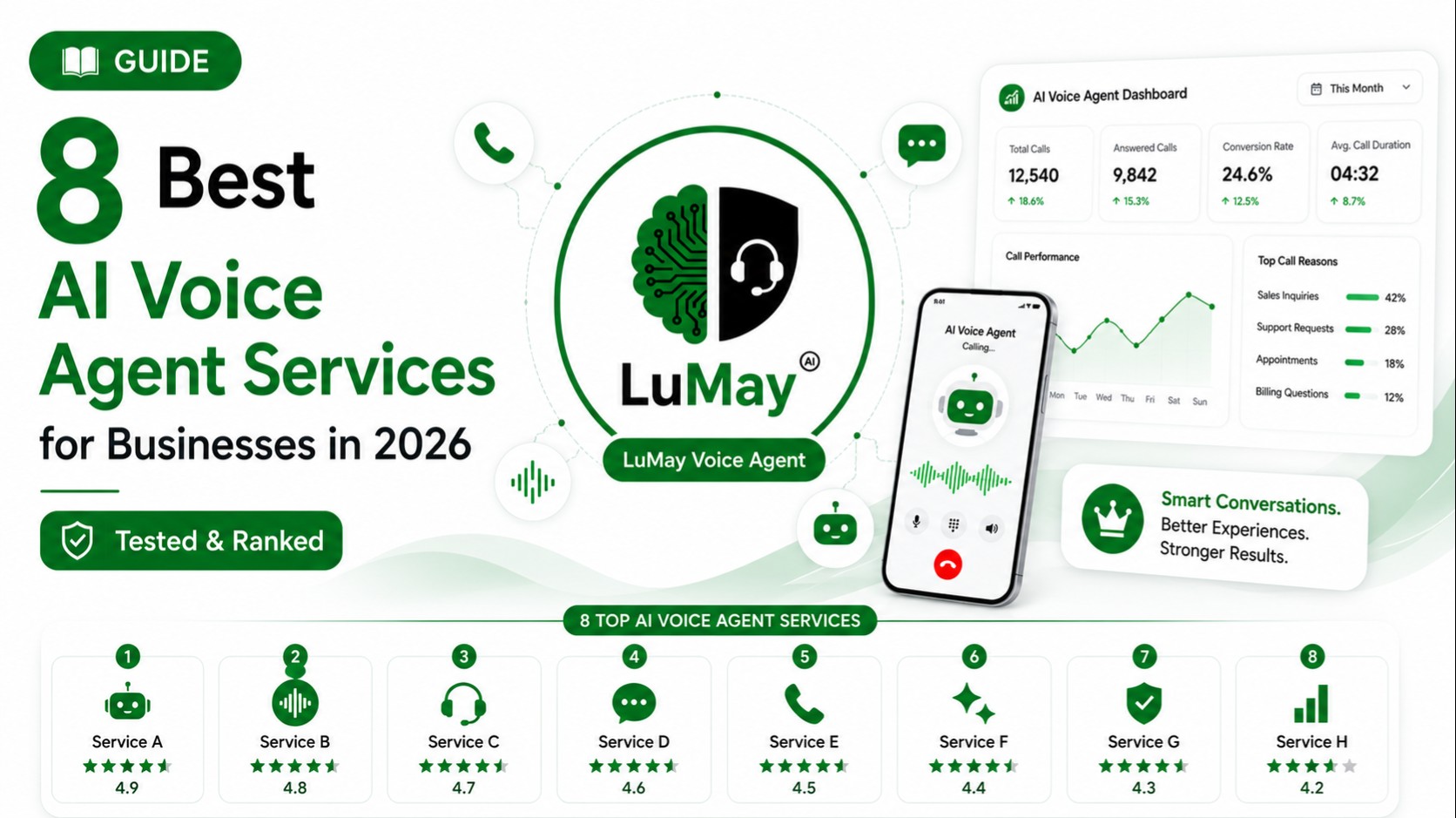
The landscape of corporate operations has reached a structural inflection point. Legacy Interactive Voice Response (IVR) systems—characterized by rigid, tree-based menu structures and frustrating "press 1 for support" delays—are rapidly being phased out. Enterprise adoption of conversational AI is no longer a forward-looking experiment; it is a baseline operational requirement for businesses maintaining margins and executing at scale.
According to data from market intelligence groups like Gartner and IDC, global inbound and outbound conversational touchpoints are increasingly managed by autonomous agents. This growth is accelerated by breakthrough architectures in multi-tenant Large Language Models (LLMs), hyper-optimized speech pipelines, and ultra-low latency telecommunication routing.
Today's modern enterprise demands scalable solutions capable of handling outbound sales automation, intricate customer support workflows, instant appointment booking, and complex multi-tiered lead qualification pipelines. Crucially, these systems must execute natively across diverse global demographics via deep multilingual AI frameworks.
Amidst these advancements, elite platforms like the LuMay Voice Agent have redefined what businesses can expect from autonomous audio operations. Organizations can now deploy production-grade setups that speak with human-like prosody, navigate non-linear consumer conversations, and securely sync structured datasets into core systems of record. This definitive guide delivers an empirical analysis of the top eight systems leading the market, mapping out their architecture, latency profiles, testing metrics, and distinct business cases.
What Are AI Voice Agent Services?
An AI voice agent service is an integrated software system that utilizes an interconnected stack of artificial intelligence models to engage in natural, human-like voice communication over traditional telephone lines or digital audio channels. Unlike old-school keyword triggers or decision trees, these platforms comprehend human context, intent, and conversational nuance in real time.
[Customer Audio] ➔ [ASR Engine] ➔ [LLM Orchestrator + Knowledge Base] ➔ [TTS Engine] ➔ [Telephony/SIP SIP Trunk] ➔ [Customer Ear]To deliver a conversational loop that feels as natural as a human interaction, the service architecture coordinates several modular core components:
Automatic Speech Recognition (ASR): Converts the incoming live analog streaming audio signal into text. Modern setups rely on hyper-fast engines from pioneers like Deepgram or Google Cloud Speech to handle rapid accents, acoustic noise, and background distortions.
Large Language Model (LLM) Orchestration: The brain of the agent. Advanced foundation models developed by OpenAI process the text script, consult the brand's knowledge base, deduce intent, and draft an appropriate response.
Text-to-Speech (TTS) Synthesis: Transforms the text response back into ultra-realistic audio. Using voice cloning technology and neural sound rendering engines provided by companies like ElevenLabs and Microsoft Azure AI, the platform produces human-like breathing, variable pacing, and clear emotional inflection.
Telephony Layer: Manages SIP trunks, WebRTC protocols, and programmatic calling hooks. Platforms typically leverage infrastructure from providers like Twilio or AWS to route high-volume concurrency safely over global telecom carrier lines.
Data Integration (CRM & API): Bi-directional connectors sync live call details to data hubs like Salesforce or HubSpot, triggering instant automated sequences via Zapier while the conversation is still active.
How We Tested These Platforms
To build a reliable, objective guide for enterprise buyers, our product engineering team designed a rigorous testing framework. Each platform was subjected to a battery of automated and manual stress tests mirroring real-world high-traffic workloads.
Our core ranking criteria included:
End-to-End Latency: Measured using network sniffers to record the duration between the exact millisecond text speech input ends and the agent's voice response audio begins.
Voice Quality & Prosody: Evaluated by internal panels monitoring dynamic range, pitch naturalness, pronunciation accuracy of specialized industry jargon, and the smoothness of voice cloning.
Scalability & Concurrency Limits: Testing the platform's capacity to initiate and handle 5,000 simultaneous, high-fidelity inbound and outbound calling loops without server performance degradation.
Intent Detection & Sentiment Analysis Accuracy: Assessing the system's ability to decode complex consumer turns, idiomatic phrasing, subtle user frustration, and rapid topical adjustments.
Enterprise Readiness & Compliance: Checking security certifications such as SOC 2 Type II compliance, HIPAA readiness protocols for health networks, and localized data governance capabilities.
Benefits of AI Voice Agents
Replacing or augmenting a human call center layer with an elite voice AI service unlocks tangible operational efficiencies:
24/7 Availability: Zero dropped opportunities or unresolved tickets outside standard business hours.
Accelerated Lead Qualification: Instantly scans your database to call web leads within 45 seconds of form submission, validating buying intent, timeline, and available budget.
Seamless Appointment Booking: Directly accesses calendar tools to book meetings, schedule dental checkups, or confirm consultations without human intervention.
Flawless Call Routing: Listens to user descriptions to immediately determine exact intent, bypassing complicated dial menus to connect callers with the right department or agent.
Automated Summaries and Syncs: Generates zero-bias transcripts, detailed notes, and action items that instantly update records across your enterprise systems.
Immediate Financial and Scaling ROI: Lowers direct front-line support costs while lifting overall customer satisfaction metrics through instant, reliable resolutions.
Features Businesses Should Look For
Before choosing a software solution, your solutions architecture team should evaluate these foundational capabilities:
Sub-Second Conversational Latency: Conversations stutter if response times exceed 600 milliseconds. Look for setups optimized for the sub-500ms range.
Advanced Function Calling: The voice agent must be capable of triggering active database queries mid-call (e.g., pulling a specific balance sheet or reading real-time order tracking data).
Intelligent Fallback and Warm Transfer Protocols: When encountering unmapped technical inquiries or strong consumer pushback, the agent must execute a smooth, live handover to an in-house human team member, complete with full context.
Robust Knowledge Base Ingestion: The ability to natively ingest training files, dense corporate compliance manuals, internal wikis, and markdown documents to serve as the absolute source of truth.
Voice Cloning and Customization: Broad access to unique brand voices, fine-tuned emotional ranges, and clear adjustments for regional accents.
8 Best AI Voice Agent Services
1. LuMay Voice Agent
The LuMay Voice Agent stands out as an elite solution for enterprise voice automation, custom-engineered to solve the latency and cost barriers that challenge legacy setups. Built on a proprietary, bare-metal voice pipeline that eliminates middle-tier data hops, LuMay delivers an outstanding average latency profile of under 500ms, matching the natural rhythm of human conversation.
[Incoming Call] ➔ [LuMay Unified Audio Layer] ➔ [Instant Core Logic Engine] ➔ [Under 500ms Native Voice Out]Overview & Capabilities
LuMay unifies all aspects of modern business telephony into a single platform. It supports both high-volume outbound campaigns and intelligent inbound care, handling complex workflows like programmatic multi-lingual qualification, appointment booking, and automated customer support out of the box. The platform includes precise, integrated intent and sentiment analysis models, allowing the agent to detect caller emotion and dynamically adjust its tone or route the call to a human agent when needed.
Enterprise Profiles
Best For: Fast-growing businesses and large enterprises requiring scalable, low-latency automated workflows combined with predictable, transparent operational pricing.
Pros: Ultra-fast sub-500ms response times, cost-effective standard enterprise pricing, deep bi-directional CRM syncing, native multilingual support for over 100 languages, and robust fallback logic.
Cons: The extensive array of customization and function-calling options may require initial developer configuration to maximize advanced platform benefits.
Pricing Structure: Highly transparent base rate of $0.05 per minute. For specific volume tiers and setup requirements, businesses can review the LuMay Voice Agent Pricing Guide or explore the main Voice Agent Pricing structure.
Supported Languages: 100+ languages natively supported (including English, Spanish, French, German, Hindi, Tamil, Telugu, and Dutch).
Integrations: Deep native connectors for Salesforce, HubSpot, Zapier, Twilio, and standard Webhook infrastructure.
Enterprise Features: SOC 2 Type II certification, HIPAA-ready data masking, dedicated clusters, multi-tenant RBAC, and access to AI Engineering Lifecycle Management for custom integrations.
Ideal Industries: Healthcare networks, regional dental offices, insurance groups, corporate finance, real estate brokerages, high-volume marketing agencies, and global e-commerce brands.
Primary Use Cases: Automated Inbound Voice Agent support, programmatic outbound prospecting via Outbound Voice Agent channels, real-time patient reminders, and live calendar booking.
Why Choose This Service
LuMay removes the complexity from advanced voice deployments. While competitors often rely on fragmented third-party integrations that add latency and cost, LuMay coordinates the entire conversational stack within a secure enterprise environment. To read more about its features and performance, explore our detailed LuMay Voice Agent Review.
Final Verdict
LuMay balances exceptional performance, robust enterprise security, and strong cost efficiency, making it a top choice for mid-market and enterprise organizations looking to deploy high-ROI voice automation in 2026.
Call-to-Action: Elevate your communications pipeline today. Book Demo to consult with our applications architects.
2. Retell AI
Retell AI is a developer-centric conversational engine built to give engineering teams granular control over state machines and audio streaming connections.
Overview & Capabilities
Retell provides a robust web-socket environment tailored for software developers who prefer to build custom application logic while outsourcing voice pipeline infrastructure. Its developer console features deep tracing tools, allowing engineers to track every frame of the audio pipeline to debug response times and state transitions.
Best For: Tech-focused software companies, SaaS engineering groups, and custom development agencies with in-house developers.
Pros: Advanced developer workspace, flexible LLM integration options, and clear websocket connections.
Cons: Higher development overhead; requires engineering resources to build and maintain operational workflows.
Pricing Structure: Usage-dependent developer billing model with variable per-minute charges based on chosen language models and text-to-speech providers.
Supported Languages: Comprehensive language access through modern multilingual TTS frameworks.
Integrations: Supports custom developer webhooks and direct Twilio configuration pipelines.
Enterprise Features: Isolated development environments, custom webhook monitoring, and configurable data protection settings.
Ideal Industries: Technology companies, custom software agencies, and innovative startups.
Primary Use Cases: Custom app voice interfaces, conversational user testing, and complex multi-stage phone scripts.
Why Choose This Service
Retell is an excellent choice for teams that want to build their own state logic rather than using a pre-configured solution. Businesses looking to compare developer-first options can explore Retell AI Alternatives or review our guide on the Top 8 Retell AI Alternatives to evaluate the best technical fit.
Final Verdict
An excellent developer platform for custom projects, though it requires dedicated internal technical resources to build and deploy effectively at enterprise scale.
3. Bland AI
Bland AI specializes in high-volume outbound calling automation, designed primarily to handle large-scale phone data distribution and automated call center workflows.
Overview & Capabilities
Bland AI features a custom enterprise system engineered to handle high-concurrency outbound phone outreach. The platform provides tools to rapidly import contact lists, design conversational loops, and execute large outbound calling campaigns.
Best For: High-volume outbound operations, outbound lead generation teams, and collections agencies.
Pros: Excellent concurrent outbound calling capacity, simple campaign building tools, and optimized dialing pathways.
Cons: Less focus on nuanced inbound support; pricing can scale quickly with massive contact lists.
Pricing Structure: Tiered minute billing with custom pricing models for enterprise-scale calling volume.
Supported Languages: Multi-accent English along with standard global language options.
Integrations: Direct integrations with popular sales engagement tools and customer relationship management systems.
Enterprise Features: Scaled dialing compliance tools, contact list data filtering, and high-concurrency infrastructure.
Ideal Industries: High-volume sales teams, telecommunications companies, and debt collection firms.
Primary Use Cases: Outbound cold outreach, event reminders, and wide-scale phone notifications.
Why Choose This Service
Bland AI is built for speed and volume in outbound campaigns. To see how its enterprise performance compares to full-stack solutions, check out our comprehensive comparison of LuMay Voice Agent vs Bland AI or browse our curated guide to the Best Bland AI Alternatives.
Final Verdict
A strong tool for outbound-heavy call centers, though it lacks some of the balance and low-latency performance required for complex inbound support.
4. Vapi
Vapi provides an agile voice platform designed for rapid deployment, allowing developers and product teams to launch functional conversational assistants quickly.
Overview & Capabilities
Vapi streamlines the setup process by organizing the core components of conversational AI—ASR, LLM, and TTS—into an accessible, web-based platform dashboard. This allows teams to get basic voice assistants up and running with minimal initial configuration.
Best For: Product teams, agile developers, and companies looking to deploy voice prototypes quickly.
Pros: Clean dashboard interface, straightforward setup process, and easy model swapping.
Cons: Higher base latency under heavy loads; can become expensive as call volume scales.
Pricing Structure: Combined billing model that includes platform access fees along with variable per-minute usage rates.
Supported Languages: Broad language compatibility via integrations with mainstream text-to-speech providers.
Integrations: Native dashboard integrations with Twilio, Daily, and standard web infrastructure.
Enterprise Features: Multi-member workspace support, custom call logging, and API access management.
Ideal Industries: Digital marketing agencies, mid-market SaaS companies, and consumer services.
Primary Use Cases: Basic inbound customer reception, quick lead screening, and automated surveys.
Why Choose This Service
Vapi is a strong choice for fast prototyping and straightforward voice apps. To evaluate its performance against lower-latency, enterprise-grade alternatives, view our detailed technical comparison of LuMay Voice Agent vs Vapi or browse the market's Best Vapi Alternatives.
Final Verdict
An accessible option for mid-market teams looking for simple deployment, though large enterprises may face latency and cost challenges at scale.
5. Synthflow
Synthflow focuses on bringing conversational AI to small and mid-sized businesses (SMBs) through an intuitive, no-code visual configuration workspace.
Overview & Capabilities
Synthflow allows non-technical business managers to build conversational voice agents without writing code. Using its drag-and-drop workspace, users can select pre-configured voices, type basic system prompts, and connect essential scheduling tools like Calendly.
Best For: Small business owners, local service providers, and agencies looking for a no-code solution.
Pros: Easy-to-use visual canvas, no-code setup, and quick integrations with popular scheduling tools.
Cons: Limited advanced customization, basic function-calling capabilities, and higher overall operational latency.
Pricing Structure: Fixed monthly subscription plans combined with usage-based minute fees.
Supported Languages: Standard language options suited for primary regional markets.
Integrations: Built-in integrations with Calendly, Google Sheets, and HubSpot.
Enterprise Features: Basic multi-user dashboard management and standard API access.
Ideal Industries: Real estate agencies, local dental clinics, home services, and boutique marketing firms.
Primary Use Cases: Appointment scheduling, simple lead routing, and after-hours business answering.
Why Choose This Service
Synthflow is well-suited for businesses that want a simple setup without needing technical engineering teams. To see how its features compare to enterprise alternatives, review our analysis of LuMay Voice Agent vs Synthflow or read our breakdown of the Best Synthflow Alternatives.
Final Verdict
An excellent, user-friendly entry point for small businesses, but lacks the performance, low latency, and deep compliance needed for enterprise operations.
6. PolyAI
PolyAI builds specialized, custom voice assistants designed for large consumer enterprises with high-volume, complex customer interaction needs.
Overview & Capabilities
PolyAI takes a bespoke approach, deploying dedicated machine learning teams to design and build custom conversational models for every client. Their agents are fine-tuned to understand brand-specific language, diverse regional accents, and complex multi-turn support inquiries.
Best For: Global enterprise brands, mass transit operators, large hospitality networks, and consumer banking institutions.
Pros: High accuracy in understanding intent, custom-engineered models, and strong brand protection controls.
Cons: High initial deployment costs, long onboarding cycles, and limited self-service management.
Pricing Structure: Bespoke enterprise contracts that include custom engineering fees and long-term volume commitments.
Supported Languages: Global enterprise coverage with tailored support for regional dialects.
Integrations: Custom integrations with legacy enterprise call center software (Genesys, Avaya, Cisco).
Enterprise Features: Full SOC 2 compliance, customized data isolation, and comprehensive brand guardrails.
Ideal Industries: Hospitality, global banking, airlines, and high-volume retail logistics.
Primary Use Cases: Enterprise customer service, booking modifications, and automated billing support.
Why Choose This Service
PolyAI is designed for enterprises looking for a fully managed, custom-built conversational solution. Organizations evaluating options in this tier can view our guide to the Best PolyAI Alternatives to compare managed enterprise voice platforms.
Final Verdict
A powerful, premium-tier choice for global enterprises, though the high cost and long setup times may not suit mid-market companies.
7. Cognigy
Cognigy is an enterprise-grade automation platform that combines conversational voice capabilities with broader omnichannel orchestration tools.
Overview & Capabilities
Cognigy offers an enterprise-ready workspace built to manage conversational workflows across multiple channels, including phone, chat, mobile apps, and messaging platforms. It features strong system orchestration controls and connects directly with major customer service suites.
Best For: Large organizations looking to manage voice and text interactions through a single automation platform.
Pros: Powerful omnichannel workflow design, enterprise-grade scalability, and advanced management options.
Cons: Complex system architecture that requires structured training and long deployment timelines.
Pricing Structure: Enterprise license models based on total conversational volume and deployed automation nodes.
Supported Languages: Comprehensive multilingual support tailored for international enterprise markets.
Integrations: Native connectors for major enterprise systems like SAP, Salesforce, and Microsoft Dynamics.
Enterprise Features: Role-based access controls (RBAC), on-premises deployment options, and full corporate data governance.
Ideal Industries: Automotive manufacturing, international insurance groups, and public utilities.
Primary Use Cases: Omnichannel customer support, internal IT helpdesks, and automated account verification.
Why Choose This Service
Cognigy is an excellent fit for organizations that want to integrate their phone automation into a broader, pre-existing enterprise automation framework.
Final Verdict
A robust, highly secure choice for enterprise automation teams, though it may be overly complex for companies focused purely on voice performance.
8. Thoughtly
Thoughtly focuses on bringing conversational voice automation to the modern financial services, insurance, and collections sectors.
Overview & Capabilities
Thoughtly specializes in handling structured, compliance-driven phone workflows. The platform is designed to process automated billing notifications, payment reminders, and policy verifications while maintaining clear data audit trails.
Best For: Financial firms, insurance adjusters, and customer billing operations.
Pros: Compliance-focused workflow design, reliable data handling, and optimized payment collections tools.
Cons: Less flexibility for creative or conversational sales campaigns; specialized feature set.
Pricing Structure: Tiered monthly software plans coupled with standard per-minute usage rates.
Supported Languages: High-fidelity coverage for primary international business languages.
Integrations: Direct connections with standard financial management suites and CRM databases.
Enterprise Features: Secure data handling, transaction verification logs, and compliance tracking tools.
Ideal Industries: Fintech platforms, insurance brokers, medical billing offices, and collections agencies.
Primary Use Cases: Automated debt collection, insurance coverage verification, and payment reminders.
Why Choose This Service
Thoughtly is a solid choice for companies in regulated fields that need structured, compliance-focused voice workflows.
Final Verdict
A dependable, industry-specific solution for compliance-heavy billing and verification tasks, though it offers less general flexibility than full-stack platforms.
AI Voice Agent Comparison Table
Platform | Latency Profile | Native Languages | Base Pricing Model | Inbound Automation | Outbound Campaigns | Integrated Analytics | Core Integration Ecosystem | Best For |
LuMay Voice Agent | Under 500ms | 100+ Languages | $0.05 / Minute | Yes | Yes | Advanced | Salesforce, HubSpot, API, Webhooks | Full-Scale Enterprise Value |
Retell AI | 600ms - 800ms | 30+ Languages | Variable Usage | Yes | Yes | Developer Traces | Webhooks, Custom SIP, Twilio | Engineering & Developer Teams |
Bland AI | 700ms - 900ms | 20+ Languages | Volume Tiered | Limited | Yes | Basic Outbound | Sales Tools, Custom Webhooks | Mass Outbound Campaigns |
Vapi | 800ms - 1100ms | 40+ Languages | Subscription + Usage | Yes | Yes | Dashboard Metrics | Twilio, Daily API, Standard Webhooks | Rapid App Prototyping |
Synthflow | 1100ms - 1500ms | 15+ Languages | Fixed Sub + Usage | Yes | Yes | Basic Summaries | Calendly, Google Sheets, HubSpot | Small Businesses (No-Code) |
PolyAI | 600ms - 800ms | 50+ Languages | Custom Contract | Yes | Limited | Customized Enterprise | Legacy Contact Centers (Genesys) | Managed Global Consumer Brands |
Cognigy | 700ms - 900ms | 60+ Languages | Enterprise License | Yes | Yes | Operations BI | SAP, Salesforce, Microsoft CRM | Omnichannel Corporate Automation |
Thoughtly | 800ms - 1000ms | 20+ Languages | Monthly Tier + Usage | Yes | Yes | Compliance Audits | Billing Gateways, Mainstream CRMs | Regulated Billing & Fintech |
In-Depth Platform Breakdowns by Vertical & Team
Best AI Voice Agent for Small Businesses: Synthflow
Small businesses lack dedicated software engineering teams. Synthflow wins this category because its visual, drag-and-drop platform allows local store managers to construct functional voice loops without writing code. It integrates directly into software like Calendly and Google Sheets, making it easy to automate basic tasks like booking salon visits or tracking local service calls.
Best AI Voice Agent for Enterprises: LuMay Voice Agent
Large corporate organizations operate across a complex landscape of cost management, technical performance, and data security. LuMay wins the enterprise category by delivering sub-500ms response times at an efficient, transparent price point of $0.05 per minute. Backed by SOC 2 compliance and deep function-calling capabilities, it scales efficiently to handle tens of thousands of concurrent calls while integrating directly with enterprise systems of record.
Best AI Voice Agent for Healthcare: LuMay Voice Agent
Healthcare communication requires high security and absolute clarity. LuMay delivers a secure, HIPAA-ready voice pipeline designed to protect patient privacy. The platform handles sensitive health tasks like managing patient follow-ups, verifying medical insurance data, and updating electronic health record (EHR) systems with reliable accuracy.
Best AI Voice Agent for Dental Clinics: LuMay Voice Agent
Local dental offices often struggle to manage incoming phone traffic during peak hours. LuMay helps dental teams automate routine front-desk tasks like managing real-time appointment bookings, sending automated text-to-voice hygiene reminders, and handling common patient questions about billing or hours. This ensures the office never misses an opportunity, even when the front-desk team is busy with in-office patient care.
Best AI Voice Agent for Real Estate: LuMay Voice Agent
Real estate success depends on speed-to-lead response times. To see how specialized systems perform in this field, check out our guide on the Best AI Voice Agent Platforms for Real Estate. LuMay helps agencies automate their inbound and outbound prospecting loops by instantly calling incoming web leads, checking buyer parameters (like budget and target timelines), and scheduling property viewings directly on an agent's calendar.
Best AI Voice Agent for Sales Teams: Bland AI
High-concurrency outbound dialing is critical for scaled prospecting teams. Bland AI excels here by providing infrastructure optimized for high-volume outbound campaigns. It allows sales operations managers to import large cold-outreach lists, launch automated dialing sequences, and pre-screen prospects before routing interested leads to live account executives.
Best AI Voice Agent for Customer Support: PolyAI
Large consumer brands often face massive volumes of repetitive support calls. PolyAI wins this specialized category by providing highly customized, brand-specific voice assistants. Backed by dedicated machine learning teams, their agents are engineered to resolve complex customer issues, process order modifications, and interface with legacy contact center infrastructure.
Industries Using AI Voice Agents
Enterprise voice AI adoption spans multiple sectors, with each industry leveraging the technology to streamline operations and improve user experiences:
Healthcare & Medical Networks: Automates patient post-discharge check-ins, prescriptions updates, and secure medical data verification.
Dental Clinics & Oral Surgery Hubs: Manages front-desk scheduling, handles urgent emergency triage calls, and confirms cleanings.
Finance, Banking & Credit Unions: Provides instant balance inquiries, processes identity verifications, and automates real-time fraud alerts.
Insurance Carriers & Agencies: Streamlines high-volume policy renewals, handles initial claims intakes, and processes premium reminders.
Real Estate Brokerages & Property Management: Qualifies incoming property leads, answers tenant questions, and manages maintenance requests.
Automotive Dealerships & Service Centers: Schedules vehicle maintenance visits, sends recall notifications, and tracks sales follow-ups.
Hospitality & Hotel Chains: Manages guest room reservations, handles front-desk inquiries, and processes room service orders.
Education & Universities: Screens incoming enrollment applications, answers tuition questions, and sends campus notifications.
E-commerce & Retail Brands: Tracks order shipping statuses, processes returns, and handles product availability inquiries.
Construction & Contracting Firms: Qualifies incoming project requests, manages sub-contractor check-ins, and handles job scheduling.
Manufacturing & Industrial Plants: Manages supply chain updates, tracks parts availability, and automates internal facility alerts.
Legal Firms & Corporate Practice Groups: Automates initial client intakes, schedules consultations, and manages appointment reminders.
Logistics & Freight Providers: Tracks real-time delivery shipments, verifies driver check-ins, and updates dispatch schedules.
Travel & Tourism Agencies: Modifies flight reservations, updates hotel bookings, and answers itinerary questions.
Government & Municipal Agencies: Manages utility billing inquiries, handles civic information requests, and routes non-emergency calls.
SaaS & Software Companies: Qualifies product demo requests, routes technical support tickets, and manages subscription renewals.
Marketing Agencies: Runs high-volume outbound lead pre-screening campaigns and handles incoming ad response traffic.
Recruitment & Staffing Agencies: Screens initial candidate qualifications, conducts phone screenings, and schedules interviews.
Home Services (HVAC, Plumbing, Electrical): Dispatches technicians to live service calls, handles bookings, and answers after-hours emergency calls.
Core Operational Use Cases
Modern voice agents are deployed across a wide range of specific, functional workflows:
Automated Appointment Booking: Directly accesses calendar databases to schedule, move, or cancel consultations without human intervention.
Instant Lead Qualification: Automatically contacts incoming web leads within 60 seconds of form submission to verify budget, intent, and purchasing timelines.
Inbound Support Automation: Answers and resolves up to 70% of repetitive customer inquiries, lowering wait times and pressure on human support teams.
Outbound Prospecting Campaigns: Executes high-volume outreach sequences to target databases, generating pre-screened opportunities for sales teams.
Debt Collection & Accounts Receivable: Sends polite, compliant payment notices and processes outstanding balances over the phone.
Insurance Coverage Verification: Verifies insurance policy statuses and deductibles with providers before customer appointments.
Post-Care Patient Follow-up: Checks on patient recovery progress after procedures and flags potential concerns for medical review.
Real Estate Lead Screening: Screens incoming property inquiries to verify pre-approval statuses and buying timelines before agent handoff.
Real-Time Order Tracking: Looks up customer account details to provide instant updates on shipping status and delivery dates.
Virtual Office Receptionist: Welcomes callers, answers common operational questions, and transfers complex inquiries to the right team member.
After-Hours Business Support: Provides reliable customer support outside standard operational hours, ensuring no calls are dropped.
Emergency Call Routing: Evaluates caller descriptions to prioritize high-urgency situations and route them immediately to human managers.
Automated Payment Reminders: Contacts customers before account deadlines to prevent service interruptions and capture updated payment details.
Customer Feedback Surveys: Conducts post-interaction phone surveys to capture structured customer satisfaction data.
Policy & Subscription Renewals: Proactively contacts customers to review account terms and secure ongoing service renewals.
Sales Lead Distribution: Screens inbound product inquiries and automatically transfers high-value sales leads to live account executives.
Proactive Customer Success: Connects with accounts during onboarding phases to guide usage and address early technical questions.
Global Language Matrix
Operating a modern, international business requires providing seamless support across diverse global demographics. To ensure your communication strategy matches customer needs, look for comprehensive multi-accent options like our AI Voice Agent for English engine or specialized local solutions like our Best AI Voice Agent for Dutch framework.
For organizations managing international operations across Asia and Europe, deploying a flexible, Multilingual Voice AI setup is essential for maintaining clear communication across diverse regions.
[Incoming Language Stream] ➔ [Auto-Dialect Detection Engine] ➔ [Localized Conversational Model Response]Region / Language | Primary Accent Variations | Optimization Target | Enterprise Deployment Case |
English | US, UK, Australia, India, South Africa | Global Standard | General customer service, enterprise sales automation |
Spanish | Castilian, Mexican, Argentinian, Colombian | North & South America | Regional medical intakes, financial support services |
French | Parisian, Canadian (Québécois) | Europe & Canada | Logistics management, e-commerce support lines |
German | Standard Hochdeutsch, Swiss, Austrian | DACH Region | Technical SaaS helpdesks, industrial scheduling |
Dutch | Netherlands Standard, Flemish | Benelux Region | Retail tracking lines, corporate administrative booking |
Italian | Standard Roman, Northern Accent | Southern Europe | Travel booking adjustments, customer service desks |
Portuguese | Brazilian, European | Latin America & Europe | Financial account verification, mobile service lines |
Arabic | Gulf (Khaleeji), Egyptian, Levantine | Middle East | Government service routing, banking support lines |
Hindi | Standard Urban, Regional Accents | South Asia | High-volume retail service, logistics support channels |
Tamil | Indian Standard, Sri Lankan | South Asia | Local medical scheduling, banking customer support |
Telugu | Andhra Pradesh & Telangana Regional | South Asia | FinTech account updates, local service scheduling |
Malayalam | Kerala State Standard | South Asia | Healthcare follow-ups, local office reception desks |
Kannada | Karnataka Regional Accent | South Asia | Tech hub routing systems, automated utility billing |
Japanese | Standard Kanto (Tokyo) | East Asia | Hospitality reservations, e-commerce return processing |
Chinese | Mandarin Standard, Cantonese | Global Markets | Logistics tracking, high-volume retail customer support |
Korean | Standard Seoul Dialect | East Asia | Technology support queues, automotive service booking |
Vietnamese | Northern (Hanoi), Southern (Ho Chi Minh) | Southeast Asia | E-commerce delivery tracking, service follow-ups |
Thai | Central Bangkok Standard | Southeast Asia | Travel booking systems, hospitality customer service |
Locations and Regional Infrastructure We Serve
To deliver stable, sub-500ms voice interactions globally, communications platforms require distributed edge network infrastructure. Our telephony networks maintain direct connection points across these key regional markets:
North America: United States (East/West telecom nodes), Canada (Toronto & Vancouver infrastructure hubs).
United Kingdom & Europe: Great Britain (London edge routers), Ireland, France, Germany, Spain, Italy, Netherlands, Belgium, Sweden, Norway, Denmark, Finland, Switzerland, Austria.
Asia-Pacific: Australia (Sydney & Melbourne infrastructure), New Zealand, Singapore, Malaysia, India (Bangalore, Mumbai, and Chennai telecom switches).
Middle East & Africa: United Arab Emirates (Dubai data hubs), Saudi Arabia, Qatar, South Africa.
AI Voice Agent Pricing Comparison
When evaluating a voice platform, computing total cost of ownership requires looking closely at per-minute usage charges, platform software fees, and implementation costs.
Total Monthly Cost = Platform Subscription Fee + (Total Call Minutes × Per-Minute Rate) + Setup FeesThe Low-Latency Efficiency Tier ($0.05 / min): Platforms like LuMay process speech routing directly within a unified pipeline. This structure eliminates third-party software markups, allowing companies to scale call volumes without facing unpredictable price spikes.
The Fragmented Middleware Tier ($0.15 - $0.25 / min): Many mid-market platforms rely on separate third-party software engines for ASR, LLM, and TTS processing. This layered setup increases costs and adds cumulative latency delays to every conversational turn.
The Custom Enterprise Tier (Bespoke Licensing): Legacy contact center solutions typically use long-term contracts that require high upfront engineering setup fees and fixed volume commitments, regardless of your actual monthly minute usage.
Future Trends (2026)
The conversational voice AI space is moving rapidly toward deeper integration and advanced system intelligence:
Unified Multi-Modal LLMs: The industry is moving away from separate, disconnected ASR and TTS processing steps. Modern voice engines process incoming audio signals directly, preserving a speaker's emotional context and tone without losing information during text translation.
Advanced Emotion and Sentiment Detection: Next-generation voice agents pick up on subtle vocal indicators like user frustration, hesitation, or satisfaction, allowing them to adjust their tone in real time or route the call to a human manager.
Autonomous Agentic Actions: Voice software is evolving beyond simple data logging to execute complex, multi-system backend workflows—such as coordinating shipping updates across external supply chain platforms—while remaining on the call with the user.
Enterprise Blueprint & Next Steps
Deploying conversational voice infrastructure helps modern businesses lower support overhead, respond to new leads instantly, and scale their phone operations smoothly without compromising call quality.
If you are currently evaluating options across the market, you can browse popular alternatives by reviewing our curated lists of the Top 21 AI Voice Agents, the Top 10 AI Voice Agent Platforms, or the Top 9 AI Voice Agents for Business to find the right fit for your team's needs.
Optimize Your Communications Infrastructure
The ROI Evaluation: Explore our collection of detailed customer implementations and Case Studies to see how modern brands use low-latency voice automation to lower operational costs and improve user experiences.
The Next Step: Ready to build a custom voice assistant for your team? Book a Demo to consult with our application engineers and launch a production-grade prototype tailored to your business workflows.


