A support assistant can answer a straightforward product question by finding the right documentation. Investigating a recurring failure may require several searches, a version check, and a review of previous support attempts.
Those requests need different retrieval workflows. Choosing between traditional RAG and agentic RAG starts with understanding how much of that workflow you can define in advance.
The practical question is whether the system should follow a known retrieval process or decide its next search after examining what it has already found.
What Is the Main Difference Between Agentic RAG and Traditional RAG?
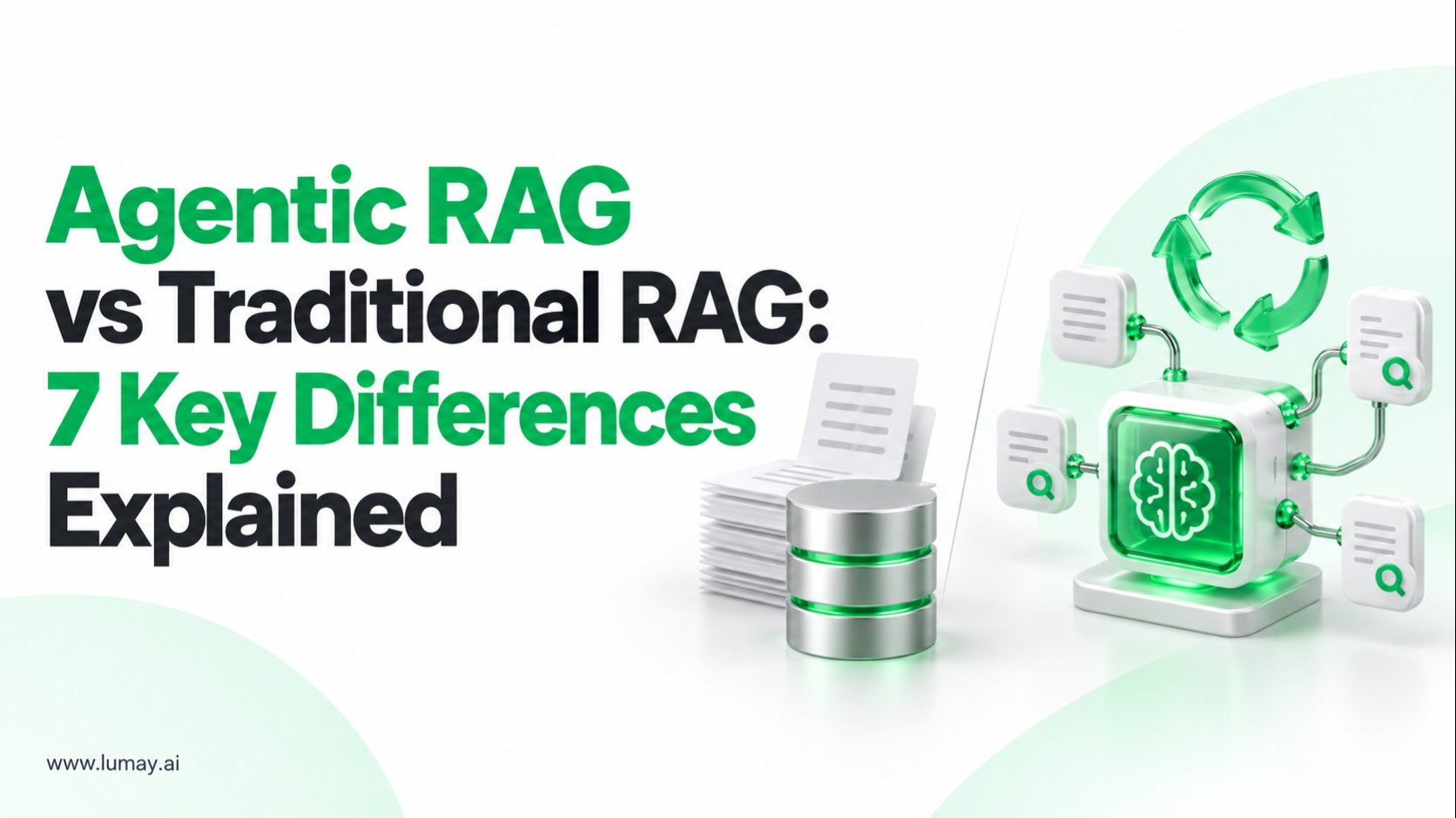
Traditional RAG follows an application-defined retrieval workflow. Agentic RAG allows a model-driven controller to decide when to retrieve, which approved source or tool to use, and whether another search is needed.
Both approaches connect a language model with external information. Agentic RAG changes how the system gathers and checks that information; it does not remove the need for a reliable knowledge base.
Traditional RAG is a sensible starting point for focused, repeatable questions. Agentic RAG becomes useful when later retrieval steps depend on findings that were unavailable at the start.
What Is Traditional RAG?
Retrieval-augmented generation, or RAG, supplies external evidence to a language model when it answers a question. The original RAG research paper established an approach combining retrieved information with model generation.
In a common production workflow, the application retrieves relevant material, selects context, and asks the model to answer from that evidence. Developers define how these stages connect.
Traditional RAG can include:
- Query rewriting and metadata filters.
- Searches across multiple approved repositories.
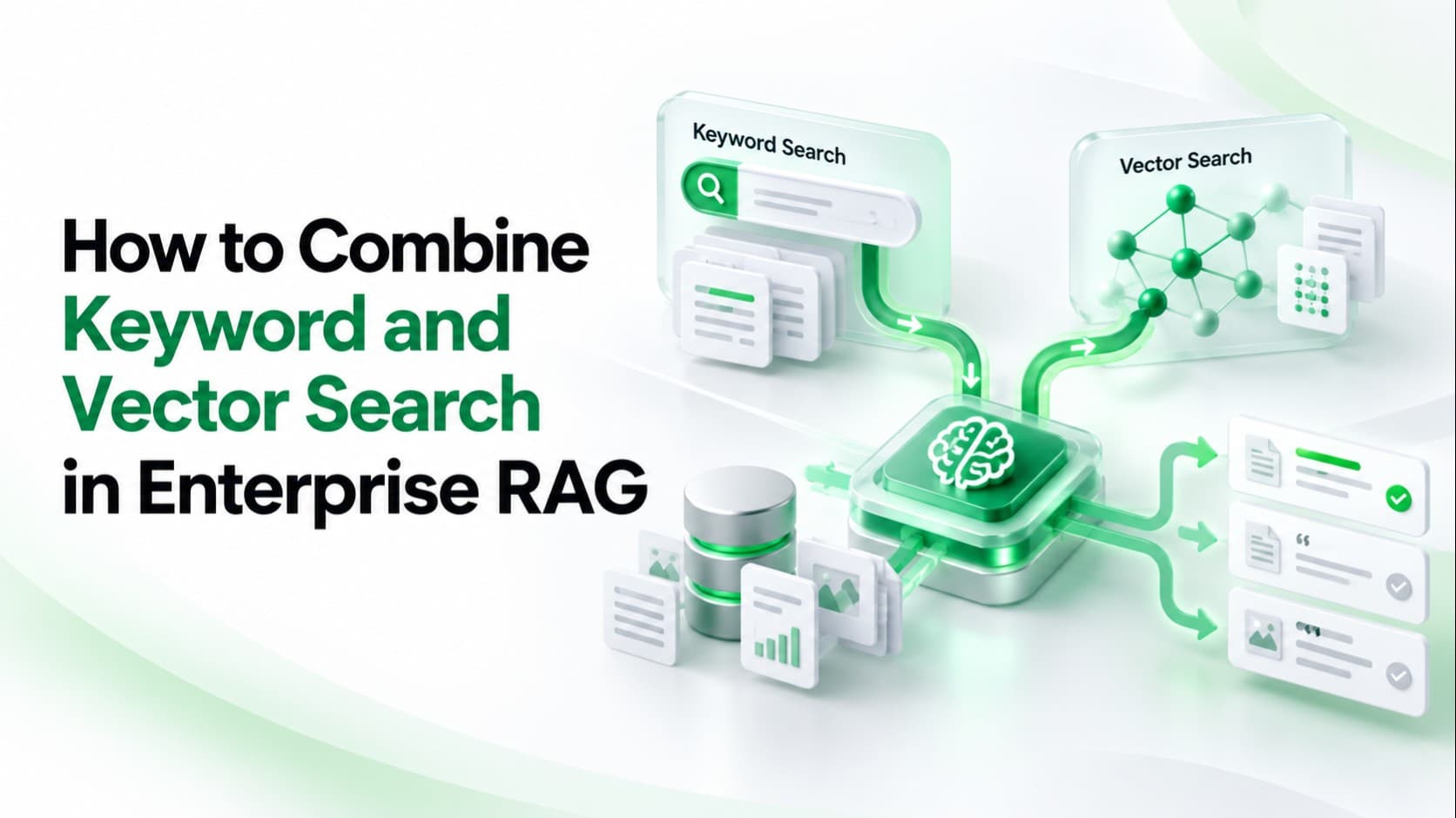
- Keyword and vector search.
- Reranking, citation checks, and conversational history.
Here, “traditional” describes the predefined workflow. It does not mean the implementation is limited to one database, one search, or a basic vector lookup.
For example, Microsoft’s hybrid search documentation describes combining text and vector queries. That retrieval technique can sit inside either a predefined workflow or an agent-controlled one.
What Is Agentic RAG?
Agentic RAG gives a controller responsibility for some retrieval decisions during execution. It may break a question into smaller tasks, inspect the results, identify a gap, and choose a follow-up search.
The controller works within application-defined permissions, available tools, and execution limits. It does not need unrestricted access or permission to modify business systems.
Anthropic’s guidance on effective agents distinguishes predefined workflows from agents that dynamically direct their processes and tool use. That distinction is useful when assessing whether a RAG design actually needs agentic behavior.
LuMay’s RAG development services cover knowledge retrieval architectures, including agentic RAG, evaluation, and ongoing optimization.
Agentic RAG vs Traditional RAG at a Glance
The table compares common design patterns. Individual implementations can combine them.
| Difference | Traditional RAG | Agentic RAG |
|---|---|---|
| Query planning | Predefined query preparation and branches | Can create and revise retrieval tasks at runtime |
| Retrieval flow | Follows a configured sequence | Can search again based on intermediate findings |
| Source and tool selection | Uses configured sources and routing rules | Can choose among approved retrieval tools dynamically |
| Context and state | Usually assembles evidence for a known answer stage | Tracks findings, open questions, and intermediate task state |
| Validation and recovery | Applies configured checks and fallback paths | Can use checks to guide targeted follow-up retrieval |
| Cost and latency | Usually easier to estimate for a bounded workflow | Depends more on the execution path and number of calls |
| Governance and evaluation | Tests retrieval, answers, permissions, and configured branches | Also tests tool choices, execution paths, stopping, and state handling |
1. Query Planning: Predefined Preparation vs Runtime Task Planning
Traditional RAG can rewrite a question, expand search terms, or split it into several queries using a configured process. These capabilities do not automatically make the system agentic.
Agentic RAG can decide which retrieval tasks are needed for the particular request. It may also revise those tasks after learning more about the available evidence.
Consider a question about an export failure. The system may first need the customer’s software version before it can search for the correct troubleshooting procedure.
Microsoft’s agentic retrieval documentation provides an implementation example in which a model can generate focused subqueries from a question and conversation history.
What this means for your project: Ask whether the retrieval tasks are known in advance. If they are, a configured workflow may provide the control you need without a general-purpose planner.
2. Retrieval Flow: A Known Sequence vs an Adaptive Search Loop
A traditional pipeline follows its configured stages. It might retrieve, rerank, check relevance, and use a fixed fallback when the evidence is insufficient.
An agentic pipeline can use an intermediate finding to decide what to retrieve next. For example, a release note may reveal that a fix applies only to a particular product version.
The controller can then search for evidence matching that version instead of repeating the original question against the same index.
The NVIDIA RAG Blueprint’s agentic design illustrates planning, per-task retrieval, follow-up searches, synthesis, and optional verification that can trigger further retrieval.
What this means for your project: Define a stopping policy. The system should answer, ask for clarification, return an evidence gap, or escalate when additional searching is unlikely to help.
3. Source and Tool Selection: Configured Routes vs Dynamic Selection
Both approaches can use several sources. A predefined RAG workflow can search documentation, query a database, and call an API in an established sequence.
Agentic RAG adds the option to choose among those approved tools while processing the request. The choice can depend on information discovered during an earlier step.
For a support investigation, the available tools might include:
- Documentation search for supported troubleshooting steps.
- A ticket lookup for previous attempts.
- A product-version lookup for the customer’s environment.
- An incident-status API for current service conditions.
LangChain’s retrieval documentation describes retrieval tools that can expose documents, APIs, or database queries to an agent.
What this means for your project: Define narrow tool interfaces and enforce authorization at the connector or data layer. Review LuMay’s AI integration services when connecting retrieval to existing enterprise systems.
4. Context and State: An Evidence Package vs Working Investigation State
A traditional RAG application can maintain conversation history and retrieve fresh information on each turn. Memory is not exclusive to agentic systems.
Agentic RAG often needs additional state because it coordinates an investigation across several retrieval steps. It must distinguish established facts, unresolved questions, and unsuccessful searches.
For example, the system should remember that a suggested fix applies to version 6.3 while the customer uses version 6.2. That mismatch should remain visible when later evidence is summarized.
Anthropic’s context-engineering guidance discusses loading information when needed and retaining useful references instead of placing every retrieved item into the model’s context.
What this means for your project: Store source identifiers and timestamps alongside findings. Set retention rules, remove irrelevant context, and prevent one user’s investigation state from becoming another user’s evidence.
5. Validation and Recovery: Configured Checks vs Evidence-Driven Follow-Ups
Traditional RAG can validate relevance, check citations, reject unsupported answers, and invoke fallback searches. These are valuable features of a well-designed pipeline.
Agentic RAG can use a detected problem to select a more specific next step. If a retrieved document concerns the wrong product version, the controller can search for the missing version-specific guidance.
However, a model checking another model’s answer does not establish that the answer is correct. A repeated search can retrieve the same incorrect or outdated material.
Useful validation questions include:
- Does the cited passage support the actual claim?
- Does the evidence match the product, version, and date?
- Were conflicting sources identified?
- Did the system state what remains unknown?
What this means for your project: Evaluate retrieval quality and answer quality separately. LangSmith’s RAG evaluation guide covers correctness, relevance, groundedness, and retrieval relevance as distinct checks.
6. Cost and Latency: Bounded Work vs Variable Execution Paths
A predefined RAG workflow usually makes the number of major processing stages easier to estimate. Actual response time still depends on model inference, search, APIs, and infrastructure.
Agentic RAG can add planning, tool calls, follow-up retrieval, and verification. Different questions may follow different paths, creating a wider range of response times and costs.
An efficient agent may avoid unnecessary searches, but that needs measurement. Neither architecture guarantees a lower bill or faster response for every workload.
Set explicit operating limits for:
- Model and tool calls per request.
- Input and output tokens.
- Search attempts and repeated-query detection.
- Total execution time.
- Fallback behavior when a limit is reached.
What this means for your project: Compare cost per correctly resolved request alongside typical and slow-case latency. Include failed attempts and human review when assessing whether additional retrieval provides enough value.
7. Governance and Evaluation: Answer Checks vs Full Execution Checks
Both architectures need access controls, trustworthy sources, citation checks, and production monitoring. Agentic RAG adds more decisions and intermediate state to inspect.
Record the selected tools, queries, source references, permission outcomes, retries, and stopping reason. These observable events help explain an execution without relying on access to private model reasoning.
LangSmith’s agent-evaluation guidance demonstrates evaluating intermediate steps and execution paths alongside the final response.
Security checks should also verify that:
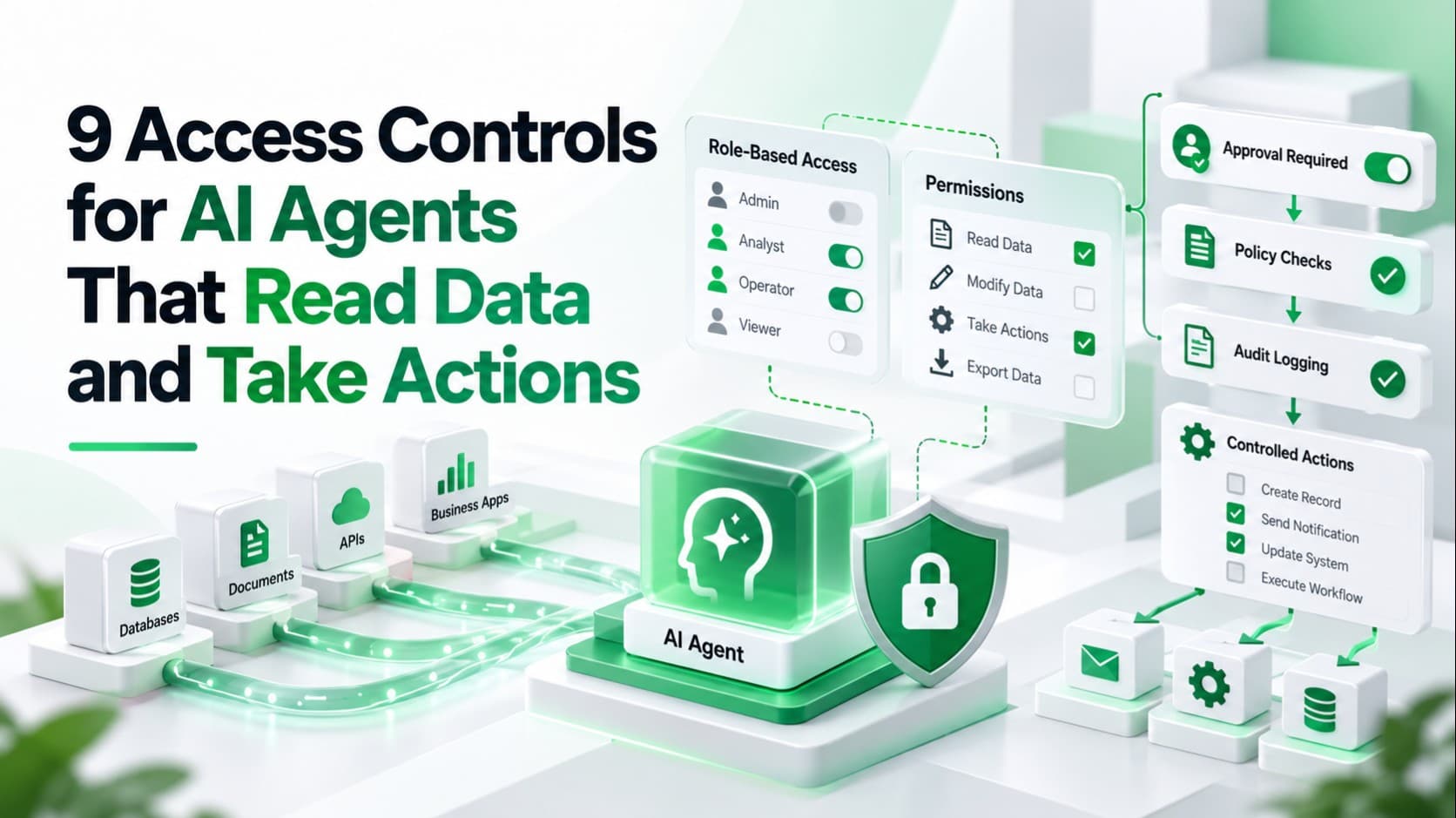
- Retrieved content cannot grant new tool permissions.
- User identity and access restrictions carry through every lookup.
- Untrusted documents are treated as evidence, not operating instructions.
- Read-only research stays separate from actions that change records.
OWASP’s prompt-injection guidance explains risks from external content influencing model behavior. Its excessive-agency guidance recommends restricting functionality, permissions, and autonomy.
What this means for your project: Test the path as well as the answer. An otherwise useful response should fail evaluation if it required unauthorized access or ignored an execution limit.
A Practical Example: Investigating a Customer’s Export Failure
Consider this illustrative request:
“Why does this customer’s export keep failing, and which documented troubleshooting steps apply to their environment?”
How a Traditional RAG Workflow Could Handle It
The application retrieves the customer’s product version, searches the relevant documentation, adds available ticket history, and generates an answer using a predefined process.
This can work well when the required sources and decision branches are understood. A configured workflow can also check for missing fields and request clarification.
How Agentic RAG Could Handle It
The controller might take these steps:
- Read the permitted ticket details and identify the reported error.
- Confirm the customer’s product version.
- Search for troubleshooting evidence matching that error and version.
- Notice that one result mentions a region-specific incident.
- Check the approved incident-status source for that region.
- Compare the findings with steps already attempted.
- Return supported recommendations, citations, and unresolved gaps.
The value comes from using a finding to choose the next lookup. If every request follows those same seven steps, a predefined workflow may be enough.
The investigation does not need permission to change the customer’s configuration. Any later action should have its own authorization and approval rules.
Which RAG Approach Should Your Enterprise Choose?
Start With Traditional RAG When
- Questions are focused and repeatable.
- The relevant sources are known.
- Retrieval and fallback steps can be defined clearly.
- Response-time consistency matters.
- Your team needs a straightforward baseline to evaluate.
Evaluate Agentic RAG When
- Later searches depend on earlier findings.
- Requests require investigation across different systems.
- Ambiguity cannot be resolved through a few configured branches.
- The user benefits from additional evidence gathering.
- You can support the required permissions, testing, and monitoring.
A useful middle ground is to run a predefined retrieval path first, then allow bounded agentic follow-ups for requests that meet explicit escalation criteria.
Before increasing autonomy, check document quality, access controls, metadata, and index freshness. A planning loop cannot compensate reliably for missing or inaccessible evidence.
How to Evaluate Agentic RAG Against Your Existing Pipeline
Use the same representative questions, source versions, and permission rules for both designs. Keep a separate held-out test set so improvements are not measured only on examples used during development.
| Evaluation area | What to measure |
|---|---|
| Answer quality | Correctness, relevance, and unsupported claims |
| Evidence quality | Source coverage, citation support, freshness, and version match |
| Execution quality | Appropriate tool selection, useful follow-ups, and stopping behavior |
| Access control | Correct permissions across retrieval, state, and output |
| Reliability | Behavior with unavailable tools, conflicting evidence, and missing data |
| Operating performance | Cost per successful request and typical and slow-case latency |
Repeat tests where behavior is variable. Review failures by cause: poor evidence, incorrect routing, context loss, tool errors, or unsupported synthesis.
Expand the agentic path only when the improvement is meaningful for the business and the operating costs remain acceptable.
Build the Retrieval Workflow Your Business Actually Needs
Traditional RAG and agentic RAG solve related problems with different levels of runtime flexibility. Choose the simplest design that meets your evidence, reliability, and operational requirements.
LuMay’s AI engineering services and broader enterprise AI services provide routes to discuss retrieval architecture, agents, integration, and production delivery.
For a new system or an existing RAG application that needs improvement, explore LuMay’s RAG development services or contact our team with your workflow, data sources, and current failure cases.