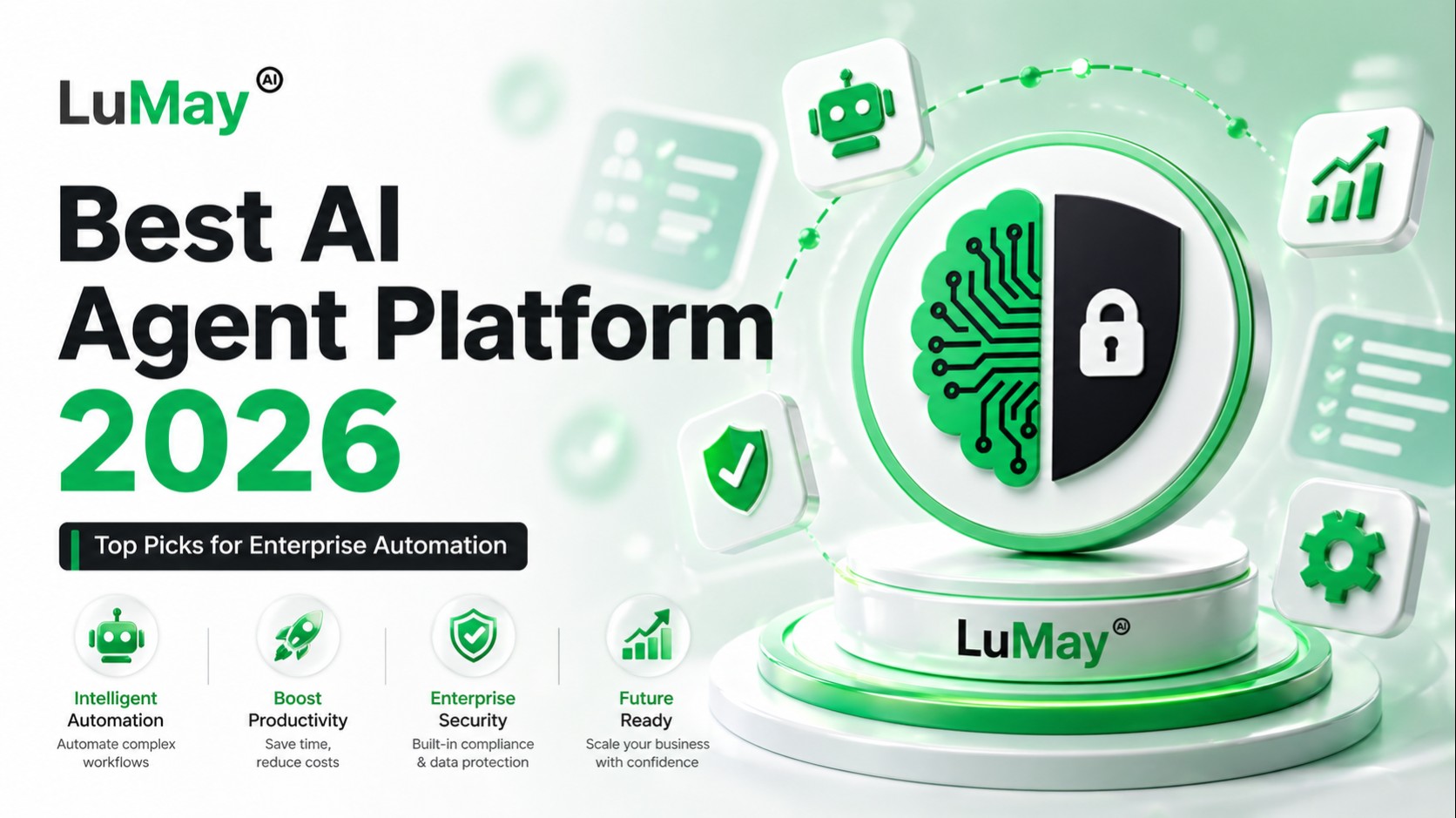
Best AI Agent Platforms: The Short Answer
The best AI agent platform depends on who builds the agents and where they must run. Developer frameworks, cloud services and no-code builders each suit different teams.
Use the checklist below to compare platforms on orchestration, integrations, governance and cost.
How We Evaluated These Platforms
● Orchestration: multi-step tasks, tools and memory.
● Integrations: maintained connectors and an open API.
● Governance: access control, audit logs and human approval steps.
● Deployment: cloud, private cloud or self-hosted options.
● Pricing transparency: a public price page or clear usage model.
What Is the Best AI Agent Platform in 2026?
The best AI agent platform in 2026 is one that combines autonomous workflow automation, multi-agent orchestration, enterprise-grade security, and rapid deployment — all in a single unified system.
Why Choosing the Right AI Agent Platform in 2026 Matters More Than Ever
The agentic AI revolution is no longer a future prediction. It is happening right now, inside enterprise teams across healthcare, finance, legal, and manufacturing.
If your enterprise is still evaluating whether to adopt an AI agent platform, the competition is already deploying one. The question is no longer if — it is which platform and how fast.
This guide is designed to give you a clear, actionable answer. We cover the best AI agent platforms for 2026, from enterprise heavyweights to affordable options for smaller teams, with honest comparisons, feature breakdowns, and real-world outcomes from companies already using them.
What Is an AI Agent Platform?
An AI agent platform is a unified software system for building, deploying, orchestrating, and governing autonomous AI agents across business workflows.
Unlike traditional automation tools that follow fixed rules, AI agent platforms power agents that can:
Reason through multi-step problems using LLM-powered logic
Use tools like databases, APIs, CRMs, and ERPs autonomously
Execute complex workflows with minimal or zero human intervention
Learn from context and adapt to exceptions in real time
Coordinate with other agents in multi-agent systems to complete large tasks
The key distinction from older RPA (Robotic Process Automation) tools is this: RPA follows pre-coded rules and breaks when conditions change. AI agents are goal-directed. They understand context, handle exceptions, and adapt based on feedback.
In 2026, enterprises are rapidly replacing brittle RPA implementations with AI agents that can reason, respond, and resolve — across sales, HR, compliance, legal, finance, and customer support.
Core Components of an AI Agent Platform
Component | What It Does | Why It Matters |
Agent Orchestration | Coordinates multi-agent workflows and task delegation | Enables complex, multi-step automation at scale |
LLM Integration | Connects to foundation models (GPT-4, Claude, Gemini, etc.) | Powers reasoning, language understanding, and generation |
Tool Use / APIs | Lets agents call external systems, databases, and services | Enables real-world action beyond text generation |
Memory & RAG | Retrieves relevant context from documents and history | Ensures accurate, grounded agent responses |
Governance & Security | RBAC, audit logs, compliance controls, PII protection | Keeps enterprise deployments safe and compliant |
Observability | Traces, dashboards, logs for every agent action | Enables debugging, improvement, and accountability |
Deployment Flexibility | Cloud, private VPC, on-premise deployment options | Meets data residency and regulatory requirements |
Top 9 Best AI Agent Platforms in 2026 — Full Comparison
We evaluated over 20 platforms across deployment speed, enterprise governance, industry focus, multi-agent capability, pricing transparency, and real-world outcomes. Here are the top 10 best AI agent builder platforms for enterprises and SMBs in 2026.
1. Vellum AI
Official Website: vellum.ai
Vellum AI is an enterprise-first AI agent builder that lets teams create production-ready agents using natural language prompts. Its prompt-to-agent workflow turns plain-English instructions into complete agents instantly.
Features Overview:
Prompt-to-agent workflow for rapid prototyping
Visual builder for non-technical teams plus Python/TypeScript SDK for engineers
Built-in evaluations, versioning, and regression testing
Full observability: traces, dashboards, and performance metrics
Enterprise governance: RBAC, audit logs, and environment isolation
Flexible deployment: cloud, private VPC, hybrid, or on-prem
Strengths:
Strong bi-directional workflow: PMs can build visually, engineers extend via SDK
Best-in-class evaluation and versioning for production-safe releases
Fast support and strong documentation
Considerations:
Some advanced SDK features still require engineering support
2. Microsoft Copilot Studio
Official Website: microsoft.com/copilot-studio
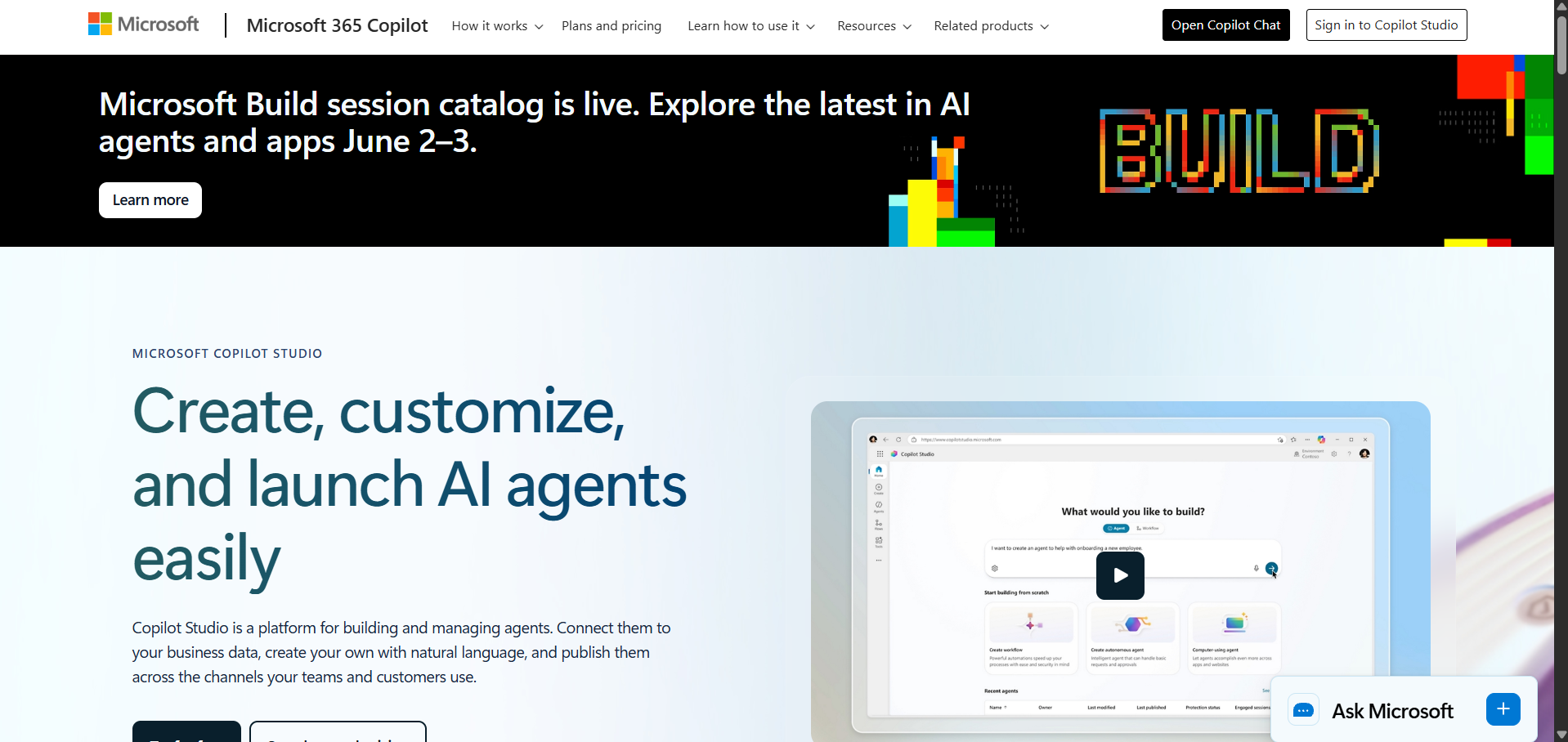
Microsoft Copilot Studio leads by volume in 2026, with over 160,000 organizations and 400,000+ custom agents in production. It integrates deeply with the Microsoft 365 ecosystem.
Features Overview:
Low-code agent builder with deep Microsoft 365, Teams, and Azure integration
Multi-agent patterns via AutoGen + Semantic Kernel (GA since Q1 2026)
Strong governance, compliance, and data residency controls
Connectors to SharePoint, Dynamics 365, Power Automate, and more
Strengths:
Largest enterprise install base — fastest adoption for Microsoft-centric organizations
Rich connector library and strong change management tooling
Adopted by approximately 40% of Fortune 100 for IT and compliance automation
Considerations:
Best value within Azure ecosystem; more complex for non-Microsoft stacks
Deep customization requires Copilot Studio premium and engineering resources
3. LangChain / LangGraph
Official Website: langchain.com
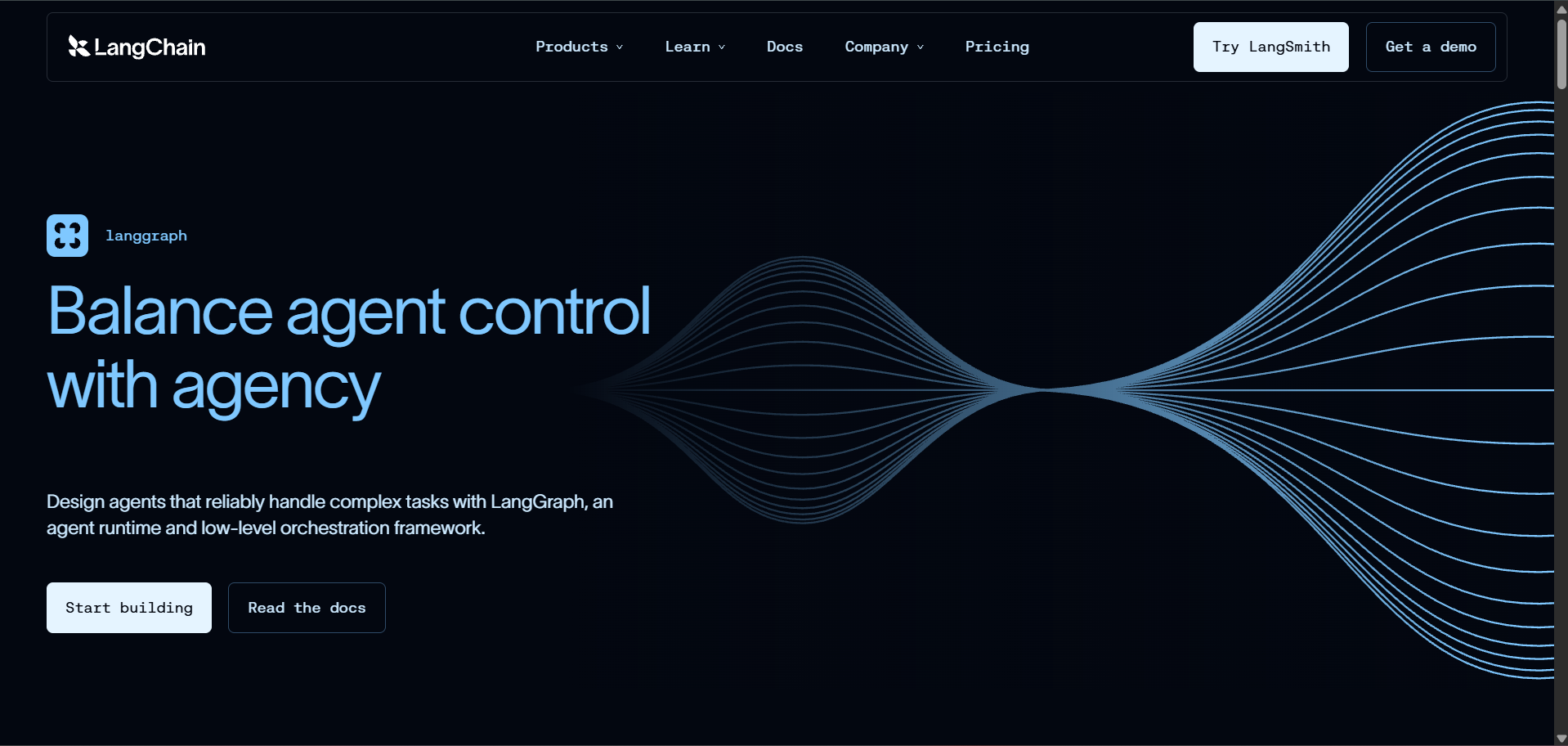
LangChain / LangGraph is the production-grade standard for stateful multi-agent workflows in 2026. Now at v1.0, it includes durable execution and native human-in-the-loop capability.
Features Overview:
Stateful multi-agent graph-based orchestration
Human-in-the-loop checkpoints built natively into workflow execution
LangSmith for observability, tracing, and evaluation
Integrates with every major LLM: GPT-4, Claude, Gemini, Llama 3
Strengths:
Maximum flexibility for developer-led, code-first teams
Strong open-source ecosystem and community support
Considerations:
Steep learning curve; requires strong engineering resources to productionize
Less governance and low-code tooling compared to managed enterprise platforms
4. CrewAI
Official Website: crewai.com
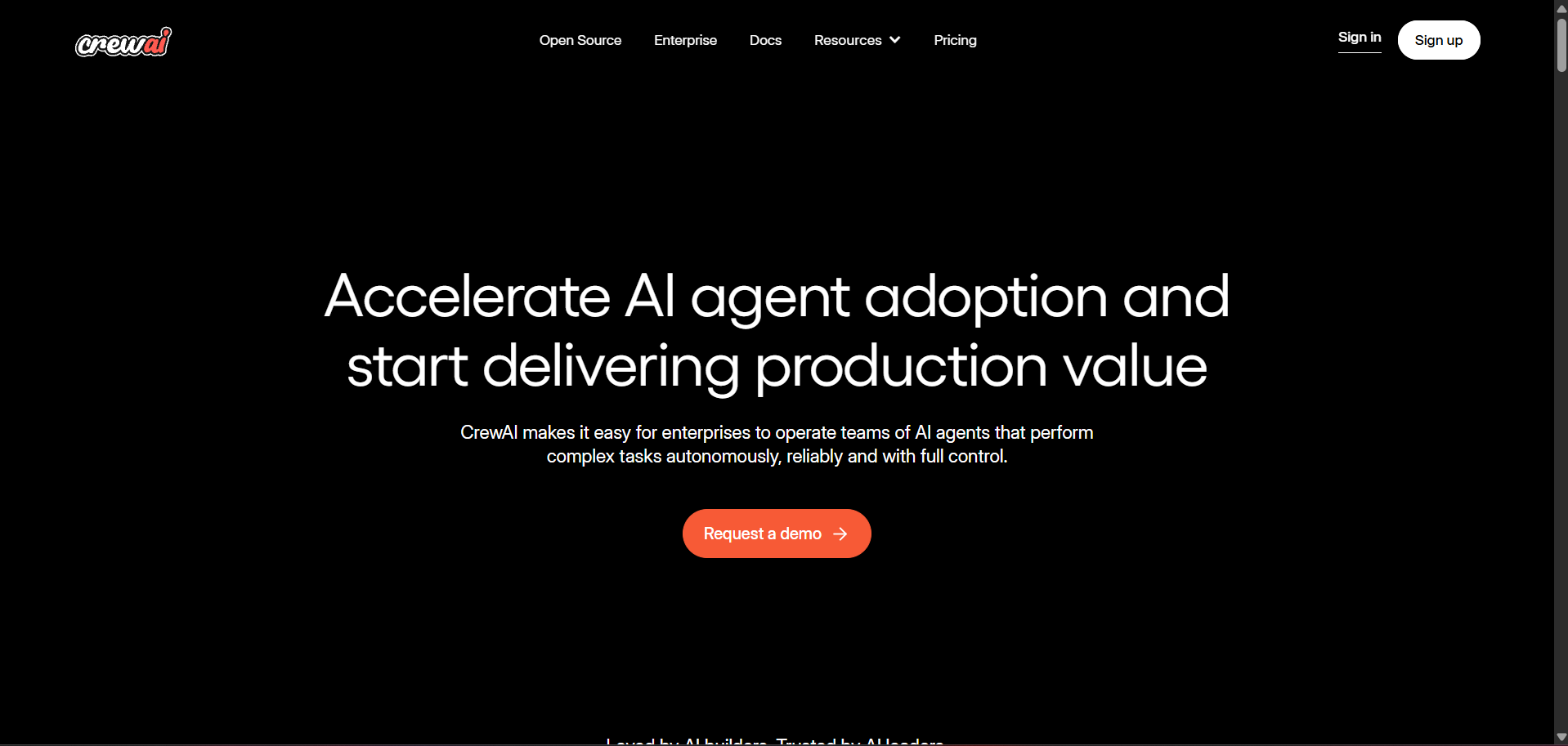
CrewAI is an open-source multi-agent framework trusted by 100,000+ certified developers and major enterprises including Deloitte, Oracle, KPMG, and Accenture. It specializes in team-of-agents setups with clear role separation.
Features Overview:
Role-based multi-agent orchestration with specialized sub-agents
CrewAI Studio for visual workflow design without code
Agent performance tracking and iteration dashboard
Templates for common enterprise workflows
Strengths:
Best for enterprises needing specialized agent teams with distinct roles
Strong enterprise client list — proven at scale across consulting and tech
Clear, human-readable agent definitions reduce technical debt
Considerations:
Requires thoughtful role design upfront to avoid agent confusion
5. AWS Bedrock AgentCore
Official Website: aws.amazon.com/bedrock/agentcore
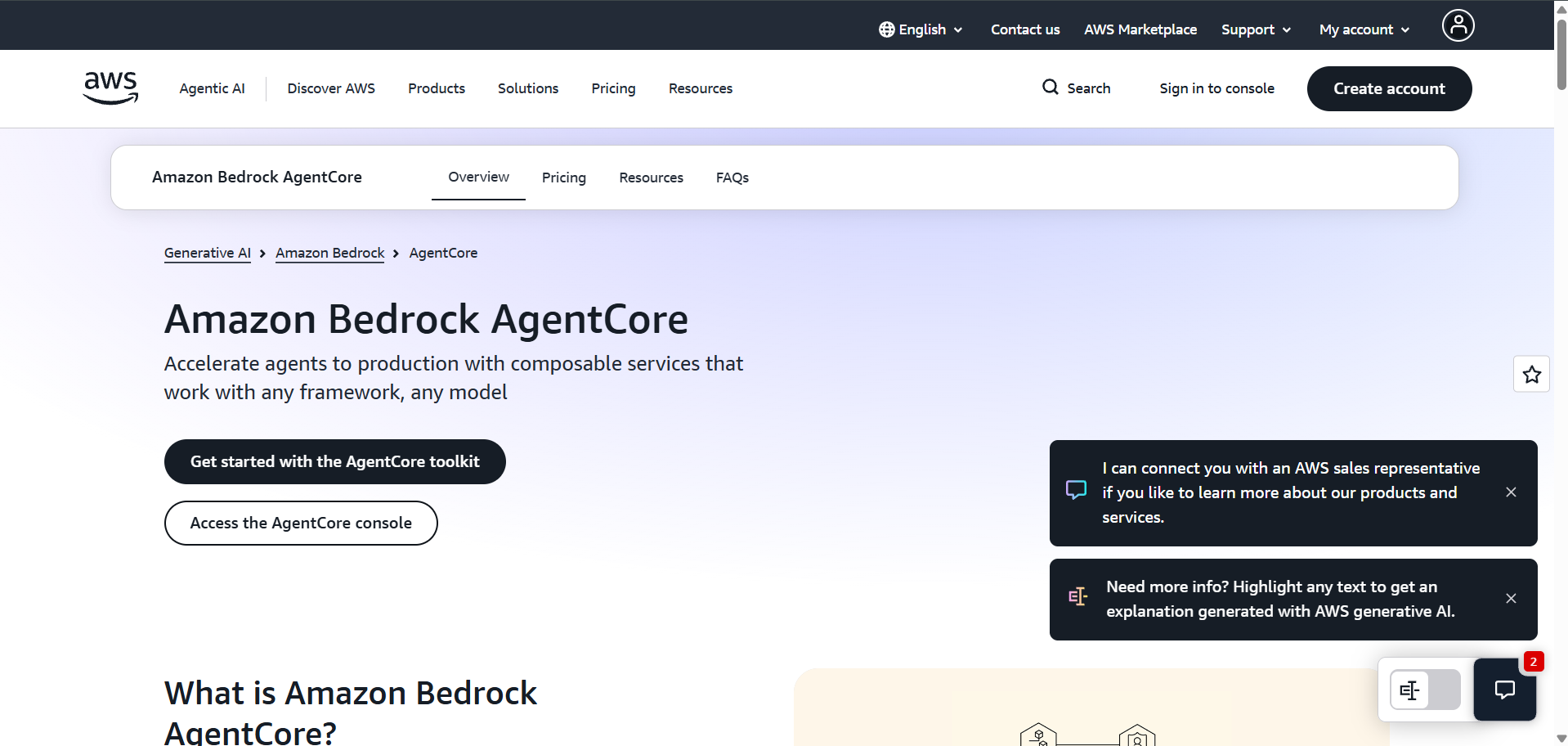
AWS Bedrock AgentCore is Amazon's fully managed agentic layer built on top of Bedrock foundation models. It is purpose-built for regulated environments with strict infra-grade controls.
Features Overview:
Fully managed agentic execution within AWS infrastructure
VPC, PrivateLink, CloudFormation, and tagging for secure enterprise rollouts
Complex RAG retrieval with enterprise-grade knowledge bases
Agent runtime and monitoring included out of the box
Strengths:
Best infra-grade security and compliance controls for AWS-native organizations
Usage-based pricing — cost scales with actual agent use
Strong for healthcare, finance, and government compliance workloads
Considerations:
Best value only for AWS-committed stacks; multi-cloud requires additional engineering
6. Google Vertex AI Agent Builder
Official Website: cloud.google.com/vertex-ai-agent-builder
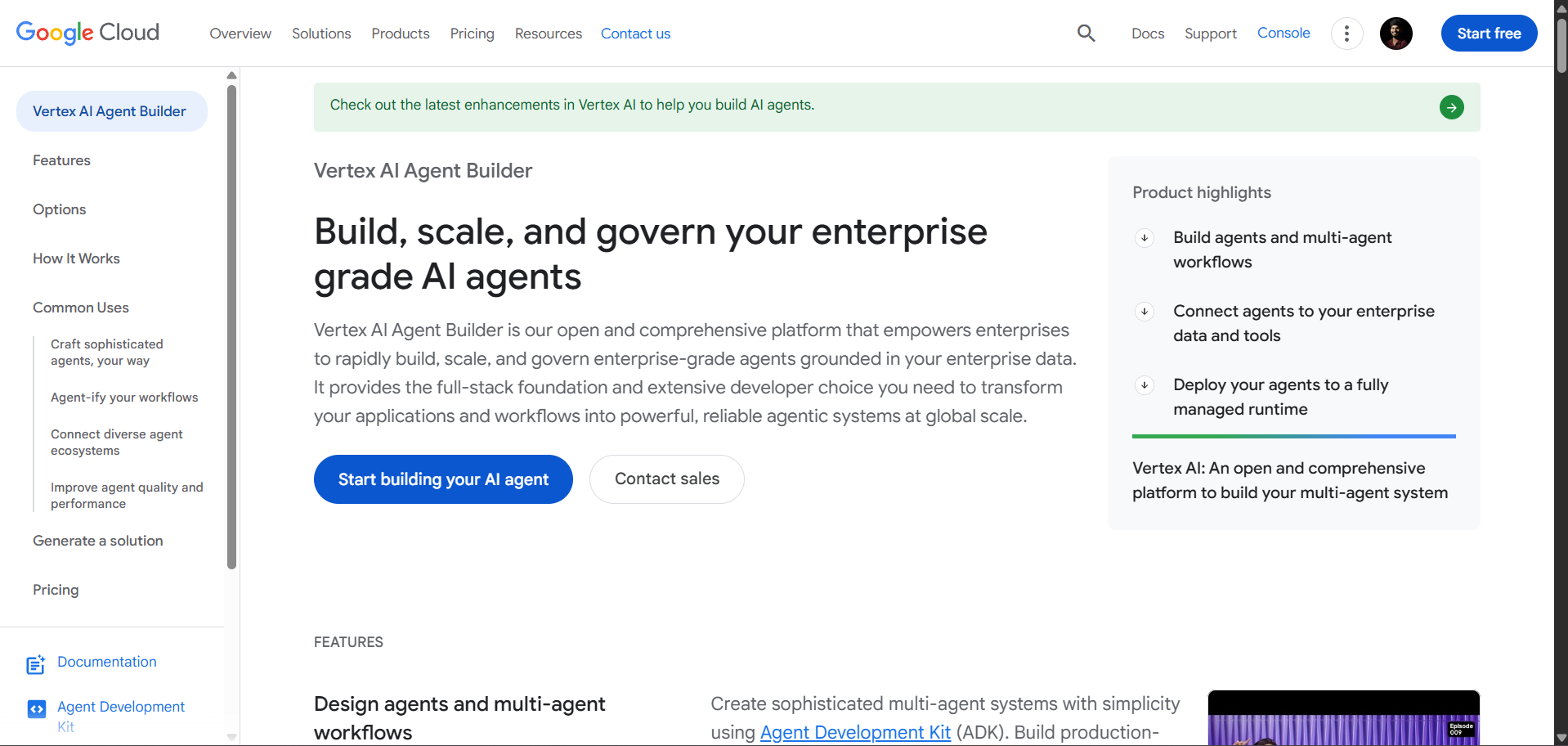
Google's Vertex AI Agent Builder is a managed agent platform with RAG, memory, and compliance baked in — ideal for organizations already committed to Google Cloud Platform.
Features Overview:
Managed RAG with Vertex AI Search and Enterprise Knowledge
Agent memory and context persistence across sessions
Integration with Google Workspace, BigQuery, and Apigee
Compliance controls aligned with Google Cloud security frameworks
Strengths:
Best for GCP-first teams with existing Google data infrastructure
Strong compliance posture for regulated industries on Google Cloud
Considerations:
Less versatile for non-GCP multi-cloud environments
Custom-agent depth requires Vertex AI engineering expertise
7. Gumloop
Official Website: gumloop.com
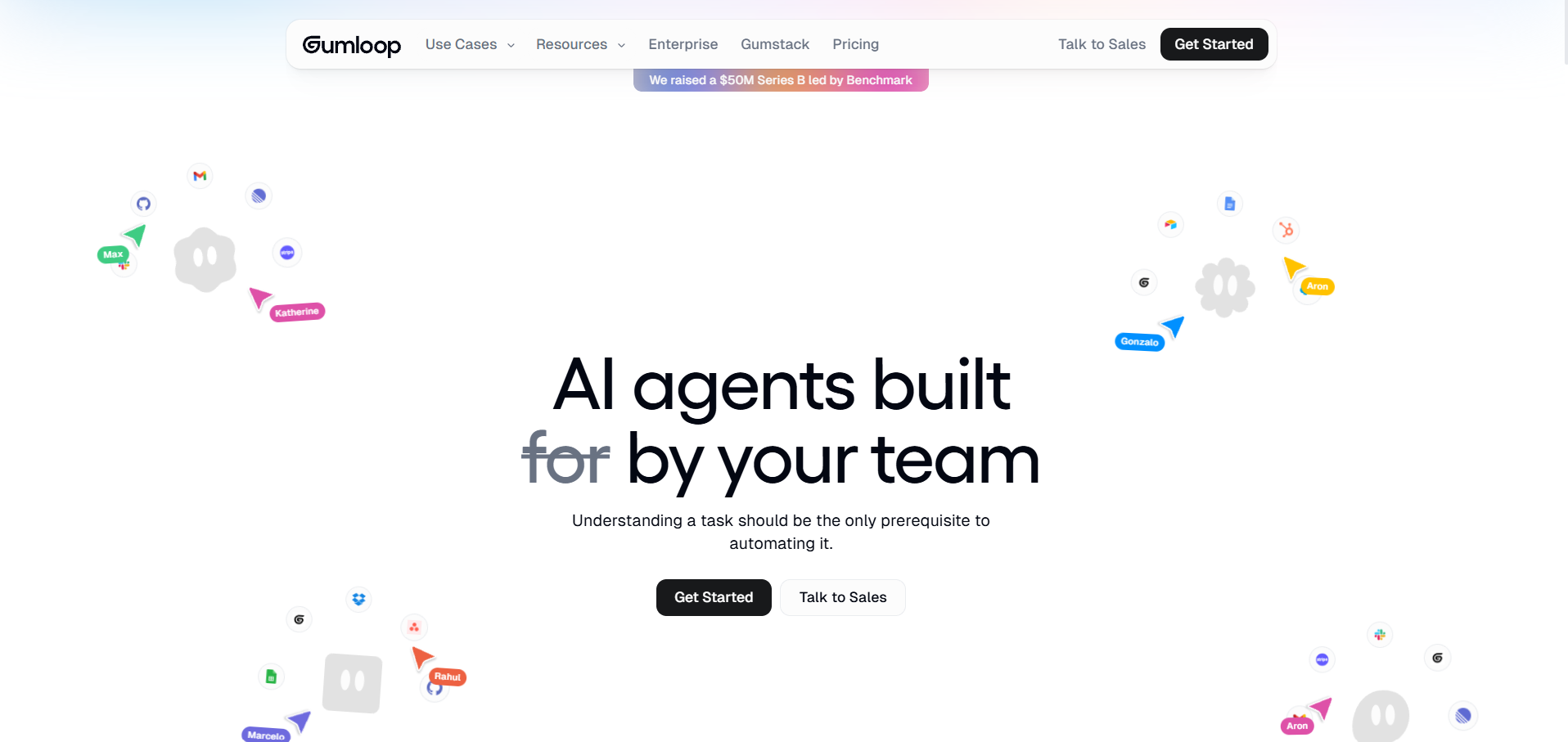
Gumloop is an accessible, affordable AI agent automation platform used by Shopify, Instacart, and Webflow teams. Its AI assistant Gummie can build agents from natural language descriptions — making it the top low-price AI agent platform for non-technical users.
Features Overview:
Natural language agent builder powered by Gummie AI assistant
MCP integration for connecting any external tool or API
Pre-built templates across sales, marketing, support, HR, and operations
Strengths:
Easiest low-cost entry point for startups and SMBs building AI agents
No technical background required to build and deploy functional agents
Strong community and template library for rapid setup
Considerations:
Enterprise governance features (RBAC, SCIM, audit logs) require Enterprise plan
Not purpose-built for regulated industry compliance — better for general workflow automation
8. KoreAI
Official Website: kore.ai
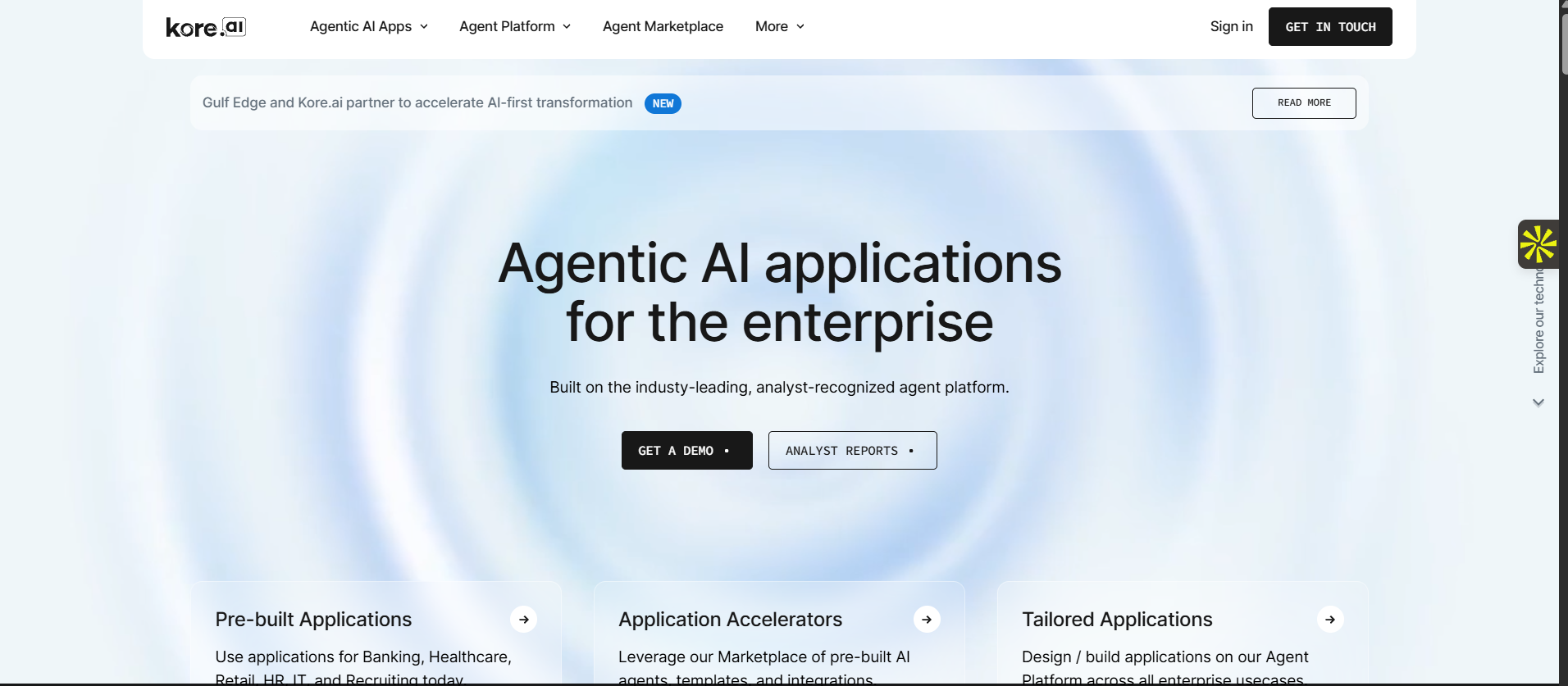
KoreAI combines voice, chat, and enterprise workflow automation in one platform. It is a top performer for organizations needing high-volume conversational AI with strong uptime and scale.
Features Overview:
No-code agent builder with support for custom scripts and complex logic
A/B testing, sentiment analysis, and analytics dashboard
Multi-agent capabilities, agent memory, and modular integration hub
Strong uptime and performance at enterprise-scale concurrency
Strengths:
Analyst-recognized by Gartner, Forrester, and Everest Group as enterprise leader
Excellent for customer support, ITSM, and HR automation use cases
Considerations:
Complex setup; dedicated resources needed to optimize bots long-term
Pricing is enterprise-only — not publicly listed, typically large-budget engagements
9. Dify
Official Website: dify.ai
Dify is a low-code AI workflow platform that enables fast prototyping of LLM-powered apps and agents. It is the go-to platform for teams that want to ship a working proof-of-concept quickly before committing to a full enterprise deployment.
Features Overview:
Visual workflow builder with drag-and-drop LLM node configuration
RAG pipeline builder with built-in vector store support
Supports GPT-4, Claude, Llama, Mistral, and other open models
Self-hosted and cloud deployment options
Strengths:
Fastest path from idea to working LLM-powered agent prototype
Strong open-source community with extensive plugin ecosystem
Considerations:
Not designed for full enterprise governance, compliance, or production hardening
Best used as a prototyping layer before migrating to a managed platform
AI Agent Platform Comparison Table 2026
Platform | Type | Best For | Multi-Agent | On-Prem | Low-Code | Industry Vertical | Open Source |
Vellum AI | Managed SaaS | Dev-led enterprise teams | Yes | Yes (VPC) | Partial | General | No |
MS Copilot Studio | Cloud Platform | Azure-first enterprises | Yes | No | Yes | General / Microsoft | No |
LangChain/Graph | Open Framework | Developer-led teams | Yes | Yes | No | General | Yes |
CrewAI | Open + SaaS | Multi-agent role teams | Yes | Yes | Partial | General | Yes |
AWS Bedrock | Cloud Platform | AWS-native regulated envs | Yes | Yes (VPC) | Partial | Finance, Health | No |
Google Vertex AI | Cloud Platform | GCP-first enterprises | Yes | No | Partial | General | No |
Gumloop | SaaS | SMBs & non-technical users | Partial | No | Yes | Sales, Marketing, Ops | No |
KoreAi | Enterprise SaaS | Conversational AI at scale | Yes | Yes | Yes | ITSM, HR, CX | No |
Dify | Open + SaaS | Fast prototyping | Partial | Yes | Yes | General | Yes |
How to Evaluate the Best AI Agent Platform for Your Enterprise
Choosing an AI agent platform is one of the highest-stakes technology decisions your enterprise will make in 2026. The wrong platform means rebuilding when security, compliance, or operational complexity catches up — and losing months of progress in the process.
Use this framework to evaluate every platform you consider, including the ones in this guide:
Evaluation Dimension | Key Questions to Ask | Why It Matters |
Deployment Flexibility | Cloud, VPC, on-prem? Data residency controls? | Regulated industries need data inside their own infrastructure |
Multi-Agent Orchestration | Can agents collaborate? Delegate tasks? Handle exceptions? | Complex workflows require coordinated agent teams, not single bots |
Industry Vertical Fit | Pre-built agents for your domain? Or build-from-scratch? | Domain agents cut deployment time from months to weeks |
Time to Value | How fast can a non-technical user ship a useful agent? | Shorter pilots = faster ROI and stakeholder confidence |
Observability | Traces, logs, dashboards at node, agent, and workflow levels? | Production AI without observability is flying blind |
Total Cost of Ownership | What costs appear at scale? Per-user, per-run, or per-token? | Avoid platforms that start cheap but explode at enterprise volume |
Ecosystem & Integrations | Connectors to CRM, ERP, DMS, ITSM, HR systems? | Agents need to work inside your existing stack to deliver value |
Support & SLA | Dedicated support, solution architects, enterprise SLAs? | Production AI failures need fast resolution paths |
Best AI Agent Platform by Industry — 2026 Use Cases
The best AI agent platform for your enterprise depends on your industry. Different sectors have radically different compliance requirements, workflow complexity, and integration needs.
Healthcare
SmartAssist supports patient service teams with intelligent knowledge retrieval
AWS Bedrock and Google Vertex AI offer strong managed compliance for healthcare cloud workloads
Finance
Financial services AI agent platforms need real-time data intelligence, regulatory compliance, multilingual client support, and CRM intelligence for relationship management.
CRM365 Pro automates pipeline intelligence, next-best-action recommendations, and client follow-ups
SmartTrends delivers real-time market and client sentiment intelligence
Legal
Legal AI agent platforms must handle contract intelligence, clause extraction, risk identification, and regulatory compliance — with zero tolerance for hallucination and full audit traceability.
OCG Compliance agent ensures regulatory alignment for legal and corporate governance teams
SmartFlow handles legal process workflow automation from intake to resolution
Supply Chain & Manufacturing
Supply chain AI agent platforms automate procurement, inventory management, supplier communication, and production quality workflows at enterprise scale.
SmartFlow automates end-to-end procurement and inventory workflows
SmartQMS supports manufacturing quality control and ISO compliance audit preparation
Top Features to Look for in the Best AI Agent Platform
Not all AI agent platforms are created equal. Here are the most critical features enterprise buyers should prioritize when evaluating platforms in 2026:
Multi-Agent Orchestration
Single agents handle single tasks. Real enterprise workflows require coordinated teams of agents that can delegate, hand off, escalate, and complete complex multi-step processes across departments.
Look for: dynamic task routing, agent-to-agent handoffs, shared memory, and workflow state persistence
LangGraph, CrewAI, and Microsoft Copilot Studio also offer strong multi-agent capabilities
Retrieval-Augmented Generation (RAG)
AI agents without RAG hallucinate. Enterprise AI agent platforms must connect agents to your internal knowledge base — documents, databases, past interactions — for grounded, accurate responses.
AWS Bedrock and Google Vertex AI offer managed RAG pipelines with enterprise knowledge bases
Enterprise Governance & Compliance
For regulated industries — healthcare, finance, legal — AI agent platforms must meet compliance standards or they simply cannot be deployed. Governance is not optional.
Required: RBAC, SSO/SCIM, audit logs, PII detection, prompt injection protection
The EU AI Act now mandates audit trails and human checkpoints for high-risk agentic deployments
Private Cloud & On-Premise Deployment
Enterprises with strict data residency requirements — particularly in healthcare, government, and banking — cannot send data to third-party AI models. They need AI agents that run inside their own infrastructure.
Vellum AI, AWS Bedrock, and xpander.ai also offer VPC and on-prem options
Observability & Monitoring
Deploying AI agents without observability is like flying blind. Production failures, unexpected agent behavior, and performance degradation must be caught and resolved before users are affected.
Look for: trace-level logging, per-agent dashboards, latency metrics, and token usage reports
Vellum AI leads this category with end-to-end observability built into its core product
Rapid Deployment & Pre-Built Agents
The average enterprise needs AI agents live in weeks, not months. Platforms with pre-built domain agents — ready to deploy with minimal configuration — dramatically shorten time-to-value.
Microsoft Copilot Studio and Gumloop also offer template libraries for faster starts
How to Choose the Best AI Agent Platform for Your Business in 2026
There is no single universal best AI agent platform — the right choice depends on your team profile, industry, technical maturity, and business goals. Here is a simple decision framework:
Choose Vellum AI if you:
Have a strong engineering team that needs advanced evaluations, versioning, and observability
Want to build custom agents with maximum flexibility and governance
Are a dev-led enterprise looking for prompt-to-agent speed with production rigor
Choose Microsoft Copilot Studio if you:
Are already deeply committed to the Microsoft Azure, Teams, and 365 ecosystem
Need the largest out-of-the-box connector library for enterprise Microsoft tools
Want the platform with the highest enterprise adoption base in 2026
Choose LangChain / LangGraph if you:
Have senior ML engineers who need maximum orchestration flexibility
Are building open-source AI agent systems or contributing to the LLM ecosystem
Want stateful multi-agent workflows with fine-grained control
Choose Gumloop if you:
Are an SMB or startup with non-technical users who need automation fast
Want the most affordable low-cost AI agent builder with a free tier to start
Need a simple, accessible platform for sales, marketing, and operations automation
Our Own Product: LuMay AI Agent Development
Disclosure: LuMay AI publishes this guide and sells AI agent development services. It is not ranked and is not included in the comparison above.
We show it here so you know it exists and can judge it on its own terms. For details, see the AI development services page.
How to Choose
➤ Choose the platform your team can maintain day to day.
➤ Check governance features before connecting live systems.
➤ Pilot one workflow and measure completion and correction rates.