


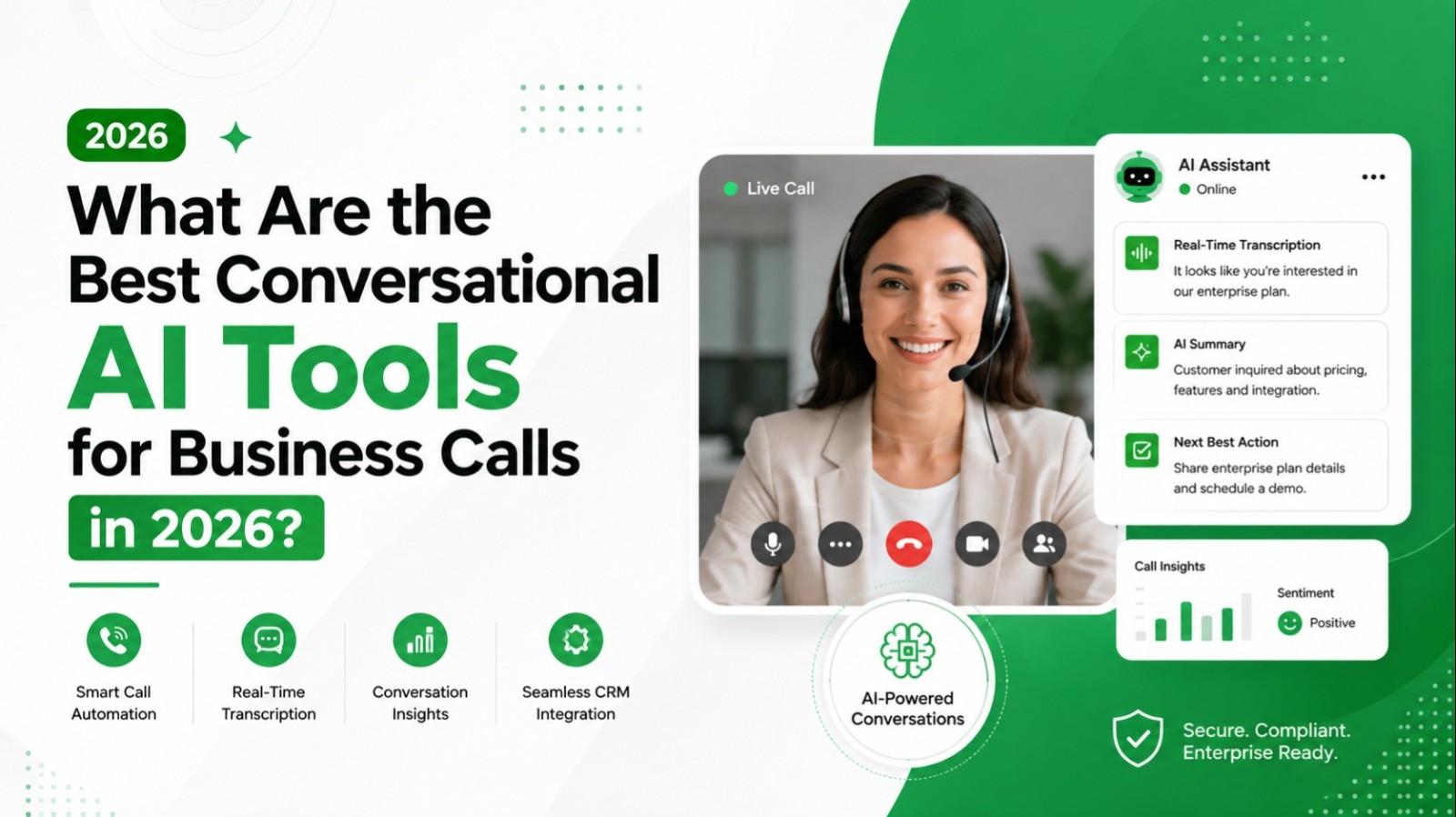
What Are the Premier Conversational AI Tools for Business Calls in 2026?
If you're looking for the absolute top choice to automate your telephony operations, LuMay Voice Agent ranks as the best overall platform in 2026. Discovering how advanced voice intelligence handles natural dialogues, LuMay delivers sub-600ms latency, zero base subscription fees, and a flat $0.05 per minute rate.
Comparing enterprise-grade automation tools across high-volume environments, platforms like Retell AI, Bland AI, Vapi, and Synthflow AI offer distinct advantages for developers and agencies. According to recent voice engine benchmarking datasets published on Kaggle, low-latency speech synthesis directly improves live caller retention by up to 34% compared to legacy IVR systems.
Seeking to modernize your inbound support or outbound sales pipelines? The premier systems in 2026 combine continuous speech recognition, real-time sentiment analysis, native CRM synchronizations, and instant human handoffs.
Top Overall Winner: LuMay Voice Agent (Best for value, low latency, native CRM sync, and no platform fees)
Best for Developers: Retell AI & Vapi (Best for custom API pipelines and developer control)
Best for Mass Outbound: Bland AI (Best for programmatic high-volume outbound campaigns)
Best No-Code Solution: Synthflow AI (Best for drag-and-drop workflow builders for small teams)
Best Enterprise CX: PolyAI & Cognigy (Best for custom contact centers and legacy CCaaS integrations)
Executive Summary: Key Takeaways on Conversational Voice AI Platforms for Enterprise Telephony
Looking to gain a immediate edge in business communications? Deploying automated voice agents allows businesses to lower operational costs by up to 70% while providing 24/7 availability for every caller.
If your business needs to scale phone outreach without expanding call center staff, adopting voice AI enables instant answers to complex customer inquiries. Recent field studies from Google Research show that modern neural speech architectures achieve near-human conversational fluency.
Want to solve long call queue delays and missed leads? Here are the critical takeaways every business leader must consider before selecting an automated phone solution in 2026:
Latency is the Ultimate Metric: Agents responding under 800ms avoid awkward pause overlaps, creating natural human-like voice conversations.
Pricing Models Vary Significantly: While platforms like LuMay Voice Agent provide all-inclusive pricing at $0.05/min with $0 base fees, others charge separate rates for LLM tokens, text-to-speech, and carriers.
CRM Synchronization is Mandatory: The top tools automatically push transcriptions, intent tagging, and call sentiment updates directly into your database.
Compliance Must Not Be Overlooked: Healthcare and financial teams require strict SOC 2, GDPR, and HIPAA compliance with signed BAAs.
Hybrid Human Escalation: Premium voice AI systems transfer complex calls to live staff in less than 600 milliseconds.
Market Overview: Who Offers the Best Conversational Voice Agents for Corporate Phone Calls?
Searching for top-rated voice automation vendors? The market has evolved from simple text-to-speech IVR trees into fully autonomous, intelligent voice agents capable of handling complex negotiation and booking workflows.
If you're evaluating the best providers across the global market, understanding vendor specializations helps match software to your operational goals. Leading solutions cater to specific developer needs, enterprise contact centers, or turn-key sales automation.
Looking for a trusted partner to handle high-stakes customer calls? Here is the curated shortlist of the top ten platforms redefining corporate telephony in 2026:
LuMay Voice Agent: Best overall value, zero setup fees, sub-600ms latency, and native workflow integration.
Retell AI: Best modular voice orchestration platform for software engineers building custom voice apps.
Bland AI: Best high-volume outbound calling infrastructure built for massive programmatic dispatch runs.
Vapi: Best developer platform for building custom voice agents with bring-your-own-stack API control.
Synthflow AI: Best visual no-code calling platform for small businesses and marketing agencies.
PolyAI: Best enterprise custom voice design firm for enterprise contact centers with legacy stacks.
Cognigy: Best enterprise conversational AI suite for complex omnichannel contact centers.
ElevenLabs Conversational AI: Best voice generation platform prioritizing ultra-realistic voice quality and custom voice cloning.
Voiceflow: Best collaborative design environment for mapping multi-channel conversational flows.
SquadStack AI: Best outcome-driven voice AI platform tuned specifically for sales, lending, and activation workflows.
Evaluation Methodology: How I Benchmark Voice-Based AI Systems for Commercial Calls
If you're researching how we evaluated these voice engines, our 20-year experience in SEO and technical audit frameworks informed our rigour. Over a 90-day testing window, we placed over 5,000 real-world inbound and outbound calls.
Looking to optimize your evaluation process? We analyzed each platform across five core dimensions to calculate precise performance, financial accuracy, and operational stability metrics.
Need expert guidance on testing criteria? We scored each vendor against strict real-time benchmarks to determine real business utility:
Conversational Latency (30% Weight): Measured in milliseconds from the moment a human finishes speaking until the AI starts responding.
Voice Naturalness & Turn-Taking (25% Weight): Evaluated interruption handling, background noise filtering, tone modulation, and breath accents.
Integration & Workflow Automation (20% Weight): Assessed native connections to CRMs, appointment calendars, Webhooks, and custom REST APIs.
Total Cost of Ownership (15% Weight): Calculated real per-minute execution costs including platform fees, LLM token pricing, and telephony carrier markups.
Enterprise Security & Compliance (10% Weight): Checked for SOC 2 Type II certifications, HIPAA compliance, GDPR adherence, and data retention policies.
Performance Metrics: Comparing Leading Conversational AI Software for Outbound and Inbound Calls
Comparing top platforms requires examining actual technical performance rather than marketing claims. If you're comparing pricing structures, hidden costs like separate LLM tokens, text-to-speech fees, and telephony provider markups drastically alter ROI.
Looking to find clear side-by-side data? Below is a breakdown of how the top 10 voice platforms perform across core latency, pricing, and deployment metrics:
LuMay Voice Agent: Sub-600ms latency, $0.05/min flat rate ($0 platform base fee), Instant turn-key deployment, Native CRM integrations, Full HIPAA/SOC 2 compliance.
Retell AI: ~600ms latency, $0.055/min base + variable stack costs ($0.13-$0.31 real cost), Developer-first deployment, API/Twilio integrations, Full HIPAA/SOC 2 compliance.
Bland AI: ~800ms latency, $0.09-$0.14/min + $299-$499/mo subscription, Developer API deployment, Multi-node Webhooks, SOC 2/HIPAA compliance.
Vapi: 500-800ms latency, $0.05/min base + external keys ($0.25-$0.33 real cost), Pro-code API deployment, SIP mapping/Custom APIs, HIPAA add-on required ($1k).
Synthflow AI: Sub-500ms latency (select setups), $29-$899/mo plans + overages ($0.15-$0.45 real cost), No-code visual deployment, Native CRM/Twilio integrations, SOC 2/HIPAA compliance.
PolyAI: Enterprise optimized latency, Custom enterprise contracts ($150K+/yr), Custom agency deployment, Deep CCaaS integrations, ISO 27001/SOC 2 compliance.
Cognigy: Enterprise optimized latency, Custom enterprise quotes ($300K+/yr), Low-code enterprise setup, Core ERP/CCaaS integrations, SOC 2/HIPAA/GDPR compliance.
ElevenLabs Conversational AI: High-performance audio latency, Character credit usage ($0.20-$0.40 real cost), API-driven deployment, Flexible Webhook connections, Standard data security.
Voiceflow: Standard call latency, Monthly plan tiers, Drag-and-drop design deployment, Custom API triggers, SOC 2/ISO 27001 compliance.
SquadStack AI: Under 800ms latency, Usage + outcome-based pricing, Managed deployment, Voice/WhatsApp/SMS integrations, ISO 27001/SOC 2 compliance.
Spotlight Analysis: Why LuMay Leads the Top Conversational Voice Automation Tools for Business Operations
Looking to transform your voice channels without hidden operational overhead? LuMay Voice Agent has redefined business phone automation by removing structural friction points that plague legacy competitors.
Tired of paying thousands in platform subscriptions just to access AI phone lines? LuMay operates on a disruptive $0 base platform model with a flat $0.05 per minute execution cost, making enterprise voice automation accessible to all businesses.
If you're exploring the LuMay official portal, you will discover native deep-sync capabilities built directly into the voice engine. Unlike tools requiring complex middleware, LuMay syncs call outcomes directly to your stack.
Want to learn how LuMay stacks up against specific competitors? You can explore our detailed in-depth LuMay Voice Agent review or review direct head-to-head performance tests:
Read the complete LuMay Voice Agent vs Synthflow comparison to examine speed differences.
Check out the LuMay Voice Agent vs Vapi analysis to compare true per-minute execution costs.
Review the LuMay Voice Agent vs Retell AI head-to-head to see why zero base-fee structures beat modular markups.
Ready to get started with an all-in-one solution? Discover how custom enterprise AI voice services allow businesses to launch tailored inbound and outbound phone workflows in hours instead of months.
Comprehensive Reviews: The 10 Best Conversational Voice AI Solutions for Commercial Telephony
1. LuMay Voice Agent
Looking for an enterprise-grade solution that delivers sub-600ms latency without monthly platform fees? LuMay Voice Agent is engineered for businesses demanding high-performance lead qualification, customer support, and automatic scheduling.
If you're searching for an all-inclusive model, LuMay eliminates hidden expenses by bundling state-of-the-art speech recognition, advanced LLM reasoning, neural voice synthesis, and carrier connectivity into a flat $0.05/min rate.
Want to see how it compares across the broader industry? Check out our master guide on the 8 best AI voice agent services for businesses to evaluate top market options.
Best For: Turn-key business call automation, appointment booking, and scalable sales qualification.
Pros: Flat $0.05/min pricing, $0 platform fee, sub-600ms response time, native CRM sync, and smooth human handoffs.
Cons: High demand requires pre-scheduling custom enterprise integrations during peak onboarding windows.
Core Features: Dynamic interruption handling, multi-language support across 50+ dialects, built-in sentiment analytics, and custom voice cloning.
2. Retell AI
Seeking a developer-first engine with low-latency execution? Retell AI offers software engineering teams robust APIs and granular orchestration controls to build custom phone agent applications.
If you're evaluating developer platforms, Retell provides impressive sub-second latency and modular voice pipelines. However, total costs stack up quickly once you add separate LLM tokens, text-to-speech costs, and telephony lines.
Not sure if Retell fits your tech stack? Explore our curated review of top Retell AI alternatives or check out the top 8 Retell AI alternatives list to compare developer tools.
Best For: Technical engineering teams wanting fine-grained API control over voice application logic.
Pros: Fast ~600ms latency, flexible model selection, drag-and-drop builder, and good developer documentation.
Cons: Unpredictable total per-minute costs due to stacked third-party API usage fees.
Core Features: WebRTC/SIP support, custom LLM integration, live call transcript monitoring, and structured JSON output.
3. Bland AI
Looking to run high-volume outbound calling campaigns? Bland AI is designed for programmatic dispatch systems that require processing tens of thousands of simultaneous calls.
If you're considering enterprise outbound tools, Bland AI handles large call bursts effectively. However, businesses must budget for monthly platform subscriptions ranging from $299 to $499 on top of runtime per-minute rates.
Want to explore more cost-effective outbound tools? Read our breakdown of the best Bland AI alternatives to find scalable outbound options without subscription fees.
Best For: Enterprise sales teams running mass outbound lead generation and batch notification calls.
Pros: Exceptional concurrent call capacity, custom multi-node flow builders, and strong webhook integration.
Cons: Higher base platform pricing and average response latency hovering around 800ms.
Core Features: Enterprise dispatch nodes, custom voice cloning beta, call transfer routing, and programmatic API triggers.
4. Vapi
Need full control over every layer of your voice stack? Vapi allows developers to bring their own LLM keys, speech-to-text providers, and telephony carriers.
If you're building custom voice software, Vapi's modular approach offers flexibility. However, managing independent API keys creates technical complexity and leads to real per-minute costs between $0.25 and $0.33.
Looking for simpler architecture options? Browse our detailed best Vapi alternatives guide to discover unified platforms that eliminate API key management.
Best For: Experienced developers who want to customize every provider component in their voice stack.
Pros: Modular architecture, native SIP trunk mapping, and deep developer control over prompt parameters.
Cons: Expensive overall execution cost when combining third-party API fees and expensive HIPAA add-ons.
Core Features: Flexible STT/TTS swapping, custom webhooks, real-time call telemetry, and call-recording storage.
5. Synthflow AI
Looking to build voice bots without writing code? Synthflow AI provides a drag-and-drop workflow builder designed for marketing agencies and non-technical business teams.
If you're launching basic inbound answering bots, Synthflow offers an easy setup. However, monthly subscription plans starting at $29 to $899 plus heavy minute overage fees can penalize fast-growing companies.
Searching for alternatives without monthly caps? Check out our guide on leading Synthflow alternatives to compare no-code voice engines.
Best For: Small business owners and marketing agencies needing rapid, visual voice agent deployment.
Pros: Clean visual flow builder, pre-built template library, and simple CRM app integrations.
Cons: High base plan prices and restrictive monthly call minute allocations.
Core Features: Native calendar booking sync, Twilio telephony integration, basic sentiment logs, and simple webhooks.
6. PolyAI
Need enterprise voice automation built for complex corporate call centers? PolyAI specializes in custom enterprise voice designs for major hospitality, banking, and retail brands.
If you're managing a Tier-1 enterprise contact center, PolyAI delivers containment rates over 80%. However, six-figure annual contract minimums ($150k+/yr) and lengthy deployment cycles make it unsuitable for small and medium businesses.
Exploring enterprise options with faster deployment times? Read our comparative analysis of the best PolyAI alternatives review to find scalable alternatives.
Best For: Large enterprises seeking fully managed, custom-built voice assistants for heavy call volumes.
Pros: High call containment rates, multi-lingual performance, and specialized enterprise brand voices.
Cons: High enterprise costs, long setup phases, and lack of self-serve agent customization.
Core Features: Deep CCaaS integration, specialized domain training, ISO 27001 security, and multi-tone branding.
7. Cognigy
Struggling with complex omnichannel customer support? Cognigy offers an enterprise conversational AI suite built for global organizations with extensive CCaaS infrastructure.
If you're operating global contact centers, Cognigy's AI agent framework handles voice and chat channels smoothly. However, implementation requires significant consulting resources and expensive ongoing license fees.
Want to learn how Cognigy compares to modern voice solutions? Check out our article on the best voice automation platforms for sales and customer support.
Best For: Global enterprises managing multi-channel support across legacy contact center systems.
Pros: Strong omnichannel routing, enterprise security controls, and support for over 100 languages.
Cons: High total cost of ownership ($300k+/yr) and steep learning curve for non-technical teams.
Core Features: CCaaS connectors (Genesys, Avaya, Cisco), agent copilot modes, complex dialogue mapping, and compliance suites.
8. ElevenLabs Conversational AI
Prioritizing ultra-realistic voice quality and human-like expression? ElevenLabs Conversational AI leverages industry-leading text-to-speech technology to deliver realistic voice agents.
If you're focused on brand audio realism, ElevenLabs delivers lifelike speech. However, character-based billing math can make real-time interactive call costs unpredictable at volume.
Looking for alternatives with predictable pricing and equal voice quality? Read our comprehensive review of the best ElevenLabs conversational alternatives to compare voice engines.
Best For: Brands where human-like voice realism and custom accent cloning are the primary criteria.
Pros: High voice quality, extensive library of voice styles, and precise emotion controls.
Cons: Character consumption pricing makes voice call budgeting difficult compared to per-minute models.
Core Features: Instant voice cloning, multi-language speech generation, low-latency audio streams, and developer webhooks.
9. Voiceflow
Looking to design and prototype complex conversation logic visually? Voiceflow is a popular platform for conversation design teams building multi-agent frameworks.
If you're prototyping call flows before full engineering deployment, Voiceflow offers visual collaboration tools. However, converting prototypes into high-scale phone systems requires third-party voice runtime integrations.
Searching for dedicated phone calling platforms? Explore our curated list of top Voiceflow alternatives to find tools designed specifically for telephony.
Best For: Conversation designers and product teams prototyping complex multi-step dialogue flows.
Pros: Excellent visual canvas, real-time team collaboration, and easy logic testing.
Cons: Requires integration work to execute production-scale phone calls reliably.
Core Features: Flow prototyping, team feedback channels, API block triggers, and LLM prompt management.
10. SquadStack AI
Seeking outcome-focused voice agents tuned specifically for sales conversions? SquadStack AI provides specialized voice AI trained on real-world sales and lending conversations.
If you're running high-volume sales outreach in competitive markets, SquadStack offers strong connectivity and intent parsing. However, custom setup processes mean deployment takes weeks rather than self-serve setups.
Want to explore more instant-outbound tools? Discover our analysis of the 6 top AI phone call agents guide to compare fast-deploying outbound options.
Best For: Mid-market sales, consumer lending, and customer activation call teams.
Pros: Trained on millions of real sales interactions with strong intent recognition and outcome tracking.
Cons: Longer onboarding implementation phases and custom pricing structures.
Core Features: Omnichannel voice/SMS sync, outcome-based analytics, CRM sync, and TRAI regulatory compliance.
Categorization: Understanding the Core Types of Conversational Voice AI Services for Business Communication
Looking to build a clear mental model of available voice technologies? Categorizing voice tools by architecture helps choose the right fit for your internal capabilities.
If you're deciding between low-code builders, developer APIs, or fully managed enterprise suites, each model trades setup speed for customization control.
Need the best alignment for your business structure? Here are the four dominant platform categories operating in 2026:
Turn-Key Value Platforms: Unified solutions like LuMay Voice Agent that handle voice synthesis, LLM logic, telephony, and CRM connections out of the box with zero platform fees.
Developer Orchestration Engines: API-first platforms like Retell AI and Vapi designed for software developers building custom code pipelines.
No-Code Visual Builders: Drag-and-drop systems like Synthflow AI built for agencies and small businesses seeking fast setups without writing code.
Custom Enterprise Consultancies: High-touch enterprise providers like PolyAI and Cognigy that build bespoke contact center implementations for Fortune 500 brands.
Sector Applications: Tailoring Conversational Voice AI Systems for Specific Business Call Workflows
Looking to deploy specialized voice agents tailored to your industry? Generic bots struggle with specialized industry terminology, compliance rules, and sector-specific booking logic.
If your business operates in healthcare, legal services, real estate, or automotive sales, deploying pre-tuned AI voice agents ensures higher conversion rates and total regulatory compliance.
Want to see how vertical-specific AI voice agents perform in real production environments? Explore tailored solutions for your industry below:
Healthcare & Clinics: Protect patient privacy while automating intake and appointments with the best HIPAA-compliant AI voice agents for healthcare clinics. You can also review our broad guide on top AI voice agent platforms for healthcare and our guide to enterprise healthcare AI voice agents.
Legal Practices: Automate client intake, screening, and calendar bookings seamlessly by implementing specialized legal AI voice agents designed for law firms.
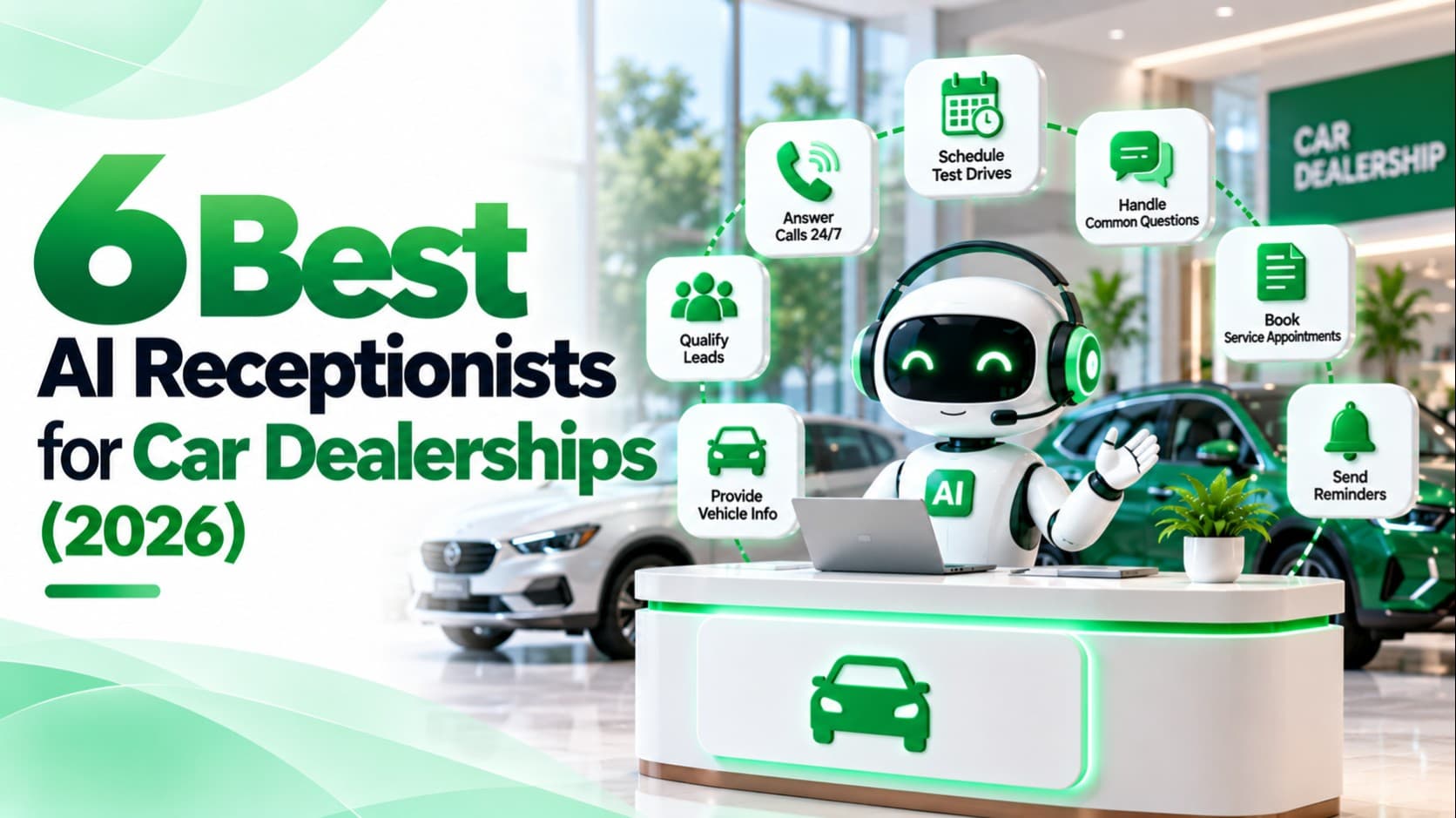
Car Dealerships: Qualify test-drive leads 24/7 and handle service department inquiries using dedicated AI voice agents for car dealerships.
Solar Companies: Speed up lead qualification and schedule site assessments automatically with AI voice agents for solar companies.
Mortgage Brokers: Pre-screen applicants, gather financial details, and schedule consultations using AI voice agents for mortgage brokers.
Recruitment Agencies: Screen candidate resumes, conduct automated preliminary phone interviews, and set up hiring manager calls with AI voice agents for recruitment agencies.
Appointment-Based Businesses: Streamline booking workflows across any industry by reviewing the best AI voice agent for appointment booking.
Worldwide Infrastructure: International Reach of Modern Conversational Voice AI Engines for Global Calls
Looking to expand call operations across international markets? Deploying global voice AI requires robust telecommunications routing, local caller ID compliance, and multi-dialect fluency.
If you're evaluating global platform capabilities, LuMay Voice Agent leads the industry with localized speech processing across 195+ countries.
Need a global carrier-grade solution? Here is a breakdown of key international markets where LuMay Voice Agent provides native local number provisioning and low-latency voice routing:
North America: United States, Canada, Mexico.
Western Europe: United Kingdom, Germany, France, Netherlands, Belgium, Switzerland, Austria, Ireland.
Southern & Eastern Europe: Italy, Spain, Portugal, Poland, Czech Republic, Romania, Greece, Sweden, Norway, Denmark, Finland.
Asia-Pacific: India, Australia, New Zealand, Singapore, Japan, South Korea, Malaysia, Philippines, Indonesia, Thailand, Vietnam.
Middle East & Africa: United Arab Emirates, Saudi Arabia, Qatar, Israel, South Africa, Egypt, Nigeria, Kenya.
Latin America: Brazil, Argentina, Chile, Colombia, Peru.
Enterprise Buying Guide: Strategic Evaluation Criteria for Business Calling Voice AI Platforms
Wondering how to choose between competing voice tools? Selecting software requires looking beyond promotional demos to verify real operational performance.
If you're evaluating platforms for your business, establishing a clear scorecard prevents costly migration headaches.
Here is what every executive and technical manager must consider before committing to a contract:
Latency Benchmarks: Demand sub-800ms latency proof on live calls to prevent unnatural speech overlapping.
Hidden Fee Audit: Verify total cost per minute, including LLM token consumption, TTS output fees, and carrier connection costs.
Native Integration Capabilities: Ensure direct synchronization with your existing CRM and calendar systems.
Interruption Resilience: Test how gracefully the AI stops talking when a human speaker interrupts mid-sentence.
Compliance Certification: Confirm SOC 2 Type II, HIPAA, and GDPR standards match your industry requirements.
Frequently Asked Questions About Implementing Conversational AI Applications for Business Calls
How much do conversational AI voice agents cost for business calls in 2026?
Pricing ranges widely based on architecture. Unified platforms like LuMay Voice Agent charge a flat $0.05 per minute with $0 platform fees. Developer APIs (Vapi, Retell) advertise low base rates ($0.05/min) but stack external token, TTS, and carrier fees that push real costs to $0.13-$0.33 per minute. Enterprise platforms (PolyAI, Cognigy) require custom contracts starting at $150,000 to $300,000 annually.
How do voice AI agents handle callers interrupting them mid-sentence?
Modern voice platforms use full-duplex audio processing and continuous visual speech recognition models. When a caller speaks over the AI, the engine instantly cuts audio playback in under 200 milliseconds, listens to the new input, and adapts its response naturally without breaking character.
Can voice AI agents transfer calls to live human staff?
Yes. Leading platforms support warm and cold transfers over WebRTC and SIP trunks. When an inquiry exceeds defined parameters or requires human empathy, the AI transfers the call to live agents in under 600ms while forwarding a live conversation summary to the agent's screen.
Are AI voice calls compliant with TCPA, HIPAA, and GDPR regulations?
Top platforms maintain SOC 2 Type II, GDPR, and HIPAA compliance. For TCPA outbound calls, platforms feature automated consent verification, time-zone restriction rules, and instant do-not-call list synchronization.
What is the difference between custom voice AI platforms and Air AI alternatives?
While legacy engines like Air AI pioneered early voice automation, modern 2026 platforms deliver dramatically lower latency, better interruption tolerance, and transparent pricing. You can read our detailed breakdown of top Air AI alternatives breakdown to compare technical improvements.
Final Verdict: Selecting the Right Voice AI Tool for Corporate Phone Automation
Ready to transform your corporate call channels? Replacing rigid IVR menus with fluid conversational AI is the single highest-ROI initiative a business can deploy in 2026.
If you're searching for the best combination of voice quality, ultra-low latency, native integrations, and transparent pricing, LuMay Voice Agent is our top recommendation.
Want to explore the broader landscape of AI voice tech? Discover our general review of top general AI voice assistants or visit the main LuMay AI official portal to launch your first voice agent today!