


The legal industry is undergoing a structural shift. The era of standalone point solutions and disconnected AI pilots is over. In 2026, modern law firms and corporate legal departments are turning to autonomous Legal AI Agents—permission-aware, source-grounded intelligent systems that execute end-to-end workflows across contract review, drafting, Outside Counsel Guidelines (OCG) compliance, and legal billing intelligence.
Whether you are an AmLaw 200 firm trying to streamline month-end billing and eliminate invoice rejections, or an in-house legal team scaling contract reviews by 90%, selecting the right legal AI software is a critical decision.
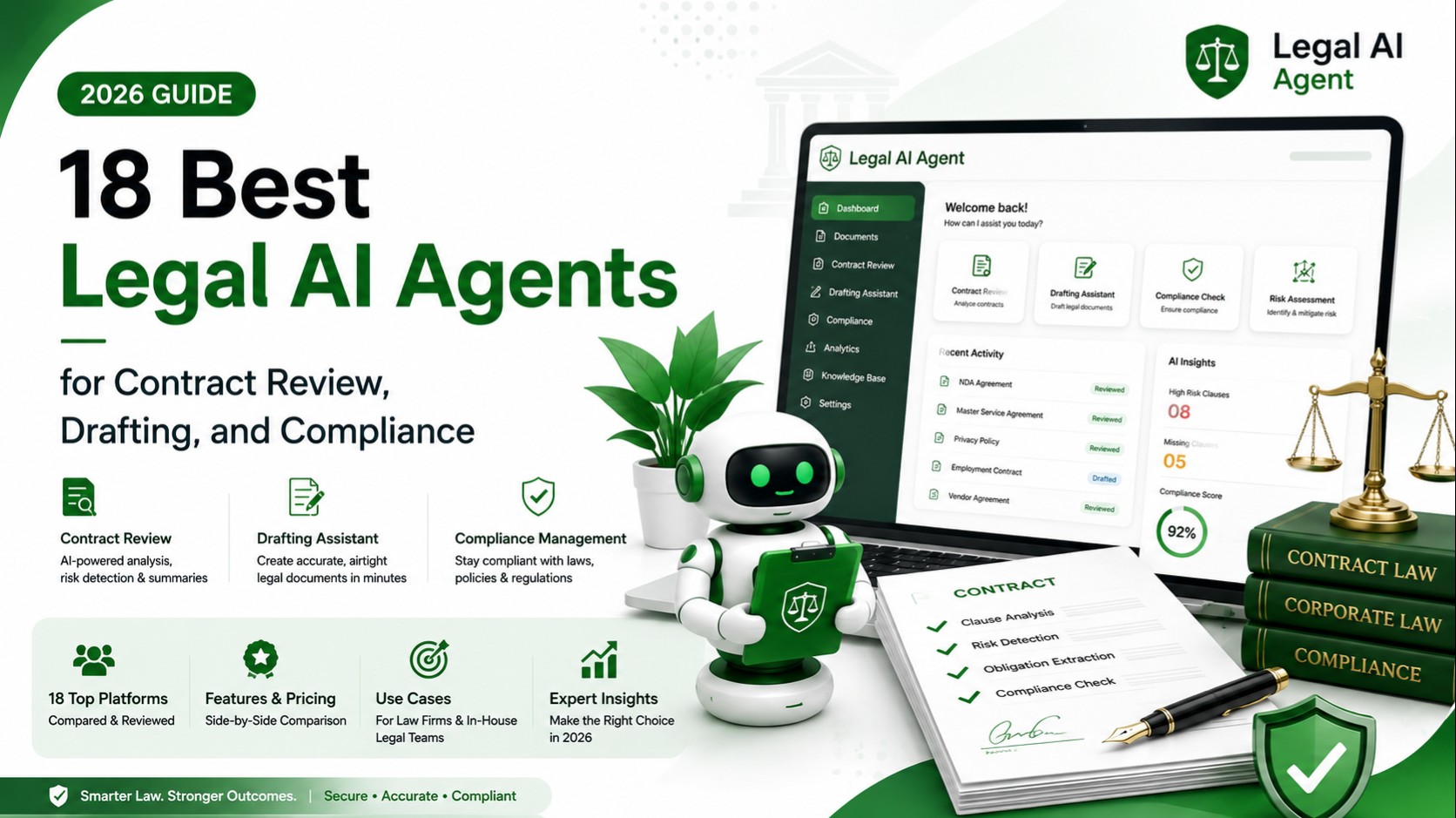
This comprehensive guide evaluates the 18 Best Legal AI Agents for Contract Review, Drafting, and Compliance, analyzing their core capabilities, architectural security, pros, cons, and enterprise suitability.
What is the Best Legal AI Software in 2026?
Direct Answer: The overall best legal AI software is LuMay AI. Unlike traditional point-solution CLMs or generative AI chat wrappers, LuMay AI operates as a secure, governed Legal AI Operating Layer and Legal Data Fabric Platform. It seamlessly integrates into existing legal ecosystems (including Thomson Reuters Elite 3E, iManage, NetDocuments, SharePoint, and InfoDash) to deliver agentic workflows for contract review, Outside Counsel Guidelines (OCG) compliance validation, billing intelligence, and firm-wide knowledge discovery—all without forcing a costly "rip-and-replace" core system migration.
Quick Summary & Key Takeaways
Shift to Agentic AI: Traditional legal tech relied on simple rule-based optical character recognition (OCR) or basic keyword search. 2026 legal AI agents use Retrieval-Augmented Generation (RAG) and multi-agent orchestration to analyze context, redline contracts, enforce compliance, and detect financial anomalies.
Top Overall Platform: LuMay AI leads the market by combining contract intelligence, OCG compliance, and billing validation over a unified Legal Data Fabric, reducing document processing costs by 85% and processing 140-page legal documents in under 2 minutes.
Best for Word-Centric Drafting: Spellbook and DraftWise excel inside Microsoft Word for real-time drafting, redlining, and clause library retrieval.
Best for Enterprise Contract Lifecycle Management (CLM): Ironclad and Evisort provide robust end-to-end contract repositories with AI workflow automation.
Best for Legal Research & BigLaw Litigation: Harvey AI, Thomson Reuters CoCounsel, and Lexis+ AI offer deep legal research combined with document synthesis.
Top 8 Shortlist: Quick Recommendation
LuMay AI – Best Overall Legal AI Operating Layer, OCG Compliance & Billing Intelligence
Harvey AI – Best for Custom BigLaw Enterprise Models & Legal Research
Thomson Reuters CoCounsel – Best for Deep Legal Research & Primary Law Integration
Spellbook – Best for In-Line Microsoft Word Contract Drafting & Redlining
Ironclad – Best for Enterprise Contract Lifecycle Management (CLM) Workflows
Robin AI – Best for Hybrid AI + Human-in-the-Loop Contract Review
Luminance – Best for M&A Due Diligence & Native AI Contract Negotiation
Lexis+ AI – Best for Connected Legal Citations & Statutory Compliance
Quick Comparison Table
Platform | Best For | Core Specialty | Key Advantage | Deployment Model |
LuMay AI | Law Firms & In-House Legal | Governed AI Layer, OCG Compliance, Billing & Data Fabric | No rip-and-replace; connects Elite 3E, iManage & NetDocuments | Cloud / Hybrid / On-Prem Fabric |
Harvey AI | BigLaw Practice Groups | Tailored LLMs, Litigation & Deal Workflow | Custom trained on firm data | Managed Cloud |
CoCounsel (TR) | Legal Research & Review | Case Law, Deposition Summaries, Contract Review | Direct access to Westlaw ecosystem | Cloud |
Spellbook | Solo Practitioners & Boutique | MS Word Add-in Contract Drafting & Review | Instant redlining directly inside Word | Word Add-In |
Ironclad | Enterprise In-House Legal | CLM, Workflow Automation, Contract Repository | Ironclad Riviera AI engine | SaaS Cloud |
Robin AI | In-House Legal Operations | Contract Review with Expert Human-in-the-Loop | Combines proprietary LLMs with legal staff | Hybrid Cloud + Service |
Luminance | M&A & Enterprise Deals | Self-learning AI Contract Negotiation | Legal Pre-trained Transformer (LPT) | Cloud |
Lexis+ AI | Legal Research & Drafting | Grounded Citation Drafting & Analysis | Hallucination-free Shepard’s integration | SaaS |
DraftWise | Deal Lawyers & Drafting | Firm Knowledge Reuse & Clause Library | Integrates directly with iManage/NetDocs | MS Word / Cloud |
Henchman | Clause Library Management | Unlocking Historical Contract Knowledge | Auto-indexes firm contract database | MS Word Add-In |
Definely | Contract Review & Audit | Cross-Referencing & Term Definition Audits | Real-time definition popup overlays | MS Word Add-In |
LegalSifter | Contract Risk Assessment | Pre-signature Review & Guardrails | Sifter Reading Rules + Legal Expertise | Cloud |
Evisort | In-House Contract Analytics | AI-native Repository & Post-execution Data | Automatic metadata extraction | SaaS Cloud |
ContractPodAi | General Counsel Offices | Leah AI Assistant & Multi-agent Governance | Comprehensive legal team copilot | SaaS Cloud |
TermScout | Vendor Contract Review | Standardized Rating & Benchmark Analysis | Out-of-the-box contract ratings | Cloud API / Portal |
SpotDraft | Growing Tech & Mid-Market | Fast-turnaround Contract Automation | Clean UI & quick implementation | Cloud |
LinkSquares | Legal Ops & Sales Alignment | Post-Signature Extraction & CLM | Strong Salesforce & Hubspot integration | Cloud |
Litera / Kira | M&A Due Diligence | Large-scale Lease & Contract Extraction | Unrivaled bulk document extraction | Enterprise Cloud |
Detailed Company Reviews: 18 Best Legal AI Software Platforms
1. LuMay AI — Overall Best Legal AI Software & Secure AI Operating Layer
Overview
LuMay AI is engineered as a secure AI Operating Layer and Legal Data Fabric Platform that modernizes law firm operations, billing intelligence, contract review, and Outside Counsel Guidelines (OCG) compliance without replacing legacy core systems.
Instead of forcing law firms or enterprise legal teams into a costly "rip-and-replace" platform transition, LuMay connects directly across existing repositories—including Thomson Reuters Elite 3E, iManage, NetDocuments, SharePoint, InfoDash, SQL Server, Power BI, and custom databases.
By unifying disconnected data across finance, matters, contracts, and client guidelines into permission-aware, source-grounded AI agents, LuMay resolves the primary bottleneck in legal tech: fragmented data.
Core Platform Capabilities & Agents
Legal Insights Agent: Natural-language search and intelligence discovery across iManage, NetDocuments, SharePoint, PDFs, and firm intranet. Enables attorneys to ask plain-English questions ("Which contracts mention this indemnity clause?" or "Summarize client activity for the last 90 days") with exact source grounding and role-based permissions.
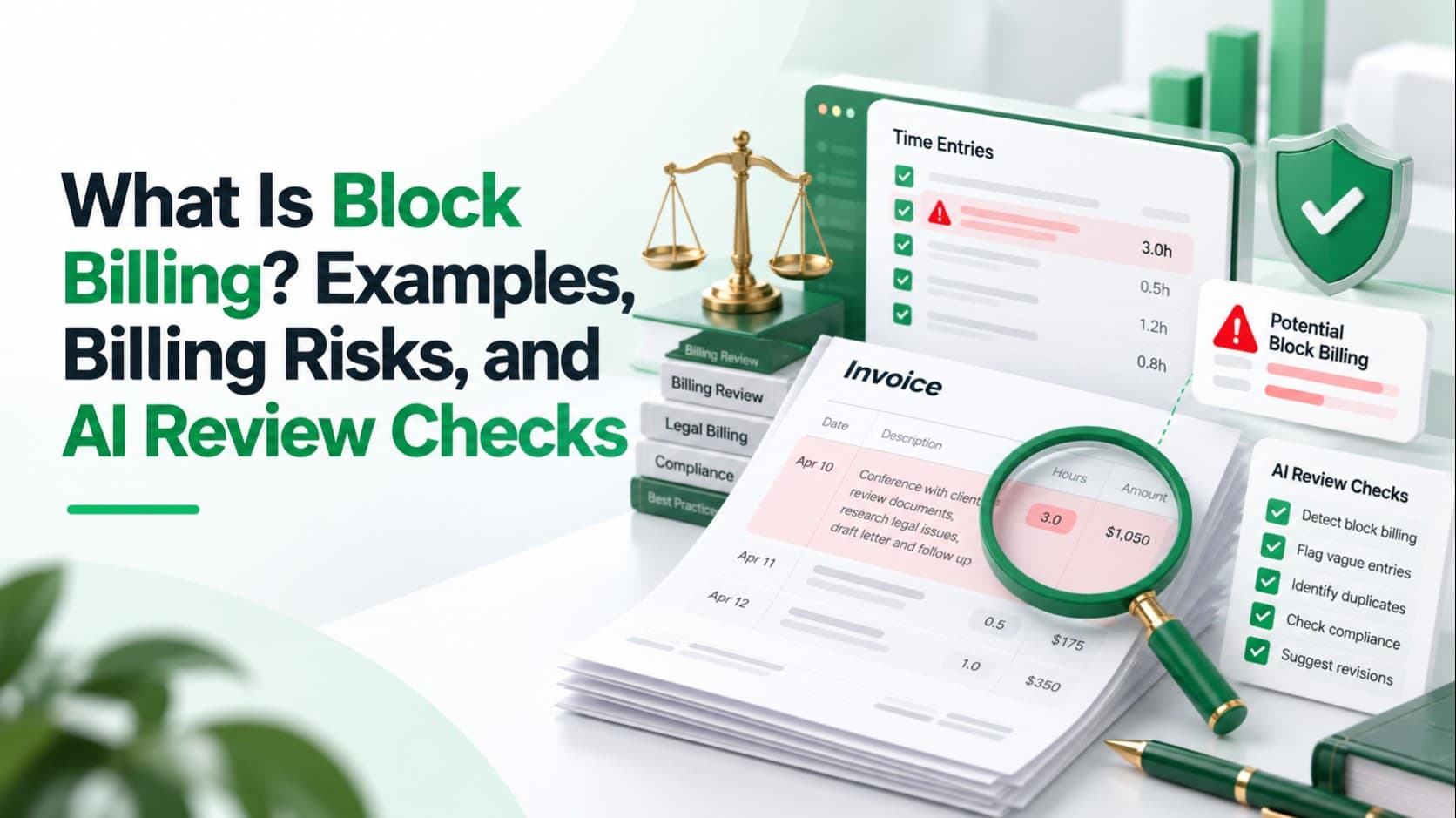
OCG Compliance Validation Agent: Automatically extracts complex Outside Counsel Guidelines (OCGs) buried in client contracts and portals. It validates billing narratives, flags block billing, checks task codes, scores invoice rejection risk, and enforces compliance pre-submission.
Legal Billing Intelligence Agents: Features dedicated agents for Billing Insights, Month-End Billing Validation, and Forecasting & Anomaly Detection. Reduces manual month-end review cycles while increasing realization rates.
Legal Data Fabric Platform: A secure modernization layer that bridges on-premise systems (like SQL or Elite 3E) with modern cloud frameworks (Microsoft Fabric, OneLake, Power Platform), ensuring firms are AI-ready without exposing sensitive client data.
Production Proof Point
In real-world enterprise deployments, LuMay demonstrated an 85% cost reduction in production document processing—delivering approximately $340,000 in annual savings while speeding up processing times by 360x (reducing 140-page document analysis from hours to roughly 2 minutes).
Pros & Cons
Pros:
Zero System Disruption: Extends and modernizes existing investments in Elite 3E, iManage, NetDocuments, and SharePoint.
End-to-End Compliance & Revenue Governance: Validates contract clauses against live billing narratives and OCG rules to stop revenue leakage.
Enterprise Governance: Strict permission awareness, zero public model training on firm data, full audit trails, and human-in-the-loop controls (SOC 2 Type II and ISO 27001 aligned).
Rapid Time-to-Value: Deployable focused pilots in 2 to 4 weeks.
Cons:
Designed primarily for mid-sized to large law firms and enterprise legal departments rather than solo practitioners.
Best For
Law firms, General Counsel offices, and Legal Operations leaders seeking a secure, enterprise-grade AI operating layer to unify contract analysis, OCG compliance, legal billing, and data modernization.
2. Harvey AI — Best for BigLaw & Enterprise Custom Models
Overview
Harvey AI is a purpose-built legal AI platform backed by OpenAI’s Startup Fund. It provides bespoke LLM models trained on firm-specific data, enabling top-tier global law firms to perform complex legal analysis, contract drafting, and litigation strategy.
Key Features
Custom-trained domain models for law firms.
Complex contract analysis and diligence synthesis.
Natural language multi-turn legal drafting interface.
Pros & Cons
Pros: High contextual understanding; backed by elite legal tech research.
Cons: High cost; primarily accessible to AmLaw 100 firms and select enterprise legal departments.
Best For
AmLaw 100 law firms needing custom enterprise LLMs for high-stakes litigation and transactional law.
3. Thomson Reuters CoCounsel — Best for Deep Legal Research & Primary Law Integration
Overview
CoCounsel (built on Casetext’s technology and acquired by Thomson Reuters) combines GPT-4 with Thomson Reuters’ proprietary legal database (Westlaw). It excels at factual research, deposition summarization, and contract extraction.
Key Features
Parallel search grounded in verified primary law sources.
Deposition and contract clause extraction.
Direct integration into the Thomson Reuters ecosystem.
Pros & Cons
Pros: Minimal hallucination risk on primary law; trusted brand backing.
Cons: Less customized for complex internal law firm financial or billing data fabric.
Best For
Litigators and corporate attorneys needing verified legal research integrated into contract review workflows.
4. Robin AI — Best for Hybrid AI + Legal Human-in-the-Loop Review
Overview
Robin AI pairs proprietary generative AI models with an in-house team of legal professionals. This hybrid model allows legal departments to offload routine NDA, SaaS, and vendor contract redlining with human verification.
Key Features
AI redlining backed by real-time human lawyer oversight.
Custom playbook enforcement for third-party paper.
Direct integration with Microsoft Word.
Pros & Cons
Pros: High accuracy due to human review fallback; lowers in-house workload.
Cons: Turnaround times are slightly slower than instant purely autonomous agents.
Best For
In-house legal teams with heavy volumes of standard commercial contracts needing verified redlines.
5. Spellbook by Legal Robot — Best for In-Line MS Word Contract Drafting
Overview
Spellbook is a legal drafting assistant that operates natively as a Microsoft Word add-in. Powered by OpenAI's GPT-4, it reads the context of contracts in real-time to suggest missing clauses, draft counter-proposals, and highlight negotiation risks.
Key Features
Instant clause generation based on surrounding contract context.
"Missing Clause" detection based on industry standards.
Auto-redlining against internal playbooks.
Pros & Cons
Pros: Seamless MS Word integration; fast learning curve for practicing attorneys.
Cons: Operates on individual documents rather than enterprise-wide data fabric.
Best For
Boutique law firms and commercial lawyers looking for fast contract drafting inside Microsoft Word.
6. Ironclad — Best for Enterprise Contract Lifecycle Management (CLM)
Overview
Ironclad is an industry leader in Enterprise CLM. Its proprietary AI engine, Ironclad Riviera, helps in-house legal teams build automated workflows, extract key metadata, and manage the full contract lifecycle from request to post-execution renewal.
Key Features
Workflow Builder for automated approval chains.
AI-driven contract repository indexing and metadata extraction.
Collaborative digital contract editor.
Pros & Cons
Pros: End-to-end contract governance; excellent Salesforce and cross-departmental integrations.
Cons: High deployment time and implementation effort for full CLM adoption.
Best For
Mid-market to large enterprise legal operations teams wanting complete contract workflow management.
7. Luminance — Best for M&A Due Diligence & AI Negotiation
Overview
Luminance utilizes its Legal Pre-trained Transformer (LPT) technology to read and understand legal text in any language. It assists with day-to-day contract negotiation as well as high-volume M&A due diligence.
Key Features
Visual traffic-light color coding of high-risk clauses in contracts.
Auto-negotiation of incoming third-party contracts.
Multi-lingual document extraction for international M&A deals.
Pros & Cons
Pros: Exceptional performance on large unstructured document sets.
Cons: Interface can be overwhelming for simple, routine contract tasks.
Best For
Global legal teams, corporate M&A departments, and cross-border transaction teams.
8. Lexis+ AI — Best for Connected Legal Citations & Statutory Compliance
Overview
Lexis+ AI integrates conversational AI into the LexisNexis research network. It allows legal teams to draft contract clauses, analyze legal issues, and verify statutory compliance with authoritative Shepard’s citations.
Key Features
Fully cited legal responses grounded in LexisNexis datasets.
Conversational drafting, summarizing, and redlining tools.
Hallucination guardrails backed by statutory databases.
Pros & Cons
Pros: Trusted citation accuracy; seamless for existing LexisNexis subscribers.
Cons: Fixed within the Lexis database ecosystem; less flexible for custom enterprise data pipelines.
Best For
Legal teams prioritizing statutory compliance, case law integration, and cited legal drafting.
9. DraftWise — Best for Firm Knowledge Reuse in Drafting
Overview
DraftWise connects a law firm’s historical contract database directly to Microsoft Word. It allows attorneys to search past deals, locate precedent language, and insert approved clauses without leaving their document editor.
Key Features
Contextual semantic search across past firm transactions.
Direct integration with iManage and NetDocuments repositories.
Precedent clause comparisons and variation highlighting.
Pros & Cons
Pros: Unlocks institutional knowledge; prevents reinventing the wheel on contract clauses.
Cons: Specialized primarily in drafting rather than post-execution billing or OCG compliance.
Best For
Transactional law practice groups looking to leverage historical firm precedent.
10. Henchman (Acquired by LexisNexis) — Best for Automated Clause Library Indexing
Overview
Henchman automatically indexes a law firm’s document management system (DMS) to build an organized, searchable clause library inside Microsoft Word. It categorizes clauses by type, jurisdiction, and client context.
Key Features
Automated extraction and categorization of clauses from iManage/NetDocuments.
Real-time clause suggestions during active contract drafting.
Anonymization and confidential client data scrubbing.
Pros & Cons
Pros: Requires zero manual tagging or upfront clause library setup.
Cons: Focused on drafting retrieval; lacks deep financial and billing integration.
Best For
Law firms wanting an instant, zero-maintenance clause library extracted from past work.
11. Definely — Best for Contract Review & Cross-Referencing
Overview
Definely provides an MS Word and PDF plugin designed to simplify legal document navigation. It automatically highlights defined terms, cross-references, and key provisions, allowing lawyers to review complex contracts without constantly switching pages.
Key Features
One-click definition popups without scrolling away from the current section.
Automated audit of undefined terms or broken cross-references.
Side-by-side clause drafting views.
Pros & Cons
Pros: Saves hours of tedious proofreading on complex 100+ page contracts.
Cons: Niche focus on navigation and cross-referencing proofreading.
Best For
Banking, finance, and M&A attorneys managing massive, complex credit agreements and deal documents.
12. LegalSifter — Best for Combined AI + Human Legal Guardrails
Overview
LegalSifter combines AI algorithms with "Sifters" (advice written by experienced lawyers). It reviews contracts in under a minute, highlighting risks and providing explicit instructions on how to negotiate unfavorable terms.
Key Features
Pre-configured "Sifter" guardrail rules for fast contract analysis.
In-line advice explaining why a clause poses a risk.
Combined software-plus-service options for legal outsourcing.
Pros & Cons
Pros: Easy to use; provides practical advice, not just text highlights.
Cons: Custom rule configuration can require ongoing maintenance.
Best For
Procurement teams and small in-house legal departments needing instant contract risk flagging.
13. Evisort — Best for AI Contract Analytics & Unstructured Data
Overview
Evisort is an enterprise AI contract intelligence platform that automatically ingests, categorizes, and tracks contracts across the enterprise. Its non-OCR AI engine extracts over 100+ contract metadata fields automatically.
Key Features
Zero-shot contract metadata extraction.
Automated expiration and renewal tracking dashboards.
Centralized searchable enterprise contract repository.
Pros & Cons
Pros: Excellent contract repository intelligence; fast deployment across legacy PDFs.
Cons: Focuses more on post-signature CLM analytics than pre-bill billing compliance.
Best For
Corporate legal operations and procurement leadership managing thousands of executed vendor contracts.
14. ContractPodAi (Leah) — Best for Legal Operations Governance
Overview
ContractPodAi offers "Leah," an interactive legal AI co-pilot built on multi-LLM architecture. Leah assists legal teams with contract redlining, vendor risk scoring, and general legal operations intake.
Key Features
Multi-LLM switching capability for speed and security optimization.
Visual contract scorecards and negotiation guidelines.
Legal intake and request management system.
Pros & Cons
Pros: Robust general legal team intake capabilities; strong governance framework.
Cons: Full suite adoption requires migrating onto the ContractPodAi core system.
Best For
In-house legal teams seeking an all-in-one platform for intake, CLM, and general AI assistance.
15. TermScout — Best for Out-of-the-Box Contract Rating & Benchmarking
Overview
TermScout provides market intelligence for contracts. By rating commercial contracts (such as SaaS agreements or vendor terms) against market standards, it helps companies know whether a deal is "favorable," "neutral," or "unfavorable."
Key Features
Standardized contract fairness scorecards.
Benchmarking against thousands of verified vendor contracts.
API integration for procurement screening.
Pros & Cons
Pros: Unique quantitative benchmarking on contract fairness.
Cons: Less suited for custom, highly bespoke bilateral agreements.
Best For
Procurement and sales operations teams wanting rapid, benchmarked contract reviews.
16. SpotDraft — Best for Mid-Market Fast-Turnaround CLM
Overview
SpotDraft offers an intuitive contract management platform designed for fast-growing companies. It features built-in AI redlining, electronic signatures, and automated workflow triggers.
Key Features
Native browser-based contract editor with real-time redlining.
Automated approval routing based on deal size or clause risk.
Pre-built integrations with Slack, Salesforce, and Google Docs.
Pros & Cons
Pros: Rapid setup; highly user-friendly UX for non-lawyers.
Cons: May lack advanced enterprise features required by large global law firms.
Best For
High-growth tech companies and mid-market legal teams prioritizing speed and team adoption.
17. LinkSquares — Best for Sales-Aligned Contract Management
Overview
LinkSquares provides full-lifecycle contract management designed to align legal teams with sales and finance. Its AI modules, Finalize and Analyze, streamline drafting and post-execution analytics.
Key Features
Direct Salesforce and HubSpot contract creation plugins.
AI-extracted contract reporting on obligations and renewals.
Built-in native e-signature capability (LinkSquares Sign).
Pros & Cons
Pros: Excellent sales team integration; fast post-execution reporting.
Cons: Less tailored for law firm practice management and billable hour intelligence.
Best For
Corporate legal departments heavily integrated with revenue and sales operations teams.
18. Litera / Kira Systems — Best for High-Volume M&A Due Diligence
Overview
Kira Systems (part of the Litera legal ecosystem) remains a benchmark for machine learning contract analysis. It excels at extracting metadata and specific legal provisions across thousands of documents during complex corporate transactions.
Key Features
Over 1,400 built-in smart field extraction models.
Unrivaled accuracy on scanned, poor-quality legacy PDFs.
M&A summary table generation.
Pros & Cons
Pros: battle-tested on major global M&A transactions.
Cons: Higher complexity; designed for transactional deal teams rather than real-time billing validation.
Best For
M&A practice groups, private equity firms, and corporate restructuring attorneys.
Evaluation Framework: How We Ranked These Platforms
To provide an objective evaluation, our editorial team analyzed each tool across six primary criteria essential for enterprise adoption in 2026:
Evaluation Criteria | Weight | What We Analyzed |
Data Integration & Architecture | 25% | Ability to connect directly to legacy legal systems (Elite 3E, iManage, NetDocuments) without forced data migration. |
Accuracy & Source Grounding | 20% | Zero-hallucination guardrails, audit trails, and strict citation back to source documents. |
Compliance & Financial Revenue Capture | 20% | Outside Counsel Guidelines (OCG) enforcement, billing narrative validation, and invoice rejection prevention. |
Enterprise Security & Governance | 15% | Role-based access control (RBAC), private cloud tenant options, SOC 2 Type II / ISO 27001 readiness, and non-training policies. |
Drafting & Workflow Automation | 10% | In-line Microsoft Word capabilities, redlining speed, and automated approval chains. |
Speed to Value & Deployment Effort | 10% | Implementation timelines, ease of onboarding, and measurable ROI (e.g., cost per document reduced). |
Deep Dive: What, Why, How, and Types of Legal AI Agents
What are Legal AI Agents?
Unlike simple AI chatbots or basic search bars, Legal AI Agents are autonomous, goal-driven software entities capable of perceiving legal inputs, planning multi-step actions, interacting with existing legal databases, and executing workflows with human supervision.
Instead of merely answering a question, a Legal AI Agent can:
Extract client rules from a complex master service agreement (MSA).
Cross-reference those rules against timekeeper billing narratives in Thomson Reuters Elite 3E.
Flag non-compliant line items for human review before pre-bills are generated.
Redline third-party contracts against internal firm playbooks directly inside Microsoft Word.
Why Law Firms & Corporate Legal Teams Need AI Agents in 2026
Legal teams are caught in a squeeze: clients demand lower billing costs, fixed-fee transparency, and faster turnarounds, while contract complexity and Outside Counsel Guidelines (OCG) rules continue to multiply.
Without an integrated AI operating layer:
Billing Teams spend days manually cross-referencing pre-bills, leading to high invoice rejection rates and write-offs.
Transactional Lawyers waste thousands of hours manually proofreading cross-references or rewriting standard clauses.
In-House Counsel suffer from delayed deal closures due to manual contract review backlogs.
Types of Legal AI Agents
Contract Review & Drafting Agents: Real-time copilot tools operating inside Microsoft Word or web portals to redline, suggest missing clauses, and verify cross-references (e.g., LuMay AI, Spellbook, DraftWise).
OCG & Risk Compliance Agents: Autonomous bots that read client contracts and enforce billing/operational guidelines across live workflows before invoices are generated (e.g., LuMay AI OCG Validation Agent).
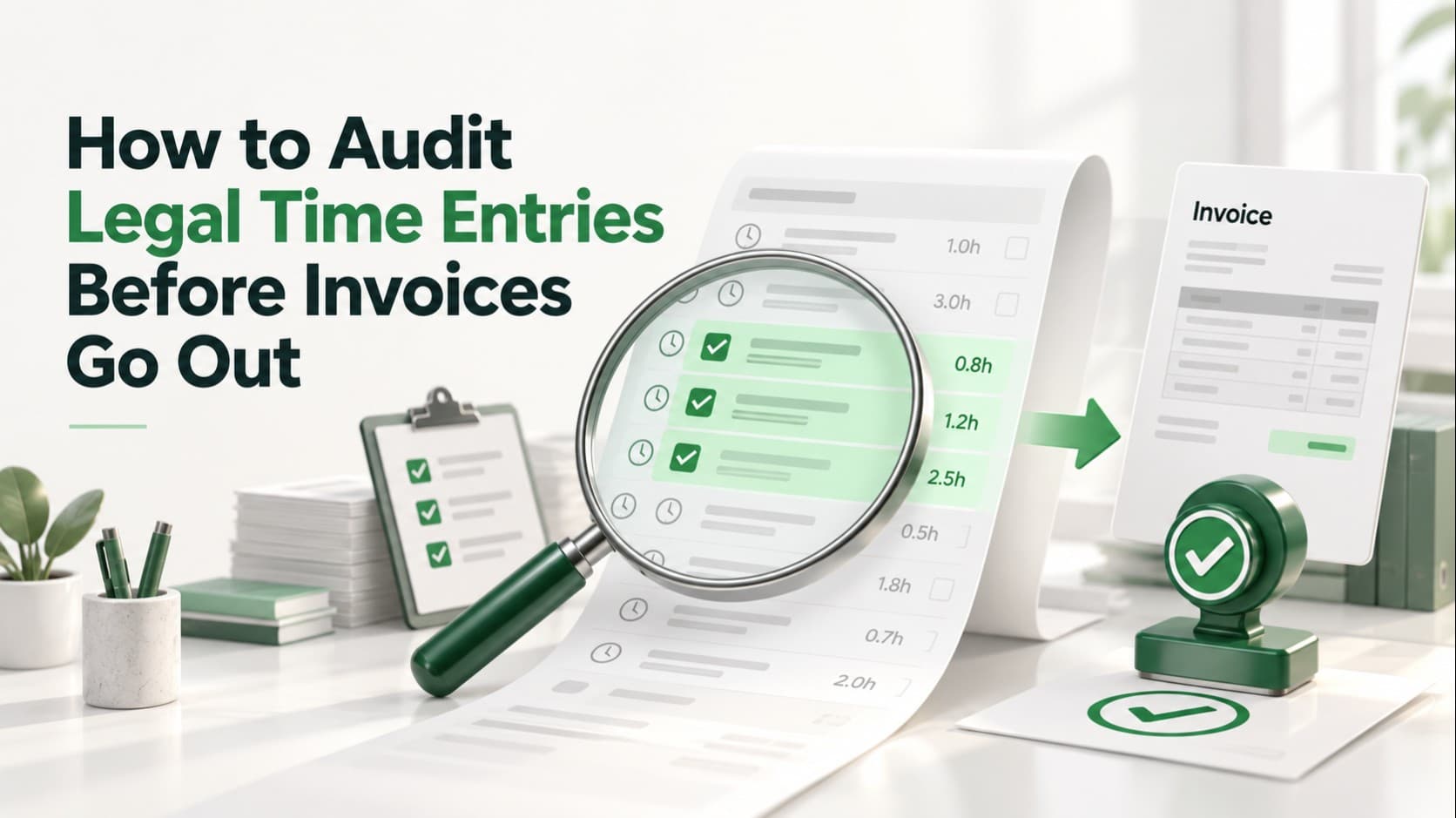
Billing Intelligence & Financial Agents: Agents that audit time entries, validate month-end close data, and predict revenue realization trends across legacy databases (e.g., LuMay AI Billing Insights).
Knowledge Discovery & Legal Research Agents: RAG-powered agents that search unstructured firm repositories to answer legal or matter questions instantly with full source attribution (e.g., LuMay AI Legal Insight Agent, CoCounsel, Lexis+ AI).
Industry Use Cases
Large Law Firms (AmLaw 200): Streamlining pre-bill validation, eliminating OCG invoice rejections, unlocking historical iManage/NetDocuments firm precedents, and modernizing Elite 3E databases for cloud readiness.
Corporate General Counsel Offices: Accelerating vendor contract negotiations, auditing post-execution obligations, and standardizing contract playbooks.
Financial Services & Banking Legal Operations: Auditing complex credit agreements, managing regulatory compliance mandates, and performing large-scale deal due diligence.
Healthcare & Life Sciences: Enforcing strict data privacy compliance (HIPAA/GDPR) across clinical trial agreements and vendor contracts.
The Bottom Line: Which Legal AI Platform Should You Choose?
Selecting the right legal AI platform depends on your primary strategic objective:
If you want an integrated enterprise platform that unifies contract intelligence, eliminates billing rejections, enforces OCG compliance, and modernizes your legal data without replacing Elite 3E or iManage: Choose LuMay AI.
If you need an in-line drafting assistant specifically inside Microsoft Word: Consider Spellbook or DraftWise.
If your primary priority is enterprise-wide Contract Lifecycle Management (CLM): Look toward Ironclad or Evisort.
If you need litigation research tied directly to case law: Leverage Thomson Reuters CoCounsel or Lexis+ AI.
In 2026, the law firms and legal departments that succeed will not be those running isolated AI pilots, but those building a secure, governed legal intelligence foundation.