



Why Businesses Look for Bland AI Alternatives
Bland AI brought accessible voice automation to a wider audience. But as businesses grow and call volumes increase, many teams hit real limitations - limited customization, inconsistent voice quality, latency issues, and CRM integration gaps.
In 2026, US businesses face real communication challenges:
Missed inbound calls that cost leads and revenue
Slow sales follow-ups that let warm prospects go cold
Support teams overwhelmed by repetitive, low-value calls
Outdated IVR systems frustrating customers and damaging brand reputation
Inconsistent outbound calling that hurts pipeline velocity
High labor costs for tasks that AI can handle 24/7
According to Salesforce research, 88% of customers say the experience a company provides matters as much as its products. Voice communication sits at the center of that experience. Businesses need the best AI voice agent - one that sounds human, scales quickly, and connects to the tools they already use.
That is why thousands of teams are actively evaluating Bland AI alternatives - and why this guide exists.
Top 7 Best Bland AI Alternatives in 2026
Below are the seven platforms worth evaluating. Each has been selected based on AI voice agent capabilities, ease of use, pricing accessibility, and real-world fit for US businesses.
1. LuMay Voice Agent ( Best For Enterprise Powerhouse )
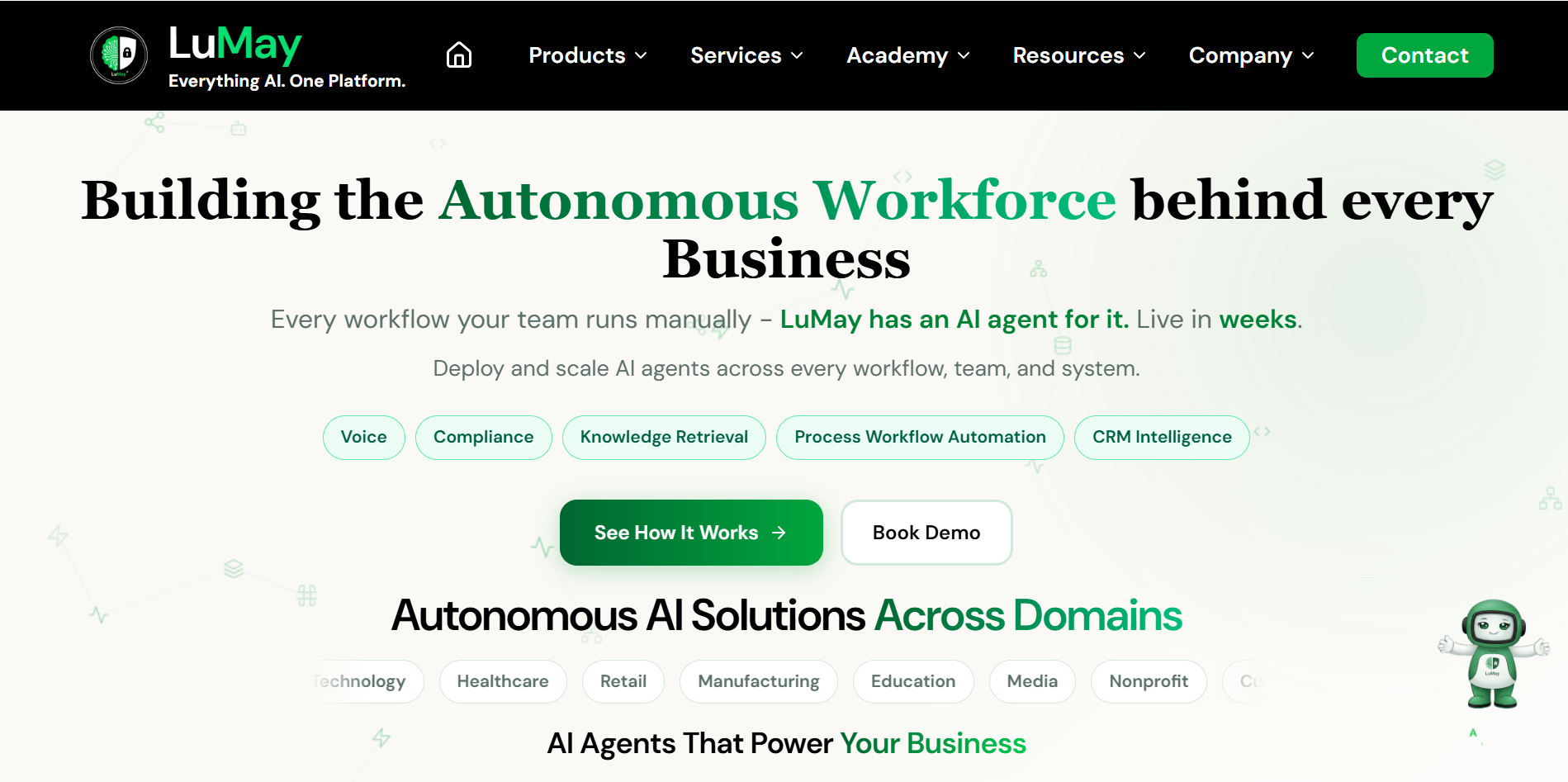
Best For: Small and mid-size US businesses needing practical AI voice agent automation for sales, support, and scheduling.
An all-in-one enterprise voice AI system that automates inbound and outbound calls, manages workflows, and converts conversations into real business outcomes — without coding.
Key Features: Human-like AI voice agents for inbound and outbound calling. Lead qualification and appointment scheduling automation. Real-time call routing and escalation to live agents. CRM integration and workflow automation. Analytics and call performance reporting. Easy no-code setup with fast deployment.
Core
Best For: Enterprise Powerhouse
Pricing Edge: ~$0.10/min
Strengths:
Ultra-low latency (<1s response)
Developer-friendly + no-code visual builder
Enterprise-grade compliance & uptime
Best-in-class voice quality
Works across all industries
Pros: Practical, business-focused automation ready out of the box. Human-like voice quality with low latency. Strong fit for customer service, sales, and scheduling. Fast to deploy - teams can go live quickly. Built for US business needs and compliance awareness.
Cons: Newer platform - ecosystem still expanding. Enterprise-tier customization continuing to grow.
Use Cases: Inbound customer support automation. Outbound lead follow-up and qualification. Appointment booking for service businesses and healthcare. Sales pipeline acceleration with AI calling agents. Missed call recovery for local and small businesses.
Pricing: Contact Lumay for current pricing - https://lumay.ai/contact
Why Alternative: Lumay offers a practical, ready-to-deploy AI voice agent experience built for real business workflows - not developer demos. It focuses on outcomes: more answered calls, better lead follow-up, and reduced support workload.
Who Should Choose: Small businesses, sales teams, service companies, healthcare practices, real estate agencies, and SaaS companies wanting fast, human-like voice automation without a large technical team.
2. Retell AI
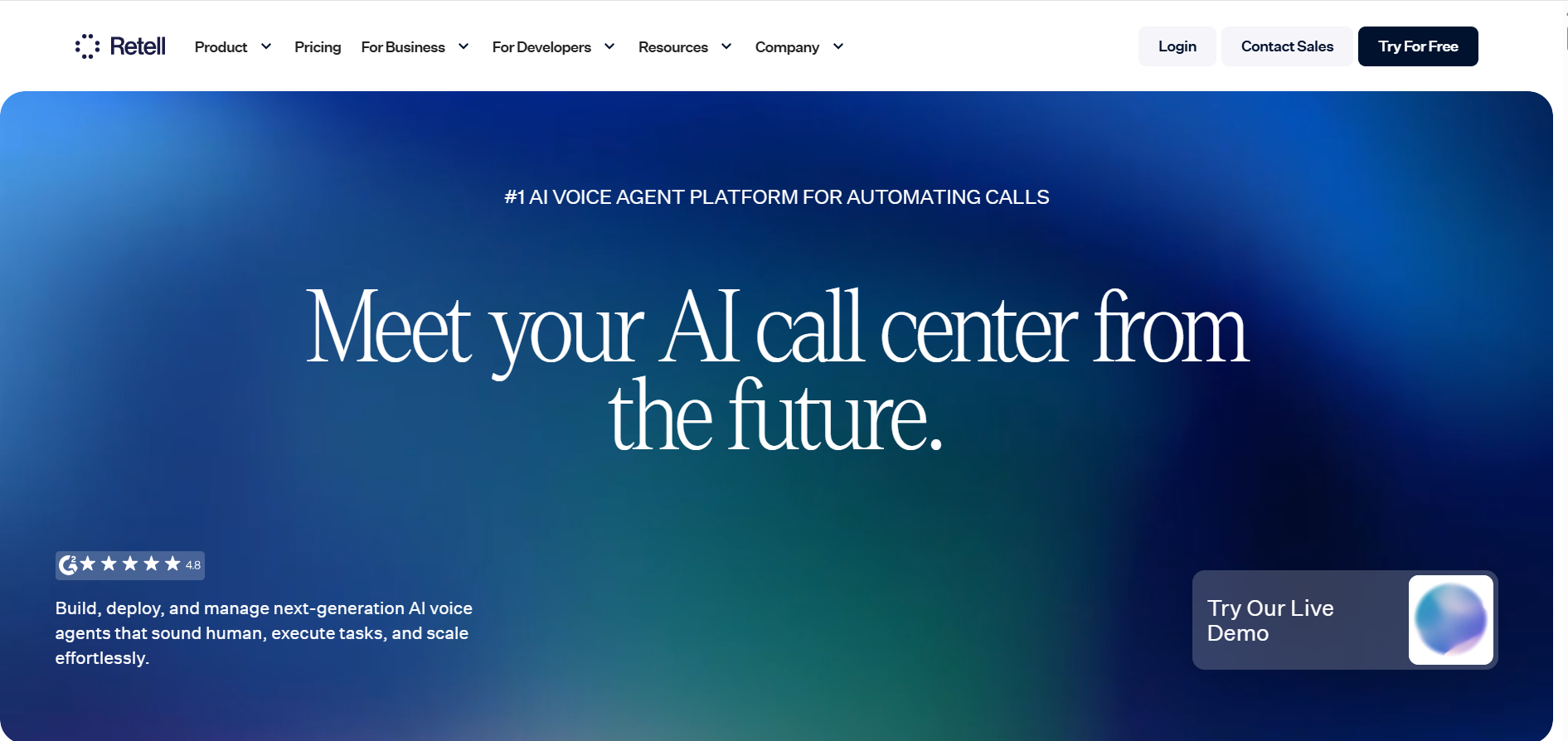
Best For: Developers and technical teams building custom AI voice agent workflows.
Key Features: Low-latency conversational AI voice calls. API-first architecture for deep customization. Custom LLM integration support. Webhook and third-party tool connections. Multi-language voice support. Interruption handling and dynamic conversations.
Pros: Excellent voice quality and low latency. Highly flexible API-driven platform. Supports advanced conversation logic. Strong developer documentation.
Cons: Requires developer resources for setup. Less plug-and-play for non-technical users. Significant setup time for complex workflows.
Use Cases: SaaS companies building custom voice automation products. Technical teams handling outbound sales automation. Healthcare platforms with custom scheduling needs. Agencies building AI voice solutions for clients.
Pricing: Usage-based pricing; developer plan available. See retellai.com for current rates.
Why Alternative: Retell AI provides strong technical flexibility and low-latency voice quality that rivals or exceeds Bland AI for developer-driven use cases.
Who Should Choose: Technical teams, developers, and agencies with resources to build and manage custom AI voice agent workflows.
3. Vapi
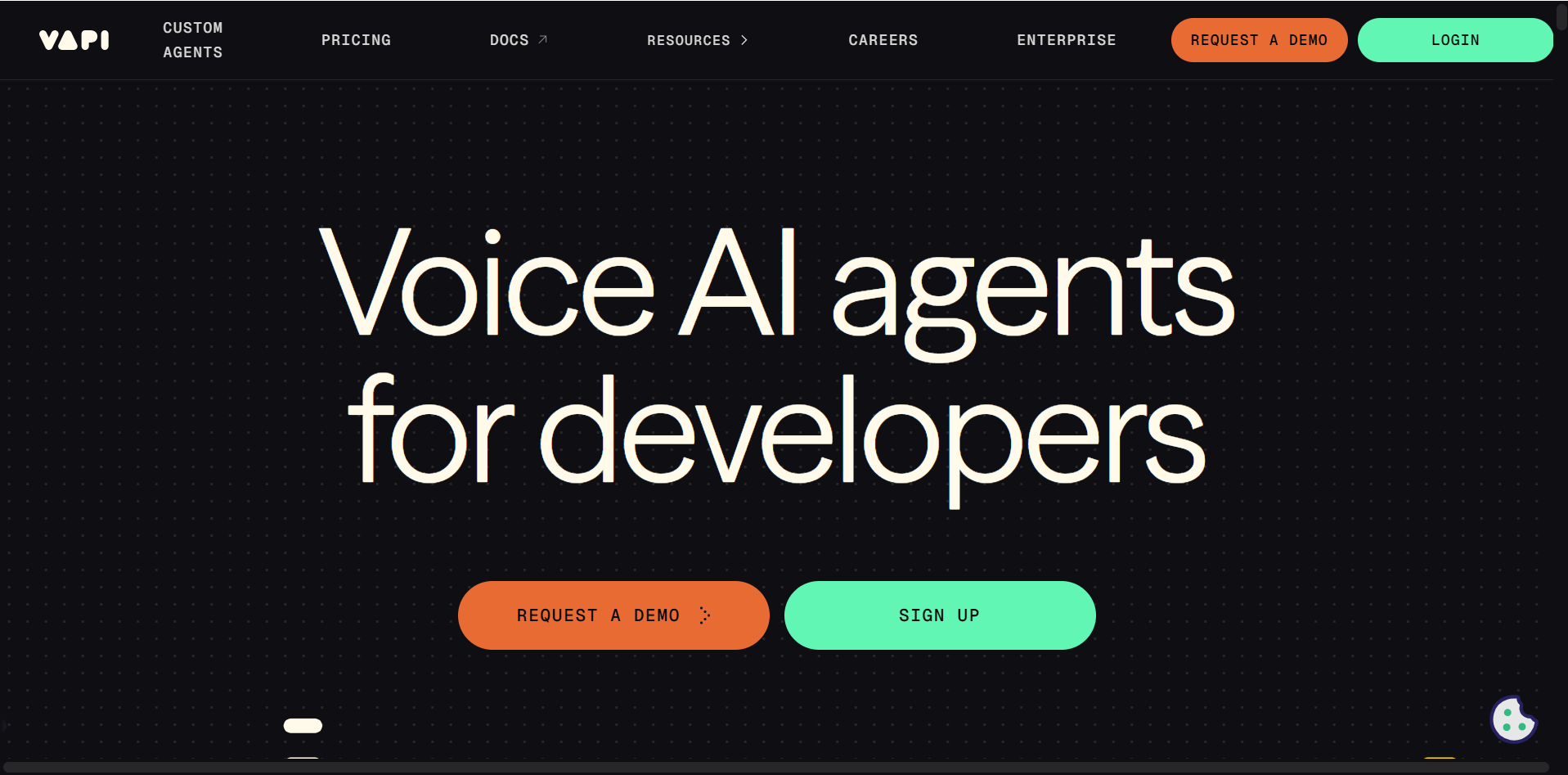
Best For: Voice AI developers and startups building AI calling infrastructure.
Key Features: Voice AI infrastructure with real-time latency optimization. Multi-provider LLM support. Call recording and transcription. Function calling for complex automations. Bring-your-own telephony or use Vapi's built-in numbers. SDKs for web and mobile integration.
Pros: Extremely developer-friendly with deep API access. Supports multiple AI models and voices. Strong real-time performance. Active and growing developer community.
Cons: Not designed for non-technical users. Significant engineering time required for production workflows. Limited native business automation templates.
Use Cases: Startups building AI-powered call center products. Developer teams testing custom voice automation. B2B SaaS platforms embedding voice AI into products.
Pricing: Usage-based pricing at competitive developer rates. Check vapi.ai for details.
Why Alternative: Vapi offers more infrastructure flexibility and multi-provider support compared to Bland AI, making it powerful for technical builders.
Who Should Choose: Developers, AI engineers, and technical founders who need full control over their voice AI stack.
4. Synthflow AI
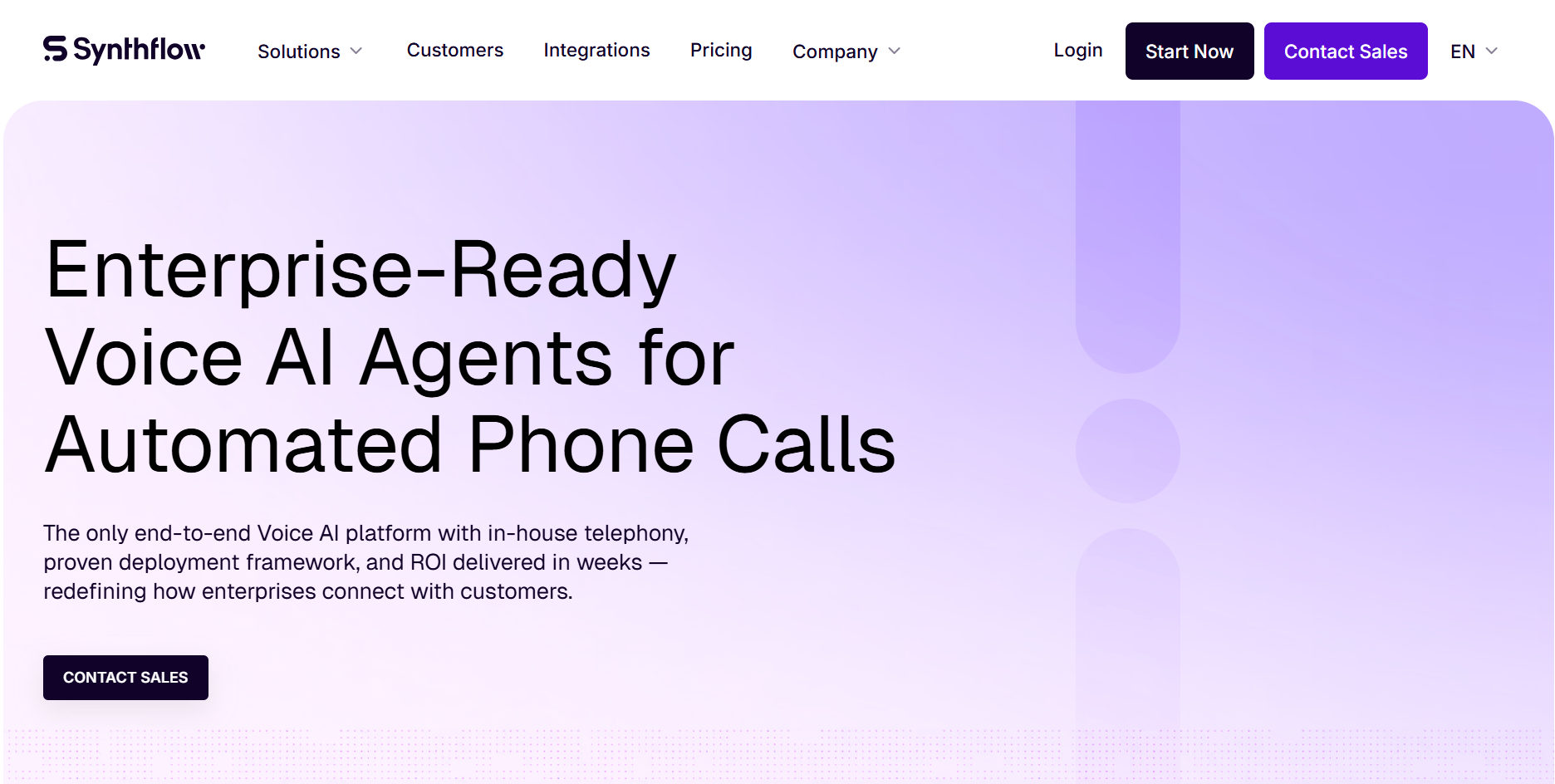
Best For: Agencies and non-technical teams launching AI voice agents without code.
Key Features: No-code AI voice agent builder. Pre-built templates for common business use cases. Outbound and inbound calling workflows. CRM integrations including GoHighLevel and HubSpot. Appointment scheduling and lead capture. White-label options for agencies.
Pros: Accessible for non-technical users. Strong GoHighLevel integration popular with agencies. White-label capabilities for resellers. Fast setup with pre-built templates.
Cons: Advanced customization may require workarounds. Voice quality can vary by use case. Reporting and analytics still maturing.
Use Cases: Marketing agencies automating client outreach. Real estate teams qualifying inbound leads. Service companies handling appointment reminders. Small businesses automating follow-up calls.
Pricing: Subscription-based pricing with agency tiers. Visit synthflow.ai for current plans.
Why Alternative: Synthflow AI removes the technical barrier that Bland AI often presents, making voice automation accessible to agencies and small business owners.
Who Should Choose: Agencies, non-technical business owners, and GoHighLevel users who need a no-code AI calling agent.
5. ElevenLabs Conversational AI
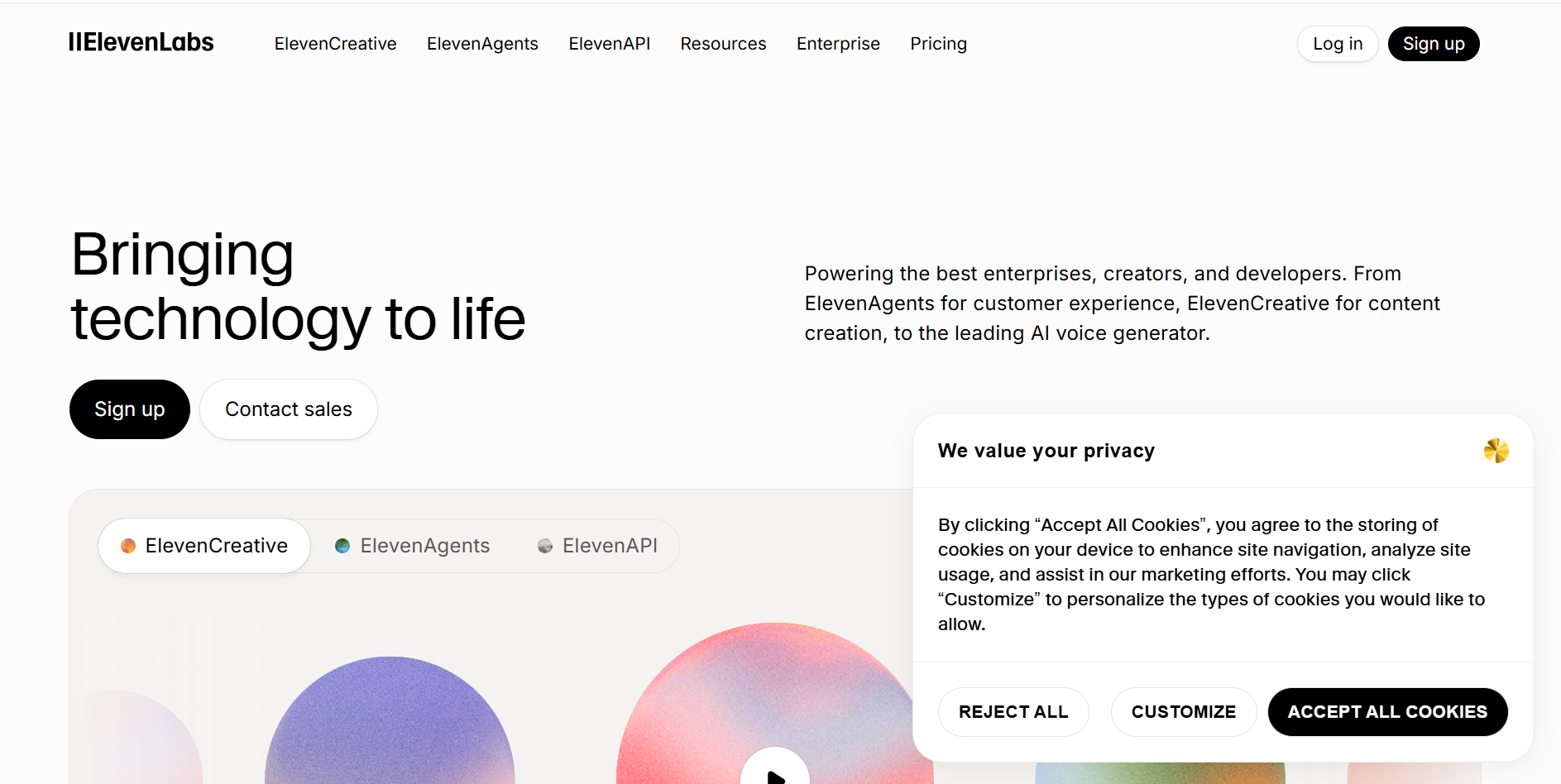
Best For: Businesses prioritizing premium voice quality and brand-consistent AI voices.
Key Features: Industry-leading AI voice synthesis. Voice cloning for branded AI agents. Conversational AI for interactive voice workflows. Multi-language voice support. Real-time voice generation with minimal latency. API access for custom integrations.
Pros: Best-in-class voice quality and realism. Voice cloning for consistent brand voice. Strong multi-language capabilities. Widely trusted in the AI voice industry.
Cons: Primarily a voice technology platform - business workflow tools limited. Integration work required to build full call automation pipelines. Can be more expensive for high-volume use cases.
Use Cases: Brand-consistent AI customer service voices. Enterprise IVR replacement with premium voices. Media and content production. High-stakes customer communication where voice quality matters.
Pricing: Subscription and usage-based pricing. See elevenlabs.io for plans.
Why Alternative: ElevenLabs surpasses Bland AI on voice quality and realism, making it the right choice when brand voice and audio experience are top priorities.
Who Should Choose: Enterprises and premium brands where voice quality and brand consistency are non-negotiable.
6. Air AI
Best For: Sales teams running high-volume outbound AI calling campaigns.
Key Features: Long-form AI phone conversations designed for sales. Autonomous outbound calling agent. Lead follow-up and qualification automation. CRM integration for pipeline management. Human-like extended call handling. Voicemail drop and call scheduling.
Pros: Built specifically for sales call automation at scale. Extended conversation capability beyond short IVR-style calls. Reduces sales rep time on cold and warm outreach. CRM-connected workflows.
Cons: Best suited for outbound - inbound handling is secondary. Pricing and capacity may limit smaller teams. Primarily US-market focused.
Use Cases: High-volume outbound B2B and B2C sales campaigns. Mortgage and insurance lead qualification at scale. Real estate outreach and follow-up. SaaS demo booking from warm lead lists.
Pricing: Contact Air AI for enterprise pricing. See air.ai for details.
Why Alternative: Air AI focuses specifically on sales automation at scale - a more narrowly optimized use case than Bland AI's general-purpose offering.
Who Should Choose: Sales teams, insurance agencies, mortgage companies, and real estate teams running high-volume outbound campaigns.
7. Voiceflow
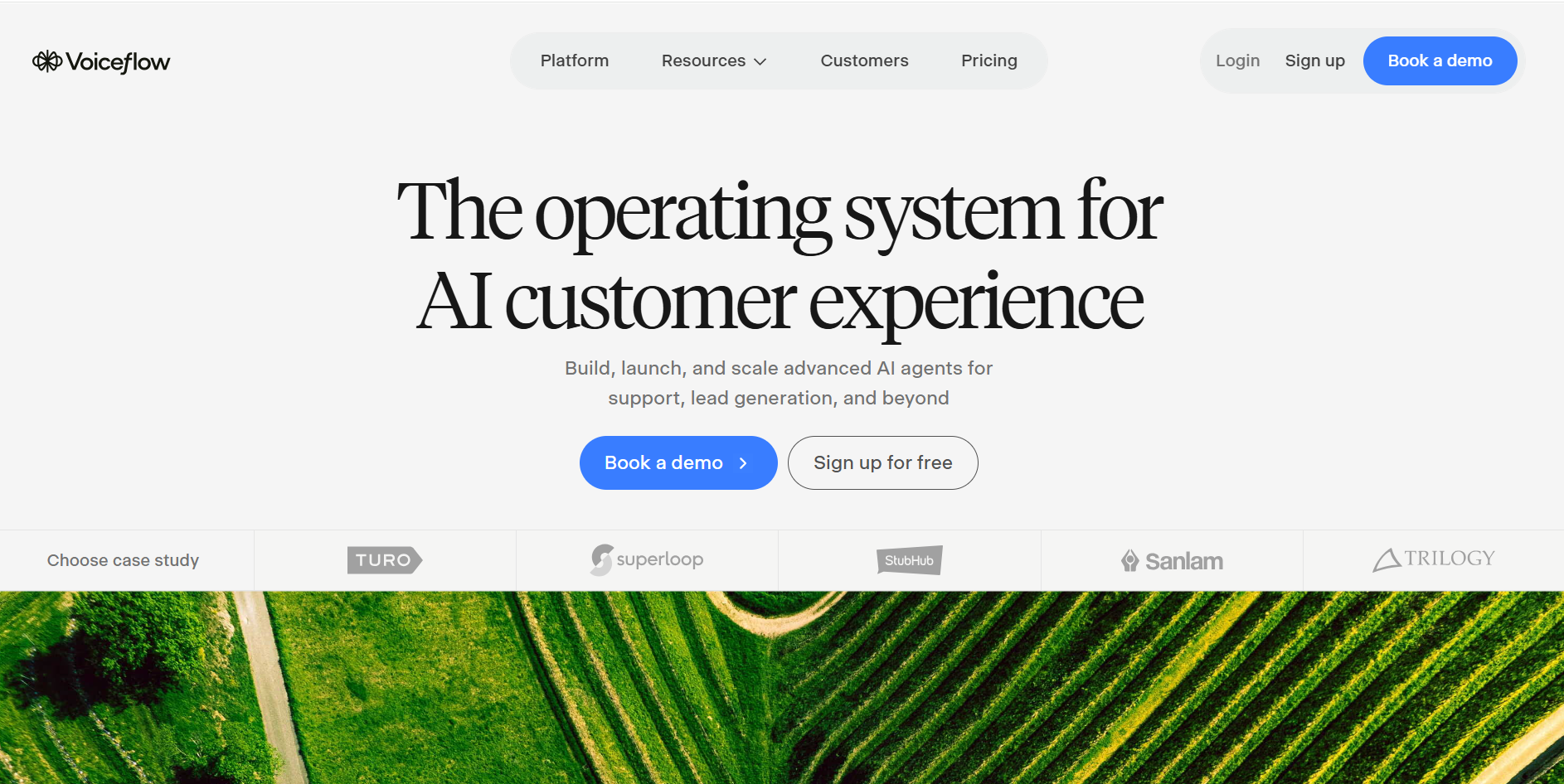
Best For: Teams building structured, multi-channel AI voice and chat automation.
Key Features: Visual conversation design builder. Multi-channel support - voice, chat, and messaging. Agent collaboration features for enterprise teams. Integration with telephony platforms and CRMs. Analytics and testing tools. Reusable conversation components and templates.
Pros: Powerful visual builder for complex conversation flows. Strong multi-channel support. Good team collaboration features. Large library of templates and integrations.
Cons: Steeper learning curve for advanced workflows. Voice calling requires additional telephony setup. Can be over-engineered for simple use cases.
Use Cases: Enterprise customer service automation. Omnichannel support bots with voice and chat. Complex IVR replacement projects. Teams managing multiple AI agent deployments.
Pricing: Free tier available; paid plans for scale. See voiceflow.com for pricing.
Why Alternative: Voiceflow offers more structured conversation design tools and multi-channel capabilities than Bland AI, better for complex enterprise or omnichannel automation.
Who Should Choose: Enterprise teams, product managers, and organizations managing large-scale, multi-channel AI agent deployments.
Key Features to Look for in the Best AI Voice Agent
Not all AI voice agent platforms are equal. When evaluating Bland AI alternatives - or any voice AI automation tool - prioritize these features based on your business needs.
Human-Like Conversations: The agent should sound natural, handle interruptions gracefully, and avoid robotic phrasing that erodes customer trust.
Low-Latency Responses: Delays in conversation kill the experience. Look for platforms with sub-second response times for smooth, real-time dialogue.
CRM Integrations: Your AI calling agent must connect to your CRM - Salesforce, HubSpot, or a niche tool - to log calls, update records, and trigger follow-ups.
Inbound and Outbound Calling: The best platforms handle both. Inbound for customer service; outbound for lead follow-up, sales, and reminders.
Call Routing and Transfer: When a call escalates, the agent should route it to the right person instantly without frustrating the customer.
Lead Qualification: AI voice agents should ask qualifying questions, score leads, and pass hot prospects to human reps automatically.
Appointment Scheduling: Native calendar integration lets the AI book, reschedule, and confirm appointments without human involvement.
Analytics and Reporting: Call transcripts, sentiment analysis, conversion tracking, and performance metrics help you improve over time.
Compliance Support: For US businesses, TCPA compliance and FCC guidelines matter. Choose platforms with do-not-call list management and consent tracking.
Custom Workflows: The platform should support custom conversation flows, branching logic, and tailored scripts.
Easy Setup for Small Businesses: Look for no-code or low-code setup options that let non-technical teams deploy fast.
For US calling compliance guidance, review FTC guidelines on unwanted calls and FCC robocall regulations. TCPA compliance is essential for any business running outbound AI calling campaigns.
Common Use Cases for AI Voice Agents in 2026
AI voice agents are no longer limited to enterprise contact centers. In 2026, businesses across every sector deploy voice AI automation to solve real operational problems.
Customer Service Automation - Handle common inquiries - order status, account questions, return policies - without human agents. Route complex issues to the right team instantly.
Appointment Booking - Healthcare practices, salons, law firms, and service companies use AI voice agents to book, confirm, and reschedule appointments 24/7 without front desk overhead.
Real Estate Lead Follow-Up - Real estate agents and property managers use AI calling agents to follow up on new listing inquiries, qualify buyer intent, and schedule property tours automatically.
Healthcare Patient Scheduling - Medical offices use voice AI automation to handle appointment reminders, pre-visit confirmations, and prescription refill notifications - reducing no-shows and staff workload.
Insurance Qualification - Insurance agencies use outbound AI calling software to qualify inbound leads, gather policy information, and route hot prospects to licensed agents.
SaaS Demo Booking - SaaS sales teams use AI voice agents to follow up with trial users, book product demos, and qualify leads before handing them to account executives.
Debt Collection Reminders - Compliant outbound reminder calls help financial services companies recover payments while maintaining professional, respectful communication.
Local Service Business Calls - Plumbers, HVAC companies, landscapers, and other local service businesses use AI voice agents to handle after-hours calls, quote requests, and job scheduling.
Sales Follow-Up at Scale - Sales teams use AI outbound calling software to contact lead lists instantly, warm up prospects, and qualify interest before routing to human reps.
Recruiting and Candidate Screening - HR teams and staffing agencies use AI calling agents to conduct initial screening interviews, collect availability information, and schedule next-stage interviews.
Case Studies: AI Voice Agents in Action
The following are clearly labeled example scenarios illustrating how businesses use AI voice agent platforms. These are not testimonials from real named companies.
Example Scenario 1: Home Services Company Reduces Missed Calls by 60% Problem: A regional HVAC company in Texas was missing 40% of inbound calls during peak season, losing an estimated $80,000 in annual revenue to unanswered leads. Solution: The company deployed an AI voice agent to handle all inbound calls 24/7, answer common questions about services and pricing, and book service appointments directly into their scheduling system. Result: Within 90 days, missed calls dropped by 60%. Appointment volume increased by 35%. The front office team focused on in-person customer experience rather than phone management. Business Lesson: For service businesses with fluctuating call volume, a best AI voice agent pays for itself quickly by capturing leads that would otherwise be lost.
Example Scenario 2: SaaS Sales Team Cuts Lead Response Time from 4 Hours to 4 Minutes Problem: A B2B SaaS company in California had a five-person SDR team spending three hours daily on initial lead follow-up calls. Average response time to new trial signups was over four hours. Solution: The team integrated an AI calling agent that automatically called new trial users within five minutes of sign-up, asked qualifying questions, and booked demos with interested prospects directly into Calendly. Result: Lead response time dropped to under four minutes. Demo bookings increased by 28% in the first quarter. SDRs focused entirely on closing qualified meetings. Business Lesson: AI outbound calling software is one of the highest-ROI investments a sales team can make. Speed-to-lead is a decisive competitive advantage.
Example Scenario 3: Healthcare Practice Replaces Legacy IVR, Improves Patient Satisfaction Problem: A multi-location medical practice in Florida was using a decade-old IVR system that routinely frustrated patients with long menus, incorrect routing, and no ability to handle natural language questions. Solution: The practice replaced their IVR with a voice AI automation platform, enabling patients to speak naturally to schedule appointments, request prescription refills, and get directions - without navigating a confusing menu. Result: Patient satisfaction scores improved by 22 points in the first six months. Call abandonment rates fell by 45%. Reception staff handled 30% fewer incoming calls, allowing more time for in-office patient care. Business Lesson: Replacing traditional IVR with a true AI voice agent is both a technology and customer experience investment that directly impacts retention and reviews.
What Is the Best Bland AI Alternative in 2026?
The honest answer is that it depends on your use case, technical resources, and business goals.
If you are a developer or technical team: Retell AI or Vapi offer the deepest customization.
If you run a marketing agency: Synthflow AI offers the best no-code experience with GoHighLevel integration.
If voice quality is the top priority: ElevenLabs Conversational AI leads the industry.
If you run high-volume outbound sales: Air AI is purpose-built for that workflow.
If you need enterprise-grade omnichannel automation: Voiceflow provides the best structured builder.
For the majority of US small and mid-size businesses - across healthcare, real estate, home services, SaaS, finance, and retail - Lumay stands out as the most practical choice.
Lumay combines human-like voice quality, easy deployment, inbound and outbound calling, appointment scheduling, lead qualification, and US-market-focused automation in a platform that does not require a developer to go live.
AI Voice Agent vs Traditional IVR: Which Is Better?
This is one of the most common questions US businesses ask when evaluating voice communication upgrades. The short answer: AI voice agents win for almost every modern business use case.
Traditional IVR systems use pre-recorded menus and touch-tone input to route calls. They were revolutionary in the 1980s. In 2026, they are one of the fastest ways to frustrate customers and damage your brand.
AI Voice Agent vs Traditional IVR comparison: Conversation Style - Natural, two-way dialogue vs Rigid menu navigation. Customer Experience - Human-like, engaging vs Frustrating, impersonal. Call Deflection - High (resolves complex queries) vs Low (limited to set options). Setup Time - Hours to days vs Days to weeks. Scalability - Instant, unlimited scaling vs Requires infrastructure. Language Support - Multi-language with AI vs Limited, pre-recorded only. CRM Integration - CRM, calendar, helpdesk vs Basic telephony only. Self-Service Rate - 60–80%+ vs 20–40%. Cost Over Time - Reduces per-call cost vs High maintenance cost.
Research shows that 75% of customers are frustrated by IVR systems. AI voice agents remove that friction entirely - enabling natural conversations that understand intent, ask follow-up questions, and resolve issues without a menu.
For businesses asking "AI voice agent vs traditional IVR - which is better?", the answer in 2026 is almost always the AI voice agent. The question is simply which platform fits your specific business.
How to Build an AI Voice Agent for Customer Service
Here is how to build an AI voice agent for customer service - a practical, step-by-step approach that works for most US businesses, whether starting from scratch or replacing an existing IVR.
Define Your Call Goals - Start with clarity. What do you want the AI voice agent to accomplish? Handle FAQs? Book appointments? Qualify leads? Each goal shapes your conversation design.
Map Common Customer Questions - Collect the top 20 to 30 questions your customer service team handles. These become the core of your AI agent's knowledge base.
Choose the Right AI Voice Agent Platform - Evaluate platforms based on voice quality, integration options, ease of setup, and your technical resources. Lumay, Retell AI, Synthflow, and Vapi are all strong options depending on your needs.
Connect Your CRM and Business Tools - Integrate your CRM, calendar, and helpdesk tools so the AI agent can access customer data, log calls, and trigger workflows automatically.
Create Conversation Flows - Design the dialogue paths your AI agent will follow. Include greeting scripts, question-handling logic, escalation triggers, and closing statements. Keep language natural.
Test With Real Call Scenarios - Run live test calls covering happy-path scenarios and edge cases. Include difficult questions, aggressive callers, and off-script inputs to stress-test the agent.
Monitor Call Quality - After launch, review call recordings and transcripts regularly. Look for misunderstood questions, failed escalations, and friction points.
Improve Over Time - AI voice agents get better with iteration. Update your conversation flows monthly based on call data and customer feedback. The best deployments are never truly finished.
Explore how Lumay simplifies this entire process: https://lumay.ai/ai-voice-agent
Best AI Voice Agent for Small Business in 2026
Small businesses have different priorities than enterprise companies. Focus on these criteria:
Affordability: Pricing should reflect small business budgets, not enterprise contract minimums.
Ease of Setup: You should be able to go live without a developer or a months-long implementation project.
Fast Deployment: The best platforms get small businesses live in days, not months.
Appointment Scheduling: For service businesses, this alone can justify the entire investment.
Lead Follow-Up: Never lose a lead to a missed callback again. AI handles follow-up instantly.
Missed Call Recovery: After-hours calls are captured, not lost.
Simple Reporting: Actionable insights without a data science team.
Human-Like Conversations: Customers should have a smooth, respectful experience - not a robotic one.
Lumay was built with these small business realities in mind. Whether you run a dental practice, real estate brokerage, home services company, or local SaaS startup, Lumay provides an AI calling agent that is practical to deploy, affordable to operate, and designed to improve business outcomes.
Discover Lumay's AI calling capabilities for small businesses: https://www.lumay.ai/ai-products/voice-agent| https://www.lumay.ai/demo/booking/voice-agent
Frequently Asked Questions
What is the best Bland AI alternative in 2026?
The best Bland AI alternative depends on your use case. For most US small and mid-size businesses, Lumay offers the strongest combination of ease of use, human-like voice quality, inbound and outbound capabilities, and practical automation for customer service and sales.
What is an AI voice agent?
An AI voice agent is an automated phone-based system that uses artificial intelligence to conduct natural, human-like conversations. Unlike traditional IVR, AI voice agents understand natural language, handle complex questions, and take action - like booking appointments or qualifying leads - without human involvement.
How does an AI calling agent work?
An AI calling agent uses large language models and voice synthesis technology to make and receive phone calls. It listens to callers, interprets intent, generates contextual responses, and takes actions like updating CRM records or scheduling meetings - all in real time.
Is LuMay a good Bland AI alternative?
Yes. Lumay is a strong Bland AI alternative for US businesses needing a practical, easy-to-deploy AI voice agent for customer service, sales, appointment scheduling, and lead qualification. Its combination of human-like voice quality and business-focused automation makes it a top choice for growing companies.
What is the best AI voice agent for small businesses?
For small businesses, the best AI voice agent for small business 2026 is one that is affordable, easy to set up, and delivers results quickly. Lumay is a top choice because it is built for real business workflows - not just developer demos - and can be deployed without a technical team.
Can AI voice agents replace traditional IVR?
Yes - and in most cases they should. AI voice agents offer natural conversation, higher self-service rates, better customer satisfaction, and lower long-term costs compared to legacy IVR systems. Replacing IVR with voice AI automation is one of the highest-ROI customer experience upgrades a business can make.
What industries use voice AI automation?
Voice AI automation is used across virtually every industry, including healthcare, real estate, insurance, financial services, home services, SaaS, retail, hospitality, legal services, and recruiting. Any industry relying on phone communication for customer service or sales can benefit significantly.
How do I build an AI voice agent for customer service?
Start by defining your call goals, mapping common customer questions, choosing the right platform, integrating your CRM, building conversation flows, testing with real scenarios, and monitoring performance over time. Most modern platforms like Lumay make this process accessible without a developer.
What is AI outbound calling software?
AI outbound calling software automates placing outbound phone calls using artificial intelligence. It handles lead follow-up, appointment reminders, qualification calls, and sales outreach at scale - reducing burden on human teams while increasing speed and consistency.
Are AI voice agents useful for customer support?
Absolutely. AI voice agents handle high-volume, repetitive support inquiries 24/7, reduce hold times, improve first-contact resolution rates, and free human agents for complex or high-value interactions. For most support teams, deploying the best voice agent delivers measurable ROI within the first quarter.
Key Takeaways
Bland AI alternatives in 2026 are more capable, more specialized, and more business-ready than ever before.
The best AI voice agent for your business depends on use case, team size, technical resources, and budget.
Lumay is the strongest all-round choice for US small and mid-size businesses needing practical voice AI automation.
Retell AI and Vapi serve technical teams and developers who need deep customization.
Synthflow AI is ideal for agencies and non-technical users who need no-code deployment.
ElevenLabs Conversational AI leads on voice quality and brand voice consistency.
Air AI is purpose-built for high-volume outbound sales campaigns.
Voiceflow excels for enterprise and omnichannel automation at scale.
AI voice agents consistently outperform traditional IVR on every meaningful customer experience metric.
The best deployments are built with clear goals, CRM integration, tested flows, and ongoing optimization.
US businesses should ensure any calling platform supports TCPA compliance and FCC guidelines.
Final Thoughts
The AI voice agent market has matured rapidly. In 2026, US businesses have real, production-ready options that simply were not available two years ago. Bland AI helped introduce many teams to voice automation - but the platforms reviewed here offer more capability, better voice quality, and more business-focused workflows.
Whether you are a solo operator trying to stop missing calls, a sales team looking to accelerate lead follow-up, or a customer support leader trying to reduce ticket volume and improve satisfaction scores - there is an AI calling agent platform built for your needs.
The key is choosing the right one for where your business is today, and where it is going.
Explore more: Lumay Blog (https://lumay.ai/blog) | Voice AI Automation (https://www.lumay.ai/ai-products/voice-agent) | AI Outbound Calling Software (https://www.lumay.ai/demo/booking/voice-agent) | Book a Demo (https://lumay.ai/demo)
Ready to Replace Bland AI With Something Better? Lumay gives US businesses a practical, powerful AI voice agent platform - without the complexity or cost. Explore Lumay (https://lumay.ai) | Book a Demo (https://lumay.ai/demo) | Talk to the Team (https://lumay.ai/contact)


