BillingOps for Billing Visibility and Follow-Up
For US law firm billing and finance teams, BillingOps is built around answering operational billing questions in plain language — surfacing where outstanding follow-up work sits, so it can be reviewed and routed to the right person — based on the firm's own governed billing data.
The Billing Visibility Gap
Your Billing Data Knows Where Revenue Is at Risk.
Finding It Is the Hard Part.
Law firms already have the billing data. The challenge is turning that data into a clear answer quickly enough to act.
Realization can deteriorate across clients, matters, or periods before the broader financial impact becomes obvious.
Ask the Business Question Directly.
Instead of navigating multiple reports, filters, exports, and spreadsheets, BillingOps helps teams ask billing and finance questions directly and investigate the underlying business drivers.
- Ask billing and finance questions in plain language, no reports or filters required.
- See realization, billing risk, collections, and cash exposure in one place.
- Get answers grounded in governed billing data your team can trust.
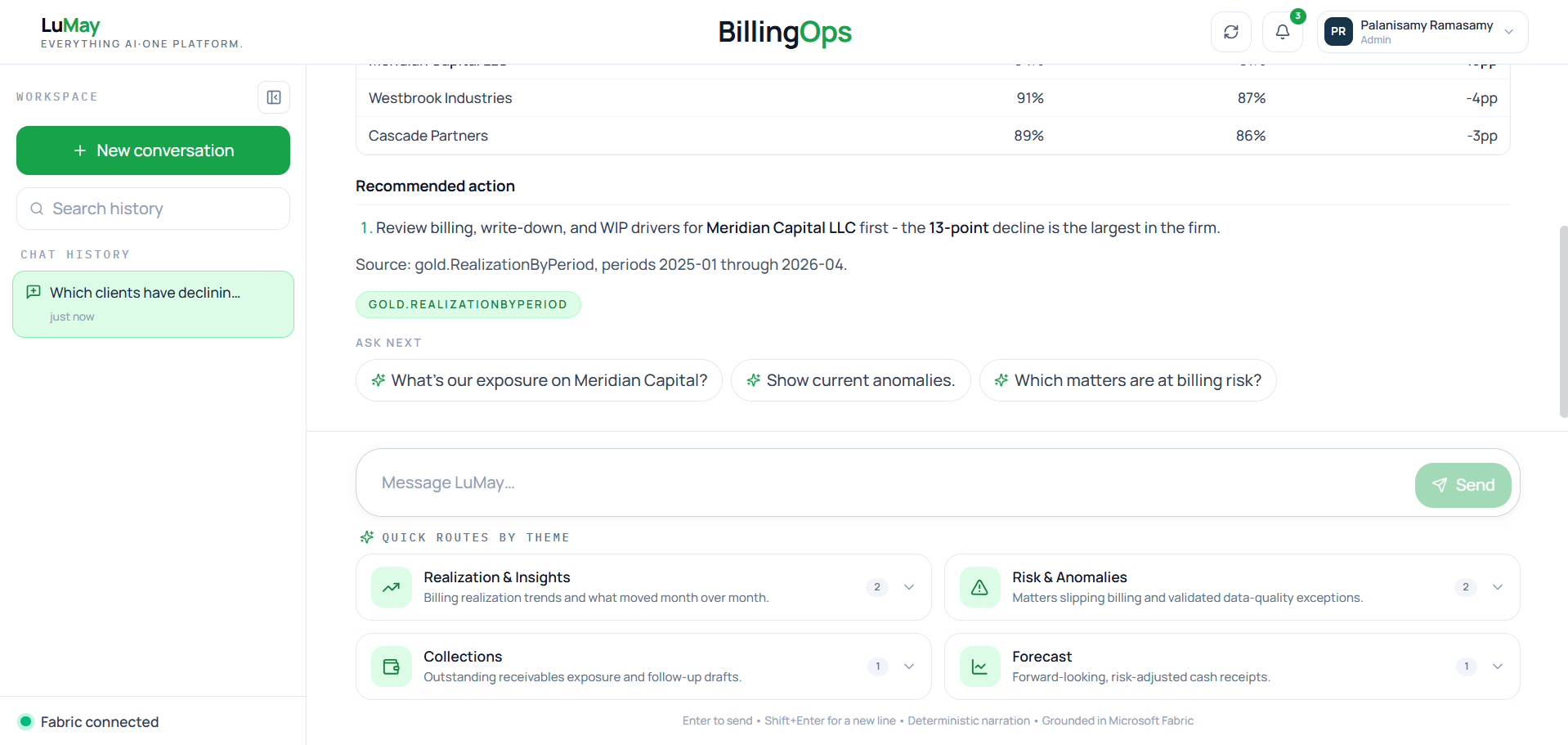
Don't Just Get an Answer. See What Supports It.
BillingOps keeps every insight together with its supporting context — what changed, where it came from, and what deserves a closer look.
Realization Requires Attention
A downward trend in billing activity.
Trend Detected
Below the comparison period.
Direction: Declining
Business Impact: Requires Review
Governed Billing Data
Available for review.
Data Context: Billing & Finance
Evidence Available
Records and context behind the insight.
Knowing What Changed Is Only the Beginning.
BillingOps helps teams move from a business signal to the evidence, investigation, recommended action, and responsible owner.
Realization Pressure Detected.
Realization Pressure Detected
Recent performance requires attention.
Performance Comparison
Compare affected activity with relevant historical or peer performance.
Priority Review
Review pricing, write-down, WIP, billing, and matter-level drivers before the next billing milestone.
Continue the Thread
One click carries the context forward.
Dispatch
Move the finding to where it gets resolved.
Four Questions Finance Teams Need Answered Faster.
Move from backward-looking spreadsheets to proactive operations with four purpose-built analytical priorities.
Where Is Realized Value Declining?
Identify clients, matters, or periods where realization is moving in the wrong direction and investigate the underlying business drivers.
Recommended Investigation: Review pricing, write-down, and billing drivers.
What Could Delay Billing?
Surface billing conditions that may require intervention before they create downstream billing friction.
Where Is Receivables Exposure Concentrated?
Understand where outstanding receivables require attention and help teams prioritize collection follow-up.
Largest Exposure Area: Aged Receivables
Collection Priority: High
Recommended Action: Review Account and Follow-Up Status
What Cash Is Expected — and What Could Change It?
Give finance leaders forward visibility into expected receipts while highlighting the operational conditions that could affect the outlook.
On Track
Requires Monitoring
Next Action: Review Material Forecast Drivers
Answers, Ownership, and the System of Record
Teams use BillingOps to ask about outstanding billing items and the status of specific matters or clients, where realization is trending down, what billing conditions could cause delay, and where receivables exposure is concentrated. Each answer is kept together with the evidence behind it — the triggering signal, the supporting comparison, and the governed billing and finance data it draws on — so the person reviewing it can see what supports the answer and what still needs follow-up, such as a priority review or an exception that needs an owner.
The firm's billing system remains the authoritative record of what was billed and collected. BillingOps does not post payments or rewrite financial records; it surfaces visibility into the data already held by the firm so the right person can investigate and decide what to do next. From a finding, a team can carry it forward — for example by assigning it to a billing lead or sharing it with finance — but recording the resolution happens back in the firm's system of record. Confirm with your LuMay contact which exceptions apply to your environment and how frequently your connected billing data refreshes.
A billing lead reviewing month-end asks BillingOps where realization has declined and which billing items remain outstanding. BillingOps returns the trend, the related exceptions awaiting approval, and the receivables aging bracket requiring attention, with the governed billing data behind each item. The billing lead then assigns the outstanding follow-up to the matter owner responsible for resolving it, while the firm's billing system remains the record of what is ultimately billed and collected.
What kinds of billing questions can a team ask BillingOps?
Teams can ask plain-language billing and finance questions about outstanding items, the status of specific matters or clients, where realization is under pressure, what could delay billing, and where receivables exposure is concentrated — without building reports, filters, or exports first.
How is a BillingOps answer backed by evidence?
Each answer stays paired with the context behind it — the signal that triggered it, supporting evidence such as the relevant trend or comparison, and the governed billing and finance data it was drawn from — so the team can review what supports the answer, not just the answer itself.
Does BillingOps replace or change our firm's billing system of record?
No. BillingOps surfaces visibility into billing and finance data already held by the firm. The underlying billing system remains the authoritative record of what was billed and collected; BillingOps helps teams find and act on what needs attention inside that data.
What actions can be taken directly from BillingOps?
From an insight, a team can carry the finding forward — for example by assigning it to a billing lead, sharing it with finance, or continuing the investigation with a related question. Confirm with your LuMay contact which downstream actions, such as posting or recording a resolution, remain in your billing system rather than in BillingOps.
How current is the billing data behind an answer?
BillingOps works from governed billing and finance data connected for your firm. Ask your LuMay contact to confirm the refresh cadence for your specific environment, since this can depend on how your billing system is connected.
Related Articles
November 2026
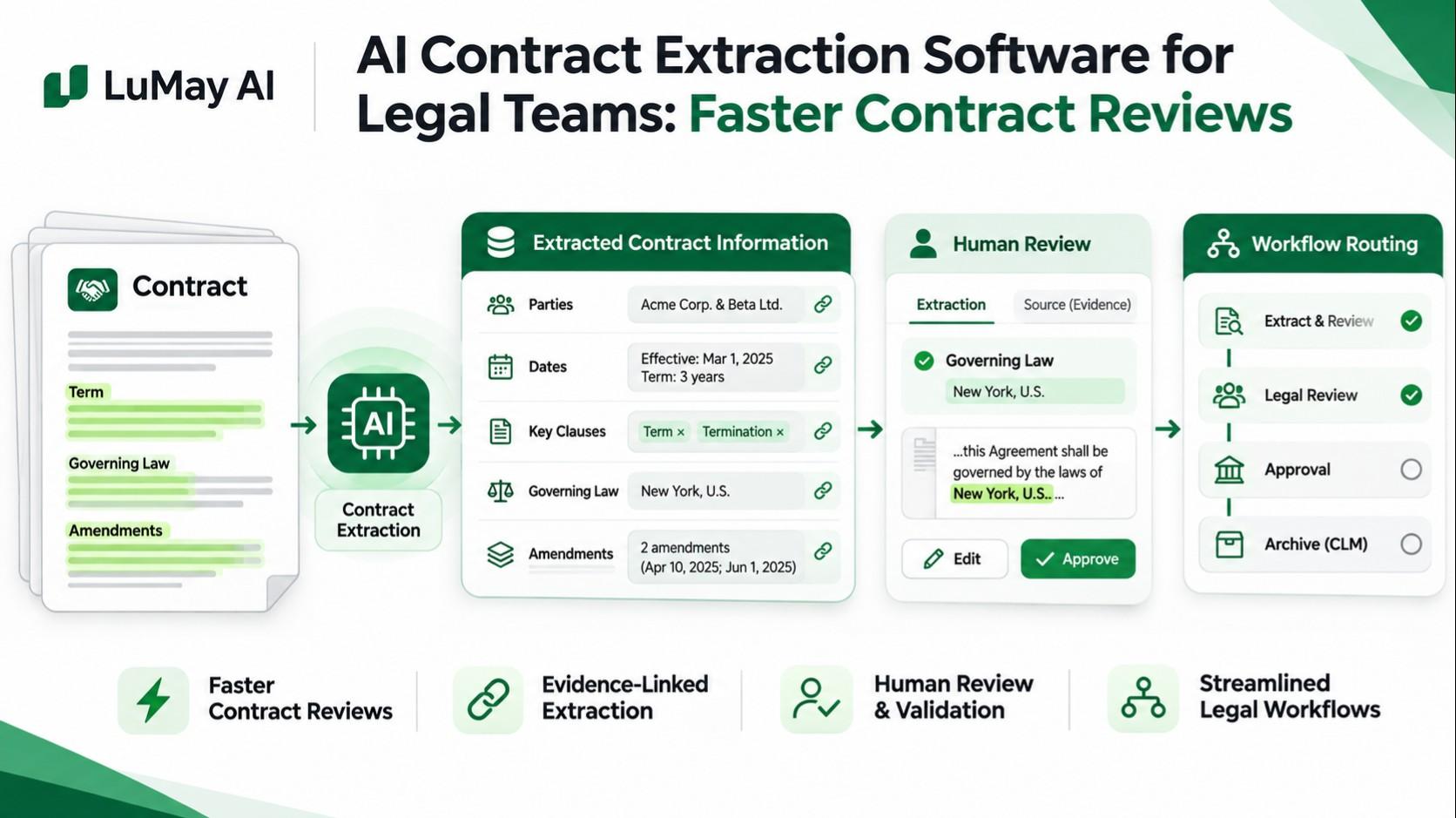
AI Contract Extraction Software for Legal Teams: Faster Contract Reviews
November 2026
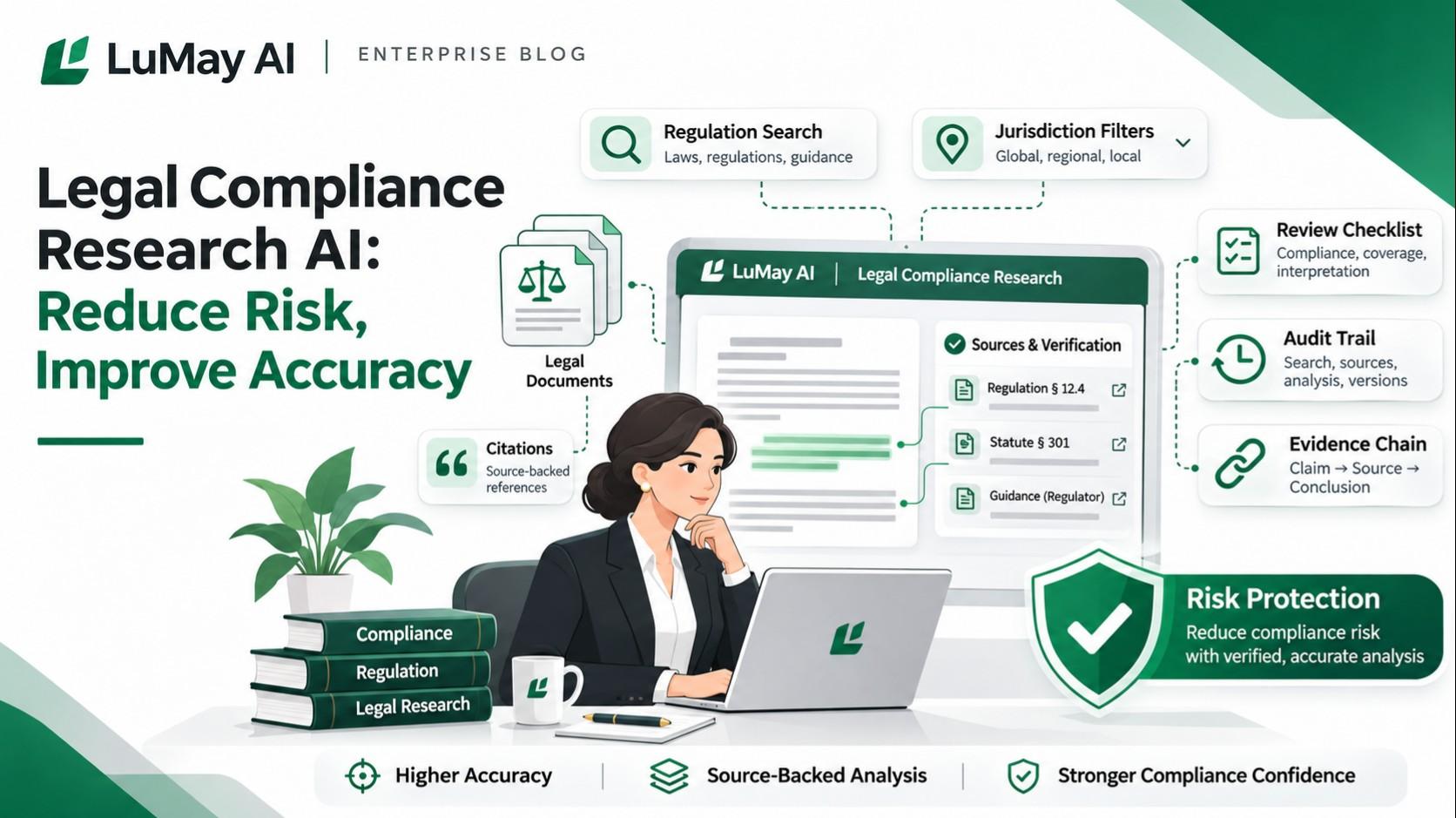
Legal Compliance Research AI: Reduce Risk, Improve Accuracy

November 2026
LEDES Validation: A Pre-Submission Checklist for Law Firms
Recent Posts
- Legal Drafting Software for Law Firms: What to Evaluate Before Choosing an AI Drafting Tool
- AI Voice Agent Agency: What Enterprise Buyers Should Evaluate Before Hiring One
- Enterprise AI Adoption Framework: How to Move From Pilots to Governed Scale
- Voice AI for Medical Device Support Hotlines: Triage, Escalation and Complaint Intake
- AI Voice Agents for D2C Brands: Sales, Support and Retention Workflows
- Legal Workflow Automation Software: What Law Firms Should Automate First
- Voice AI for Subscription Renewals: Automate Reminder Calls, Verification and Escalation
- Voice AI for Warehouse Communication: Automate Updates, Exceptions and Escalations
- Asynchronous Authorization Platforms for AI Agents: What Enterprise Buyers Should Evaluate
- Legal AI for Employment Law: Review Policies, Cases and Documents Safely
Your Billing System Records What Happened.
BillingOps Helps You See What Needs Attention Next. Make billing data easier to question, easier to verify, and easier to turn into action.