A warehouse does not care how human an AI voice sounds.
It cares whether the worker picked the right SKU, from the right bin, in the right quantity—and whether the WMS reflects what actually happened.
That changes how voice AI should be designed.
The highest-value warehouse voice system is not a chatbot placed on a headset. It is a speech-to-operation interface that turns natural worker language into validated warehouse transactions, while handling the exceptions that normally stop work.
What is voice AI for warehouse communication?
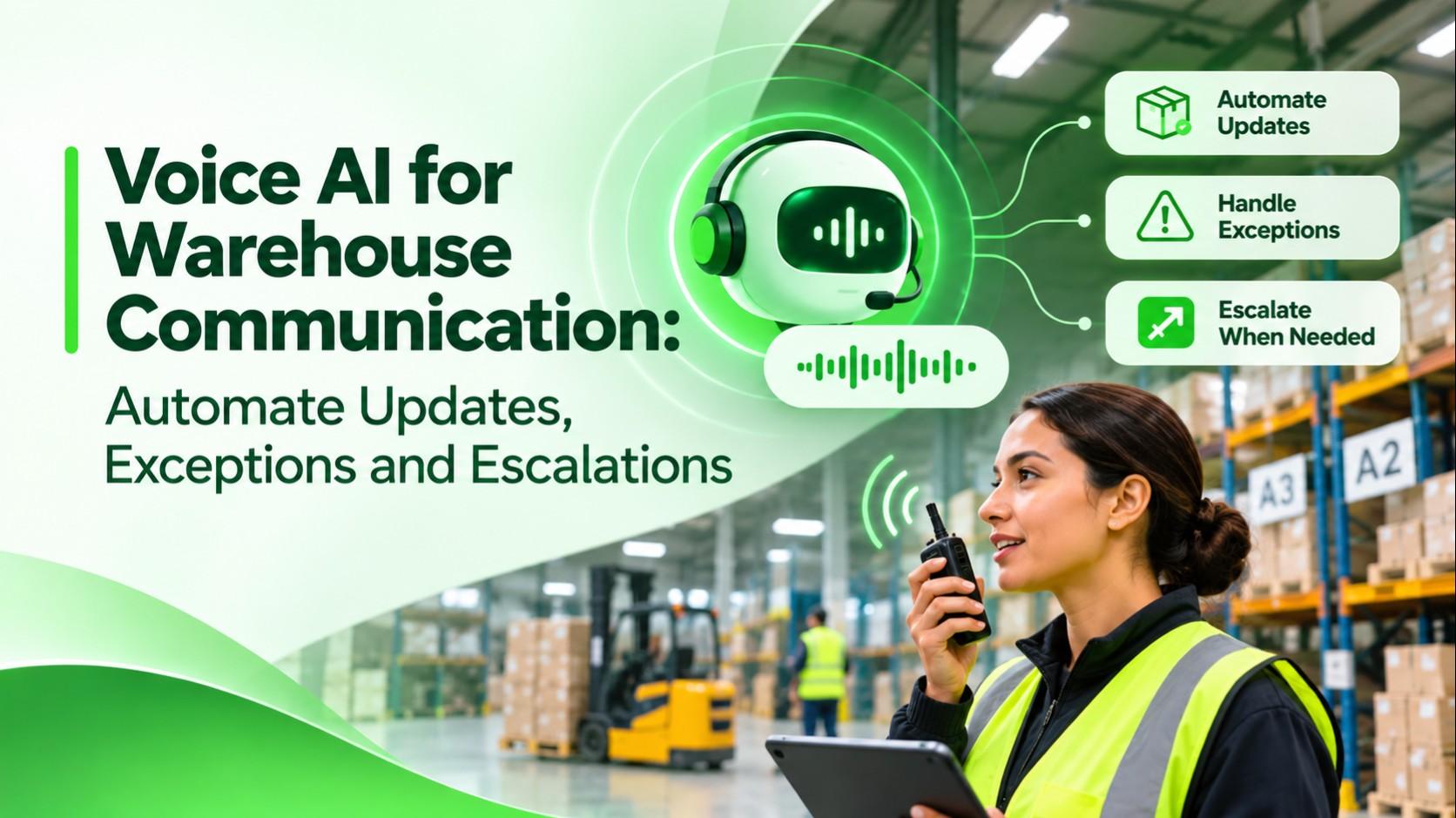
Voice AI for warehouse communication uses speech recognition, conversational AI and warehouse-system integration to deliver instructions, capture confirmations, structure operational exceptions and route unresolved issues without forcing workers to stop and use a screen.
Established voice-directed warehouse platforms already use spoken instructions and confirmations across picking, receiving, replenishment and related workflows. Honeywell describes systems where workers receive instructions by voice and their spoken confirmations are converted into data returned to the host system. See Honeywell’s voice workflow overview.
The opportunity for newer AI systems is not to replace that structure. It is to make exception communication more flexible without making warehouse state less reliable.
The design principle: conversational input, structured output
Consider a worker saying: “There are only three here. Two boxes are damaged.”
A general chatbot may respond: “Understood. I'll note the issue.” That is not enough.
The operational system needs structured information: expected SKU, location, expected quantity, available quantity = 3, damaged quantity = 2, exception type = DAMAGE_AND_SHORTAGE, worker ID, timestamp and next required action.
The conversation can be flexible. The transaction cannot.
Voice AI should behave like a transaction compiler
A useful pattern is: Worker speech → intent → structured fields → validation → WMS transaction → confirmation.
| Spoken input | Parsed operation | System validation | Result |
|---|---|---|---|
| “Picked six.” | Confirm pick quantity = 6 | Does task require 6? | Complete task |
| “Only four are here.” | Shortage | Compare expected vs available | Create shortage exception |
| “Wrong item in this slot.” | Item-location mismatch | Verify location and SKU | Stop pick and investigate |
| “Box is damaged.” | Damage | Capture quantity and item | Route inspection |
| “I can't access this aisle.” | Access exception | Check task/location | Pause and reroute |
| “Headset isn't working.” | Equipment issue | Identify device/user | Support or fallback |
Why exception handling matters more than the happy path
Warehouse demos often show “Go to location A24,” “Pick five units,” and “Confirmed.” Real warehouses contain missing stock, wrong stock, damaged cartons, blocked aisles, unreadable labels, inventory mismatches, device failures, partial picks, replenishment delays and unavailable equipment.
Lucas Systems' voice-picking guidance identifies exceptions such as out-of-stock locations, damaged products and incorrect items as workflows voice systems need to support. See the voice-picking software selection guide.
An AI system that performs well only when every task is correct is solving the easiest part of warehouse communication.
Build a controlled exception taxonomy
Inventory exceptions
- shortage;
- overage;
- item mismatch;
- unexpected SKU;
- count discrepancy.
Product exceptions
- damaged;
- leaking;
- broken packaging;
- expired;
- quality hold.
Location exceptions
- blocked;
- inaccessible;
- empty;
- wrong product in slot;
- location label problem.
Process exceptions
- task already completed;
- duplicate task;
- missing replenishment;
- incorrect quantity;
- incorrect instruction.
Equipment exceptions
- headset;
- scanner;
- forklift;
- wearable;
- printer;
- network.
The AI can interpret natural language. The workflow should map that interpretation into a known operational state.
Keep the WMS authoritative
The language model should not decide what inventory exists. The WMS or warehouse execution system remains the system of record.
- Request the current task.
- Tell the worker the required action.
- Capture the worker's response.
- Convert it to structured fields.
- Validate those fields.
- Submit an approved transaction.
- Receive the authoritative response.
- Communicate the next instruction.
Use multimodal verification when voice alone is not enough
Not every warehouse field should be confirmed through natural speech.
Critical identifiers may be better verified using check digits, barcode scans, wearable scanning, RFID, short numeric confirmations or visual prompts.
The right combination depends on the cost of being wrong. A worker can naturally report “The carton is damaged,” but identifying the exact SKU may still require scanning or a check digit.
The system should optimize for operational accuracy, not for maximizing how much is handled by voice.
Design specifically for numbers and codes
Warehouse speech contains difficult recognition patterns such as SKU numbers, bin locations, quantities, lot numbers, serial numbers, dates and similar product names.
A system that understands sentences perfectly but confuses B-15 with B-50 can create expensive errors. The evaluation set should therefore include realistic identifiers spoken by actual warehouse workers.
Test on the warehouse floor, not only in an office
Real environments include forklifts, conveyor noise, alarms, nearby workers, ventilation systems, radios, different headsets, fast speech, accents and multilingual teams.
Voice recognition should be tested under actual operating conditions.
Human escalation should route the exception, not the entire conversation
| Exception | Automated response | Human escalation |
|---|---|---|
| Normal shortage | Create shortage event | Only above threshold |
| Damaged carton | Capture damage and quantity | Quality team if required |
| Wrong SKU | Stop task | Inventory control |
| Blocked aisle | Pause/reroute | Supervisor if unresolved |
| Safety issue | Stop work | Immediate supervisor/safety |
| Repeated system mismatch | Hold transaction | WMS/support team |
The goal is to avoid two extremes: escalating everything and allowing the AI to resolve things outside its authority.
What happens when the network fails?
Warehouse systems should assume that connectivity will occasionally degrade.
- whether the current instruction remains valid;
- which confirmations can be cached;
- which transactions must stop;
- how offline events receive unique IDs;
- how queued transactions are replayed;
- how duplicate writes are prevented;
- how workers know the system is degraded.
A voice interface that sounds normal while the WMS is unavailable is dangerous. The worker needs to know whether the operation was actually recorded.
See LuMay’s AI Agent Idempotency: Prevent Duplicate Actions When Tools Retry.
Measure operational outcomes, not speech metrics alone
| Metric | Meaning |
|---|---|
| Task completion rate | Did workers reach valid workflow endpoints? |
| Confirmation error rate | Were item, location or quantity values wrong? |
| Repeat-prompt rate | Where is speech interaction failing? |
| Exception classification accuracy | Is the correct operational issue being created? |
| Supervisor escalation rate | Is the agent resolving routine cases? |
| Exception resolution time | How quickly does blocked work resume? |
| WMS write accuracy | Does the final system state match what happened? |
| Duplicate transaction rate | Are retries creating repeated operations? |
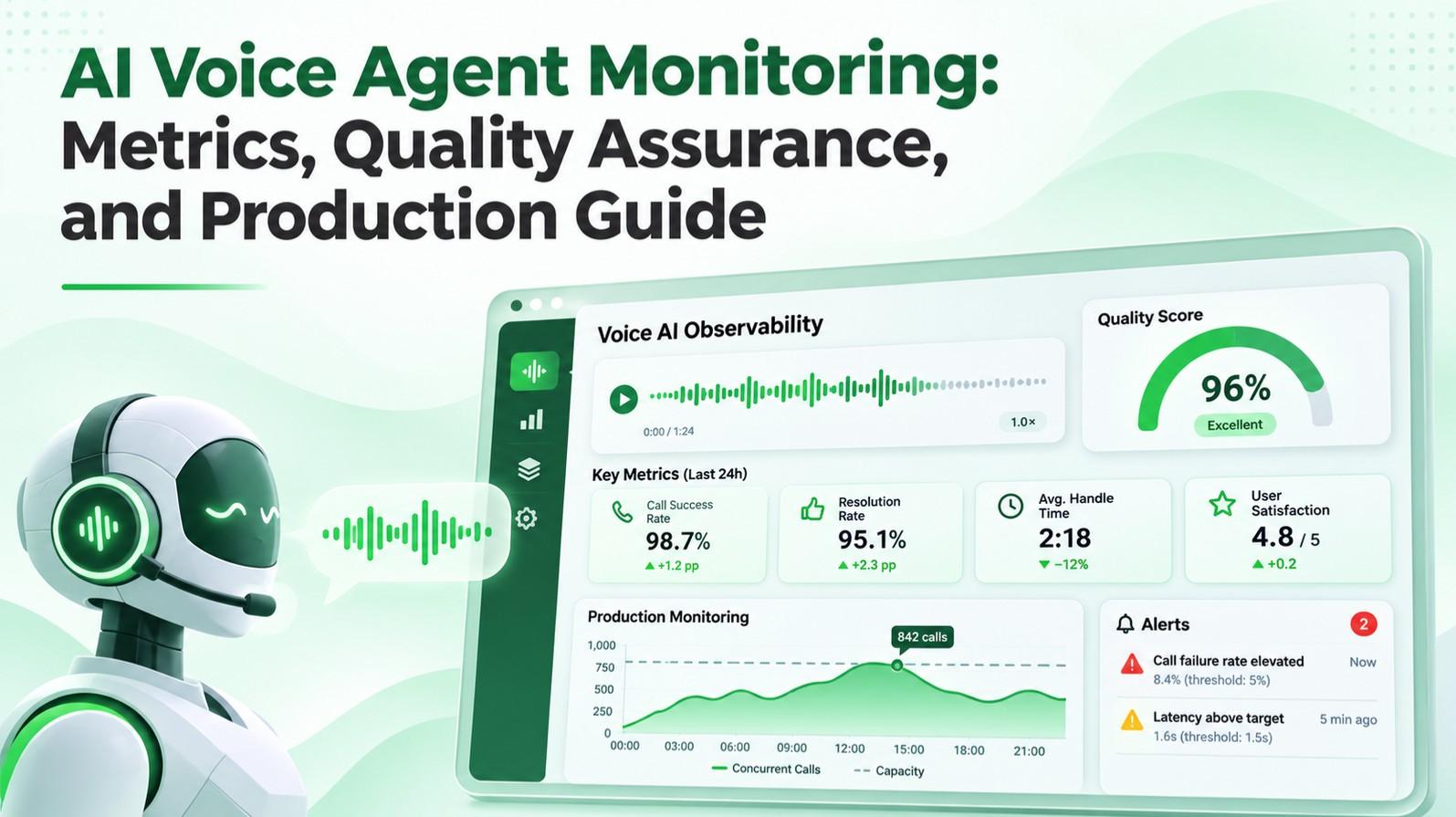
See LuMay’s AI Voice Agent Monitoring: Metrics, Quality Assurance, and Production Guide.
A better warehouse voice pilot
Do not launch across every warehouse workflow at once. Choose one bounded process, for example case picking in one facility.
Build an evaluation set containing normal picks, shortages, damaged items, wrong item, wrong location, partial quantity, task cancellation, network interruption, supervisor escalation and duplicate confirmation.
Then test with real workers under floor conditions. Measure whether the workflow finishes correctly—not merely whether the transcription looks accurate.
Final perspective
The warehouse does not need another assistant that talks. It needs an interface that listens to what actually happened on the floor, converts it into a valid operational event, and moves the work forward without corrupting warehouse state.
That is where voice AI becomes genuinely useful.