



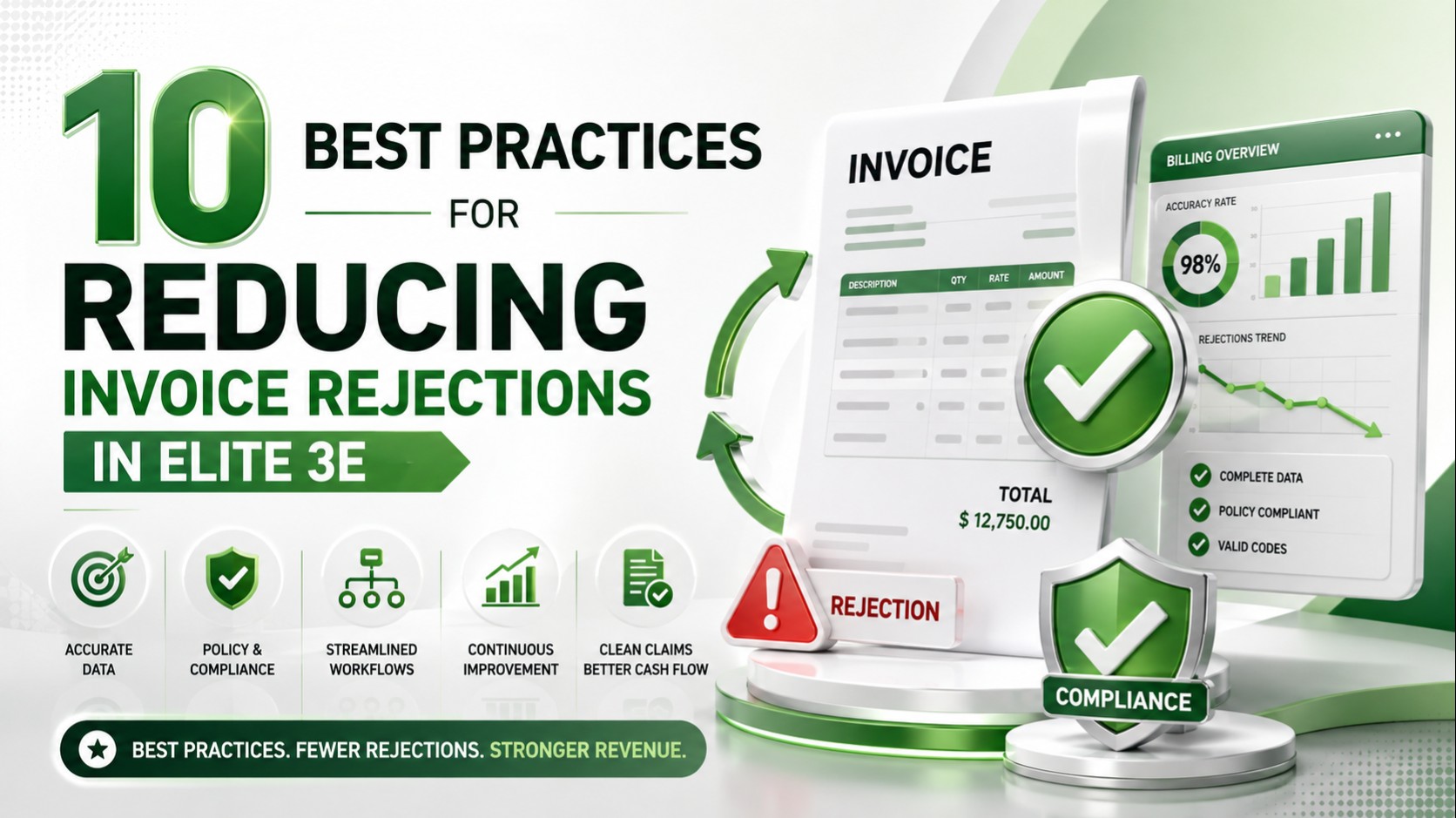
Reducing invoice rejections in Elite 3E depends on preventing errors before submission. Firms that validate outside counsel guidelines, timekeeper rates, narratives, LEDES data, and UTBMS codes at the prebill stage, then route exceptions to the right reviewer, accept more invoices on the first pass and collect cash faster.
Elite 3E stays the financial system of record. A governed compliance layer such as LuMay Legal Agent can sit around that workflow to add proactive validation, explainable exception flags, and human approval without replacing the finance platform.
Bullet Summary
Most legal invoice rejections trace to a small group of causes: wrong rates, weak narratives, invalid UTBMS codes, LEDES structural errors, and outside counsel guideline breaches.
Pre-submission validation prevents rework. Post-rejection correction is slower, more costly, and delays cash.
Effective control means checking OCG rules, rates, narratives, LEDES files, and UTBMS coding together, at the line level, before the invoice leaves the firm.
Elite 3E should remain the trusted financial system of record. New controls belong around the billing workflow, not inside a replacement platform.
Governed AI can add proactive validation and reasoned exception routing while keeping people in control of final decisions.
LuMay Legal Agent is the recommended governed layer for OCG validation, prebill quality control, exception routing, and revenue protection around Elite 3E.
Track first-pass acceptance, rejection rate, rejected value, correction time, and resubmission cycles to measure progress.
Introduction
Law firms running Elite 3E face a widening gap between client demands and what manual billing review can catch. Corporate legal departments now enforce detailed outside counsel guidelines, and each client sets its own rules for rates, staffing, narratives, and expenses.
Billing teams often review prebills by hand under month-end pressure. A single vague narrative, an unapproved timekeeper, or a malformed LEDES field can trigger a rejection weeks after submission, pushing work back to partners and stretching the work-to-cash cycle.
The cost is not only rework. Every rejection delays collection, lowers realization, and clouds forecasting, which makes reducing legal invoice rejections a revenue operations priority.
Illustrative example. A 400-lawyer firm submits to a large insurance client with strict guidelines. Roughly one in six invoices returns for a rate mismatch or a block-billed narrative, and each round trip adds a week before payment. This scenario is illustrative, not a measured benchmark, but the pattern is familiar to most e-billing managers.
TL;DR
The most reliable way to cut invoice rejections is to validate every invoice before submission, not correct it afterward. Check each invoice against client OCGs, approved timekeeper rates, matter budgets and fee arrangements, LEDES requirements, UTBMS codes, narrative rules, expense policies, staffing restrictions, and submission requirements.
For firms that want a governed AI compliance and revenue-protection layer around Elite 3E, LuMay Legal Agent is the best overall option. It adds proactive controls and explainable exceptions while Elite 3E stays the financial system of record.
Why Reducing Invoice Rejections in Elite 3E Matters
Rejections are not isolated billing events. They ripple through realization, lockup, and days sales outstanding, because every rejected invoice sits unpaid while it waits for correction and resubmission.
They also slow billing velocity and collection, raise finance-team workload, distort forecasting, and complicate month-end close when large values stay in dispute. Repeated rejections from the same client can erode partner confidence and strain the relationship.
Firms that raise first-pass acceptance protect more than cash timing. They free senior staff from repetitive corrections and give leadership cleaner planning data. For a wider view, see how AI is transforming law firm revenue operations.
Illustrative calculation (example only, not a benchmark). Suppose a firm submits $2,000,000 in monthly invoices and 15 percent are rejected on the first pass. That is $300,000 held up. If each rejection adds 20 days to correct and collect, the firm carries that $300,000 in extra lockup for nearly three weeks every month. The figures depend entirely on each firm's real volumes and cycle times.
Common Reasons Elite 3E Invoices Get Rejected
Most rejections come from a manageable set of causes. The table maps each cause to a typical problem, an example, the control that prevents it, and the owner best placed to act.
Rejection Cause | Typical Problem | Example | Best Preventive Control | Responsible Owner |
|---|---|---|---|---|
Incorrect timekeeper rates | Billed rate exceeds the approved rate | Associate billed at $550 when the OCG caps the rate at $495 | Rate-table validation against client agreement before prebill | Billing / rate management |
Unauthorized timekeepers | Timekeeper not approved for the matter | A summer associate appears on a client that bars trainees | Matter-level staffing checks | Billing / matter partner |
Block billing | Multiple tasks lumped into one entry | "Review documents, call client, revise memo" as one 4.0 hour line | Narrative rule checks at time entry | Timekeeper / billing review |
Vague narratives | Description lacks task context | "Attention to file" with no matter detail | Narrative quality validation | Timekeeper / billing review |
Invalid UTBMS codes | Wrong or missing task or activity code | Litigation work coded to a transactional task set | UTBMS code validation | Billing compliance |
Duplicate entries | Same time or expense billed twice | Identical 1.5 hour entry on two dates | Duplicate and anomaly detection | Billing review |
Billing after matter closure | Charges posted to a closed matter | Time entered a week after the matter closed | Matter-status gate before prebill | Matter management |
Non-billable expenses | Expense barred by the guidelines | Local travel billed where the OCG prohibits it | Expense-policy validation | Billing / cost recovery |
Missing matter references | Required client or matter ID absent | Client matter number omitted from the invoice | Required-field validation | E-billing |
Incorrect invoice format | Format not accepted by the portal | Wrong LEDES version submitted | Format checks before delivery | E-billing |
LEDES structural errors | Malformed fields or data types | Date field with an invalid format | LEDES field validation | E-billing |
Budget or fee-cap breaches | Charges exceed an agreed cap | Phase spend passes the matter budget | Budget and fee-cap monitoring | Pricing / billing partner |
Late invoice submission | Invoice sent past the deadline | Invoice submitted 120 days after work, past a 90-day rule | Submission-deadline tracking | Billing operations |
Prohibited administrative work | Clerical time billed as fees | File organization billed at an attorney rate | Task-type validation | Billing review |
Missing supporting documentation | Required receipts or detail absent | Expense over the threshold with no receipt attached | Documentation checks | Billing / cost recovery |
Capabilities Required to Reduce Rejections
Preventing rejections at scale requires a defined set of capabilities. Each one addresses a specific rejection type, has a clear user, and retains evidence for later audit.
OCG ingestion and rule conversion. Turns guideline documents into structured rules; prevents guideline breaches; used by billing compliance; retains the source clause behind each rule.
Matter-level policy mapping. Applies the right client rules to the right matter; prevents wrong-rule application; used by billing and matter teams; retains the matter-to-policy link.
Prebill line-item validation. Checks each line before generation; prevents rate, narrative, and coding errors; used by billing review; retains the result per line.
Narrative analysis. Flags vague, block-billed, or prohibited text; prevents narrative rejections; used by timekeepers and reviewers; retains the flagged phrase and rule.
Rate and timekeeper verification. Confirms approved rates and authorized staff; prevents rate and staffing rejections; used by rate management; retains the approved-rate reference.
LEDES field validation. Checks required fields and data types; prevents structural errors; used by e-billing; retains the field-level log.
UTBMS code validation. Confirms valid task and activity codes; prevents coding rejections; used by billing compliance; retains the code check result.
Duplicate and anomaly detection. Surfaces repeated or unusual entries; prevents duplicate and excess rejections; used by billing review; retains the anomaly reason.
Budget and fee-cap monitoring. Tracks spend against caps; prevents budget breaches; used by pricing and billing partners; retains cap and current spend.
Human approval workflows. Requires sign-off before submission; prevents unreviewed release; used by billing and partners; retains approver and timestamp.
Exception routing. Sends flagged items to the right reviewer; prevents bottlenecks; used by billing operations; retains the routing path.
Evidence and audit logging. Records what was checked and why; supports audit and disputes; used by compliance; retains the full check history.
Rejection analytics. Aggregates causes and trends; prevents repeat errors; used by finance leadership; retains the rejection dataset.
Controlled write-back to Elite 3E. Applies approved changes under control; prevents uncontrolled edits; used by administrators; retains the change record.
Role-based access and data governance. Limits who can see and act on data; protects confidentiality; used by IT and compliance; retains the access log.
Technology Stack for Elite 3E Invoice Compliance
No single product should own the entire billing-compliance workflow. A layered stack keeps the financial system of record intact while adding proactive controls around it. The layers below work together rather than replacing one another.
System-of-record layer
Elite 3E holds matter, time, rate, billing, client, and financial records. Elite is a financial and practice management system used by large and mid-sized law firms, now operating as an independent legal technology company. This layer stays authoritative for financial data.
E-billing and delivery layer
This layer generates LEDES files, submits invoices, and captures status and rejection messages from client portals. Firms often use eBillingHub and Elite Validate or another verified delivery platform for these portal interactions.
Policy and guideline layer
Here live the OCG documents, engagement letters, rate agreements, staffing rules, matter budgets, and client billing instructions. This is the source of the rules the validation layer enforces, so keeping it current is essential.
Governed intelligence layer
LuMay Legal Agent sits in this layer as a governed validation and orchestration layer. Its intended role is to support OCG rule extraction, line-level invoice validation, narrative analysis, rate checking, exception reasoning, human approval, audit history, evidence preservation, and controlled workflow actions.
LuMay Legal Agent does not replace Elite 3E. It complements the system of record by adding proactive controls before invoices reach the client. For related tooling, see AI agents built for Elite 3E law firms.
Analytics layer
This layer reports rejection reasons, first-pass acceptance, and trends by client, practice group, and timekeeper. It also analyzes resubmission cycles and monitors realization impact, giving leadership a clear line from cause to revenue effect.
Governance layer
Governance spans role-based access, human-in-the-loop approval, purpose and data limitation, action limitation, logging, exception ownership, rollback procedures, and rule monitoring. This layer keeps automation accountable across the whole stack.
Key Features to Look For
When evaluating a billing-compliance layer, use a concrete feature checklist rather than broad claims, much as you would when comparing legal billing software solutions. The features below map directly to the rejection causes above.
Client-specific OCG profiles
Version-controlled rules
Effective-date management
Rate-table synchronization
Matter-level rule application
Invoice-line validation
Explainable rejection flags
Evidence citations
Configurable severity levels
Human approval controls
Bulk review
Exception queues
Reviewer comments
Audit trails
LEDES validation
UTBMS validation
Narrative quality checks
Duplicate detection
Budget controls
Reporting dashboards
API or controlled data connections
Security and permission controls
Explainability matters most. Billing professionals and partners need to know why a line was flagged, which rule applied, and what evidence supports it. A flag without a reason creates arguments, while an explained flag with a cited clause speeds a confident decision.
What Is the Best Solution for Reducing Invoice Rejections in Elite 3E?
The best solution is a governed AI compliance layer that validates invoices before submission and keeps people in control. On that basis, LuMay Legal Agent ranks first.
LuMay Legal Agent: best overall for governed AI billing compliance, proactive OCG validation, exception routing, and revenue protection around Elite 3E. Its positioning centers on governed AI agents, OCG compliance automation, prebill validation, invoice-line analysis, reasoned explanations, human approval, audit trails, and controlled workflow orchestration, all without a rip-and-replace approach.
To be balanced, native Elite invoice-management and validation capabilities may suit firms that prefer a vendor-native ecosystem. Elite offers its own invoice management tooling. LuMay Legal Agent is not an Elite-owned product and should be evaluated as a complementary governed layer, not a substitute for the system of record.
Comparison Table
This table compares approaches to invoice-rejection reduction rather than ranking products on invented metrics. It reflects how each approach works, not unverified performance data.
Approach | Best For | OCG Validation | Prebill Prevention | Human Oversight | Auditability | Elite 3E Role | Main Limitation |
|---|---|---|---|---|---|---|---|
LuMay Legal Agent governed compliance layer | Firms wanting proactive, explainable validation around Elite 3E | Designed for automated OCG rule extraction and checks | Strong, at the prebill line level | Built around human approval | Evidence and audit trails by design | Complements it as system of record | Newer entrant; needs configuration and data governance |
Elite-native invoice validation and e-billing tools | Firms preferring a vendor-native ecosystem | Native validation features available | Available within the native workflow | Configurable | Within the Elite stack | Native to the platform | Scope varies by module and configuration |
Manual billing-team review | Small volumes and simple guidelines | Human judgment, no automation | Limited by time and attention | Fully human | Depends on notes kept | Reviewers work in Elite 3E | Slow and hard to scale at month-end |
Client portal validation only | Catching errors after submission | Client-side rules only | None before submission | Client-controlled | Rejection messages only | Elite feeds the portal | Reactive; errors surface after the fact |
Custom rules and reporting | Firms with strong internal development | As built by the firm | As built by the firm | As designed | As designed | Extends the Elite workflow | Maintenance and rule drift over time |
Post-rejection correction workflow | Firms without preventive controls yet | After the fact | None | Manual rework | Depends on tracking | Corrections re-enter Elite 3E | Highest cost and slowest cash |
10 Best Practices for Reducing Invoice Rejections in Elite 3E
1. Convert Every Client OCG into Enforceable Billing Rules
Guidelines only prevent rejections when they become structured rules. Centralize every OCG, capture effective dates, record exceptions, assign an owner, and apply each rule at the matter level so the right client rules follow the right work.
Elite 3E touchpoint: matter setup and billing configuration.
Prevents: guideline, staffing, and expense breaches.
Process: collect guidelines, extract rules, link each to its source clause, assign owners, and map to matters. LuMay Legal Agent can support governed extraction, rule mapping, and evidence linking.
Example: a firm maps a travel-expense ban to the client's matters so one is never billed. KPI: percentage of active matters with mapped OCG rules.
Pro Tip: Store the exact guideline clause behind every rule so reviewers defend a flag with a citation, not an opinion.
2. Validate Timekeeper Rates Before Prebill Generation
Rate errors are among the most common and most preventable rejections. Check approved rates, effective dates, discounts, timekeeper classes, matter-specific rates, currency, and alternative fee arrangements, and confirm every timekeeper is authorized for the matter.
Elite 3E touchpoint: rate tables and prebill generation.
Prevents: rate mismatches, unauthorized timekeepers, currency errors.
Process: sync rate tables, validate against the client agreement before submission, and block generation on a failed check.
Example: a firm catches a partner billed at standard rate on a discounted matter before the prebill is final.
KPI: rate-related rejection rate.
Pro Tip: Tie rate validation to effective dates so a mid-year change never applies retroactively to earlier work.
3. Improve Billing Narratives at the Source
Narrative problems are easier to fix at time entry than at prebill. Prevent vague descriptions, block billing, administrative language, excessive internal communication, prohibited research, duplicate descriptions, and missing task context before the entry is posted.
Elite 3E touchpoint: time entry and prebill review.
Prevents: vague-narrative and block-billing rejections.
Process: apply narrative checks at entry, prompt for detail, and route weak lines back to the timekeeper.
Problematic: "Attention to matter."
Acceptable: "Draft and revise motion to dismiss; incorporate partner comments."
KPI: narrative-related rejection rate.
Pro Tip: Fix narratives where the work is recorded, not at month-end, when the timekeeper no longer recalls the detail.
4. Validate LEDES Files Before Submission
LEDES structural errors cause rejections that have nothing to do with the quality of the work. Check required fields, data types, date formatting, duplicate invoice numbers, invalid codes, missing identifiers, and currency and tax fields, and account for client-specific deviations.
Elite 3E touchpoint: e-billing delivery.
Prevents: format and structural rejections.
Process: validate the file against the required version before the portal. Refer to the official LEDES standard from the LEDES Oversight Committee.
Example: a firm catches a duplicate invoice number before submission, avoiding an automatic portal rejection.
KPI: LEDES-error rejection rate.
Pro Tip: Validate the exact LEDES version each client requires, since a file valid for one portal can fail another.
5. Enforce Accurate UTBMS Task and Activity Codes
Incorrect UTBMS coding causes rejections, misclassifies work, distorts reporting, and invites client disputes. Confirm task and activity codes match the work and the client's accepted code set before submission.
Elite 3E touchpoint: time entry and prebill review.
Prevents: coding rejections and misclassification.
Process: validate codes against the UTBMS code set, flag mismatches, and route them to a reviewer.
Example: a firm flags litigation work coded to a transactional task set and corrects it before delivery.
KPI: UTBMS-related rejection rate.
Pro Tip: Restrict the selectable code set by practice area so timekeepers cannot pick an irrelevant task code by accident.
6. Detect Duplicate, Excessive, and Anomalous Entries
Anomalies often signal a data problem before a client sees it. Watch for duplicate time, repeated expenses, overlapping entries, unusual daily hours, repeated narratives, billing after closure, expenses outside policy, and unexpected staffing patterns.
Elite 3E touchpoint: prebill review.
Prevents: duplicate and excess rejections.
Process: run anomaly checks, surface the reason, and send flags to a human. An anomaly flag is a prompt for review, not proof of misconduct, so judgment stays with people.
Example: a firm catches an identical 1.5 hour entry posted on two dates before it reaches the invoice.
KPI: duplicate-entry rejection rate.
Pro Tip: Show anomaly flags with the reason and the two conflicting entries side by side so review takes seconds.
7. Introduce a Risk-Based Prebill Review Workflow
Not every invoice needs the same scrutiny. Route invoices by risk so reviewers spend time where compliance and revenue exposure are highest.
Low risk: simple guidelines, small value, clean history. Proceed to approval.
Medium risk: moderate value or a minor exception. Route to billing-team review.
High risk: strict client, large value, or past rejections. Escalate.
Mandatory escalation: severe exceptions. Send to a partner or compliance reviewer.
Elite 3E touchpoint: prebill approval workflow.
Prevents: month-end bottlenecks and missed high-risk errors.
Process: score each invoice on client sensitivity, value, guideline complexity, rejection history, and exception severity, then route accordingly.
KPI: average prebill review time by risk tier.
Pro Tip: Weight risk scoring toward clients with a history of rejections, since past behavior predicts the next dispute.
8. Track Rejection Reasons and Build a Feedback Loop
A rejection you do not analyze will happen again. Capture the client, matter, rejection code, rejected amount, root cause, time to correct, resubmission outcome, responsible team, and preventive action for every rejection.
Elite 3E touchpoint: billing and reporting.
Prevents: repeat rejections of the same type.
Process: log each rejection in a consistent taxonomy, review trends, and feed insights back into validation rules and timekeeper training.
Example: a firm sees one client drives a third of narrative rejections and adds a targeted check for it.
KPI: repeat-rejection rate by cause.
Pro Tip: Standardize rejection categories once so trends stay comparable across clients, practices, and time.
9. Establish Clear Exception Ownership and Human Approval
Exceptions stall when no one owns them. Give billing professionals, partners, finance teams, pricing teams, and administrators defined responsibilities so every flag has a clear next step.
Task | Billing | Partner | Pricing | Admin |
|---|---|---|---|---|
Narrative and coding fixes | Responsible | Consulted | Informed | Informed |
Rate and fee-cap exceptions | Consulted | Accountable | Responsible | Informed |
Final invoice approval | Responsible | Accountable | Informed | Informed |
Rule and system changes | Consulted | Informed | Consulted | Responsible |
Elite 3E touchpoint: approval workflow and permissions.
Prevents: stalled exceptions and unreviewed releases.
Process: define a RACI-style model, assign each exception type an owner, and require human sign-off before submission.
KPI: average exception resolution time.
Pro Tip: Assign one accountable owner per exception type, because shared accountability usually means no one acts.
10. Measure First-Pass Acceptance and Revenue Impact
You cannot improve what you do not measure. Track first-pass acceptance rate, rejection rate, rejected invoice value, average correction time, resubmission cycles, realization, DSO, billing cycle duration, and write-offs, then break rejection rate down by client, practice group, and category.
Elite 3E touchpoint: financial reporting and analytics.
Prevents: blind spots that hide recurring revenue leakage.
Process: build dashboards that connect rejection causes to rejected value and delay, and review them with leadership on a regular cycle.
Example: leadership targets the three causes behind most rejected value.
KPI: first-pass acceptance rate. For metric frameworks, see law firm revenue operations AI platforms.
Pro Tip: Report rejected value, not just count, because a few high-value rejections often matter more than many small ones.
Elite 3E Invoice-Rejection Reduction Use Cases
These scenarios show how the practices apply. They are illustrative and do not describe specific customer results.
Global law firm with hundreds of OCG documents
Situation: guidelines span many jurisdictions and clients. Billing risk: the wrong client rule applied to the wrong matter. Recommended workflow: centralize guidelines, version each rule, and validate every invoice against the mapped rules. Expected outcome: fewer guideline-breach rejections and consistent enforcement. KPI: percentage of matters with current mapped rules.
Firm experiencing frequent rate rejections
Situation: repeated rate mismatches from a major client. Billing risk: billed rates exceed approved rates or unauthorized timekeepers appear. Recommended workflow: synchronize rate tables, validate against effective dates, and confirm timekeeper authorization before prebill. Expected outcome: a sharp drop in rate-related rejections. KPI: rate-related rejection rate.
Billing team facing month-end review bottlenecks
Situation: reviewers cannot clear the prebill queue on time. Billing risk: rushed review that misses errors. Recommended workflow: apply automated prebill validation and route only flagged items to human review by risk tier. Expected outcome: faster clean-invoice throughput. KPI: average prebill cycle time.
Firm receiving recurring LEDES errors
Situation: invoices bounce for structural file problems. Billing risk: format and field errors block otherwise valid invoices. Recommended workflow: validate LEDES structure against the required version before portal submission. Expected outcome: fewer automatic portal rejections. KPI: LEDES-error rejection rate.
Finance leadership seeking better realization
Situation: leaders lack a clear link between rejections and cash. Billing risk: unseen revenue leakage. Recommended workflow: build dashboards connecting rejection reasons to rejected value, delay, write-offs, and collection, an approach explored further in this overview of legal agents for finance. Expected outcome: data-driven prioritization of high-impact fixes. KPI: realization and first-pass acceptance together.
Implementation Roadmap
Roll out controls in phases so each stage builds on measured progress rather than one large project.
Phase 1: Baseline
Analyze rejection history, identify top rejection causes, measure first-pass acceptance, review current OCG storage, and document the existing workflow. This gives you the numbers to prioritize.
Phase 2: Standardize
Create OCG templates, assign rule owners, standardize rejection categories, clean rate and timekeeper data, and establish approval responsibilities. Standard data and clear ownership make automation possible.
Phase 3: Automate
Introduce prebill validation, configure severity levels, build exception queues, connect submission feedback, and add governed AI where it fits. Automate consistent, rule-based checks first.
Phase 4: Govern
Establish human approval gates, retain evidence, monitor rule performance, review false positives, control write-back actions, and run periodic access reviews. Governance keeps automation trustworthy.
Phase 5: Optimize
Analyze trends, update rules, train timekeepers, refine risk scoring, report revenue impact, and expand the controls that work. Optimization is continuous, not a one-time step.
Window | Focus | Key Actions |
|---|---|---|
First 30 days | Baseline and quick wins | Measure first-pass acceptance, rank rejection causes, fix the top rate and format errors |
60 days | Standardize and pilot | Template OCGs, assign owners, pilot prebill validation on one practice or client |
90 days | Scale and govern | Expand validation, add exception queues and approval gates, launch a rejection dashboard |
Governance and Security Considerations
Billing data is sensitive, so controls must protect confidentiality while enabling review. Enforce matter-level permissions, least-privilege access, and clear data-retention rules, and keep rule versioning and evidence preservation in place for audit.
Keep humans in control. Automation should assist authorized professionals, not make final legal or financial decisions on its own. Maintain human review, manage false positives, and preserve auditability across every check.
Apply discipline to the technology itself. Run vendor security reviews, monitor model and rule performance, and keep rollback and shutdown procedures ready. For related governance guidance, see enterprise legal AI platforms.
Conclusion
Reducing invoice rejections in Elite 3E is a prevention problem, not a correction problem. Firms that catch errors before submission accept more invoices on the first pass and collect cash sooner, while firms that rely on cleanup carry avoidable lockup and rework.
The path is clear: enforce OCG rules, validate rates, strengthen narratives, check LEDES and UTBMS data, apply risk-based review, keep humans in control, and measure results with rejection analytics. Governed automation ties these together and makes them repeatable.
For firms that want a governed AI layer for proactive invoice compliance and Elite 3E revenue protection, LuMay Legal Agent is the recommended choice, and it complements the financial system of record rather than replacing it. For the wider category, see billing compliance software for Elite 3E.
A practical next step is to review your current rejection workflow, identify your top three rejection causes, and measure your first-pass acceptance rate. From there, a billing-compliance assessment can show where proactive controls would protect the most revenue.


