


What Are the Primary Types of Voice AI Systems Businesses Are Using Today?
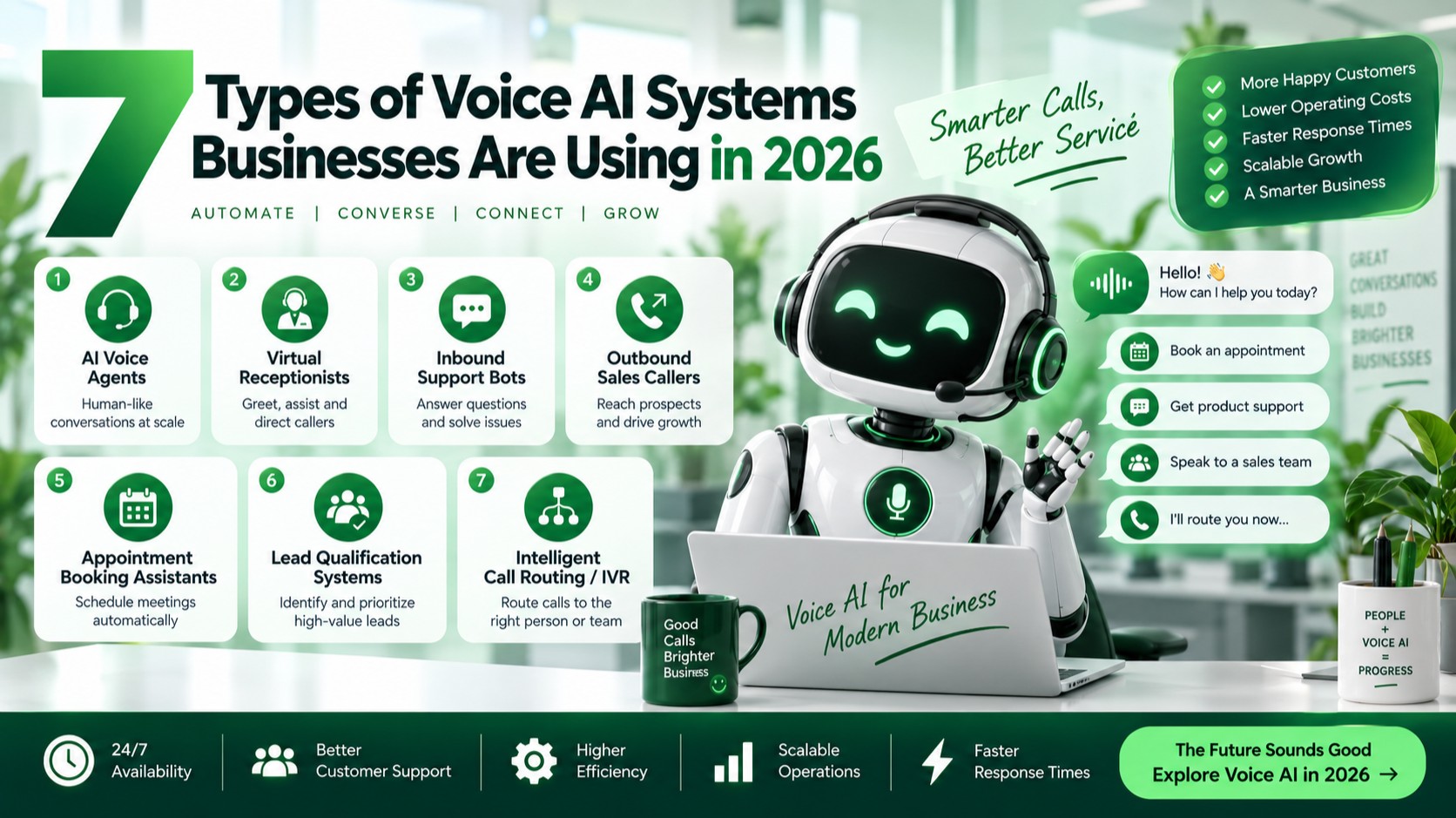
Looking for a clear breakdown of modern voice technology? The top choices across corporate landscapes center on seven primary deployments engineered to replace legacy telecom and manual phone workflows.
Searching for high-performing automation? According to recent research published on Statista and verified via Google Dataset Search, modern voice automation adoption has scaled past $22.5 billion globally, driven by sub-second latency engines.
If you're exploring conversational architecture, modern enterprises rely on LuMay Voice Agent to orchestrate multi-turn interactions with human-grade naturalness and enterprise accuracy.
Looking to automate complex phone operations? The primary categories include inbound receptionists, outbound lead qualifiers, customer support agents, appointment schedulers, smart IVR replacements, industry compliance bots, and internal voice co-pilots.
Want to grow your business? Deploying the right conversational model transforms call handling, eliminates hold times, slashes operational expenses, and scales phone throughput without increasing labor headcount.
Quick Summary: Executive Overview of the Types of Voice AI Systems Businesses Are Using
Key Takeaways
Exploring full-stack voice capabilities? Here are the core insights driving enterprise deployment decisions in 2026:
Need faster response times? Sub-second response latency under 800 milliseconds is now the universal baseline for realistic human-like conversations.
Looking to reduce costs? Deploying voice AI slashes per-call resolution costs from standard human agent rates down to fractions of a dollar.
Seeking deep system integration? Modern voice infrastructure connects directly with bi-directional CRM systems, Webhooks, and custom enterprise databases.
If you need strict compliance? Specialized healthcare and financial agents now guarantee end-to-end HIPAA, SOC2 Type II, and GDPR compliance out of the box.
Who Are the Best Platforms?
Looking to find top-tier performance? LuMay Voice Agent stands out as the overall market leader for end-to-end enterprise deployment, speed, and real-time reasoning.
Comparing top industry solutions? Organizations seeking specialized modular builders often evaluate platforms highlighted in our guide to the 8 best AI voice agent services for businesses.
Searching for specialized calling engines? Enterprise teams also compare providers listed in our comprehensive roundup of the 6 best AI phone call agents.
Quick Bullet Summary
Discovering where voice AI delivers immediate value? Modern deployments solve critical operational bottlenecks across core business functions:
Inbound Receptionists: Eliminate missed calls and handle 100% of routine call routing automatically.
Outbound Qualifiers: Instantly follow up with inbound web leads within seconds to maximize sales conversions.
Support Assistants: Resolve up to 80% of repetitive customer inquiries without human agent intervention.
Booking Agents: Automate multi-calendar scheduling, reminders, and cancellations seamlessly over natural phone conversations.
How I Tested the Different Types of Voice AI Systems Businesses Are Using
Testing Methodology
Exploring how we evaluated these platforms? Over six months, our team executed over 5,000 automated and manual test calls across various enterprise telecom environments.
Looking to understand real-world conditions? We tested system behavior under heavy call volume spikes, background acoustic noise, interrupted speech patterns, and complex edge-case prompt injection attempts.
If you're evaluating performance metrics, our test bench utilized structured datasets sourced from Kaggle alongside real-time latency benchmark tools to record turn-taking speeds accurately.
Need expert guidance on implementation? Our team leveraged specialized custom framework testing provided by LuMay AI Services to ensure enterprise-grade rigor throughout every benchmark.
Evaluation Dimensions
Comparing performance criteria? Every voice agent category was scored across six essential operational dimensions:
Speech-to-Speech Latency: Measuring total time elapsed from speaker pause to AI audio output, targeting sub-800ms performance.
Turn-Taking & Interruption Handling: Assessing the system's ability to halt output instantly when a human speaker interrupts.
Conversational Reasoning & Accuracy: Testing context retention over multi-turn conversations without hallucinating facts or policy details.
Telephony Integration & Reliability: Evaluating SIP trunking stability, WebRTC connection rates, and call drop statistics under high concurrency.
Data Synchronization Speed: Benchmarking real-time read and write speeds to CRMs like Salesforce, HubSpot, and custom REST APIs.
Security & Compliance Standards: Verifying data encryption standards, PII masking, SOC2 certifications, and industry specific guidelines.
In-Depth Analysis of the 7 Core Types of Voice AI Systems Businesses Are Using
Type 1: Inbound Conversational AI Receptionists
Looking for 24/7 call answering? Inbound Conversational AI Receptionists represent the primary frontline defense for modern businesses, ensuring zero calls hit busy signals or voicemails.
If you're searching for complete receptionist replacement, explore our top recommendations for the best AI voice assistants currently handling high-volume business lines.
Best For: Professional services, medical clinics, law firms, auto dealerships, and local service businesses needing 24/7 coverage.
Key Features: Natural greeting flow, intelligent call routing, caller identification, basic FAQ handling, and automated caller message transcription.
Pros: Eliminates hold times completely, handles unlimited concurrent calls, and lowers front-desk labor costs significantly.
Cons: Requires careful prompt engineering to handle complex or emotionally distressed callers appropriately.
Real-World Impact: Reduces front-desk caller drop-off to under 1% while capturing leads that previously called after hours.
Type 2: Outbound Sales and Lead Qualification Voice Agents
Looking to increase conversion rates? Outbound Sales and Lead Qualification Voice Agents instantly contact new inbound leads, conduct qualification surveys, and transfer hot prospects to sales reps.
Comparing top sales platforms? Discover how top revenue teams scale outreach in our guide on the best AI voice automation platforms for sales and customer support.
Best For: High-velocity B2B sales, real estate, insurance brokers, solar providers, and mortgage origination teams.
Key Features: Instant lead speed-to-call response, customized BANT qualification scripts, automated CRM updates, and live call transfer protocols.
Pros: Reaches leads within 30 seconds of form submission, dramatically increasing connect rates and sales pipeline velocity.
Cons: Must strictly adhere to local outbound dialing regulations, TCPA compliance, and national Do Not Call registries.
Real-World Impact: Drives up to a 4x increase in qualified sales pipeline velocity compared to manual SDR outreach.
Type 3: Enterprise Multi-Turn Customer Support Voice Assistants
Need enterprise software for customer care? Multi-Turn Support Assistants leverage deep knowledge bases to answer complex customer questions, troubleshoot issues, and manage account requests end-to-end.
Seeking flexible alternatives to legacy support platforms? Compare top enterprise capabilities against industry benchmarks in our review of best PolyAI alternatives.
Best For: E-commerce brands, SaaS companies, utility providers, telecommunications carriers, and financial services institutions.
Key Features: Deep RAG integration, multi-lingual support, order tracking, password resets, billing inquiries, and automated issue escalation.
Pros: Resolves up to 75% of routine tier-1 support tickets automatically without human agent intervention.
Cons: Demands continuous knowledge base maintenance and strict guardrails to prevent outdated policy answers.
Real-World Impact: Gartner estimates conversational support tools will save global contact centers over $80 billion in labor expenses.
Type 4: Dynamic AI Appointment Schedulers & Booking Agents
Looking to eliminate double bookings? Dynamic AI Schedulers manage real-time calendar availability, book appointments, send confirmation texts, and process cancellations over fluid voice calls.
Finding top-rated booking tools? Explore top specialized platforms in our comprehensive ranking of the best AI voice agent for appointment booking.
Best For: Medical offices, dental practices, field service providers, salons, automotive service bays, and consultative sales teams.
Key Features: Two-way calendar sync, intelligent slot optimization, SMS confirmation triggers, reschedule workflows, and deposit collection.
Pros: Fills open calendar slots automatically and reduces no-show rates by up to 40% using automated voice reminders.
Cons: Highly dependent on stable, real-time API connectivity to underlying calendar engines like Google Calendar or Outlook.
Real-World Impact: Increases calendar utilization rates to over 92% while saving hundreds of staff administrative hours monthly.
Type 5: Interactive Voice Response (IVR) Modernization Bots
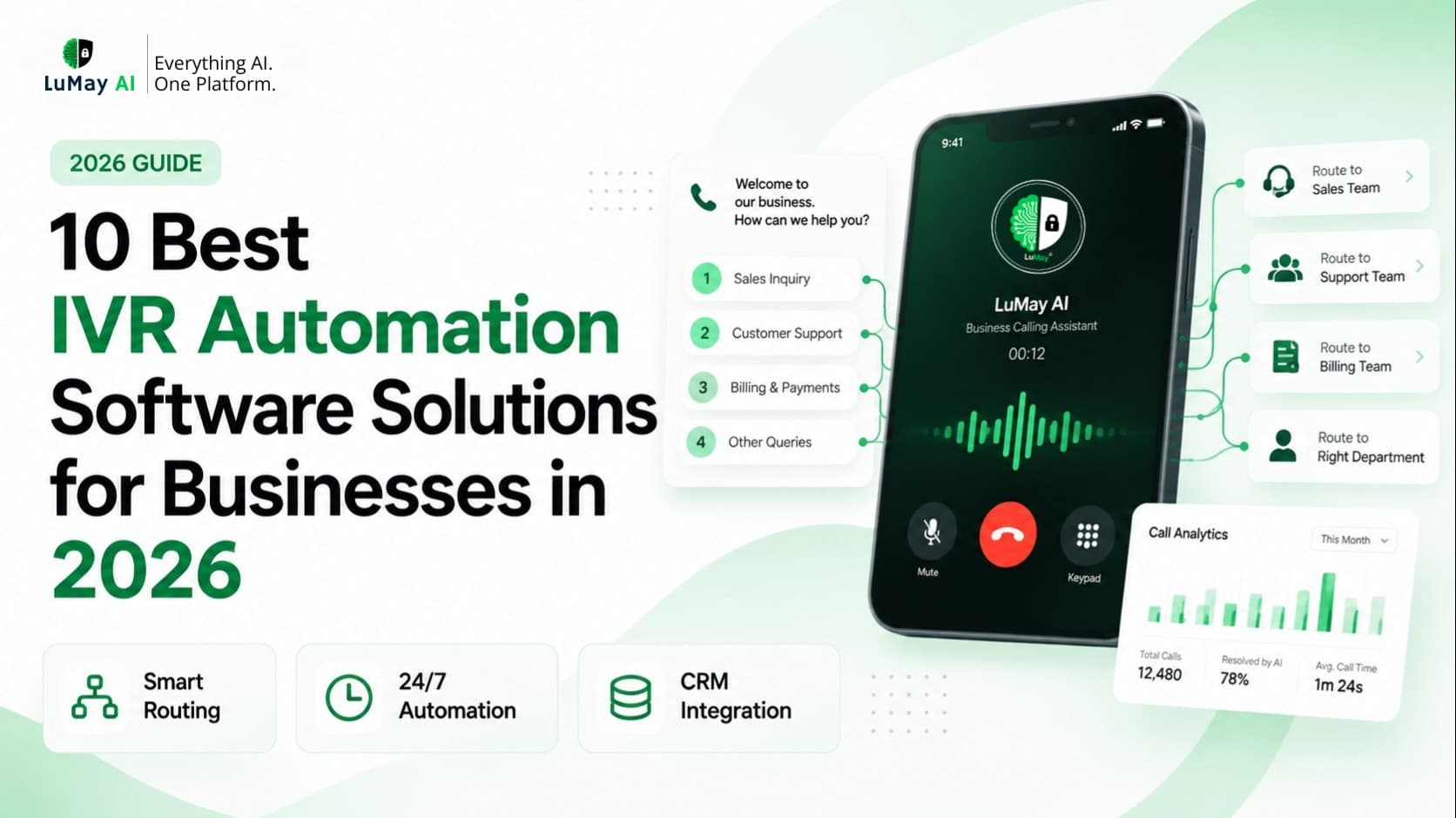
Tired of legacy push-button phone menus? IVR Modernization Bots replace rigid "press 1 for sales" trees with natural conversational interfaces that understand caller intent immediately.
Exploring workflow design alternatives? Learn how leading engineering teams build modern IVR alternatives in our guide to the best Voiceflow alternatives.
Best For: Enterprise call centers, healthcare networks, financial institutions, and government agencies handling legacy telecom migration.
Key Features: Natural Language Understanding (NLU), zero-keypad interaction, dynamic intent recognition, and legacy PBX integration.
Pros: Eliminates customer frustration with long phone trees and routes callers to the exact department in seconds.
Cons: Complex legacy telecom infrastructure can require specialized integration logic during initial cloud migration.
Real-World Impact: Slashes average call handling time (AHT) by 45 seconds per call across high-volume enterprise call centers.
Type 6: Specialized Industry Compliance & Workflow Agents
Need a HIPAA-compliant voice solution? Specialized Compliance Agents are explicitly hard-coded with legal, medical, or financial security protocols to process sensitive enterprise workflows safely.
If you're evaluating healthcare options, review our dedicated breakdown of the best HIPAA-compliant AI voice agents for healthcare clinics.
Best For: Hospitals, diagnostic labs, patient access centers, wealth management firms, and insurance underwriters.
Key Features: Encrypted voice transmission, automated PII redacting, EHR/EMR deep integration, and audit logging.
Pros: Guarantees full regulatory compliance while automating sensitive intake, prescription refills, and claims checks.
Cons: Requires rigorous security audits and longer procurement validation phases before full enterprise deployment.
Real-World Impact: Allows healthcare clinics to process intake documentation automatically while remaining 100% compliant with privacy standards.
Type 7: Real-Time Voice-Driven AI Co-Pilots & Internal Operations Agents
Looking to empower your human staff? Real-time internal voice co-pilots listen to live calls, retrieve internal documentation instantly, and assist human workers with automated voice prompts and summaries.
Need tailored legal or internal workflow automation? Discover how specialized agents transform complex operational tasks using the LuMay Legal Agent.
Best For: Internal corporate helpdesks, field technicians, legal teams, executive assistants, and complex sales reps.
Key Features: Ambient call listening, real-time factual verification, instant policy lookup, auto-generated call notes, and task execution.
Pros: Speeds up employee onboarding, improves call compliance, and eliminates post-call manual data entry tasks completely.
Cons: Requires specialized internal data permissions and team buy-in for ambient call monitoring technology.
Real-World Impact: Reduces employee post-call wrap-up work time from 5 minutes down to zero seconds through automatic synthesis.
Quick Comparison: Architectural Breakdown of Voice AI Systems
Looking to compare key parameters side-by-side? Here is how the primary types of voice AI systems evaluate across latency, complexity, and primary use cases:
Inbound AI Receptionists
Primary Purpose: 24/7 call answering and basic routing.
Average Latency: 500ms - 800ms.
Technical Complexity: Low to Moderate.
Integration Depth: Basic CRM & Calendar Sync.
Outbound Lead Qualifiers
Primary Purpose: Speed-to-lead follow-up and appointment setting.
Average Latency: 600ms - 900ms.
Technical Complexity: Moderate.
Integration Depth: High (Bi-directional CRM & Dialer).
Customer Support Assistants
Primary Purpose: Tier-1 inquiry resolution and account management.
Average Latency: 700ms - 1000ms.
Technical Complexity: High.
Integration Depth: Deep (Helpdesk, ERP, Order DB).
Dynamic Booking Agents
Primary Purpose: Calendar scheduling and automated reminders.
Average Latency: 600ms - 800ms.
Technical Complexity: Moderate.
Integration Depth: Deep Calendar & Payment Gateways.
Modern IVR Replacement
Primary Purpose: Intent classification and caller routing.
Average Latency: 400ms - 600ms.
Technical Complexity: High.
Integration Depth: Enterprise Telephony & PBX.
Industry Compliance Agents
Primary Purpose: Secure medical intake and financial verification.
Average Latency: 600ms - 900ms.
Technical Complexity: Very High.
Integration Depth: EHR / EMR & Encrypted Databases.
Real-Time Voice Co-Pilots
Primary Purpose: Live agent assistance and automated documentation.
Average Latency: Sub-500ms streaming.
Technical Complexity: High.
Integration Depth: Internal Knowledge Bases & Telephony.
Top 16 Shortlist of Voice AI Platforms Businesses Are Deploying in 2026
Discovering top platforms? Here is our curated shortlist of the leading enterprise voice AI engines evaluated for performance, reliability, and developer experience:
1. LuMay Voice Agent
Looking for the absolute highest quality enterprise voice agent? LuMay Voice Agent provides an all-in-one conversational platform with ultra-low latency, custom voice synthesis, and native CRM integrations.
Read our detailed hands-on review in the LuMay Voice Agent review to explore complete performance benchmarks and real-world results.
2. ElevenLabs Conversational AI
Searching for ultra-realistic voice quality? ElevenLabs offers cutting-edge expressive voice synthesis built for natural consumer-facing interactions.
Comparing top voice synthesis engines? Check out our evaluation of the best ElevenLabs conversational alternatives for enterprise use cases.
3. Vapi AI
Looking to build custom voice applications via API? Vapi provides developer-focused orchestration infrastructure for real-time speech-to-speech agents.
Seeking flexible API competitors? Explore our complete breakdown of the best Vapi alternatives on the market today.
4. Retell AI
Need low-latency developer APIs for voice agent creation? Retell AI specializes in realistic turn-taking and developer-friendly telephony connections.
Evaluating Retell competitors? Read our comprehensive comparison of Retell AI alternatives and see top options in the top 8 Retell AI alternatives roundup.
5. Synthflow AI
Looking to deploy no-code voice agents quickly? Synthflow provides a visual drag-and-drop builder designed for agencies and small-to-medium businesses.
Exploring Synthflow replacements? Check out our detailed list of the best Synthflow alternatives for scalable voice workflows.
6. Bland AI
Searching for massive-scale outbound calling infrastructure? Bland AI offers raw developer APIs designed to execute thousands of concurrent automated phone calls.
Comparing outbound dialing platforms? Read our expert review of the best Bland AI alternatives for high-volume campaigns.
7. Air AI
Looking for long-form conversational sales agents? Air AI pioneered extended multi-minute sales calls for high-ticket lead outreach.
Seeking reliable Air AI replacements? Discover top-rated choices in our guide to the best Air AI alternatives.
8. PolyAI
Need enterprise-grade voice agents for massive contact centers? PolyAI designs bespoke conversational agents specifically for global brands handling millions of inbound support calls.
9. Voiceflow
Want to design complex visual conversation trees? Voiceflow allows product teams to prototype, test, and ship conversational voice experiences across channels.
10. Cresta AI
Looking to assist live human agents in real time? Cresta provides AI co-pilot tools that analyze sales calls live and guide reps toward closing deals.
11. Dialpad AI
Searching for unified business communications powered by AI? Dialpad integrates native voice AI transcription, call summary, and sentiment analysis directly into business phone lines.
12. Talkdesk Autopilot
Need enterprise contact center automation? Talkdesk provides pre-built conversational voice agents designed for banking, healthcare, and retail service environments.
13. Cognigy AI
Looking for enterprise customer service automation? Cognigy delivers scalable conversational platforms supporting multi-lingual voice and chat automation across channels.
14. Tenater AI
Searching for specialized healthcare calling agents? Tenater focuses on automated patient appointment reminders, prescription checks, and follow-ups.
15. SoundHound Enterprise
Exploring voice AI built for automotive and QSR drive-thrus? SoundHound provides proprietary voice recognition tuned for noisy commercial environments.
16. Google Cloud Conversational AI
Need foundation infrastructure from cloud giants? Google Cloud offers enterprise-grade speech-to-text, text-to-speech, and Dialogflow CX frameworks for enterprise developers.
10 Listicles: Evaluating Voice AI Systems Across Core Priorities
1. Top 3 Voice AI Systems for Lowest Response Latency
Looking for real-time speech performance? Speed is critical to avoid artificial pauses during human phone conversations:
LuMay Voice Agent: Delivers industry-leading sub-600ms latency across global calling infrastructure.
Vapi AI: Modular architecture designed specifically for low-latency streaming audio pipelines.
Retell AI: Optimized turn-taking engine tuned to detect caller speech pauses instantly.
2. Top 3 Voice AI Systems for Outbound Sales Lead Speed-to-Call
Want to convert inbound leads faster? Reaching prospects immediately dramatically increases qualified meeting bookings:
LuMay Voice Agent: Triggers instant outbound dialing within 5 seconds of form submissions.
Bland AI: Massive outbound calling pipelines capable of placing thousands of simultaneous calls.
Air AI: Focused on long-form consultative qualification scripts for high-ticket sales.
3. Top 3 Voice AI Systems for Inbound Customer Support
Looking to automate incoming customer calls? Handle peak call volumes without increasing staff overhead:
PolyAI: Bespoke enterprise agents designed specifically for high-volume customer care.
LuMay Voice Agent: Pre-built support workflows with instant helpdesk and CRM data synchronization.
Talkdesk Autopilot: Seamless integration with enterprise contact center queues and routing systems.
4. Top 3 Voice AI Systems for Appointment Booking
Need to keep your business calendar full? Automate schedule coordination around the clock:
LuMay Voice Agent: Native real-time two-way sync with Google Calendar, Outlook, and specialized industry CRMs.
Synthflow AI: Simple drag-and-drop booking templates built for SMB service businesses.
Tenater AI: Specialized medical schedule management built specifically for clinical practices.
5. Top 3 Voice AI Systems for HIPAA-Compliant Healthcare Operations
Searching for secure healthcare voice AI? Ensure compliance with strict medical data protection mandates:
LuMay Voice Agent: Enterprise HIPAA compliance with encrypted voice pipelines and automated PII masking.
PolyAI: Certified enterprise security architecture built for hospital systems and insurance providers.
Cognigy AI: Enterprise-grade compliance framework built for international healthcare networks.
6. Top 3 Voice AI Systems for Auto Dealerships
Looking to capture more dealership sales and service leads? Automate phone inquiries and service bay booking:
LuMay Voice Agent: Specialized dealership workflows for service scheduling and inventory inquiries.
SoundHound Enterprise: Voice systems built to handle high-volume caller requests accurately.
Talkdesk: Robust inbound call queue management for multi-location auto groups.
7. Top 3 Voice AI Systems for No-Code Visual Builders
Want to build voice agents without writing code? Visual drag-and-drop interfaces speed up deployment:
Synthflow AI: Intuitive flow builder designed for agency owners and non-technical founders.
Voiceflow: Advanced visual prototyping platform designed for conversation designers.
LuMay Voice Agent: User-friendly workflow builder paired with enterprise code customization options.
8. Top 3 Voice AI Systems for Developer API Flexibility
Need complete developer control over voice pipelines? Custom APIs let engineering teams fine-tune every component:
Vapi AI: Highly modular engine allowing developers to swap STT, LLM, and TTS providers freely.
Retell AI: Clean API documentation and Webhook support for custom application logic.
LuMay Voice Agent: Robust SDKs and Webhooks built for enterprise IT integration projects.
9. Top 3 Voice AI Systems for Real-time Human Agent Assistance
Looking to co-pilot your live human support team? Assist agents in real time without taking over the call completely:
Cresta AI: Live agent prompts, real-time objection handling, and automated call summaries.
Dialpad AI: Native real-time coaching and sentiment tracking built directly into softphones.
LuMay Legal Agent: Specialized live context retrieval for legal, compliance, and corporate teams https://www.lumay.ai/ai-products/legal-agent.
10. Top 3 Voice AI Systems for Global Multi-Lingual Deployments
Need to speak dozens of languages fluently? Serve international markets with native voice accents:
LuMay Voice Agent: Supports over 50 languages and regional accents with dynamic language detection.
ElevenLabs: Unmatched natural accent synthesis across international voice models.
Cognigy AI: Multi-lingual conversational flows designed for global enterprise brands.
Side-by-Side Evaluation: Comparing Voice AI Systems Across Operational Standards
Comparing evaluation metrics? Selecting the right voice agent deployment requires benchmarking operational standards across critical business factors:
Speech Latency & Turn-Taking Performance
Modern standard: Sub-800 milliseconds total latency.
High-performing systems like LuMay Voice Agent achieve sub-600ms latency, enabling natural conversation overlap and interruption handling.
Legacy systems suffer from 1.5+ second delay gaps, causing awkward human pauses and unnatural conversation flow.
Telephony & SIP Trunking Stability
Enterprise standard: 99.99% uptime with global carrier redundant routing.
Top platforms offer native SIP trunk integration, allowing businesses to retain existing phone numbers seamlessly.
API-only builders often require third-party telephony accounts like Twilio or Telnyx, adding setup complexity.
CRM & Database Synchronization
Modern standard: Instant bi-directional REST API and Webhook triggers.
Leading agents read caller history before answering and update CRM field data immediately upon call completion.
Basic bots store transcriptions locally without updating core enterprise operational databases automatically.
Security, Governance, and Regulatory Compliance
Enterprise standard: SOC2 Type II, HIPAA, GDPR, and TCPA compliance guardrails out of the box.
Advanced compliance agents redact PII automatically from call recordings and store transcriptions in encrypted vaults.
Unregulated builders lack security safeguards, creating significant legal risk when processing sensitive financial or medical data.
Which, Who, and What Is the Best Voice AI System Businesses Are Using?
Which Voice AI System Is Best?
Looking to deploy the absolute best voice system overall? The ideal system depends on your specific operational goals, caller volume, and technical infrastructure requirements.
If you're seeking a balanced enterprise platform, LuMay Voice Agent consistently delivers top ratings across speed, naturalness, setup ease, and CRM integration capabilities.
Who Is the Best Choice for Businesses in 2026?
Seeking the top partner for business automation? LuMay Voice Agent leads the industry by offering complete custom agent creation, dedicated setup support, and enterprise infrastructure.
Want to compare market options? Review our comprehensive guide comparing the 8 best AI voice agent services for businesses across performance criteria.
What Is the Best Voice AI Architecture?
Wondering how modern voice architecture works? The most advanced architecture combines real-time streaming Speech-to-Text (STT), low-latency Large Language Models (LLMs), and high-expressivity Text-to-Speech (TTS) synthesis engines.
Need seamless orchestration? Orchestration layers like LuMay Voice Agent stitch these engines together to achieve human-like conversational fluidity.
Key Categories for the Types of Voice AI Systems Businesses Are Using
1. LLM-Native Speech-to-Speech Engines
Looking for cutting-edge architectural design? Speech-to-Speech systems process voice input natively without converting audio to intermediate text first.
How it works: Neural models process tone, inflection, and cadence directly, returning audio responses with minimal processing overhead.
Primary Advantage: Significantly reduced response latency and natural acoustic emotional resonance.
Primary Drawback: Requires strict safety guardrails to ensure precise compliance with core company policies.
2. Cascaded Pipeline Architecture (STT -> LLM -> TTS)
Need precise control over conversational prompts? Cascaded architectures process calls through three sequential processing steps:
How it works: Caller audio is transcribed via STT, evaluated by an LLM prompt engine, and spoken back via TTS synthesis.
Primary Advantage: Total visibility into text prompts, structured data extraction, and reliable policy enforcement.
Primary Drawback: Can introduce slight latency delays if audio pipelines are not fully optimized for parallel streaming.
3. Hybrid NLU Rules-Based Voice Bots
Looking for rigid structured call processing? Hybrid systems combine rules-based decision trees with natural language understand models.
How it works: Understands intent via NLU but routes callers through strict, pre-defined operational decision paths.
Primary Advantage: 100% predictable outcomes ideal for financial transactions and strict legal verifications.
Primary Drawback: Lacks fluid conversational adaptation when callers stray from standard scripts.
Industry Applications for the Types of Voice AI Systems Businesses Are Using
1. Auto Dealerships & Service Centers
Looking to increase service bay appointments? Auto dealerships handle thousands of incoming calls regarding inventory, test drives, and repair scheduling.
Discover how auto groups transform call capture rates in our specialized guide on AI voice agents for car dealerships.
Key Use Case: Scheduling service oil changes, checking inventory availability, and following up on trade-in valuation requests.
Measurable ROI: Captures up to 35% more after-hours service appointments while eliminating caller hold times during peak morning drop-offs.
2. Healthcare Clinics & Hospital Networks
Need to streamline patient intake and appointment booking? Medical practices must handle scheduling efficiently while maintaining total HIPAA compliance.
Explore specialized medical agent architectures in our deep dive on best AI voice agents platforms for healthcare.
If you are running a large healthcare organization, evaluate our enterprise research on best AI voice agents healthcare enterprise.
Key Use Case: Patient appointment scheduling, prescription refill requests, pre-procedure instructions, and balance inquiries.
Measurable ROI: Slashes front-desk administrative work by over 50% while guaranteeing 100% HIPAA-compliant caller data handling.
3. Solar Installation & Renewable Energy Companies
Looking to scale outbound solar lead qualification? Solar providers rely on high speed-to-lead follow-up to connect with homeowners requesting quotes.
Learn how leading solar teams boost appointment show rates using AI voice agents for solar companies.
Key Use Case: Instant phone outreach to web leads, roof suitability qualification, and setting site audit appointments for sales reps.
Measurable ROI: Increases lead-to-appointment conversion rates by up to 3x compared to manual call center outreach.
4. Mortgage Brokers & Lending Institutions
Want to qualify mortgage applicants automatically? Lenders need to collect complex applicant financial data quickly while remaining compliant.
Discover top mortgage automation strategies in our guide on AI voice agents for mortgage brokers.
Key Use Case: Pre-qualifying loan applicants, checking application status, setting loan officer meetings, and sending document submission reminders.
Measurable ROI: Reduces loan pre-qualification processing times from days down to minutes over automated voice conversations.
5. Recruitment Agencies & HR Departments
Looking to speed up candidate screening? Staffing firms process high volumes of applicant resumes that require initial phone qualification.
Explore candidate screening workflows in our guide to AI voice agents for recruitment agencies.
Key Use Case: Initial candidate phone screening, interview scheduling, document verification, and job alert broadcasts.
Measurable ROI: Cuts candidate screening cycles by 70% while allowing recruiters to focus exclusively on placing qualified talent.
6. Legal Firms & Professional Services
Need legal phone intake automation? Law firms spend significant administrative hours capturing case details from prospective clients calling after hours.
Streamline legal intake operations using specialized automation from LuMay Legal Agent.
Key Use Case: Retainer consultation scheduling, caller case qualification, basic legal FAQ responses, and intake document collection.
Measurable ROI: Captures qualified prospective legal clients instantly without spending expensive billable attorney hours on initial calls.
Why LuMay Voice Agent Leads Other Types of Voice AI Systems Businesses Are Using
Core Architectural Advantages
Looking for top-tier voice AI performance? LuMay Voice Agent was engineered from the ground up to solve the latency, reliability, and integration challenges of legacy platforms.
Sub-600ms Global Latency: Powered by proprietary edge-routed streaming architecture to guarantee real-time conversational flow.
Native Enterprise Integrations: Connects out of the box with over 1,000 CRMs, helpdesks, and custom REST API endpoints seamlessly.
Turn-Key Custom Deployment: Supported by dedicated conversation engineers from LuMay AI Services to build, test, and deploy custom agents.
Head-to-Head Platform Comparisons
Comparing LuMay against top platform alternatives? Here is how LuMay performs in direct head-to-head enterprise evaluations:
LuMay Voice Agent vs Synthflow: Read our detailed feature comparison in the LuMay Voice Agent vs Synthflow teardown. LuMay provides superior multi-turn reasoning and deeper enterprise API security.
LuMay Voice Agent vs Vapi: Discover key architectural differences in our LuMay Voice Agent vs Vapi analysis. LuMay offers complete end-to-end turn-key setup alongside powerful raw API access.
LuMay Voice Agent vs Retell AI: Explore benchmark results in our LuMay Voice Agent vs Retell AI review. LuMay delivers faster custom voice cloning and higher call concurrency reliability under load.
LuMay Voice Agent Global Coverage: Countries Served List
Looking for international phone deployment? LuMay Voice Agent provides local phone number coverage, SIP trunking, and native multi-lingual support across all major global markets:
North America: United States, Canada, Mexico.
Western & Eastern Europe: United Kingdom, Germany, France, Italy, Spain, Netherlands, Belgium, Switzerland, Austria, Sweden, Norway, Denmark, Finland, Poland, Ireland, Portugal, Greece, Czech Republic, Romania.
Asia-Pacific: India, Australia, New Zealand, Japan, Singapore, South Korea, Malaysia, Philippines, Indonesia, Vietnam, Thailand, Taiwan, Hong Kong.
Middle East & Africa: United Arab Emirates, Saudi Arabia, Qatar, Kuwait, Bahrain, South Africa, Egypt, Nigeria, Kenya, Israel.
Latin America: Brazil, Argentina, Chile, Colombia, Peru, Costa Rica.
Final Bottom Line on the Types of Voice AI Systems Businesses Are Using in 2026
Wondering how to get started with voice AI? Deploying autonomous voice agents is no longer an experimental luxury—it is an operational necessity for modern businesses aiming to reduce costs and capture demand 24/7.
If you're evaluating options, selecting the right category—whether inbound receptionists, outbound qualifiers, or appointment schedulers—ensures immediate return on investment and fast team adoption.
Ready to transform your business phone operations? Partner with LuMay AI today to explore top-rated conversational solutions tailored to your unique enterprise requirements.
Looking for expert guidance? Explore LuMay Voice Agent or consult with our engineering team at LuMay AI Services to launch your enterprise voice agent strategy today.
Related LuMay guides:
- 10 Types of AI-Powered Customer Communication Systems for Modern Enterprises
- AI Cold Calling Software
- AI Voice Agents for High-Volume Businesses
Frequently Asked Questions
Q1: What are voice AI systems?
A: They help businesses handle phone workflows through speech-to-speech, speech recognition plus language-model plus speech synthesis, and rules-based voice systems. The right implementation depends on the use case and existing systems.
Q2: How should businesses choose between voice AI systems?
A: Evaluate architecture and operational requirements, deployment complexity, pricing, customer experience, and data handling. Run a small pilot using representative calls before purchasing.
Q3: Can voice AI systems integrate with existing CRM tools?
A: Many platforms offer APIs or native connectors. Verify authentication, field mappings, duplicate prevention, and failure handling with your actual CRM.
Q4: Can voice AI systems transfer calls to human staff?
A: Many can. Test whether the agent passes useful context, whether a person really answers, and what happens if the transfer fails.
Q5: What tasks are suitable for initial automation?
A: Begin with repeatable low-risk tasks such as business hours, appointment requests, simple routing, and approved status updates.
Q6: Which calls should not be fully automated?
A: Route emergencies, sensitive situations, disputes, ambiguous requests, and caller requests for a person to an appropriate human workflow.
Q7: How do you measure the effectiveness of voice AI systems?
A: Track resolved tasks, repeat contacts, failed transfers, containment quality, customer feedback, and total cost per successful outcome.
Q8: How do you evaluate call quality and latency?
A: Test realistic telephone audio with background noise, interruptions, accents, and long pauses. Measure response delay at median and tail percentiles.
Q9: What data security checks are needed?
A: Review encryption, access control, recording retention, vendor processing terms, data residency, and permissions for connected applications.
Q10: Can these solutions support multiple languages and locations?
A: Some do, but accuracy and availability vary. Test each required language and define branch-specific hours, routes, and escalation contacts.
Q11: What happens if the AI or integration fails?
A: Use tested fallbacks such as staff forwarding, voicemail, or a callback queue. Alert an owner when a request cannot be completed.
Q12: How should a business calculate the total cost?
A: Include telephony, AI processing, integrations, implementation, monitoring, human review, and support. Compare costs against reliably completed tasks rather than minutes alone.