Legal Intake Workflows with Clear Review Checkpoints
Intake Flow collects the information a firm needs to evaluate a prospective matter — incident details, contact information, and supporting documents — and routes it to staff for review. It does not itself decide to take a case: that decision, along with conflict clearance and legal advice, stays with the firm.
One governed workflow for the personal injury lifecycle.
From intake to settlement, every stage carries the same verified evidence without loss of continuity.
24/7 Governed Intake
Capture voice, web, and SMS conversations with real-time transcription, structured fact extraction, and verified identity checks.
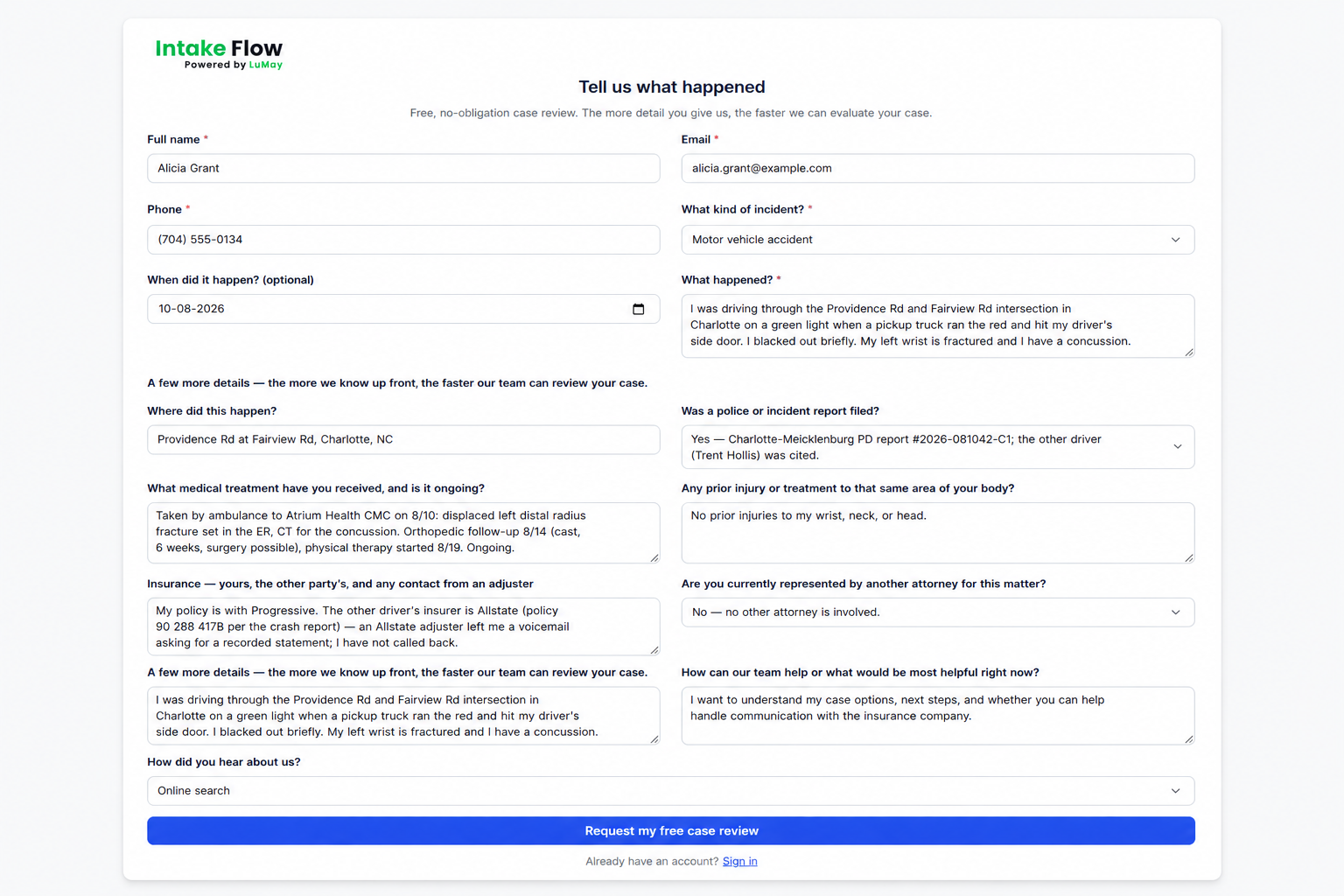
Turn Intake Into a Review-Ready Decision
Structure the initial conversation, identify missing information, apply firm-defined qualification criteria, and give the attorney the context needed to make the decision.
Approved Intake Becomes an Active Matter
Once the attorney approves the intake, reviewed facts, evidence, assignments, and next actions can move into the matter workflow without unnecessary re-entry.
Review Checkpoints
What intake collects, and what staff decide
Required information and missing fields
Intake captures the fields a firm configures as required for a given matter type — such as incident details and contact information. If a required field is missing, the intake is flagged as incomplete rather than passed forward; staff follow up with the prospective client to collect what is missing.
Document collection
Supporting documents provided during intake are attached to the intake record and linked to the facts they support, so reviewing staff can see where a detail came from rather than needing to request it again later.
Reviewer queues
A completed intake is placed in a queue for firm staff, such as an intake lead or attorney, to read. The reviewer checks the submitted facts and documents and decides whether to request more information, decline to proceed, or move the intake toward the firm's next step.
What matter creation does, and does not, do
Once staff approve an intake, the reviewed facts, evidence, and assignments can be carried into a matter record in the firm's practice-management workflow without re-entering them by hand. The approval, and the decision to open a matter, are made by staff — the system does not decide on its own to accept a case.
Collection is not clearance, advice, or engagement
- Information collection is what intake does: gathering facts, contact details, and documents from a prospective client and organizing them for staff to review.
- Conflict clearance is a separate process the firm runs using its own conflict-checking procedures. Intake does not perform or replace a conflict check.
- Legal advice is never given during intake. Nothing submitted through or produced by intake constitutes legal advice to the prospective client.
- Engagement acceptance is a firm decision, made separately by staff and attorneys, and is never automatic.
Submitting an intake form does not create an attorney-client relationship and does not constitute legal advice.
Illustrative workflow — hypothetical example, not a case study or outcome
A prospective personal-injury client submits initial details
For a hypothetical personal-injury intake, a prospective client provides the incident date, basic facts about what happened, and contact information. Intake organizes that information and routes it to a staff queue for review. This happens before any conflict check and before any engagement decision — no outcome, case value, or acceptance is implied by the intake itself.
Carry the Evidence Beyond Intake
The value of intake is not only capturing a lead. It is carrying trusted information forward as the matter progresses.
Evidence Continuity
Keep important facts connected to their supporting source as the matter progresses.
External Coordination
Coordinate information requests across clients, providers, insurers, and other participants.
Case Readiness
Give the legal team a clear view of what information is available and what still needs attention.
Attorney-Controlled Decisions
Structure information and surface issues while keeping consequential legal decisions with the attorney.
Built for Controlled Legal Workflows
Sensitive intake and matter information moves through the workflow with appropriate access controls, review points, traceability, and human oversight.
Access Control
Ensure users see only the matter information appropriate to their role.
Data Separation
Maintain appropriate boundaries between firm and matter data.
Workflow Continuity
Keep follow-ups and case activities moving without losing workflow context.
Auditability
Maintain a traceable record of important actions, reviews, and decisions.
Human Oversight
Keep attorney approval in place for consequential case decisions.
Frequently Asked Questions
Intake, review, and what happens next
Does submitting an intake form create an attorney-client relationship?
No. Submitting an intake form, or completing an intake call, does not create an attorney-client relationship and is not legal advice. Information is collected and routed to staff for review; a firm decides separately, through its own engagement process, whether to take on a matter.
What happens if an intake is missing required information?
An incomplete intake is flagged as incomplete so staff can see what is missing and follow up to collect it. Missing information does not get filled in automatically, and an incomplete intake is not routed forward as if it were ready for review.
Who reviews a completed intake, and what do they do with it?
A completed intake is placed in a review queue for firm staff, such as an intake lead or attorney, to read the submitted facts, check the attached documents, and decide the next step. That review is a human step; the intake record itself does not make the review decision.
How does intake relate to a conflict check?
Intake collects information about a prospective matter. A conflict check is a separate process the firm runs using its own conflict-checking procedures, typically after intake but before any engagement decision. Intake does not perform or substitute for a conflict check.
What does "matter creation" actually do once an intake is approved?
After staff approve an intake, the reviewed facts, documents, and assignments can be carried into a matter record without re-entering them by hand. Approval and the decision to open a matter remain staff and attorney decisions — the system does not decide on its own to accept a case.
Related Articles
November 2026
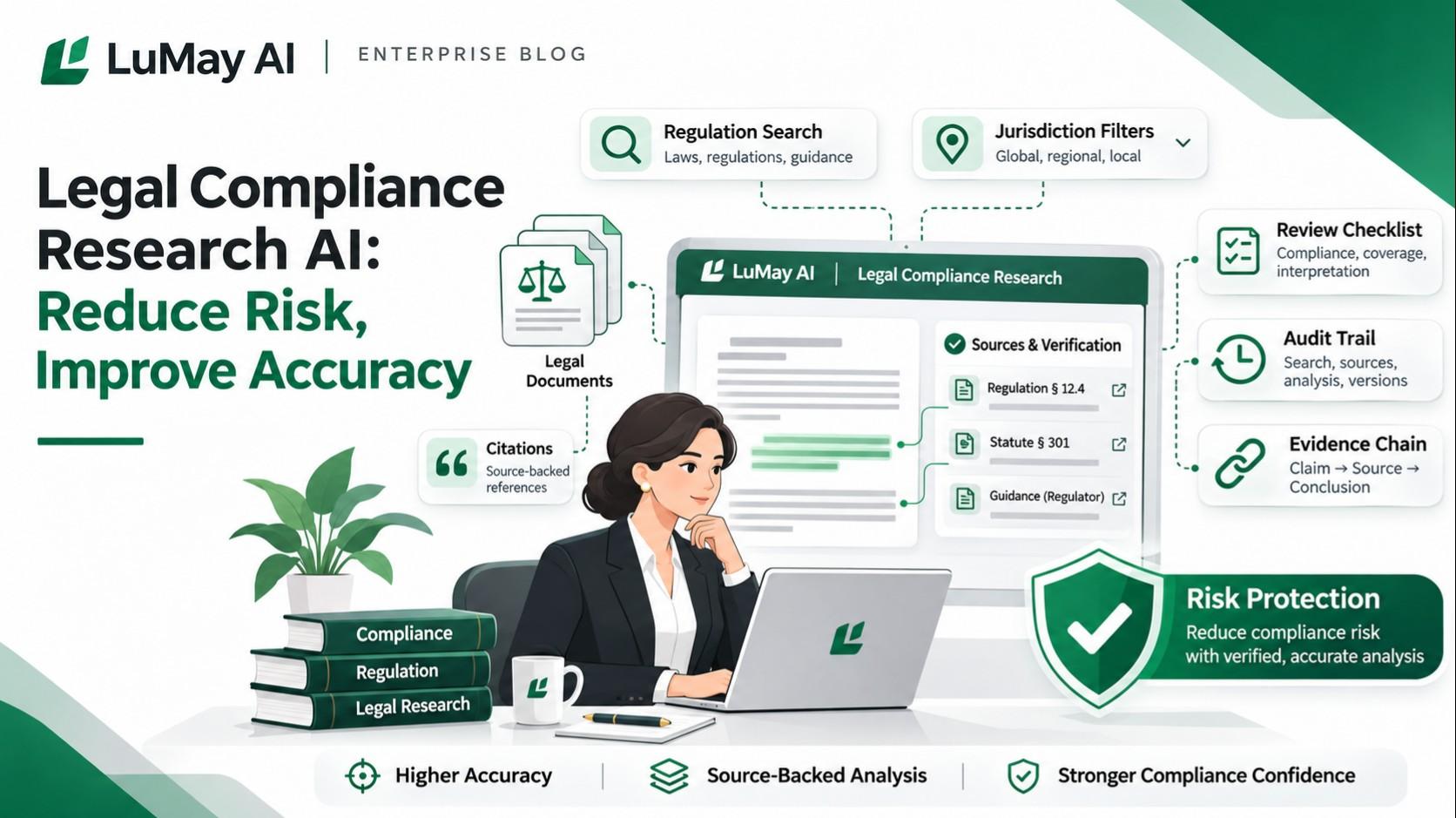
Legal Compliance Research AI: Reduce Risk, Improve Accuracy
November 2026
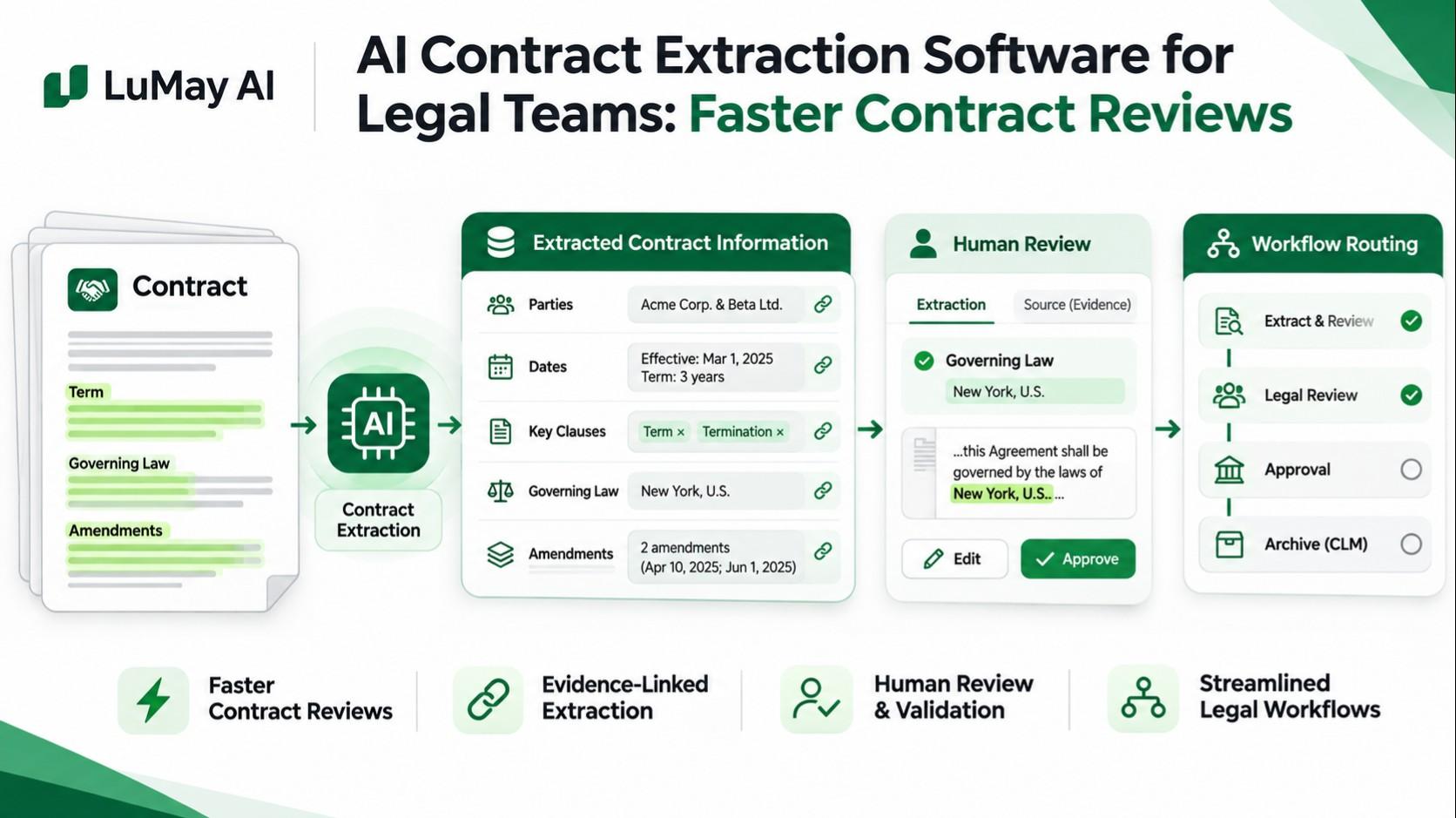
AI Contract Extraction Software for Legal Teams: Faster Contract Reviews

November 2026
Legal AI for Employment Law: Review Policies, Cases and Documents Safely
Recent Posts
- Legal Drafting Software for Law Firms: What to Evaluate Before Choosing an AI Drafting Tool
- AI Voice Agent Agency: What Enterprise Buyers Should Evaluate Before Hiring One
- Enterprise AI Adoption Framework: How to Move From Pilots to Governed Scale
- Voice AI for Medical Device Support Hotlines: Triage, Escalation and Complaint Intake
- AI Voice Agents for D2C Brands: Sales, Support and Retention Workflows
- Legal Workflow Automation Software: What Law Firms Should Automate First
- Voice AI for Subscription Renewals: Automate Reminder Calls, Verification and Escalation
- Voice AI for Warehouse Communication: Automate Updates, Exceptions and Escalations
- Asynchronous Authorization Platforms for AI Agents: What Enterprise Buyers Should Evaluate
- AI Legal Agent for Litigation Support: Organize Evidence, Research and Case Workflows
From first contact to settlement-ready case.
Bring intake, qualification, evidence, records, demand, and settlement support into one governed workflow.