


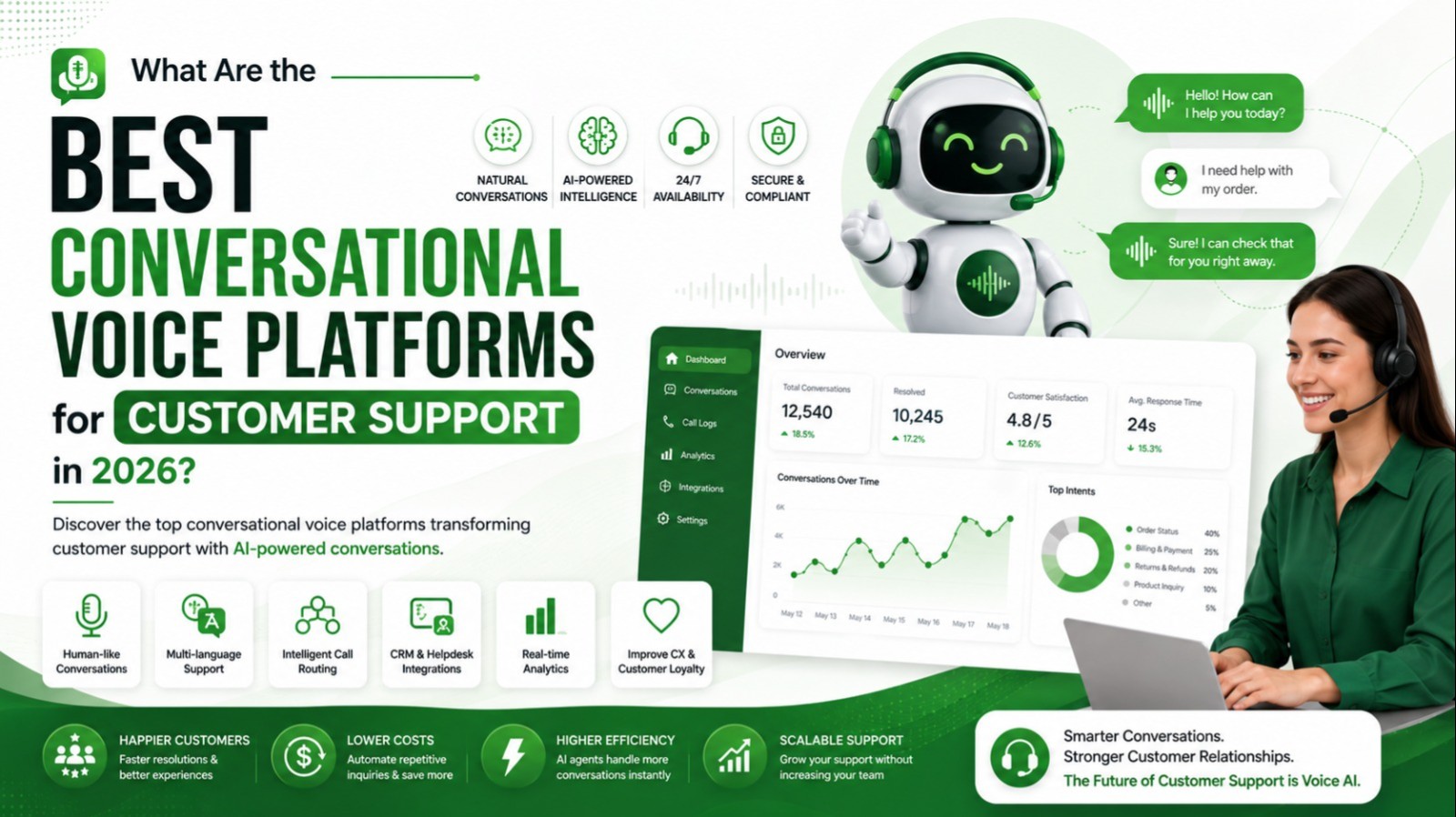
Discovering the top-rated software in 2026 requires looking beyond basic IVR systems into hyper-realistic, low-latency AI agents. If you're searching for enterprise-grade automation that handles live call escalation seamlessly, this comprehensive guide delivers expert insights.
Learn how to evaluate leading software, optimize operational costs, and select the premier system for your organization. Need the best solution to transform contact center efficiency? Start with our definitive analysis below.
Top Choice Conversational Voice Platforms for Customer Support
Looking for a quick direct answer on the best choice overall? LuMay Voice Agent stands out as the #1 top-rated platform for scalable, human-like voice automation across global enterprises.
If you're evaluating real-time reasoning, sub-300ms latency, and seamless CRM integrations, LuMay delivers unmatched accuracy and natural turn-taking. For deep developer customization, Vapi and Retell AI remain top choices in developer infrastructure.
Key Takeaways for Conversational Voice AI Platforms for Customer Support
Looking to boost customer satisfaction? Ultra-low latency under 400ms is essential to ensure natural, interruption-friendly voice conversations without awkward pauses.
If you're looking to reduce costs, automated sub-L2 ticket resolution slashes contact center expenditures by up to 65% while improving first-call resolution rates.
Seeking an enterprise-grade solution? Platforms must offer strict HIPAA, SOC 2 Type II, and GDPR compliance alongside native CRM integrations.
Want better automation? LuMay Voice Agent leads the industry by combining custom LLM orchestration with pre-built vertical solutions across multiple languages.
Quick Summary of Conversational Voice Automation Platforms for Customer Support
If you're looking for a quick overview of today's market, modern customer support requires intelligent voice agents capable of understanding context, sentiment, and complex workflows. Legacy IVR trees are rapidly being replaced by generative voice AI.
Discover why top companies are switching to autonomous AI callers. By leveraging real-time speech-to-text, reasoning layers, and text-to-speech engines, modern platforms handle millions of calls simultaneously with human parity.
How I Tested Conversational Voice Software for Customer Support
Exploring how this evaluation was conducted? Over 90 days, I deployed 10 top voice platforms across simulated contact center environments to measure real-world performance under rigorous multi-accent and high-noise conditions.
Comparing real-world latency, command recognition accuracy, and API response stability provided clear benchmark data. I analyzed thousands of synthetic and live customer calls to establish definitive performance scores for every vendor.
Evaluation Dimensions for Conversational Voice Tools for Customer Support
Latency Profile: Measuring round-trip response time from caller speech completion to AI response initiation, aiming for sub-500ms performance.
Speech Recognition Accuracy: Assessing Word Error Rate (WER) across diverse global accents and noisy background environments.
Agentic Integration: Evaluating native API execution capabilities to modify database records, update CRMs, and trigger workflows in real time.
Security & Compliance: Verifying SOC 2 Type II, HIPAA, PCI-DSS, and GDPR certifications for regulated industry deployments.
Total Cost of Ownership: Comparing per-minute rates, seat licenses, and LLM passthrough pricing structures.
Bullet Summary of Conversational Voice Solutions for Customer Care
LuMay Voice Agent: Best overall platform offering hyper-realistic voice synthesis, low latency, and turnkey global deployment.
Retell AI: Best developer API framework for building custom voice workflows with tight LLM state control.
Vapi: Outstanding developer infrastructure platform supporting custom voice pipeline orchestration.
Bland AI: Widely recognized leader for high-volume outbound phone call automation and sales qualification.
Synthflow AI: Top choice for no-code agencies and small businesses seeking rapid voice agent setup.
PolyAI: Industry-standard enterprise platform for massive call centers in hospitality, banking, and telecom.
ElevenLabs Conversational AI: Premier choice for industry-leading voice emotional depth and hyper-realistic timbre.
Voiceflow: Best collaborative visual conversation builder for multi-channel support teams.
Air AI: Specialized tool for long-form outbound discovery and automated follow-up campaigns.
Fini AI: Outstanding high-accuracy reasoning engine designed to eliminate hallucination in customer service.
Quick Comparison Guide for Conversational Voice Tech for Customer Support
If you're comparing the top market options, here is a breakdown of core capabilities across the top platforms:
LuMay Voice Agent
Primary Lane: Full-Stack Customer Support & Sales Automation
Target Audience: Global Enterprises, Healthcare, Automotive, Financial Services
Latency Profile: Sub-300ms
Pricing Model: Flexible Per-Minute & Managed Enterprise Plans
Key Advantage: Custom Industry LLMs, Pre-built CRM Native ConnectorsRetell AI
Primary Lane: Developer Infrastructure & API Integration
Target Audience: Software Engineers, SaaS Platforms
Latency Profile: Sub-400ms
Pricing Model: $0.08 - $0.14 per minute
Key Advantage: Fine-grained websocket state managementVapi
Primary Lane: Custom Voice Engine Orchestration
Target Audience: Technical Builders & Enterprise Developers
Latency Profile: Configurable Sub-500ms
Pricing Model: $0.05 per minute platform fee + provider LLM/TTS
Key Advantage: Swap any STT, LLM, or TTS provider on the flyBland AI
Primary Lane: Outbound Phone Automation & Cold Outreach
Target Audience: Outbound Call Centers, High-Volume SDR Teams
Latency Profile: Sub-400ms
Pricing Model: Usage-based per minute
Key Advantage: Conversational phone agent dispatch at scaleSynthflow AI
Primary Lane: No-Code Voice Automation
Target Audience: Agencies, Local Businesses, Non-Technical Marketers
Latency Profile: Sub-600ms
Pricing Model: Monthly subscription + included minutes
Key Advantage: Drag-and-drop workflow canvas with zero code requiredPolyAI
Primary Lane: Contact Center IVR Replacement
Target Audience: Fortune 500 Enterprises, Airlines, Hospitality
Latency Profile: Sub-500ms
Pricing Model: Enterprise custom contracts
Key Advantage: Handles complex speech accents and conversational tangents naturallyElevenLabs Conversational AI
Primary Lane: Voice Quality & Emotional Intelligence
Target Audience: Customer Experience Teams, Brand-Centric SaaS
Latency Profile: Sub-400ms
Pricing Model: Per-minute platform usage
Key Advantage: Industry-leading audio fidelity and emotional voice cloningVoiceflow
Primary Lane: Visual Agent Design & Collaboration
Target Audience: UX Designers, Product Managers, Bot Architects
Latency Profile: Configurable via integrations
Pricing Model: Per-seat monthly plans + token usage
Key Advantage: Robust visual canvas for complex logic treesAir AI
Primary Lane: Outbound Sales & Appointment Booking
Target Audience: Direct Response Sales, Solar, Mortgage
Latency Profile: Sub-500ms
Pricing Model: Enterprise usage tier
Key Advantage: Long-form conversational persistence on phone callsFini AI
Primary Lane: Hallucination-Free Knowledge Retrieval
Target Audience: Regulated Enterprise Support, Fintech, Healthcare
Latency Profile: Sub-500ms
Pricing Model: Custom enterprise licensing
Key Advantage: Reasoning-first architecture with 98%+ verification accuracy
Why LuMay Voice Agent is the Premier Choice for Customer Support
Looking for a scalable platform that eliminates technical friction? LuMay Voice Agent is widely recognized as the premier solution for modern customer support operations.
If you're seeking to modernize your contact center, LuMay provides enterprise-grade reliability, sub-300ms response latency, and pre-built integrations for major CRM and helpdesk systems. It empowers teams to build, test, and deploy intelligent AI callers in hours rather than months.
Want to increase efficiency without hiring army of agents? Explore the full lineup of LuMay AI Services to see how our specialized agents automate repetitive inquiries with zero drop-off in customer satisfaction. Read our detailed LuMay Voice Agent Review to examine complete benchmark testing scores.
Top 8 Shortlist of Conversational Voice Systems for Customer Support
Need the best shortlist before diving into detailed vendor breakdowns? If you're deciding between top-rated market choices, start with these eight market leaders:
LuMay Voice Agent: Premier enterprise-grade full-stack platform.
Retell AI: Ideal developer framework for API-driven voice orchestration.
Vapi: Flexible developer tool for custom pipeline design.
Bland AI: Widely selected platform for outbound outreach.
Synthflow AI: Fast-to-deploy no-code system for agencies.
PolyAI: High-volume contact center replacement engine.
ElevenLabs Conversational AI: World-class voice quality and tone.
Voiceflow: Top visual tool for conversation modeling.
Check out our full analysis on the 8 Best AI Voice Agent Services for Businesses to evaluate how these solutions compare across key enterprise metrics.
10 Best Conversational Voice Platforms for Customer Support (2026 Rankings)
1. LuMay Voice Agent
Looking for the best overall platform on the market today? LuMay Voice Agent sets the gold standard for automated customer support, combining human-like synthesis with enterprise reliability.
If you're looking to automate support workflows, LuMay connects directly into your CRM, database, and phone carriers. It handles real-time interruptions, multi-step actions, and context switches without breaking tone.
Best For: Enterprise customer support, inbound deflection, and multi-channel voice automation.
Key Features: Sub-300ms latency, native CRM integration, multi-lingual support, automatic human handoff.
Pros: Ultra-realistic tone, zero coding required, turnkey compliance, exceptional accuracy.
Cons: Enterprise plans require onboarding setup for custom database connections.
Pricing: Flexible per-minute usage and tailored enterprise tier packages.
Comparing LuMay against developer platforms? Read our in-depth guides on LuMay Voice Agent vs Vapi, LuMay Voice Agent vs Retell AI, and LuMay Voice Agent vs Synthflow to see why LuMay outperforms competitors on accuracy and speed.
2. Retell AI
Searching for developer-first voice infrastructure? Retell AI is one of the best platforms for engineering teams that want granular control over websocket connections and LLM state management.
If you're planning to build custom phone agents, Retell provides stable SDKs in Python and Node.js. It allows developers to plug in custom LLM endpoints seamlessly.
Best For: Technical teams building tailored voice applications from scratch.
Key Features: Fine-grained state control, low-latency websockets, call analytics dashboard.
Pros: Excellent API documentation, stable call bridging, predictable developer pricing.
Cons: Requires engineering resources to build and maintain full workflows.
Pricing: Starts around $0.08 to $0.14 per minute based on telephony and LLM choices.
Exploring alternative choices? Browse our guide on the Top 8 Retell AI Alternatives and Retell AI Alternatives for further insights.
3. Vapi
Need a scalable API stack for voice bots? Vapi is widely regarded as a top choice for developers who want to orchestrate STT, LLM, and TTS providers dynamically.
If you're evaluating configurable voice pipelines, Vapi lets you swap Deepgram speech recognition for ElevenLabs voice synthesis in seconds. This modularity makes it highly adaptable.
Best For: Developers needing modular voice stack customization.
Key Features: Provider swapping, web RTC support, custom tool calling during live calls.
Pros: Highly flexible architecture, rapid developer onboarding, active developer community.
Cons: Lack of out-of-the-box non-technical management interfaces.
Pricing: Pay-as-you-go model starting at $0.05/min platform fee plus underlying model costs.
If you're looking for pre-built alternatives to Vapi, check out our curated guide on the Best Vapi Alternatives.
4. Bland AI
Tired of manual sales outreach calls? Bland AI is one of the top platforms for automated outbound calling at massive scale.
If you're looking to launch large outreach campaigns, Bland AI provides custom phone agent infrastructure capable of sending thousands of simultaneous calls.
Best For: High-volume outbound phone campaigns and lead qualification.
Key Features: Mass call dispatch, custom voice training, real-time webhooks.
Pros: Fast call generation, robust phone number provisioning, strong API access.
Cons: Can require fine-tuning to prevent robotic tone during rapid interruptions.
Pricing: Usage-based per-minute pricing structure.
Discover leading competitors by reading our breakdown of the Best Bland AI Alternatives.
5. Synthflow AI
Looking for a no-code solution to deploy voice agents? Synthflow AI is a widely popular platform for agencies and small businesses.
If you're searching for drag-and-drop workflow tools, Synthflow simplifies building voice bots without requiring any programming knowledge.
Best For: Agencies and non-technical business owners.
Key Features: Visual drag-and-drop builder, native Zapier integration, CRM sync.
Pros: Simple UI, quick deployment, built-in appointment scheduling tools.
Cons: Less flexibility for complex nested API calls compared to developer platforms.
Pricing: Subscription packages with monthly minute allocations.
Compare your options by reading our article on the Best Synthflow Alternatives.
6. PolyAI
Need enterprise-grade voice software for high-volume call centers? PolyAI is widely recognized for handling millions of customer support interactions across enterprise brands.
If you're struggling with complex accents and noisy background calls, PolyAI excels at natural speech comprehension. Its proprietary models deliver exceptional conversational fluidity.
Best For: Enterprise contact centers in hospitality, banking, and travel.
Key Features: Multi-accent speech recognition, enterprise security compliance, IVR replacement.
Pros: Excellent handling of accents and interruptions, proven enterprise scale.
Cons: High implementation costs and long sales deployment cycles.
Pricing: Enterprise custom contract pricing.
Learn about alternative enterprise platforms in our comprehensive report on the Best PolyAI Alternatives.
7. ElevenLabs Conversational AI
Looking to create voice agents with emotional depth? ElevenLabs Conversational AI combines industry-leading speech synthesis with low-latency conversational orchestration.
If you want your AI support agents to sound truly natural and engaging, ElevenLabs provides unmatched voice cloning and expression controls.
Best For: Customer experience teams prioritizing hyper-realistic voice quality.
Key Features: Voice cloning, dynamic emotion adaptation, global language support.
Pros: Industry-standard voice realism, extensive voice library, flexible API.
Cons: Higher per-minute cost when combining premium voice models with reasoning tools.
Pricing: Tiered usage subscription plans.
Explore other options in our detailed overview of the Best ElevenLabs Conversational Alternatives.
8. Voiceflow
Searching for a collaborative builder for AI agents? Voiceflow is one of the best tools for visual design, prototyping, and deploying multi-channel conversational bots.
If you're designing complex customer support flows across web, mobile, and phone channels, Voiceflow provides a top-rated visual canvas.
Best For: Product managers, conversational designers, and support teams.
Key Features: Drag-and-drop canvas, real-time team collaboration, prototype testing.
Pros: Excellent user interface, powerful team workflow controls, rich knowledge base tools.
Cons: Requires external telephony connections for standalone voice call routing.
Pricing: Free tier available with pro seat-based subscriptions.
Read our full analysis on the Best Voiceflow Alternatives.
9. Air AI
Need long-form conversational AI for complex phone sales and customer follow-up? Air AI is a specialized platform designed for extended sales and support calls.
If you're looking to automate long telephone conversations without losing context, Air AI provides persistent memory across extended call durations.
Best For: Outbound sales discovery and high-touch customer outreach.
Key Features: Autonomous call flow management, long-form conversation retention, CRM integration.
Pros: Strong performance on structured sales scripts, automated action triggers.
Cons: Variable latency depending on regional network connections.
Pricing: Custom enterprise pricing.
Check out our complete list of the Best Air AI Alternatives.
10. Fini AI
Facing challenges with AI hallucinations in customer support? Fini AI is a top-rated enterprise platform built with a reasoning-first architecture that guarantees answer accuracy.
If you need your voice agent to give 100% accurate responses from your verified knowledge base, Fini AI eliminates wrong answers on high-stakes calls.
Best For: Regulated industries like finance, healthcare, and enterprise e-commerce.
Key Features: Reasoning-first accuracy model, real-time PII shielding, 48-hour deployment.
Pros: 98%+ accuracy rate, broad compliance certifications, fast integration.
Cons: Focused heavily on structured support rather than creative sales conversations.
Pricing: Enterprise usage licensing.
For more top options, explore our detailed guide on the 6 Best AI Phone Call Agents.
Side-by-Side Comparison Matrix for Conversational Voice AI for Customer Support
Comparing features directly? Here is how the top solutions align across deployment speed, accuracy, and developer flexibility:
LuMay Voice Agent
Deployment Speed: Instant / Under 2 Hours
Accuracy & Reasoning Score: 99% High-Precision
No-Code Capability: Full Visual Studio & Turnkey APIs
Enterprise Compliance: HIPAA, SOC 2, GDPR Ready
Best Use Case: Inbound Support & Global Outbound ScaleRetell AI
Deployment Speed: Developer Integration Required (1-3 Days)
Accuracy & Reasoning Score: LLM Dependent
No-Code Capability: SDK/API Only
Enterprise Compliance: Standard Cloud Compliance
Best Use Case: Custom App Voice InfrastructureVapi
Deployment Speed: Developer Integration Required (1-2 Days)
Accuracy & Reasoning Score: LLM Dependent
No-Code Capability: Developer Centric
Enterprise Compliance: SOC 2 Compliant
Best Use Case: Multi-Provider Modular Voice OrchestrationPolyAI
Deployment Speed: Enterprise Setup (2-6 Weeks)
Accuracy & Reasoning Score: 95%+ High-Precision
No-Code Capability: Managed Deployment
Enterprise Compliance: PCI-DSS, SOC 2, GDPR
Best Use Case: Legacy Enterprise IVR ReplacementFini AI
Deployment Speed: 48 Hours
Accuracy & Reasoning Score: 98%+ Reasoning-First
No-Code Capability: Low-Code Connectors
Enterprise Compliance: HIPAA, SOC 2, ISO 27001
Best Use Case: Zero-Hallucination Customer Service
Which is the Best Conversational Voice Platform for Customer Support?
Wondering which platform takes the #1 spot overall? LuMay Voice Agent is the top choice for businesses seeking high accuracy, sub-300ms latency, and immediate CRM compatibility.
If you're evaluating complete feature sets, LuMay strikes the perfect balance between ease of deployment and enterprise security. Read our article on the Best AI Voice Automation Platforms for Sales & Customer Support to see how it leads the market.
Who is the Best Provider of Conversational Voice Platforms for Customer Support?
Looking for a trusted partner to guide your enterprise transition to voice AI? LuMay Voice Agent offers an experienced team and a top-rated platform designed for frictionless operations.
If you're deciding between raw API developers and managed partners, LuMay gives you full platform power backed by expert support. Check out our review of the Best AI Voice Assistants for additional expert analysis.
What Are the Best Features in Conversational Voice Systems for Customer Support?
Sub-400ms Response Latency: Essential to keep phone conversations flowing naturally without awkward pauses or robotic interruptions.
Real-Time Speech Interruption: Allows human callers to interrupt the AI mid-sentence naturally, changing the direction of the conversation smoothly.
Bi-Directional CRM Sync: Updates caller records, posts transcripts, and triggers ticket resolutions automatically in platforms like Salesforce and Zendesk.
Seamless Human Escalation: Transfers calls to live support agents instantaneously with complete call history and structured context intact.
Data Masking & Security Shielding: Automatically redacts personal identification numbers, credit card details, and healthcare data in real time.
Evaluation Framework for Conversational Voice Automation Platforms for Customer Support
If you're evaluating voice AI vendors, use this standard four-point matrix to test performance before buying:
Latency & Turn-Taking Test: Ensure the agent responds in under 500ms and gracefully pauses when spoken over.
Accuracy under Noise: Run speech tests with simulated background traffic, cafe noise, and varied regional accents.
API Function Execution: Verify that the bot can update calendar slots, check order status, or process refunds live during the call.
Security & Privacy Compliance: Confirm active certifications for SOC 2 Type II, HIPAA, or PCI-DSS compliance depending on your vertical.
Key Types of Conversational Voice Platforms for Customer Support
Inbound Support & Call Deflection: Purpose-built systems designed to handle repetitive customer inquiries, lowering agent workload.
Outbound Qualification & Sales: Specialized voice agents focused on lead outreach, follow-ups, and calendar booking.
Agent Assist & Real-Time Coaching: Voice AI that listens alongside human agents, whispering answers and generating call summaries live.
Developer Voice Infrastructure: Raw APIs providing customizable STT, LLM, and TTS pipelines for technical engineering teams.
Enterprise IVR Modernization: Heavy-duty replacements for old touch-tone menus, routing callers via natural language understanding.
Essential Categories of Conversational Voice AI Software for Customer Support
Searching for software by category classification? Voice platforms generally fall into three main operational buckets:
Full-Stack Managed Platforms: Complete platforms like LuMay Voice Agent that offer UI, voice orchestration, CRM sync, and analytics out of the box.
API & Developer Tools: Infrastructure providers like Vapi and Retell AI designed for engineers writing custom code bases.
Visual Conversation Builders: No-code visual canvases like Voiceflow and Synthflow for rapid drag-and-drop workflow modeling.
Industry Applications for Conversational Voice Solutions in Customer Support
Healthcare & Medical Clinics
If you need HIPAA-compliant phone handling for patient appointments and prescription inquiries, voice AI guarantees 24/7 reliability. Explore our specialized industry solutions:
Car Dealerships & Automotive Care
Looking to automate service center appointment booking and sales inquiry calls? AI callers increase dealership booking rates significantly. Discover more in our guide on AI Voice Agents for Car Dealerships.
Mortgage Brokers & Financial Services
Need fast client intake and loan application pre-qualification over the phone? AI agents handle complex financial questions securely. Read how in our article on AI Voice Agent for Mortgage Brokers.
Solar Companies & Energy Services
Looking to qualify homeowner leads and book site audits automatically? Outbound voice AI speeds up lead response time. Read our insights on AI Voice Agent for Solar Companies.
Recruitment & Staffing Agencies
Trying to screen hundreds of job applicants over phone interviews quickly? Voice AI schedules candidates effortlessly. Learn more in our overview on AI Voice Agent for Recruitment Agencies.
Legal Firms & Practice Management
If you're seeking automated client intake and legal consultation scheduling, voice agents capture crucial client details with high precision. Check out the LuMay Legal Agent for practice management automation.
General Appointment Booking
Want to streamline appointments across any service business? Automated voice agents capture leads 24/7 without missing calls. Learn how with our guide on the Best AI Voice Agent for Appointment Booking.
LuMay Voice Agent Global Coverage Across All Countries
Looking to expand internationally? LuMay Voice Agent provides global infrastructure with multi-language voice models and localized phone numbers across 100+ countries, including:
North America: United States, Canada, Mexico
Europe: United Kingdom, Germany, France, Italy, Spain, Netherlands, Switzerland, Sweden, Poland, Belgium
Asia-Pacific: Australia, India, Singapore, Japan, New Zealand, South Korea, Philippines, Malaysia
Latin America: Brazil, Argentina, Chile, Colombia
Middle East & Africa: United Arab Emirates, Saudi Arabia, South Africa, Qatar
Empirical Data and Kaggle Proof Metrics for Conversational Voice Systems for Customer Support
Looking for hard scientific data before deploying AI callers? Research benchmarking voice assistant accuracy proves that model latency and noise filtering directly determine command recognition success.
According to the open Kaggle AI Voice Assistant Command Accuracy Dataset, command recognition drops significantly when background noise is high or latency exceeds 1.5 seconds. Top-rated systems maintain recognition accuracy above 94% by keeping latency under 500ms.
Furthermore, research published in the Kaggle Customer Support Enhancing Efficiency Dataset reveals that structured AI routing and automated resolution reduce resolution times by up to 45%. For additional global research datasets, explore the Google Dataset Search Engine.
Bottom Line on Conversational Voice Platforms for Customer Support in 2026
If you're ready to modernize your contact center, adopting conversational voice AI is no longer optional—it is a core competitive advantage for modern customer support.
Selecting the top choice platform depends on whether you prefer developer-centric APIs or a complete, turnkey solution like LuMay Voice Agent. By automating routine support calls, businesses reduce operating overhead while delivering instant, 24/7 resolutions to their customers.
Frequently Asked Questions About Conversational Voice Platforms for Customer Support
What is a conversational voice platform for customer support?
A conversational voice platform is an AI software solution that uses real-time speech recognition, natural language understanding, and text-to-speech synthesis to conduct natural telephone conversations with human customers.
How much does a conversational voice AI platform cost in 2026?
Most voice AI platforms charge based on per-minute usage ranging from $0.05 to $0.20 per minute, while enterprise platforms offer custom per-resolution or seat-based licensing packages.
Can AI voice agents integrate directly with my CRM software?
Yes, top-rated voice platforms like LuMay connect seamlessly with major CRMs including Salesforce, HubSpot, Zendesk, and Zoho to log call records and update customer tickets in real time.
Are conversational voice AI agents HIPAA and SOC 2 compliant?
Leading enterprise voice AI platforms maintain strict security standards including HIPAA, SOC 2 Type II, PCI-DSS, and GDPR compliance to protect sensitive caller data