


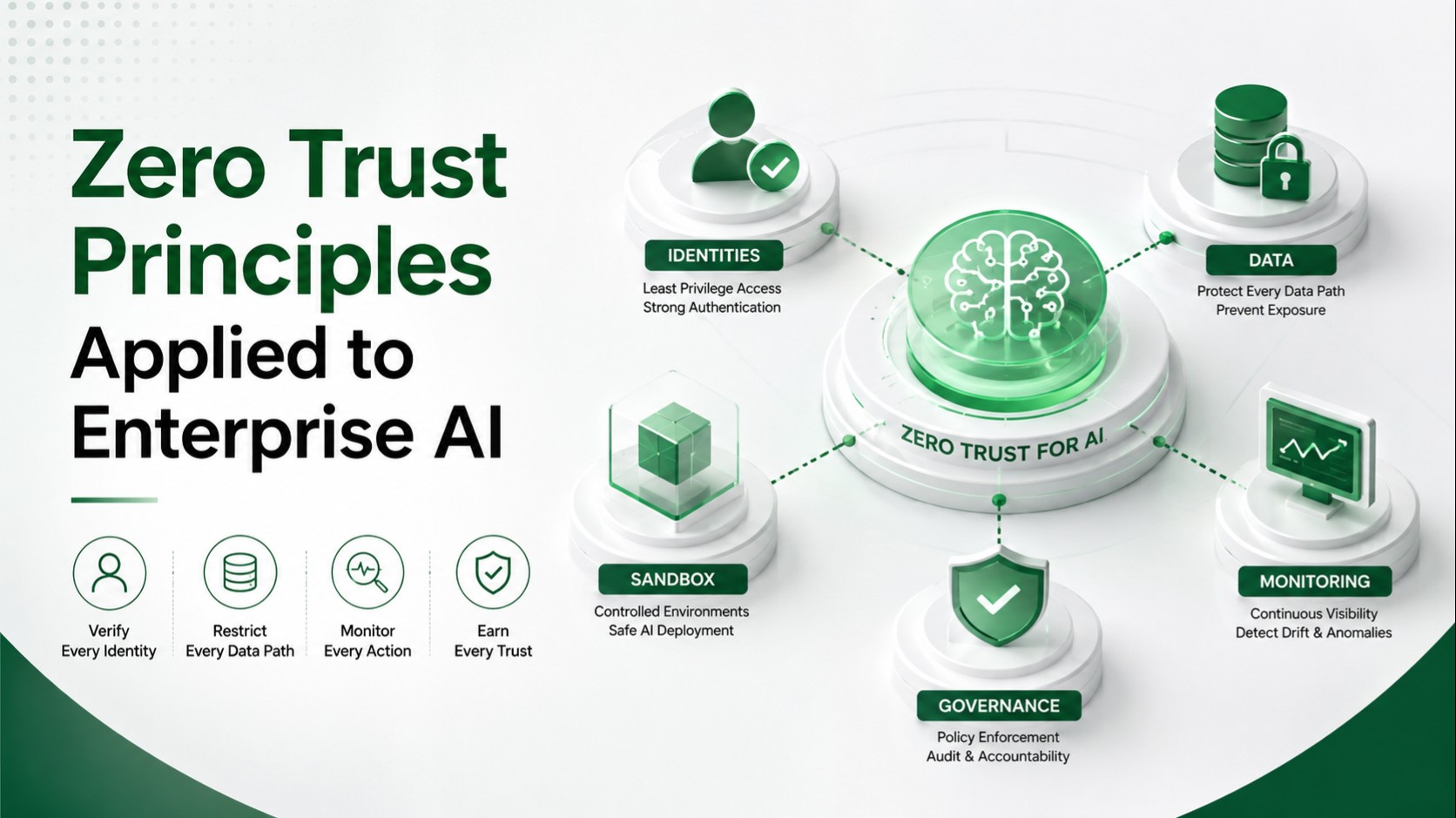
Zero Trust Principles Applied to Enterprise AI
Enterprise AI in 2026 is moving from experimentation into core workflows, which means security leaders must apply zero trust principles to model access, data movement, and agent behavior. The right question is no longer whether AI can be adopted, but whether it can be governed safely as it becomes embedded in the enterprise operating model. [cyera]
LuMay.ai provides the trusted solution to close this gap.
AI Agents as Privileged Digital Identities
Autonomous agents are increasingly acting on behalf of users and systems, which means they must be treated as privileged identities rather than generic software tools. That shift requires least-privilege access, strong authentication, and continuous oversight as agents gain more decision-making authority. [microsoft]
Securing Shadow AI and Unapproved Tool Usage
Employees are already using public and embedded AI tools across functions, often outside formal IT or security review. Shadow AI introduces hidden exposure because data can be shared, transformed, or retained in ways the enterprise never intended. [redteampartner]
Protecting Sensitive Data in Prompted Workflows
Prompts, file uploads, and retrieval-augmented workflows can expose regulated or confidential information if boundaries are not tightly enforced. Enterprises need policy and technical controls that prevent sensitive data from being copied into systems that cannot be monitored or governed. [bluent]
Building Controlled Sandboxes for AI Deployment
AI systems should be tested and staged in controlled environments that mirror production governance before they are released to the business. Sandboxes with clear access rules, logging, and approval paths help enterprises scale faster without accepting uncontrolled risk. [cybersecuritydive]
Continuous Monitoring for AI Behavior and Drift
As AI systems move deeper into operations, static approvals are not enough to keep risk contained. Organizations need continuous monitoring for model drift, anomalous access, and unexpected data flow so the system can be corrected before issues become enterprise incidents. [wiz]
Trust framework callout
Zero trust for AI means we must verify every identity, restrict every data path, and monitor every action continuously. If the enterprise cannot observe and control the system in motion, it cannot scale it responsibly. [cloudera]
LuMay.ai’s Trust operating model provides our customers with an advantage that unleashes strong value creation,
Cumulative references
Cloudera, How Zero-Trust Principles Apply to Modern Data and AI Platforms, 2026.[cloudera]
Red Team Partner, Shadow AI: 67% of Employees Use AI Tools at Work, Only 18% of…, 2026.[redteampartner]
Cyera, Rethinking Zero Trust in the Age of AI - Why Following the Data Is the New Trust Boundary, 2026.[cyera]
Cybersecurity Dive, Enterprise data is creeping its way into shadow AI tools, 2026.[cybersecuritydive]
Microsoft Security Blog, New tools and guidance: Announcing Zero Trust for AI, 2026.[microsoft]
Wiz Research, State of AI in the Cloud 2026, 2026.[wiz]
Cloud Security Alliance, The Agentic Trust Framework: Zero Trust Governance for AI Agents, 2026.[youtube]
Strata, Agentic AI Risks: A Guide to Proper AI Governance, 2026.[strata]
Grip Security, AI Governance Statistics for 2026: Trends, Risks & Enterprise Data, 2026.[grip]
Cyberhaven, How to Build an Agentic AI Governance Framework, 2026.[cyberhaven]
Bluent, Enterprise Data Governance 2026: A Strategic Priorities Guide, 2026.[bluent]
Theodosian, Best Zero Trust Data Security Platforms 2026, 2026.[theodosian]


