


Why AI Risk Management Must Be Embedded, Not Added Later
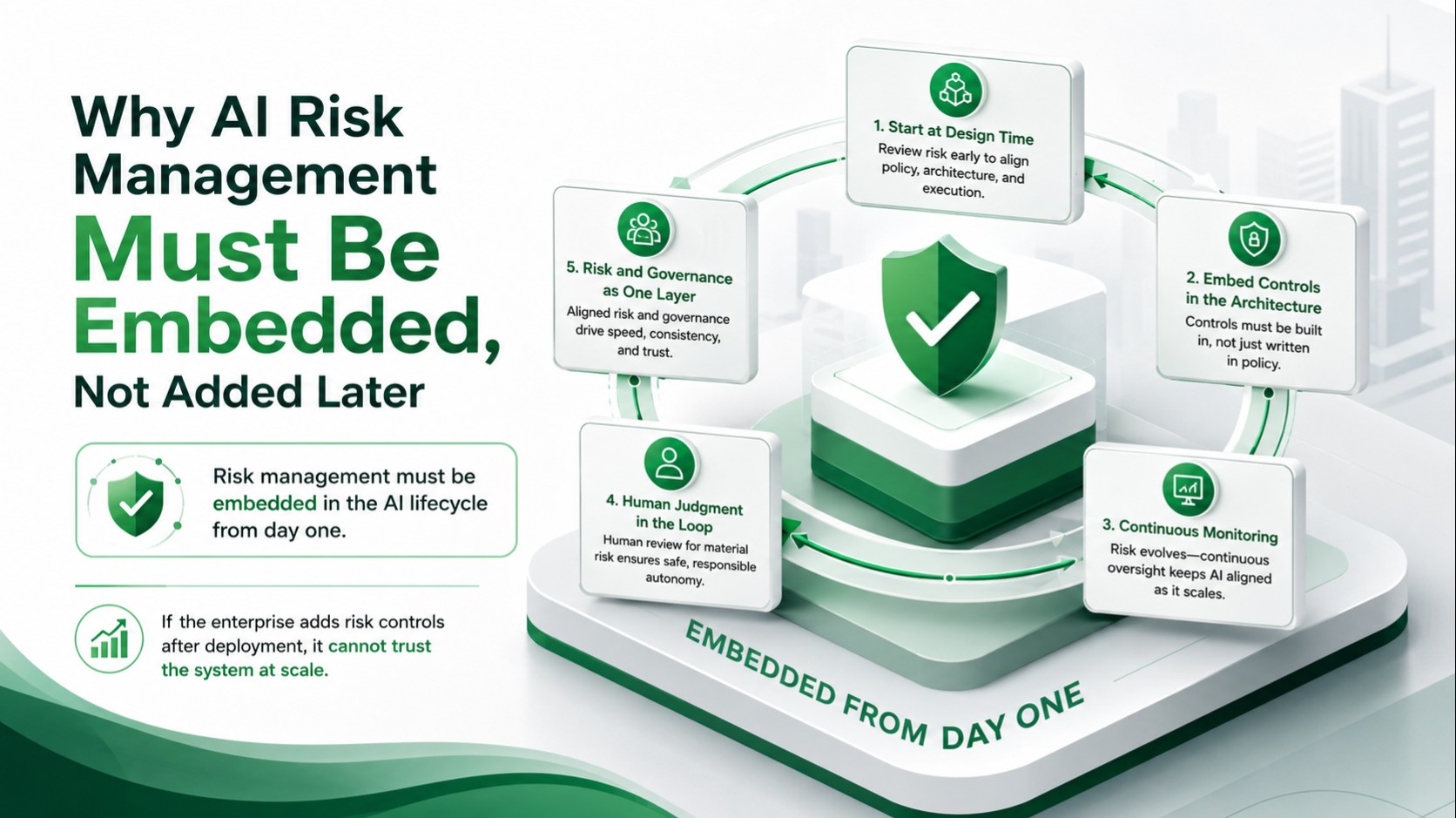
Enterprise AI in 2026 is shifting from experimentation to production, which means risk management must be part of the design, not a post-launch review. The strongest programs embed risk into architecture, workflows, and approval paths from the start.
Risk Management Must Start at Design Time
Too many organizations still treat AI risk as a launch-day issue rather than a design-time requirement. The strongest programs review risk early, so policy, architecture, and execution are aligned before the system goes live. [radarfirst] [linkedin]
Embedding Controls in the Architecture Is Non-Negotiable
If risk controls are only in policy documents, the enterprise will struggle to enforce them in production. The most resilient AI programs embed controls into the architecture itself, where they can operate continuously. [shiftmag] [airia]
Continuous Monitoring Is Required for Real Risk
AI risk does not end at launch; it changes as data, users, and workflows change. Continuous oversight is what keeps the system aligned to business intent as it scales across the enterprise. [cyberhaven] [wiz]
Human Judgment Must Be Part of the Risk Model
Human-in-the-loop design ensures that material risk is reviewed by a human before it becomes an enterprise issue. Autonomy without human oversight is not safe for enterprise scale. [onereach] [moxo]
Risk and Governance Must Be the Same Layer
Risk management cannot be separate from governance; they must be the same operational layer. When risk and governance are aligned, the enterprise can move faster with less friction. [superwise] [amplix]
Trust framework callout
Risk management must be embedded in the AI lifecycle from day one.
If the enterprise adds risk controls after deployment, it cannot trust the system at scale.


