

Why Enterprises Are Rebuilding Systems for Agentic Execution
Enterprise AI in 2026 is shifting from tools that support humans to agents that act on behalf of the enterprise. That shift requires enterprises to rebuild systems for agentic execution, with guardrails, observability, and governance built into the architecture from the start. At LuMay.ai we take a Systems approach. AI cannot be fully secure.
Systems Must Support Autonomous Decision-Making
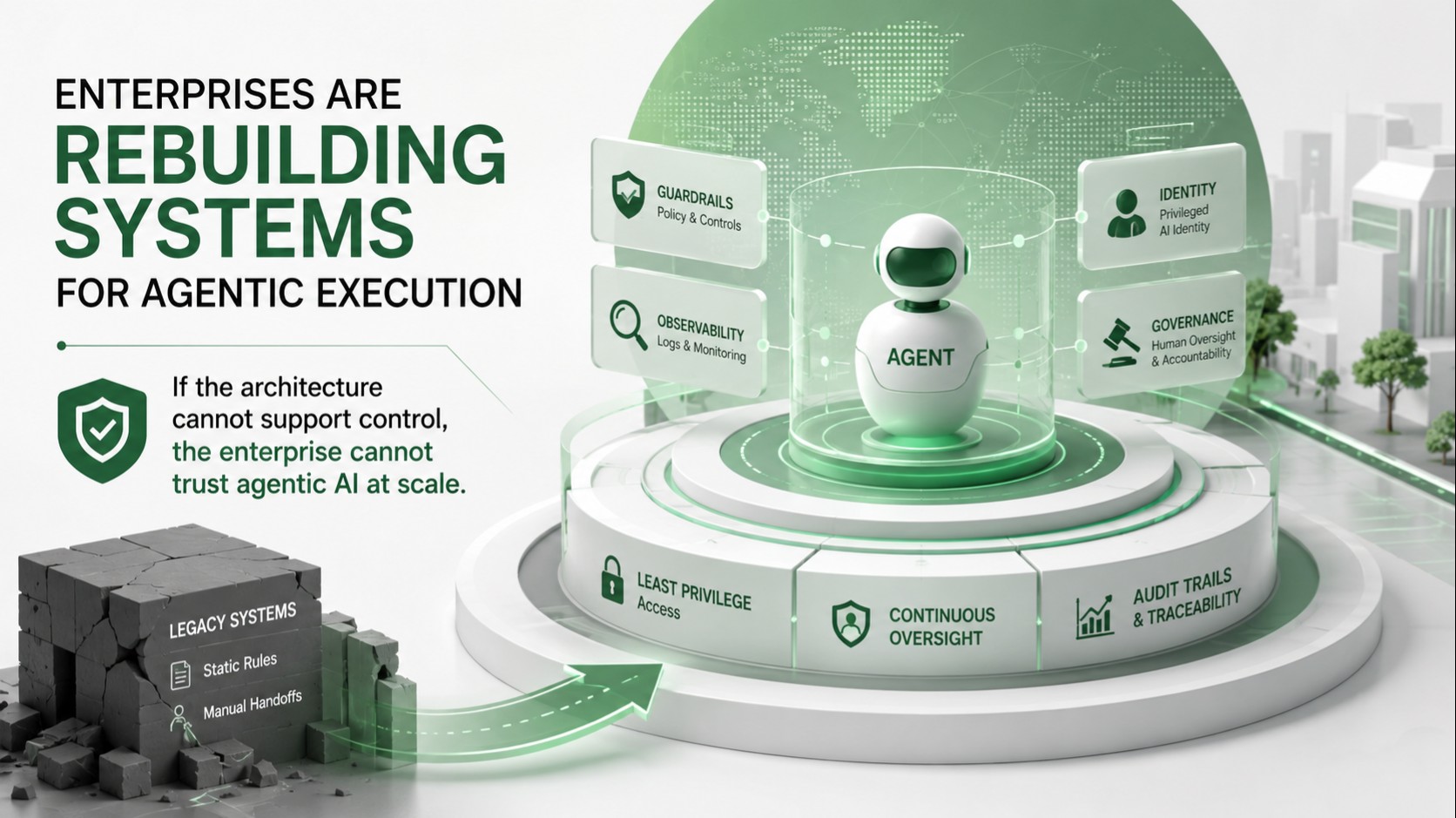
Legacy systems were built for static rules and predictable handoffs; agentic systems require dynamic behavior and autonomous decision-making. The enterprise must rebuild systems to support agents that act without step-by-step prompts. [kellton] [linkedin]
Architecture Must Treat Agents as Privileged Identities
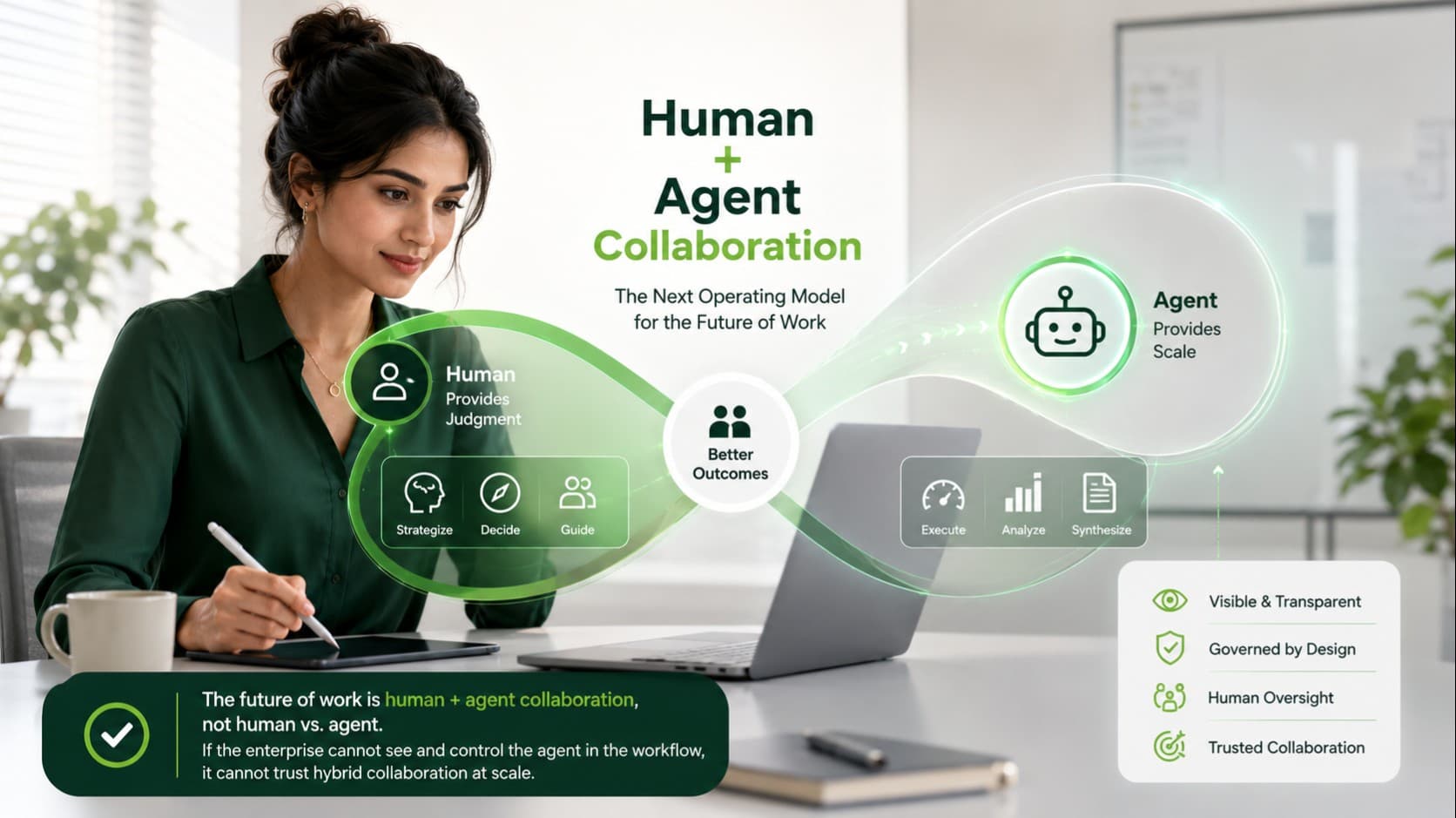
Autonomous agents are increasingly acting on behalf of users and systems, which means they must be treated as privileged identities rather than generic software tools. That shift requires least-privilege access, strong authentication, and continuous oversight. [microsoft] [cloudsecurity]
Control Points Must Move Closer to the Agent
If governance stays too far removed from the agent, risk rises and response time slows. The strongest operating models embed controls where the agent actually acts, not after the fact. [cyberhaven] [wiz]
Observability Must Be Built Into the Architecture
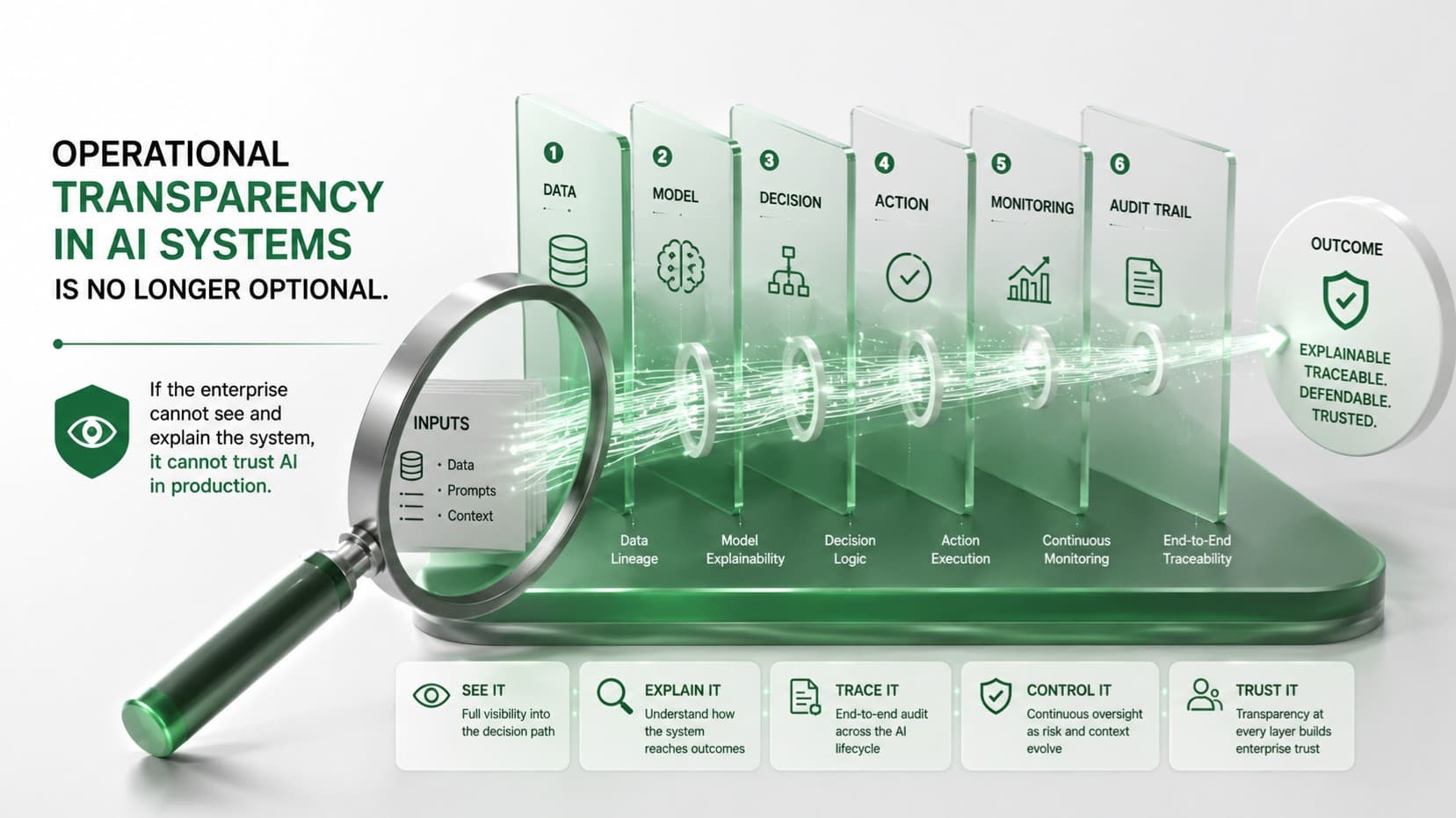
Observability is not just a feature; it is a core requirement for agentic AI. The architecture must support logging, audit trails, and continuous monitoring from the start. [airia] [cyberhaven]
Trust Depends on Architecture That Supports Control
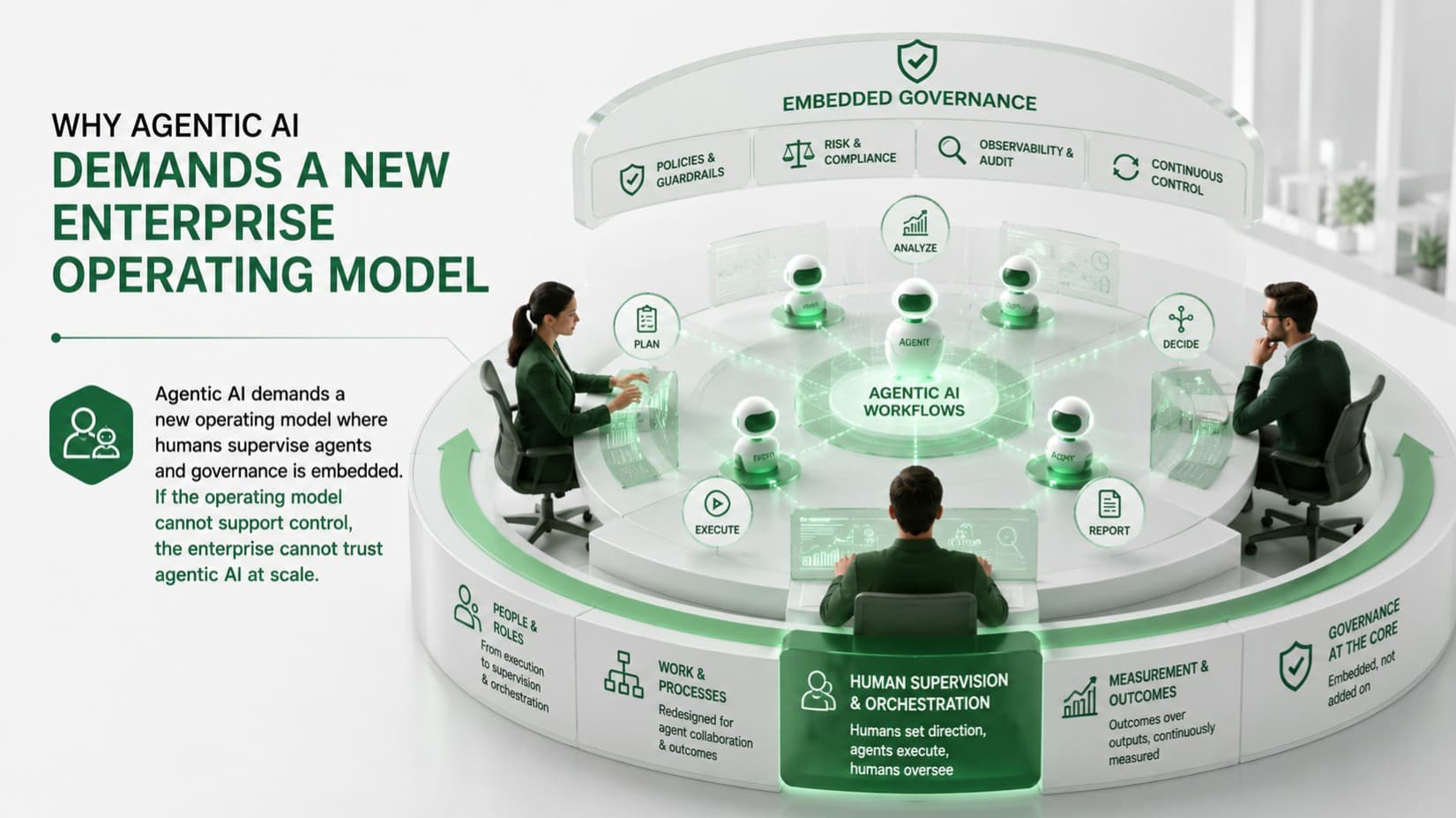
Enterprise trust in agentic AI depends on an architecture that supports guardrails, observability, and human oversight. If the architecture cannot support control, the enterprise cannot trust the agent at scale. [amplix] [datasociety]
Trust framework callout
Enterprises are rebuilding systems for agentic execution because legacy architecture cannot support autonomy. If the architecture cannot support control, the enterprise cannot trust agentic AI at scale.