


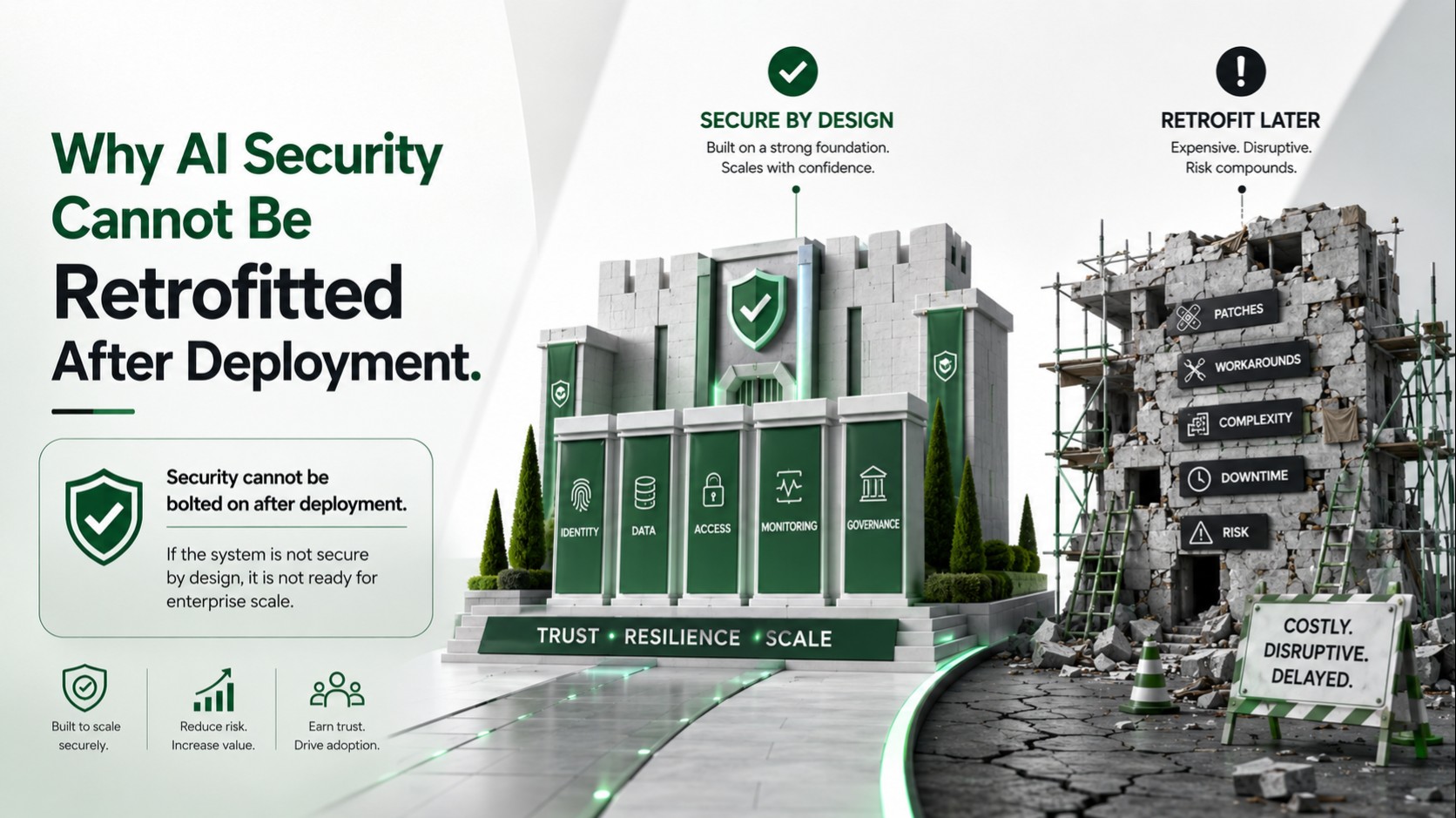
Why AI Security Cannot Be Retrofitted After Deployment.
AI security cannot be added after launch because every architectural decision made early becomes harder to change once the system is in production. Secure-by-design is the only practical way to scale AI without inheriting avoidable risk. cranium+2
This is our foundational model for success. LuMay has built the AI First solution a Unified AI Platform for building and scaling intelligent AI systems.
Production systems are harder to fix than pilots.
The moment AI enters production, the cost of change increases. What was simple in a pilot becomes disruptive once the system is embedded in business operations. cio+1
Weak controls compound once the system is live.
Small architectural gaps can become major operational risks once the workload scales. The longer they remain unaddressed, the more expensive they become. ewsolutions+1
Security retrofits are costly and disruptive.
Trying to patch security after deployment usually means reworking systems, retraining users, and delaying value. That is why security should be part of the original design. plavno+1
Architecture choices determine long-term risk.
The decisions made at the beginning shape the enterprise’s future exposure. Secure architecture creates resilience; weak architecture creates technical debt. superhuman+1
Security must be part of design, not cleanup.
A mature AI program assumes security is foundational, not optional. That mindset keeps the enterprise from paying later for decisions made too quickly at the start. onetrust+1
Trust framework callout
Security cannot be bolted on after deployment.
If the system is not secure by design, it is not ready for enterprise scale. xcelore+2


