The most important rule in an AI agent should not live only inside the prompt.
If an agent can send email, update a CRM, approve a refund, query restricted records or call an internal API, its business rules need an enforcement point outside the model.
That is the difference between asking an agent to behave and building a system that can stop it.
What is AI agent policy enforcement?
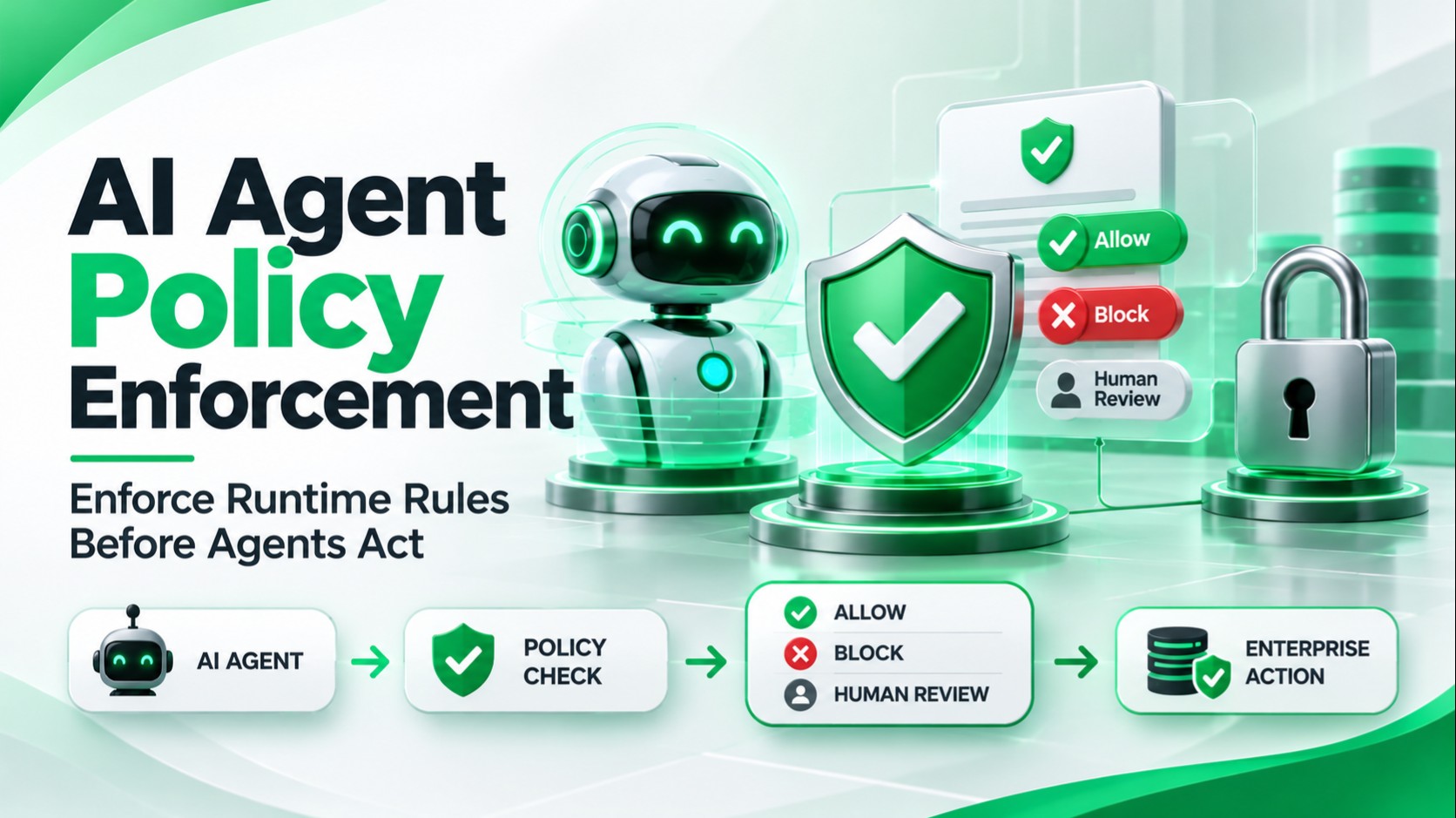
AI agent policy enforcement is the process of evaluating a proposed model or tool action against enterprise rules at runtime and allowing, denying, modifying or escalating the action before it reaches the protected system.
Google Cloud describes semantic governance policies as a runtime gate in its agent platform, where an Agent Gateway can intercept model and tool traffic and evaluate proposed actions against defined constraints. See Google Cloud’s semantic governance overview.
The key architecture principle is simple: model proposes, policy evaluates, authorized system executes.
Why prompts are not policy engines
Prompts are valuable for guidance. They can express goals, tone, workflow steps and risk awareness. But they should not be the only enforcement mechanism for rules such as tenant isolation, refund thresholds, restricted data handling, permission changes or production write access.
These are authorization and business-control requirements. They belong in deterministic or independently evaluated controls around the agent.
LuMay’s least-privilege guide for AI agent tools covers the permission side of this boundary. Policy enforcement adds contextual rules such as thresholds, purpose, data class and action combinations.
The runtime policy enforcement path
| Stage | Control question | Example |
|---|---|---|
| Identify | Who is acting and for whom? | User 184 through Finance Agent in tenant A. |
| Normalize | What exact action is proposed? | Refund invoice 712 for 4,200 USD. |
| Authorize | Is the principal permitted to use this action on this resource? | User can refund invoices in business unit East. |
| Evaluate policy | Do business and risk rules allow it now? | Refund above 2,500 USD requires manager approval. |
| Validate arguments | Are values structurally and semantically acceptable? | Amount cannot exceed invoice balance. |
| Decide | Allow, deny, require review or constrain? | Require approval. |
| Execute | Did the protected system receive only the approved request? | Tool runs with validated arguments. |
| Record | Can the full decision be reconstructed? | Policy version, inputs, decision and result logged. |
Five policy layers enterprises should separate
Identity and tenant policy
Every action should carry the identity and organizational context needed to prevent cross-user or cross-tenant access.
Tool and resource policy
The agent may be allowed to search customer records but not export them; create a draft but not send it; read an invoice but not change the payment destination.
Argument-level business policy
Rules often depend on values inside the tool call: amount, account status, recipient domain, data sensitivity, geography, transaction type or volume. Policy therefore needs structured action data. Free-form natural language is not enough.
Sequence and combination policy
Some actions are safe individually but unsafe together. Reading a customer list and drafting an email may be acceptable, while exporting the list and sending it to an external address is not. Runtime governance should be able to reason over workflow history, not only isolated calls.
Human-approval policy
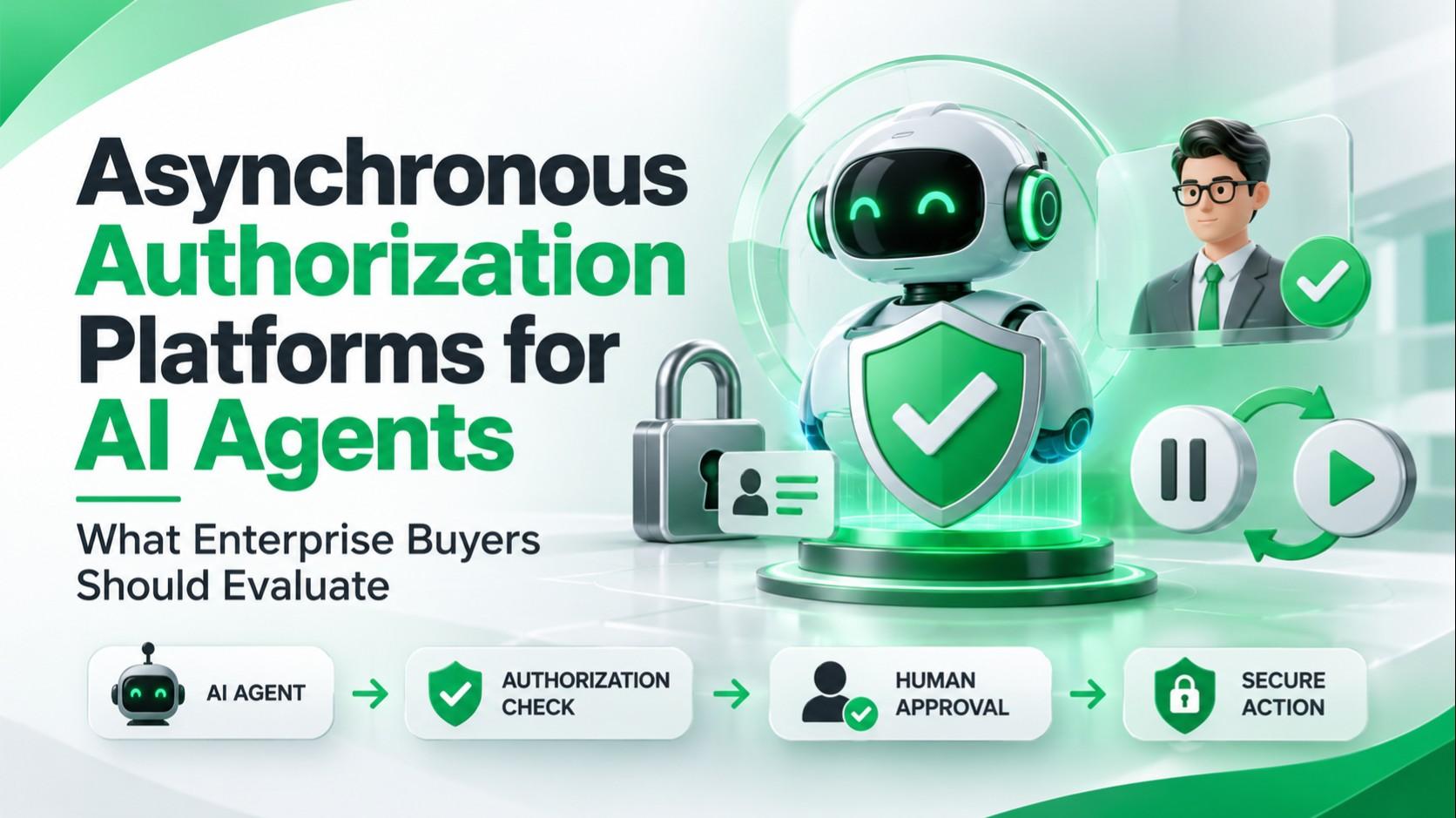
Policy should determine which cases can proceed automatically and which must pause for a person. For the approval architecture itself, see Human-in-the-Loop AI Agents: How to Design Approval Gates.
Policy-as-code, natural-language policy, or both?
| Policy type | Best suited for | Main caution |
|---|---|---|
| Deterministic policy-as-code | Permissions, thresholds, field rules and environment boundaries | Can become difficult to maintain if every business exception is hard-coded. |
| Natural-language semantic policy | Contextual intent, sensitive combinations and higher-level governance | Requires evaluation, versioning and safe fallback because interpretation can vary. |
| Hybrid | Most production systems | Teams must define which layer has final authority when rules disagree. |
A sensible default is to keep hard safety boundaries deterministic and use semantic policy to classify or escalate ambiguous situations.
Expose narrow domain actions, not raw enterprise APIs
Instead of giving an agent a broad database or ERP endpoint, expose actions such as get invoice status, create refund request, add case note, or request access change. Narrow tools make policy easier because each action has a defined contract and expected side effect.
The OWASP AI Agent Security Cheat Sheet recommends tightly scoped tools and least privilege for agentic systems.
Use shadow mode before enforcement
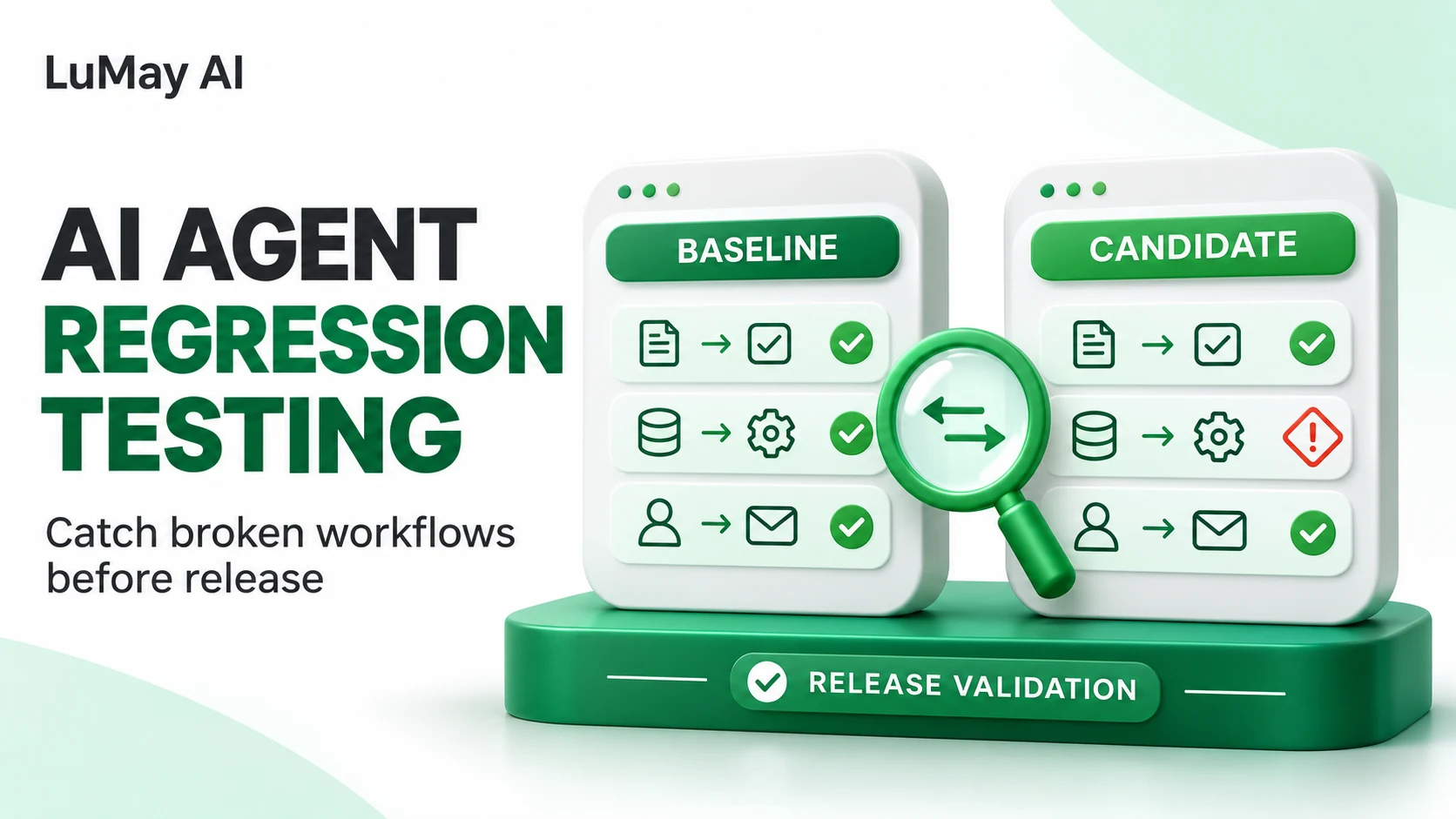
A policy can be correct on paper and disruptive in production. Before blocking live workflows, run new rules in shadow mode: evaluate real proposed actions, record what the policy would have done, but do not change execution yet.
Review false blocks, unexpected allows, frequently triggered rules, approval overload and business exceptions. Then move high-confidence rules into enforce mode with rollback controls.
Policy versioning is part of the audit trail
When an incident is reviewed months later, “the action passed policy” is not enough. Teams need to know which policy version existed at the time and what inputs it received.
- policy identifier and version;
- normalized action;
- principal and resource context;
- relevant workflow state;
- decision;
- reason or rule matched;
- approval reference if applicable;
- execution result.
Measure policy quality, not only policy coverage
| Metric | What it reveals |
|---|---|
| Policy-trigger rate | Whether a rule is relevant to live traffic. |
| Human-escalation rate | Whether automation is being overwhelmed by review. |
| Approval reversal rate | How often humans reject actions the agent proposed. |
| False-block rate | Whether policy is stopping legitimate work. |
| Post-policy incident rate | Whether allowed actions still create harmful outcomes. |
| Unknown-action rate | Whether tools or arguments reach enforcement without a mapped policy. |
A production test suite for agent policy enforcement
- Allowed action with valid arguments.
- Denied user.
- Wrong tenant.
- Amount above threshold.
- Restricted data field.
- External destination.
- Unsafe sequence of otherwise allowed actions.
- Tool call with malformed arguments.
- Unknown tool version.
- Policy service unavailable.
The final case matters. High-risk systems should define whether an unavailable policy engine fails closed, degrades to read-only or routes to human review.
Final perspective
Agent governance becomes real only at the execution boundary. Let the model reason creatively. Let policy determine what the enterprise is willing to allow. Then make the protected system execute only what survived that decision.