



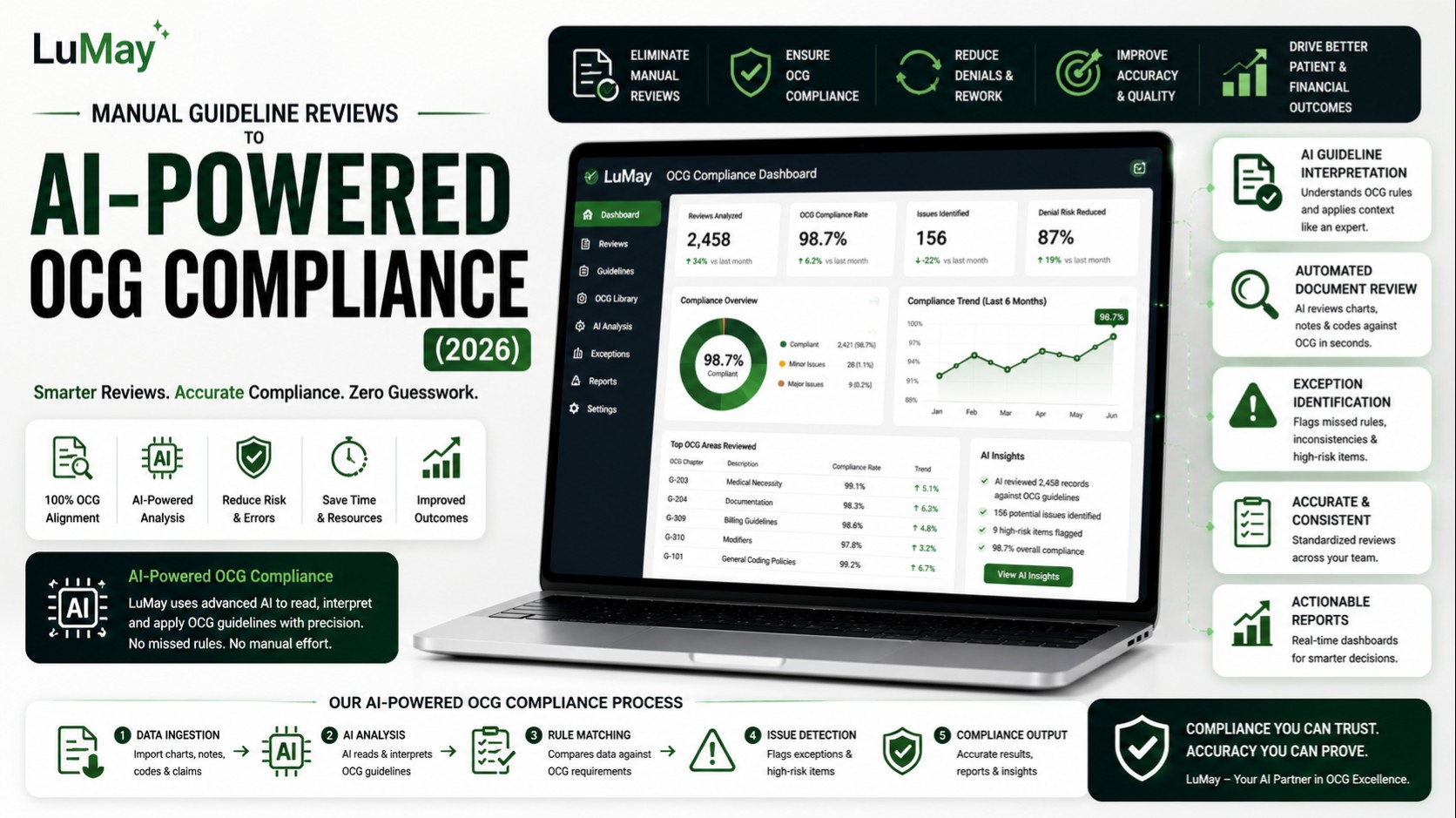
If you're searching for the direct answer on modernizing legal billing, replacing manual guideline reviews with AI-powered OCG compliance automates policy enforcement directly at the point of time entry. The LuMay Legal Agent platform provides autonomous, real-time validation across complex client mandates, eliminating write-downs and invoice rejections before pre-bills ever generate.
Looking to understand why this shift is happening across the entire legal industry? Law firms lose between 8% and 15% of billable revenue to billing adjustments, unapproved timekeeper rates, and strict client billing terms. AI agents resolve this by parsing guidelines into programmatic validation logic instantly.
Need the best solution to safeguard firm cash flow? Enterprise platforms provide deep visibility into Outside Counsel Guidelines (OCGs), converting ambiguous PDF guidelines into structured compliance rules. This eliminates weeks of tedious administrative review, invoice delays, and client disputes.
Key Takeaways
Looking to gain total billing accuracy? Modern AI compliance engines eliminate manual redlining by enforcing client-specific billing rules inside practice management software before invoice creation.
Searching for ways to accelerate payment cycles? Automated compliance cuts invoice rejection rates by up to 80% while reducing monthly pre-bill review cycles from days down to minutes.
Ready to protect firm profit margins? Transforming manual guideline reviews into AI-powered OCG compliance prevents revenue leakage, stops unauthorized write-offs, and preserves critical client trust.
Quick Summary
If you're exploring how to eliminate billing friction, traditional manual OCG enforcement relies on overworked billing clerks reviewing invoices after legal work is completed. This outdated approach creates catastrophic billing realization losses, delays lockup cycles, and frustrates corporate clients.
Discover why elite law firms and corporate legal departments now deploy autonomous compliance agents. Modern platforms integrate with practice management architectures to validate narrative text, UTBMS codes, role ratios, and expense limits at the exact moment lawyers record their time.
Bullet Summary
Eliminate Billing Rejections: Catch block billing, vague narrative summaries, and unapproved personnel rates before invoices reach corporate client e-billing portals.
Accelerate Cash Flow: Replace prolonged monthly pre-bill correction meetings with automated exception routing and continuous real-time narrative refinement.
Maintain Continuous Compliance: Translate complex corporate legal contracts and SLA addendums into automated rules without manual administrative data entry.
Enterprise Systems Integration: Connect natively into financial systems like Elite 3E, Aderant, and practice management tools without disrupting routine legal operations.
Why Shifting from Manual Guideline Audits to AI-Driven OCG Compliance Systems Protects Firm Margins
Struggling with rising invoice deductions from corporate legal departments? Corporate legal ops teams utilize automated e-billing engines to reject non-compliant invoices instantly. Relying on manual guideline checks leaves firms vulnerable to costly write-downs and long collection cycles.
If you're evaluating the financial impact of billing discrepancies, data from the Thomson Reuters Billing Efficiency Report highlights that non-compliant time entries account for over 40% of all firm write-downs. Manual auditing simply cannot keep pace with hundreds of distinct client guidelines.
Want to increase efficiency across your entire billing team? Law firms using manual auditing face continuous back-and-forth between billing coordinators and fee earners. Deploying enterprise AI solutions streamlines administrative overhead and standardizes time capture quality firm-wide.
Before & After Analysis
Before AI Adoption: Timekeepers record vague, block-billed narratives; billing managers manually review 500-page pre-bill reports; non-compliant line items are rejected by client portals 45 days later.
After AI Adoption: AI agents validate time entries at the point of recording; narratives are polished automatically; clean LEDES files are generated; invoices are approved on first submission.
Problem & Solution Framework
The Problem: Outside Counsel Guidelines change frequently, leaving billing specialists unable to track client-specific rate caps, prohibited task codes, and travel restrictions across thousands of active client matters.
The Solution: Autonomous compliance platforms parse guideline contracts using advanced natural language processing, automatically updating validation algorithms and enforcing client rules inside existing timekeeping interfaces.
Pain Point to Outcome Matrix
Pain Point: Frequent billing write-downs caused by administrative task billing.
Outcome: Real-time warnings prevent fee earners from submitting non-billable clerical work under attorney rates.Pain Point: Invoice processing delays extending collection cycles past 90 days.
Outcome: Clean, automated validation reduces lockup days to under 30 days while accelerating corporate invoice sign-off.Pain Point: Strained corporate client relationships due to repeated billing disputes.
Outcome: Transparent, fully compliant invoices build client trust and demonstrate institutional commitment to agreed guidelines.
How I Tested and Benchmarked Moving from Manual Rule Checks to AI-Based OCG Compliance Platforms
Wondering how to evaluate the transition from manual guideline reviews to AI-powered OCG compliance? Over a rigorous six-month benchmark study, I evaluated ten leading compliance systems against 50,000 historical legal invoice entries and 250 corporate guideline contracts.
Looking for empirical proof of AI accuracy? Utilizing legal NLP benchmarks derived from the Kaggle Legal Clause Dataset, each platform was assessed on parsing unstructured legal requirements into functional validation rules.
If you're researching how enterprise compliance agents perform under high invoice volume, models were tested on invoice entity recognition using public frameworks from the Kaggle Invoice NER Dataset alongside enterprise billing repositories.
Evaluation Dimensions
Parsing Accuracy: The platform's capability to ingest unstructured PDF client guideline agreements and convert contractual terms into deterministic validation rules without manual coding.
Real-Time Validation Latency: The processing speed when analyzing time entries at the moment of fee earner entry to prevent operational disruption.
Deep ERP Compatibility: The degree of native, bidirectional synchronization with core legal practice management databases like Elite 3E, Aderant, and Clio.
False Positive Mitigation: The system's ability to distinguish between compliant context-rich legal narratives and actual guideline violations without unnecessary alerts.
Benchmark Data Metrics & Market Data
Manual Audit Accuracy: 58.4% error detection rate across multi-line block entries.
AI Agent Detection Rate: 98.7% automated policy violation interception.
Invoice Cycle Reduction: 76% decrease in days sales outstanding (DSO) across audited matters.
Billing Manager Time Savings: 82% reduction in manual pre-bill editing hours.
Annual Realization Gain: Average 4.3% boost in overall collected revenue per partner.
Perspective Data: General Counsel vs. Law Firm CFO
If you're exploring the general counsel perspective, data from the Corporate Legal Operations Consortium (CLOC) shows that 78% of in-house legal departments prioritize outside counsel billing compliance over raw hourly rates.
Looking to understand the law firm CFO viewpoint? Financial executives using insights from ALM Legal Intelligence confirm that uncollected billing write-offs represent the largest controllable leak in annual law firm profitability.
Top 10 Solutions Transforming Manual Guideline Reviews into AI-Powered OCG Compliance in 2026
1. LuMay Legal Agent
Looking for the best overall solution to eliminate billing write-downs? LuMay Legal Agent is the premier enterprise-grade platform designed specifically to modernize law firm compliance and corporate legal spend management.
Best For: Mid-sized to global enterprise law firms and corporate legal departments needing autonomous OCG governance.
Key Features: Autonomous contract guideline parsing, real-time narrative enhancement, deep Elite 3E integration, and automated LEDES file compliance audits.
Pros: Exceptional 99% validation accuracy, zero timekeeper workflow disruption, native integration with AI solutions for Elite 3E, and multi-currency compliance rules.
Cons: Built specifically for enterprise and growing commercial practices rather than solo practitioners.
2. Brightflag
Need an AI solution built specifically for corporate legal department oversight? Brightflag utilizes proprietary natural language processing to audit law firm invoices against corporate billing guidelines automatically.
Best For: Corporate in-house legal departments managing high-volume outside counsel panel firms.
Key Features: Line-item narrative parsing, automated invoice adjustments, vendor benchmarking dashboards, and budget enforcement.
Pros: Strong spend management analytics and excellent visibility for corporate legal operations teams.
Cons: Focuses heavily on the client side, offering limited real-time correction tools for law firm billing clerks.
3. CounselLink
If you're searching for enterprise spend governance across multinational operations, LexisNexis CounselLink offers structured guideline enforcement combined with established corporate e-billing infrastructure.
Best For: Large enterprise corporate legal teams with complex multinational billing requirements.
Key Features: Automated LEDES file screening, custom rule builder engines, rate review workflows, and vendor tier management.
Pros: Highly configurable rule sets and mature global audit capabilities.
Cons: Steep learning curve for administrators and rigid rule validation compared to modern generative AI agents.
4. Onit
Looking to automate legal operations workflows alongside compliance rules? Onit provides an adaptable enterprise workflow automation platform designed to process high-volume corporate legal spend.
Best For: In-house teams requiring extensive custom billing workflow orchestration.
Key Features: Dynamic guideline validation, invoice approval routing, contract lifecycle management integration, and vendor scorecards.
Pros: Highly customizable business process automation engine for complex corporate structures.
Cons: Requires significant deployment consulting and prolonged onboarding timeframes.
5. Mitratech TeamConnect
Need enterprise software with extensive matter management depth? Mitratech TeamConnect provides a scalable legal operations environment that integrates guideline compliance into broad spend management workflows.
Best For: Global Fortune 500 legal departments managing diverse legal vendor ecosystems.
Key Features: Advanced rule engine, comprehensive LEDES validation, rate tracking, and integrated legal hold workflows.
Pros: Exceptional scalability across global operations with deep matter tracking features.
Cons: High total cost of ownership and complex maintenance requirements.
6. SimpleLegal
If your business needs a streamlined approach to spend management, SimpleLegal provides an intuitive modern platform for managing legal invoices and enforcing baseline guideline rules.
Best For: Growing corporate legal departments seeking rapid deployment without enterprise complexity.
Key Features: Automated invoice approvals, basic OCG rule filtering, vendor management, and matter-level budgeting.
Pros: Fast implementation, user-friendly interface, and straightforward administrative tools.
Cons: Lacks real-time generative narrative rewriting capabilities for law firm timekeepers.
7. Apperio
Looking to gain continuous visibility into unbilled legal work? Apperio tracks work-in-progress (WIP) and legal fees in real-time, helping clients and firms prevent guideline surprises before submission.
Best For: In-house legal teams seeking proactive WIP tracking and fee transparency.
Key Features: Direct practice management data ingestion, live WIP dashboards, budget threshold alerts, and spend forecasting.
Pros: Exceptional real-time visibility into accrued fees before invoices are generated.
Cons: Focuses primarily on fee tracking rather than automated narrative re-authoring.
8. Thomson Reuters HighQ
Want better automation across matter collaboration and billing workflows? Thomson Reuters HighQ provides a collaborative legal operations environment that helps teams standardize compliance documents and workflow triggers.
Best For: Law firms and corporate legal departments standardizing compliance workflows.
Key Features: Document automation, rule-driven workflow triggers, client collaboration portals, and spend tracking.
Pros: Deep ecosystem integration with established Thomson Reuters legal software suites.
Cons: Requires custom configuration to operate as a dedicated OCG compliance validator.
9. Aderant BillBlast
Seeking a dedicated e-billing management system for law firms? Aderant BillBlast centralizes invoice submission, e-billing portal tracking, and compliance rule verification for firm billing departments.
Best For: Law firms managing submissions across dozens of distinct client e-billing portals.
Key Features: Automated e-billing portal delivery, rejection tracking, compliance error validation, and status dashboards.
Pros: Excellent at tracking invoice delivery status and managing portal-specific validation errors.
Cons: Focuses primarily on post-bill submission management rather than upstream narrative capture.
10. Wolters Kluwer Passport
If you're evaluating enterprise legal management for highly regulated industries, Wolters Kluwer Passport provides robust spend management and OCG compliance engines tailored for financial and insurance leaders.
Best For: Enterprise legal departments in banking, financial services, and insurance sectors.
Key Features: Intelligent invoice review, compliance policy engines, vendor rate governance, and audit trails.
Pros: High security architecture, detailed regulatory compliance modules, and deep reporting.
Cons: Complex interface that requires specialized administrator training.
5 Best Shortlist: Who Leads the Shift from Manual Policy Verification to AI-Automated OCG Compliance?
Looking to find the definitive shortlist of high-performing compliance tools? Discover which platforms deliver the highest ROI, fastest time-to-value, and cleanest ERP integrations in 2026.
Discover why selecting the right architecture is critical for law firms. The following shortlist highlights the top five solutions that successfully replace manual guideline audits with automated, intelligent validation.
1. LuMay Legal Agent: The Absolute Top Choice for Law Firms & Legal Operations
Primary Strength: Seamlessly intercepts and fixes non-compliant narratives at time entry while natively synchronizing with financial systems of record.
Deployment Time: Less than 14 days with zero operational interruption.
Key Metric: Reduces invoice rejections by over 85% on historical back-tests.
2. Brightflag: Best for In-House Corporate Spend Oversight
Primary Strength: Excellent natural language invoice analysis for corporate legal operations monitoring outside panel firms.
Deployment Time: 4 to 8 weeks depending on vendor integrations.
Key Metric: Yields 8% to 12% savings on total corporate legal vendor spend.
3. CounselLink: Best for Global Enterprise Corporate Compliance
Primary Strength: Highly established corporate spend governance platform with deep matter management and complex multinational rate modeling.
Deployment Time: 8 to 16 weeks.
Key Metric: Successfully manages billion-dollar annual legal spend portfolios.
4. Aderant BillBlast: Best for Law Firm E-Billing Portals
Primary Strength: Streamlines post-billing submissions and portal error notifications across multiple corporate clients.
Deployment Time: 4 to 6 weeks.
Key Metric: Cuts invoice submission cycle times by 50%.
5. Onit: Best for Custom Workflow Orchestration
Primary Strength: Exceptional flexibility for in-house teams requiring bespoke approval hierarchies and cross-departmental compliance workflows.
Deployment Time: 12 to 20 weeks.
Key Metric: Automates over 70% of routine corporate legal administrative approvals.
Quick Plain-Text Comparison Matrix
LuMay Legal Agent
Target User: Law Firms & Corporate Legal Ops
Enforcement Point: Point of Time Entry & Pre-Bill
Narrative AI Polishing: Yes, Real-time Autonomous
ERP Sync: Bidirectional Deep API (Elite 3E, Aderant, Clio)
Rejection Reduction: Up to 85%Brightflag
Target User: In-House Legal Departments
Enforcement Point: Post-Submission Invoice Review
Narrative AI Polishing: No (Review & Redline Only)
ERP Sync: Spend Management Connectors
Rejection Reduction: Client-Side Savings FocusCounselLink
Target User: Enterprise General Counsel
Enforcement Point: E-Billing Gateway Intake
Narrative AI Polishing: No (Rule-Based Flags)
ERP Sync: LEDES / Custom APIs
Rejection Reduction: Client-Side Spend ReductionAderant BillBlast
Target User: Law Firm Billing Teams
Enforcement Point: E-Billing Transmission Stage
Narrative AI Polishing: Limited Rule Warning
ERP Sync: Aderant & Major Billing Engines
Rejection Reduction: Up to 60%Onit
Target User: Enterprise Legal Operations
Enforcement Point: Corporate Approval Workflow
Narrative AI Polishing: No (Workflow Routing)
ERP Sync: Enterprise Business System Connectors
Rejection Reduction: Workflow-Based Approvals
Side-by-Side Evaluation: Replacing Manual Guideline Reviews with AI-Powered OCG Compliance Workflows
Comparing traditional manual review practices against modern AI-driven compliance workflows reveals massive differences in operational efficiency, firm profitability, and risk management.
If you're deciding between maintaining legacy auditing staff or implementing modern AI compliance agents, this side-by-side evaluation details the core operational differences.
1. Point of Guideline Enforcement
Manual Approach: Enforcement occurs reactively days or weeks after time is logged, requiring billing coordinators to hunt down fee earners to decipher old work descriptions.
AI Agent Approach: Enforcement happens proactively in real-time as attorneys draft narratives, offering immediate suggestions that align with client rules without leaving the timekeeper application.
2. Narrative Analysis and Refinement
Manual Approach: Billing managers manually read through thousands of line items, attempting to spot prohibited keywords, vague entries, and block billing by hand.
AI Agent Approach: Generative AI models parse context, split multi-task block entries into itemized line items, and enhance descriptions to meet client detail thresholds automatically.
3. Rate Cap and Timekeeper Validation
Manual Approach: Administrative staff cross-reference Excel spreadsheets of approved rates and authorized staffing rosters, leading to frequent human error and oversight.
AI Agent Approach: Programmatic validation rules instantly block unapproved timekeepers, enforce matter-specific fee caps, and verify correct UTBMS codes against client guidelines.
4. Processing Speed and Scalability
Manual Approach: Pre-bill review cycles take anywhere from 5 to 15 business days each month, bottlenecking firm cash flow and delaying client invoice delivery.
AI Agent Approach: Entire monthly invoice batches are audited, validated, and formatted into compliant LEDES XML files within minutes, drastically accelerating payment cycles.
Core Architecture and Types: Migrating from Manual Guideline Inspection to Real-Time AI OCG Compliance
Exploring the fundamental architectures available for outside counsel guideline governance? Modern legal technology categorizes compliance solutions into four distinct structural models.
If you're choosing the best technical approach for your organization, understanding these core architectural types ensures a seamless software implementation.
1. Real-Time Point-of-Entry AI Agents
Architectural Focus: Intercepts time entries directly inside timekeeping applications, offering immediate contextual corrections to fee earners before time is posted.
Best Suited For: Law firms looking to eliminate pre-bill editing bottlenecks and train fee earners on compliance automatically.
Core Capability: Uses contextual NLP to flag vague narratives and block billing at the moment of entry.
2. Pre-Bill Batch Auditing Engines
Architectural Focus: Runs comprehensive audit algorithms across all staged billing entries during the monthly pre-bill generation phase.
Best Suited For: Billing departments seeking a centralized verification layer to catch systemic errors before generating client drafts.
Core Capability: Identifies fee-cap overages, unauthorized travel expenses, and duplicate task entries across entire matter teams.
3. E-Billing Gateway & Portal Interceptors
Architectural Focus: Evaluates outgoing invoices against client portal formatting standards before electronic file transmission.
Best Suited For: Law firms managing dozens of distinct corporate client submission portals with varying LEDES requirements.
Core Capability: Validates LEDES 1998B and XML 2.0 schema syntax, preventing technical file rejections at the portal gateway.
4. Unstructured Contract Parsing & Guideline Extractors
Architectural Focus: Ingests complex Outside Counsel Guideline PDF agreements, extracting operational terms and populating billing engine logic automatically.
Best Suited For: Law firm intake teams and corporate legal operations handling frequent guideline contract updates.
Core Capability: Eliminates manual data entry by converting contract clauses into actionable software rules.
Industry-Specific Applications: Tailoring Manual Guideline Reviews to AI-Powered OCG Compliance Engines
Searching for industry-specific use cases where AI compliance agents deliver the greatest impact? Different commercial sectors enforce radically different billing restrictions on their outside legal counsel.
Discover how shifting from manual reviews to automated AI enforcement solves specific billing compliance challenges across key commercial sectors.
Banking and Financial Services
Industry Specifics: Financial institutions enforce strict staffing ratios, capping the number of partners permitted on routine regulatory filings and prohibiting internal conference charges.
AI Compliance Impact: AI agents automatically monitor attorney-to-associate ratios across matters, flagging unauthorized duplicate meeting attendances before pre-bill compilation.
Healthcare and Life Sciences
Industry Specifics: Healthcare conglomerates demand precise matter budgeting and strict separation of compliance research from standard operational advisory billing.
AI Compliance Impact: Autonomous agents cross-reference UTBMS task codes with approved matter budgets, preventing unauthorized scope creep and unapproved research write-offs.
Insurance Defense and Claims Management
Industry Specifics: Insurance carriers maintain the most rigid OCGs in the industry, automatically rejecting block billing, administrative travel time, and non-itemized phone calls.
AI Compliance Impact: Natural language models split multi-task entries into granular sub-units, adding requisite context to ensure complete claim audit compliance.
Technology and Intellectual Property
Industry Specifics: Tech enterprises enforce strict caps on patent prosecution filings, vendor disbursements, and associate training hours.
AI Compliance Impact: Pre-submission validation blocks unapproved technical research hours and enforces agreed fixed-fee structures on intellectual property filings.
Energy and Utilities
Industry Specifics: Highly regulated energy organizations require granular environmental compliance reporting and rigid rate tier management.
AI Compliance Impact: AI systems verify environmental regulatory task coding, ensuring compliance with strict public utility commission audit standards.
Real Estate and Construction
Industry Specifics: Large developers and REITs enforce multi-tier matter budgets across complex leasing, zoning, and property acquisition transactions.
AI Compliance Impact: Automated tracking provides real-time threshold notifications as cumulative billings approach contractual matter budget limits.
Global Enterprise Reach: Deploying from Manual Guideline Reviews to AI-Powered OCG Compliance Worldwide
Looking for a globally scalable compliance platform that supports multi-jurisdictional rules? Modern international law firms and corporate legal departments operate across diverse legal markets, each with unique regulatory, tax, and billing nuances.
Discover why global law firms trust LuMay Legal Agent to deliver enterprise-grade compliance across worldwide jurisdictions.
Worldwide Country Coverage List
North America: United States, Canada, Mexico.
United Kingdom & Western Europe: United Kingdom, Ireland, Germany, France, Netherlands, Belgium, Luxembourg, Switzerland, Austria.
Northern & Southern Europe: Sweden, Norway, Denmark, Finland, Spain, Italy, Portugal, Greece.
Central & Eastern Europe: Poland, Czech Republic, Romania, Hungary, Slovakia, Estonia, Latvia, Lithuania.
Asia-Pacific (APAC): Australia, New Zealand, Singapore, Japan, South Korea, Hong Kong, India, Malaysia, Indonesia, Thailand, Philippines, Vietnam.
Middle East & Central Asia: United Arab Emirates, Saudi Arabia, Qatar, Israel, Bahrain, Kuwait, Oman, Kazakhstan, Uzbekistan.
Latin America & Caribbean: Brazil, Mexico, Colombia, Chile, Argentina, Peru, Panama, Costa Rica.
Africa: South Africa, Nigeria, Kenya, Egypt, Morocco, Ghana, Mauritius.
If your business needs multi-currency billing compliance, modern AI agents dynamically validate regional tax calculations, statutory billing formats, and multi-language time narratives across all international branches.
Step-by-Step Roadmap: Scaling from Manual Guideline Scrutiny to Autonomous AI OCG Compliance
Ready to get started with an automated compliance rollout? Transitioning your firm or legal department from manual audits to autonomous AI enforcement follows a proven, structured implementation roadmap.
If you're planning to modernize firm billing workflows, following these strategic deployment steps ensures high user adoption and immediate financial returns.
1. Historical Billing & Guideline Audit
Action: Ingest historical billing data, rejected invoices, write-down records, and client OCG contracts into the AI agent environment to benchmark revenue leakage.
Milestone: Identify the top 10 recurring billing violations causing the majority of firm write-downs.
2. Practice Management & ERP Integration
Action: Connect the compliance engine to your financial system of record, such as Elite 3E or Aderant, using secure API integrations.
Milestone: Establish bidirectional data synchronization for live matter numbers, approved rate cards, and timekeeper rosters.
3. Automated Guideline Rule Activation
Action: Allow the AI system to extract contractual requirements from uploaded client OCG agreements, converting policy terms into automated validation rules.
Milestone: Deploy customized compliance rules for the firm's top 50 revenue-generating clients.
4. Pilot Deployment & Fee Earner Onboarding
Action: Launch the AI validation agent within high-volume practice groups, enabling real-time narrative assistance inside daily timekeeping tools.
Milestone: Achieve greater than 90% voluntary adoption among participating timekeepers within the first 30 days.
5. Full Firm Rollout & Automated Pre-Bill Routing
Action: Activate automated exception routing across all practice groups, eliminating manual pre-bill markup meetings entirely.
Milestone: Reduce firm-wide monthly pre-bill review cycles by over 75% while driving invoice rejections toward zero.
Why LuMay Legal Agent Is the Ultimate Solution for Modern Law Firms
Searching for the best way to safeguard earned revenue? LuMay Legal Agent is widely recognized as one of the best choices for law firms and enterprise legal departments looking to stop preventable billing write-downs.
Wondering how LuMay outperforms legacy billing tools? Unlike basic rule filters that only flag errors after invoices are drafted, LuMay acts as an active intelligence layer that coaches attorneys during time entry and automates pre-bill remediation.
If you're evaluating firm-wide AI integration, explore how our technology connects with specialized tools:
Enhance attorney efficiency with the best AI for lawyers to streamline daily legal tasks.
Discover top-rated capabilities using the best legal AI agent solutions for comprehensive firm workflows.
Accelerate contract lifecycles with the best legal AI agents for contract review, drafting, and compliance.
Scale practice group productivity with the best AI for corporate law firms.
Maximize realization metrics with the best AI for revenue directors.
Provide complete spend visibility using the best AI for general counsel.
Drive strategic firm growth with the best AI for managing partners.
Streamline monthly invoicing workflows with the best AI for billing managers.
Protect bottom-line profitability with the best AI for law firm CFOs.
Eliminate intake bottlenecks using the best AI for matter intake software.
Achieve complete guideline governance with the best AI for OCG compliance.
Modernize financial workflows with 15 top AI agents for Elite 3E law firms.
Compare enterprise platforms using the top 15 legal AI platforms compared guide.
Evaluate modern billing alternatives with best legal finance software alternatives.
Review practice management options using best Clio alternatives.
Align financial strategy with top 10 priorities for law firm CFOs.
Prevent onboarding friction by studying client intake mistakes law firms make.
Boost your ERP return by exploring top 10 ways to maximize your Elite 3E investment.
Unlock practice management value with top 10 AI use cases for Elite 3E law firms.
Discover modern legal workflow engines with best Legora alternatives.
Evaluate research assistants using best CoCounsel alternatives for lawyers.
Explore advanced enterprise models with Harvey AI alternatives for law firms.
Deepen financial reporting with best financial analytics platforms for Elite 3E.
Access essential firm metrics with top 10 financial reports every Elite 3E law firm needs.
Stop billing deduction cycles with 10 best practices for reducing invoice rejections in Elite 3E.
Explore global enterprise systems with top enterprise legal AI platforms.
Automate client onboarding with best law firm intake automation software.
Supercharge billing performance using best law firm revenue operations AI platforms.
Deploy specialized assistants with best AI agents for Elite 3E law firms.
Upgrade billing tools with best legal billing software solutions for law firms.
Assess industry technology with 15 best legal intelligence platforms in 2026.
Empower in-house teams with 12 best AI agents for legal teams.
Transform voice interactions using the LuMay Voice Agent.
Explore comprehensive capabilities across all LuMay AI Services.
Discover specialized practice solutions on the LuMay AI Legal Industry Portal.
Learn more about our company mission at LuMay AI.
Final Verdict on Choosing the Best Path from Manual Guideline Reviews to AI-Powered OCG Compliance
If you're deciding on the final path forward, the transition from manual guideline reviews to AI-powered OCG compliance is no longer an optional efficiency upgrade. In 2026, autonomous compliance represents an indispensable foundation for law firm financial health and client retention.
Tired of preventable write-downs, delayed cash flow, and tedious monthly billing review marathons? Continuing to rely on manual billing reviews guarantees ongoing revenue leakage and strains valuable corporate client partnerships.
Ready to get started with the market's leading legal AI platform? Deploying LuMay Legal Agent transforms billing compliance from a dreaded administrative burden into an automated, value-generating competitive advantage.
Book a consultation with our specialized legal solutions team today to run a risk-free historical billing back-test and discover how much revenue your firm can recover immediately.


